
![]() | ||||||||||
|
History of Diversity at UR
|
|||||||||
|
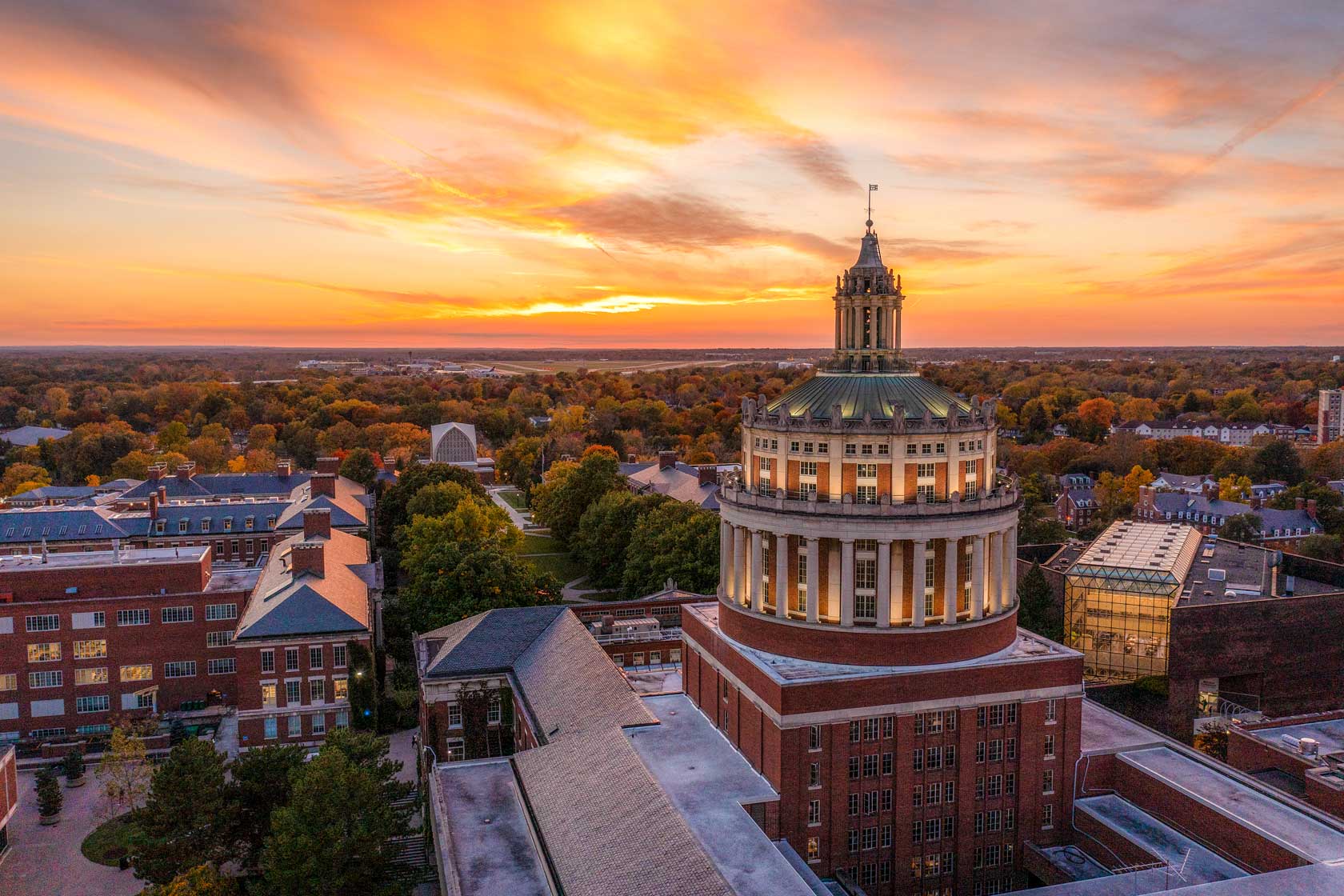
Photo by Max Schulte |
"Students concerned over diversity issues on campus staged a peaceful sit-in outside the president's office in February. About 200 undergraduates participated in the four-hour demonstration, which ended when students and administration put on record their mutually agreed-upon aims about several issues, principal among which were recruitment of minority students and faculty and enhancement of academic and cultural life for minorities. "A lot of what the students are asking for was already under way," said Robert Kraus, associate vice president for public relations, adding that ongoing meetings on the subject would improve communications on continuing progress. The demonstration was the first of its kind since the mid-1980s." (Rochester Review)
1999, March 5
"U. of Rochester Officials Yield to Protesters" (Chronicle of Higher Education)
1999, February 22
A group of University of
Rochester minority undergraduate students, many of them members of the
Black Student Union, led a sit-in in the office of Thomas H. Jackson, the
University’s ninth president. As a result of that peaceful protest, the
University administration agreed to develop a mission statement on
diversity, to permanently increase the recruitment of minority students in
The College, to appoint students to the Dean’s Advisory Committee on
University Programs in African and African American Studies and the Frederick Douglass Institute, to foster increased diversity in academic and cultural programming throughout the University, and to create a plan for the
increased recruitment of minority faculty and staff. Some progress has been
made in most of the identified areas; the University has seen very little
progress, however, in the area of minority faculty recruitment. (RCCD)
1992
The Eaves Report (Report of the Faculty Senate Ad Hoc Report on Minority Issues.)
Proposed by President O’Brien and established
by the Faculty Senate in 1990, this committee examined the issue of
recruitment and retention of minority graduate students and faculty. The
report urged the Faculty Senate, President and administration to develop “systematic oversight and clearly articulated effective incentives” to
improve the recruitment and retention of minority faculty and graduate
students. The report also urged the development of “mentoring systems” for
untenured faculty and improved connections with the Rochester community.
1989
"Towards the Future of Minority Student Affairs: A Discussion Paper"
The Directors of the Frederick Douglass Institute and the Office of Minority Student Affairs were the principal authors of this paper, which called for a greater integration of effort in all facets of the University in
pursuing the goal of achieving a more diverse and welcoming community.
The “Discussion Paper” posed the problem as follows: “There is an urgent
need to enhance the cultural sensitivity of all students and to increase their
sophistication about the diverse human world in which they will live out
their lives. Consciously accommodating diversity should also be the
business of faculty, administrators, staff members, and service persons – and
of all administrative units. It should not be left to OMSA, the Frederick
Douglass Institute, the International Student Office, and the Office of
University and Community Affairs….The issues surrounding diversity and
multicultural community are far too complex for any one office or set of
offices alone.” (RCCD)
![]() |
1987, November The College's Spanish and Latino Students' Association (S.A.L.S.A.) was formed in November of 1987 by Edward Chafart. He acted as president of the organization for the 1987-1988 academic year. That first year also marked the inception of annual Tropicana events. Find a brief history here.
1986
The University established the Susan B. Anthony Center for Women's studies and an undergraduate major and minor in women's studies was established.
1985
The College's Student Association for Development of Interest in the Indian Subcontinents (ADITI) was founded.
1985, March 15
University of Rochester Currents "Statement on Minority Relations at the University of Rochester." It includes a "Memorandum of Agreement", a "Memorandum on Minority Relations from President O'Brien, a "Memorandum to President O'Brien from the African-American Education Oversight Commission,"and the "University's Affirmative Action Plan."
1985, April 10
The University's Department of Special Student Services produced
Volume 11, No.4 of the "Grapevine"
Headline: Rodnell E. Claboine is the first black student elected as Student Association President.
1984
“ Community Relations Committee Paper”
President Dennis O’Brien
appointed a 17 member ;Community Relations Committee consisting of
representatives of the black community, alumni, student groups, UR faculty,
and administrators to consider the following: African American Studies;
recruitment of minority faculty, staff and students; support services; security
services; and student judicial procedures. One significant result from the
work of this committee was the creation of the Frederick Douglass Institute.
(RCCD)
1983, November 11
"A Statement from the Provost: Blacks and the University" (Currents)
1983
"The Gifford Report: Study on Race Relations at the University of Rochester"
Over 600 students participated in the study which
surveyed pre-university interracial experiences, defensiveness, interracial
interactions, prejudices and stereotyping, attitudes about racial groups, and
attitudes about University policies and curriculum. The study concluded: “…minority and non-minority freshman students may need an initial period for adjusting to each other. We suggest that the University take steps to aid
this adjustment. These steps could include promoting interracial interaction
during freshman orientation and during the first weeks of classes….Resident
advisors may be particularly useful for this purpose: we therefore
recommend that they receive training in skills and techniques for promoting
interracial interaction. Minority resident advisors may be particularly useful
as role models for both minority and white students: we therefore
recommend that their number be increased.” (Gifford Report, RCCD)
1982, December 3
The University's Department of Special Student Services produced
Volume 10, No.10 of the "Grapevine"
Headline: The Provost Meets with te BSU.
![]() |
1982, April 23
The University's Department of Special Student Services produced
Volume 9, No.25 of the "Grapevine"
Headline: University Attacks Attrition Amoung Minorities.
1982
The women's studies program officially opened.
1980, November 14
The University's Department of Special Student Services produced
Volume 8, No.12 of the "Grapevine"
Headline: The Future of Black Education at the University of Rochester.
1980, October 31
The University's Department of Special Student Services produced
Volume 8, No.10 of the "Grapevine"
Headline: Kwame Ture, The Former Stokely Carmichael, Speaks at UR.
1980
The College's Korean American Student's Association (KASA) was founded.
1980
The University launched a concentration in women's studies.
Click herefor a brief history of the Susan B. Anthony Institute.
1979, October 26
The University's Department of Special Student Services produced
Volume 7, No.8 of the "Grapevine"
Headline: The Assimilation of Latins at the U of R.
1979, March 30
The University's Department of Special Student Services produced
Volume 6, No. 24 of the "Grapevine"
Headline: Alumni Reunion a Success.
1979, February 23
The University's Department of Special Student Services produced
Volume 6, No. 20 of the "Grapevine"
Headline: Alumni Reunion: What it should mean to us.
1979, January 26
The University's Department of Special Student Services produced
Volume 6, No. 16 of the "Grapevine"
Headline: BSU elects new Officers
1978, March 24
The University's Department of Special Student Services produced
Volume 5, No. 23 of the "Grapevine"
Headline: MLK Memorial Celebration Held
1978, January 20
The University's Department of Special Student Services produced
Volume 5, No. 15 of the "Grapevine"
Headline: Marchers protest loans to South Africa
1978
Provost O'Brien Initiatives
From 1979-1981, Provost
Richard O’Brien championed the following initiatives: formed a Council For
Minority Education; formed a Task Force on Affirmative Action; established
closer working relationships with black students in the Black Students
Union, as members of the Provost’s Undergraduate Council; worked with an
Alumni Committee on Minority Enrollment which helped form a close
relationship with the Urban League and led to the creation of twenty special
scholarships for minority students; helped recruit an outstanding black
alumnus, Bernard Gifford, as Vice President for Student Affairs. (RCCD
Report)
1977, November 11
The University's Department of Special Student Services produced
Volume 5, No. 9 of the "Grapevine"
Headline: Parents Weekend
1977, September 23
The University's Department of Special Student Services produced
Volume 5, No. 3 of the "Grapevine"
Headline: Julian Bond delivered a lecture Sunday night at the U of R.
1975, October 17
The University's Educational Opportunity Program produced
Volume 3, No. 2 of the "Grapevine"
1973
The Grapevine, a publication of the Office of Minority Student Affairs ,was first published "for the purpose of providing the minority community with a voice for their concerns."
1973
Review of the Educational Opportunity Program The
University administration undertook a systematic review of the EOP. A
three-member committee consisting of President Sproull, Vice President
Dowd and Associate Dean Goldberg headed the effort. In a progress report
to the faculty senate in March, Goldberg emphasized appropriate criteria for
admission and the merits of the pre-freshman summer program. In July, the
administration hired a new EOP director, its fifth in five years. (RCCD
Report)
1969
The College's Gay Academic Union was originally founded. It later became the Gay, Lesbian, Bisexual and Friends Association of the University of Rochester and is now known as the Pride Network.
1969, March 14
BSU Sit-in Informational Packet Sent to Alumni
Including:
1969, March 11
Student Sit-in Over, Issues Stay Alive at UR
1969, March 11
![]() |
(Campus Times)
1969
Statements from the Office of Public Relations
March 10
Statement announcing that normal use of the third and fourth floors of the Frederick Douglass building is expected to being tomorrow (Tuesday) following the evacuation of those floors, which the Black Students Union has held since last Tuesday night. (March 4)
March 7
Statement regarding the sub-commitee (including 2 members of the BSU) that was created within the committee on Academic Policy
March 6
Statement regarding meetings with the Black Students Union
1969, March 4-11
Black Students Union Takeover
The Black Students Union led a six-day takeover of the third and fourth floors of the Frederick
Douglass Building (the location of the former Faculty Club). Student
demands included: hiring of a minority admissions recruiter, recruitment of a
greater number of black students, providing black studies in the curriculum,
improved services to the local black community, and improved opportunities
for the University’s own black employees. (RCCD Report)
1968
Educational Opportunity Program
The University established the Educational Opportunity Program (EOP) and admitted the
first cohort of students of color who would receive targeted academic and
social support services. These services and programs are administered today
through the Office of Minority Student Affairs, HEOP. (RCCD Report)
Campus Times: |
![]() |
1955, February 23
Dr. John Hope Franklin lectures on dissent/free speech at intellectual institutions
Dr. John Hope Franklin visited the UR on February 23, 1955, and gave a lecture in Strong Memorial Hospital on dissent/free speech at intellectual institutions. The text of the lecture was reprinted, with Franklin's permission, in the Campus Times on February 25, 1955.
1948
Dr. Kathrine Koller was appointed to the post of chairman of the English department, the first woman in the history of the College of Arts and Sciences to hold the chair of a major department.
1945 Board of Trustees |
1943-1958
Marianne Warren Fry was the first women to serve on the University's Board of Trustees. Mrs. Fry, who was on the Board until 1958, is shown in this 1945 group picture of the Trustees.
1931
Beatrice Amaza Howard was the first African-American woman to graduate from UR. "Beatrice Amaza Howard First Girl of Colored Race to Graduate at U of R."
1927 The first woman to receive a Ph.D. was M. Elizabeth Marsh, who recieved her doctoral degree in physiology of nutrition.
1925 The University awarded its first Ph.D to Warren Myron Sperry who received a Ph.D. in biochemistry.
1910
Annette Gardner Munro was the first woman to receive an honorary degree from the University of Rochester.
1906, March 13
Susan B. Anthony died.
1901
Ella S. Wilcoxen was the first woman to obtain a degree—Ph.B.—at the U of R. She had attended Geneseo State Normal School; after graduation she became a high school teacher and a religious worker. (University of Rochester History by A. J. May)
1902, September 18
Note from Susan B. Anthony
"Today—I hope will see thirty or forty more than 68—pupils enter the Rochester University. May their numbers increase--until the daughters of the city shall be all thoroughly educated...is the hope of yours sincerely, Susan B. Anthony." (Written on the occasion of the third class of women entering the University in September, 1902)
1900
Susan B. Anthony convinced the University of Rochester’s
Board of Trustees that the time had come to admit women into the student body. For more details about women's struggle for co-education please visit the fully searchable University of Rochester History by A. J. May .
1898
The first Hispanic student is thought to have been Ivoe De Calesta, Class of 1902.
1895, February 20 Frederick Douglass died.
1881
The first African American, Henry Austin Spencer, was admitted into the freshman class.
1879, June 25
Letter from Frederick Douglass to Samuel Drummond Porter.
"Douglass thanks Porter for his letter in which Porter had described the presentation of Douglass's bust to the City of Rochester and speeches made by "eminent gentlemen" (notably Anderson). He expresses his feelings of honor and thanks to Porter and the "Committee". He speaks of the rise of himself and his race from such a low status in "the most powerful nation in the world", finishing with his feeling of attachment to the City of Rochester."
1854
Simon Tuska, "... Stranger in the Synagogue is the first published work by a University of Rochester alumnus (published while he was still a student), and he conferred upon the University the distinction of being the first American university to give an alumnus to the rabbinate."
1852, July 5
Frederick Douglass "4th of July" Speech
Oration, Delivered in Corinthian Hall, Rochester, by Frederick Douglass
Maintained by the Office for Faculty Development and Diversity. Please send your comments and suggestions to: Office for Faculty Development and Diversity

|
Last modified: Wednesday, 03-Oct-2007 12:39:13 EDT
|