


The weekend that changed a heart—and a life
The weekend that changed a heart—and a life
A surprising discovery, split-second decisions, and the surgery that gave an endurance athlete his life back.
“I had no idea I had any issues. I was in the best shape of my life.”
When Andrew Lytwynec says that, he means it literally. Andy is the kind of person who builds goals—and then outworks them. An endurance athlete and driven professional, he was training at an elite level: placing in competitive cycling events, qualifying for Ironman, and pushing himself the way disciplined people do when they’re raising a family and still finding time to chase big goals.
And then his body sent a signal he couldn’t out-train.
After a race in August 2024, Andy began feeling unwell. Night sweats. A growing sense that something wasn’t right. “I knew something was wrong,” he recalls. He went to the University of Rochester Medical Center’s (URMC) Highland Hospital, where he spent three nights under observation as clinicians worked to understand what was happening.
What they found next was stunning—and urgent. Andy’s early symptoms—night sweats, fever, and feeling unwell—were ultimately traced to an acute Lyme infection. But the testing also revealed something entirely separate, found incidentally: an aortic aneurysm, dangerously enlarged at the aortic root. Typically, aneurysms cause no symptoms at all—until it is ultimately “too late,” especially for someone without immediate access to a Level 1 trauma center with advanced cardiac care (which, thankfully, URMC provides).
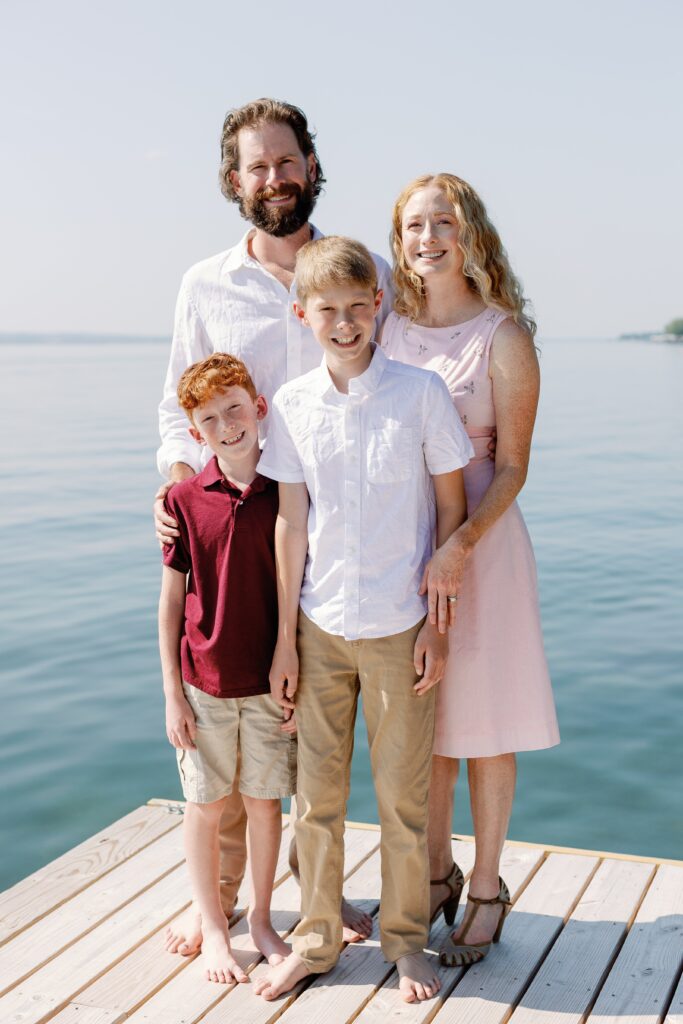 Andy and his wife, Jill, remember the clarity and urgency of those early conversations. They describe cardiologist Michael Vornovitsky, MD, as “awesome”—the kind of physician who explains the stakes, outlines the plan, and makes sure you feel seen while you’re still trying to catch your breath. The message was sobering: this couldn’t wait.
A few days later—on the weekend of Andy’s 40th birthday—everything escalated. He rushed to Strong Memorial Hospital’s Emergency Department, experiencing frightening new symptoms and realizing just how quickly “fine” can become “critical.”
”In the ED, he saw what our teams face every day: intense volume, constant motion, and clinicians moving fast in a space that is straining to meet modern demand. He was also deeply grateful for what happened next: coordination, decisive action, and a plan to protect his life.
Soon after, Andy met the surgeon who would perform his operation, Kazuhiro Hisamoto, MD. “He was confident and incredibly empathetic,” Andy told us. In a moment when there was no “minimally invasive” solution—only the best possible surgical one—Andy felt steadied by competence and humanity at the same time.
On September 18, Andy underwent a complex, seven-hour valve-sparing aortic root replacement commonly called the David Procedure. He woke up in the Cardiac ICU—intubated, disoriented, and terrified. Like many patients after major heart surgery, he faced unexpected complications and fears, including sudden vision changes that raised immediate concern. In those moments, what patients remember forever is not only the medicine—it’s the presence, the vigilance, and the teamwork.
That’s what Andy and Jill experienced: specialists communicating across disciplines, care coordinated under one system, and a sense that an entire institution was behind them.
It also happened close to home. For Andy, that fact still carries weight. World-class cardiac care wasn’t hours away in a far-off city. It was here in Rochester—allowing family to remain connected in the most difficult days.
For the last year, Andy has been building his life back—not just medically, but personally. He’s off heart medications. Recovery started with slow laps around the cul-de-sac. Now he’s training again with the kind of grit that defines him: restoring strength, rebuilding trust in his body, and returning to the active pursuits that make him feel like himself—as an athlete, as a father of two boys, and as someone who doesn’t quit when life demands adaptation.
He also felt an immediate pull to help others. “I had an immediate impulse to be a resource for others,” he said. Andy connected with a community of “aortic athletes” whose motto is simple and hard-won: Don’t quit. Adapt.
Andy’s story is a reminder: cardiac emergencies do not discriminate by age or fitness. But outcomes can be transformed when a community has access to extraordinary cardiac care—surgeons, cardiologists, imaging, ICU teams, and coordinated expertise—ready at the moment it matters most.
–February 2026
Make a difference
Help improve the health and well-being of people of all ages across our region by supporting Strong Memorial Hospital Expansion Project. For more information on how to make your impact, please contact Jennifer Koehnlein.
Sorry, the comment form is closed at this time.