
Each semester, students in CASC 202: Introduction to Community-Engaged Scholarship are asked to attend an off-campus event and reflect on their experience through the lenses of power, privilege, and community assets and needs. The event they choose to attend is the central study of their work throughout the semester, which is contextualized within different texts, models, and principles of community engagement. Students begin the semester by journaling about their expectations for the event. After attending the event, they write an academic paper that revisits their initial expectations and analyzes their experience within the context of the course materials. At the end of the semester, they share their experience with their classmates through an interactive presentation. Below is the final draft of Nima Mohamed’s reflection paper. Nima is majoring in Health Behavior and Society. She is a member of the Class of 2027 and plans to apply for Take 5.
This semester, our course has forced me to reconsider what community engagement truly entails, particularly in a city like Rochester, where the history of activism, inequity, and resilience shapes everyday life. Attending a Rochester City Council meeting and participating in class discussions and readings both helped me get a deeper understanding of community engagement. Through this experience, I was able to observe how the ideas we learned, like rest as resistance, power redistribution, and critical service-learning, appear in actual public settings. The conference helped me see community participation as a living, emotional, and collaborative activity rooted in the voices of Rochester citizens rather than as something abstract or remote. Residents of all ages, activists, seniors, and students crowded the council chambers downtown for the City Council meeting. Concerns about general safety, animal abuse, gun violence, and the need for accessible green spaces were among the topics that people spoke passionately about. Despite the formal format of the conference, there was a sense of urgency and intimacy. Residents shared lived experiences affected by dread, dissatisfaction, and optimism for change rather than just cataloging issues. Their testimonials demonstrated that civic engagement is more than just following the rules; it is also a kind of communal service and emotional work.
An elderly resident’s description of the dearth of secure outdoor areas for senior citizens struck a chord with me. She clarified that the lack of accessible parks or public spaces where elders can stroll, sit, or mingle makes many of them feel alone. Soon after, a young man talked about animal mistreatment and then another young man shared how unsafe it is for him to walk home at night after losing a friend to gun violence. Hearing these worries in quick succession showed how various generations in Rochester have different perspectives on safety, yet they both want the same thing: a place where people may live fearlessly. Speaking about animal maltreatment in the city, another speaker made the case that neglected animals frequently mirror larger patterns of neglect in local communities. These stories demonstrated the true interconnectedness of community issues. I had imagined, prior to the meeting, that City Council meetings were primarily procedural, with lengthy agendas, political rhetoric, and decisions occurring far away from daily life. Rather, those presumptions were questioned during the meeting. Council members had to sit with the weight of those experiences as people spoke with emotion, occasionally trembling or sobbing. I came to see that public places are extensions of community life rather than anything apart from it. The gathering showed that community involvement involves more than just volunteering or “helping”; it also entails paying attention to, seeing, and comprehending how actual people are impacted by governmental decisions.
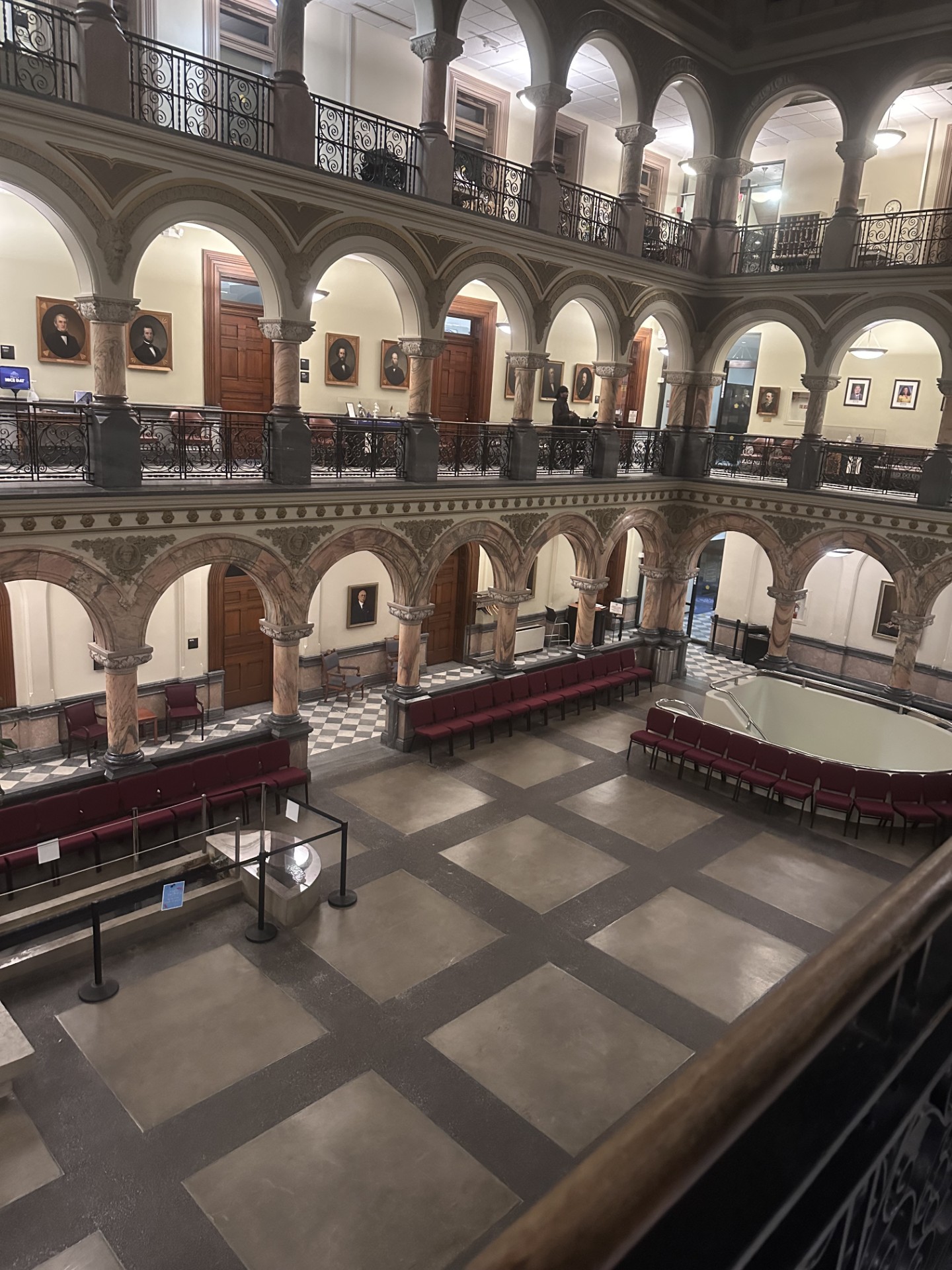
I was able to make sense of what I saw thanks to Tania Mitchell’s paradigm for critical service-learning. Mitchell contends that by portraying communities as beneficiaries and students as helpers, traditional service-learning frequently perpetuates power disparities. Critical service learning, on the other hand, “focuses on social change and works to redistribute power” (Mitchell, 2014, p. 54.) This change of power was reflected in the City Council meeting.
Residents talked for themselves rather than experts or students representing the community. Their opinions influenced the agenda. Accountability was demanded by their stories. Additionally, Mitchell highlights that “an explicit commitment to social justice” is necessary for critical service-learning (Mitchell, 2014, p. 56.) By elevating the views of those most impacted by policy decisions, those dealing with gun violence, elderly people in need of green areas, and activists fighting for animal rights, the meeting exemplified this dedication. It served as a reminder that genuine engagement entails collaborating with communities rather than presuming their needs. My understanding of the meeting’s emotional impact was also influenced by Tricia Hersey’s Rest Is Resistance. Rest, according to Hersey, is a way to rebel against systems that dehumanize and deplete people. She claims that fatigue is a tool of oppression and that “rest is a portal for healing” (Hersey, 2022, p. 29.) Hersey’s argument felt genuine after hearing locals talk about their ongoing fear of gun violence, taking care of abandoned animals, or feeling alone in the absence of secure outside areas. Many Rochester residents are worn down by the mechanisms in their environment, not because they lack motivation. Hersey also highlights the communal nature of rest, stating that “we rest so we can imagine new worlds” (Hersey, 2022, p. 41.) Despite their weariness, the City Council meeting seemed to be a place where people were attempting to envision a better Rochester. By being present, speaking up, and refusing to remain silent, they demonstrated resistance.
Through this experience, I learned that Rochester is a city full of people who care deeply about their neighborhoods and who are willing to advocate for themselves and others. I also learned that community engagement is not always comfortable or uplifting; it can be emotional, frustrating, and heavy. But it is necessary. The meeting showed me that civic participation is not just about voting; it is about showing up in public spaces, telling the truth about what is happening, and demanding change. Moving forward, I want to approach community engagement with humility and intention. Instead of asking, “How can I help?”, I want to ask, “How can I work with communities to challenge injustice?” (Mitchell, 2014, p. 60.) I also want to incorporate Hersey’s emphasis on rest by recognizing that justice work requires sustainability. If I want to be involved in community engagement long‑term, I need to balance action with reflection and care for myself and for the people I work with. This means choosing opportunities that align with justice, not charity, and committing to listening before acting. Overall, attending the City Council meeting pushed me to rethink my assumptions about civic spaces, confront my own privilege, and understand community engagement as a shared responsibility. It deepened my connection to Rochester and reminded me that solidarity is something we practice, not something we declare.
References
Hersey, T. (2022). Rest is resistance: A manifesto. Little, Brown Spark.
Mitchell, T. D. (2014). Traditional vs. critical service-learning: Engaging the literature to
differentiate two models. In J. T. Mitchell (Ed.), Critical service-learning: A pedagogy
of social justice (pp. 50–65). Johns Hopkins University Press.
written by Nima Mohamed, Spring 2026 CASC 202 Student
