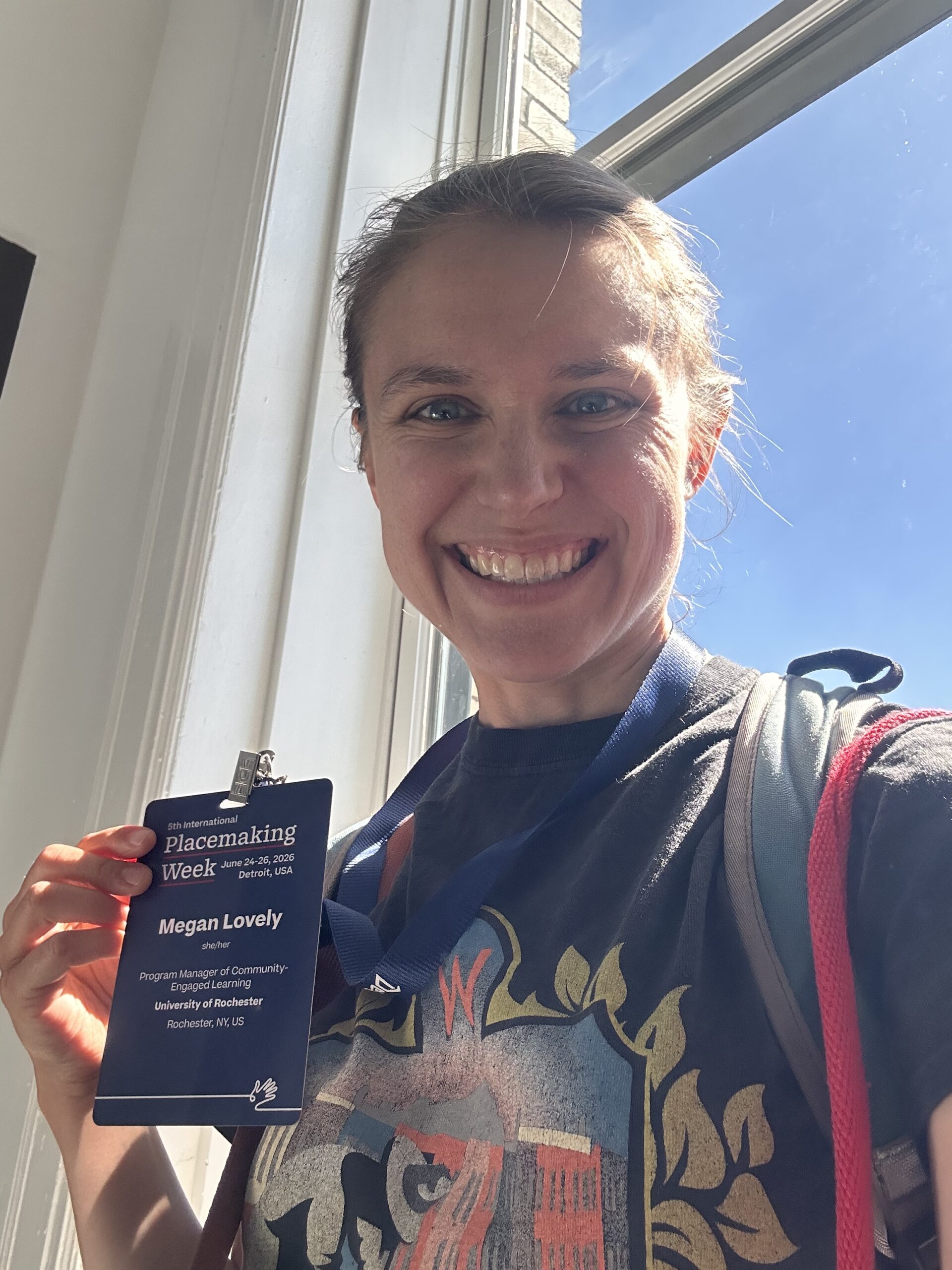
From June 24 – June 26, I had the opportunity to gather with more than 600 attendees from 177 cities across 12 countries for the fifth International Placemaking Week. Co-hosted by Project for Public Spaces and Downtown Detroit Partnership, this event took us around Detroit to experience the resilience, love, and pride of city residents and public leaders.
Placemaking as a field emerged in the 1960s to shift the focal point of city planning from the form of public spaces (i.e. highways, shopping centers) to how they function in the day-to-day lives of city residents. As I share with my students in Introduction to Community Engaged Scholarship, the Rochester 2034 plan explicitly takes a placemaking approach. As it outlines: “Conventional comprehensive plans contain a future land use plan as the centerpiece for guiding physical change in the municipality. The community engagement process for Rochester 2034 made it abundantly clear that there are many other elements – physical projects, policies, and programs – that intersect with land use and development to contribute to a functional cityscape and positive sense of place. As such, this comprehensive plan contains an innovative approach to conventional land use planning by integrating other elements into a larger Placemaking Plan.”
Having taught Introduction to Community Engaged Scholarship for the past two years through the Center for Community Engagement and coming from a background in community engaged art, I have been circling around the placemaking field as a potential synergy of the values espoused in the community-engaged learning and public art spheres. Attending the International Placemaking Week confirmed my perception, as well as highlighted the importance of a values-based approach to this work. Below are some key takeaways I’ve synthesized from the event:
- Placemaking is fundamentally a “people-first approach.” As Meagan Elliot shared from her 12 years as the Chief Parks Planner in the City of Detroit, this looks like pursuing three park developments for $300,000 each, rather than one specialized $1 million park development. Although some stakeholders criticized this decision, she affirmed the importance of meeting the baseline needs of city residents before investing in special renovations for a smaller constituent base.
- Placemaking is interdisciplinary. Attendees at International Placemaking Week ranged from urban planners to arts administrators to philanthropic representatives to local government officials to conservationists to farmers market managers to nonprofit staff to academic affiliates. Several presenters described themselves as “accidental placemakers.” But what we all shared was an attunement and commitment to uplift the needs and assets of our local communities. For example, Nazura Rahime co-founded Jalan Negara Kita in response to the isolation that people were experiencing during the COVID-19 pandemic. This project tapped into the creativity of the local neighborhood in suburban Kuala Lumpur to transform a neglected alley into a collaborative artmaking space.
- Invest in the professional development of community leaders. One example of this is the Community Advisory Council created by the Detroit Riverfront Conservancy. The Conservancy paid for council members to travel with their families to visit public spaces in other cities and come back to share how they want public space in Detroit. Notably, the Detroit Riverfront was voted the best riverfront by USA Today for three consecutive years – so the investment in the Community Advisory Council paid off! Aside from the national accolades though, community leaders should be compensated and recognized for their time and expertise because, as one speaker shared, “People have a PhD in their neighborhood.”
- Shift from projects to engagement. This sentiment was a throughline between all of the presentations I attended. “We don’t do projects. We do engagement,” said Meagan Elliott, President and CEO of Belle Isle Conservancy. “Placemaking is not a ribbon cutting. It’s a process,” said Carolina Pluszcy, CEO of Michigan Central. “You can’t fix park inequity by building one park at a time,” said Grace Contangco, Program Manager at Prevention Institute. All of these declarations speak to the need for placemaking to move beyond isolated projects and initiatives to create sustained engagements that build community power and address systemic challenges in our public infrastructure. Whether we call it projects or engagement or community power building, our people-centric, social change, and relationship-based values guide our work. I think Tania Mitchell’s 2008 literature review about traditional vs. critical service-learning articulates the values in a way that transcends arguments about what we call the work and allows us to focus on what drives it.
- If placemaking is both process and project, then the process must be shared publicly and frequently. Sometimes this might look like a public report, such as sharing results and action items from a survey. Public events themselves may be part of the process. As Maya Curtis shared about the Oretha Castle Haley Cultural Corridor Project, food, music, celebration and gatherings weren’t just events; they were planning tools. Nazura Rahime highlighted the importance of small, consistent “activations” in Jalan Negara Kita that are cheap, fast, and feedback-driven. In summary, you don’t need to wait to reveal the big action. As Njia Kai of NKSK Events + Production shared, demonstrating how we’re transforming community insight into action creates trust and an ongoing willingness to engage.
- Placekeeping is an intentional spinoff of placemaking that emphasizes investment without displacement. It preserves cultural memory, people, and stories. Placemaking without intentional planning for how the people who currently occupy those spaces can stay in those spaces risks gentrifying neighborhoods and gatekeeping participation in civic life. Placekeeping is about stewardship of place – not just what is coming next, but how to care for what and who is already here.
7. University stakeholders are untapped resources and collaborators in the placemaking field. During the opening plenary, the moderator surveyed the audience to get a sense of who was in the room. Academic-affiliated attendees were in the minority. This was refreshing, because even when I’m collaborating with community partners it’s from the lens of community-engaged learning, which has the dual objectives of advancing student learning outcomes while simultaneously building capacity for local organizations. Positioning myself within the placemaking field offered perspective on how universities can move beyond engagement to become what Dr. Richard Guarasci calls “anchor institutions” in his book Neighborhood Democracy. How can we be good neighbors to our surrounding communities? How can we partner with local innovation hubs and incubators to design solutions to community-identified issues? How can we co-create public spaces that support civic life and facilitate communal care and belonging? How can we integrate our students into the off-campus community so that when they graduate, they choose to stay, live, and work in their college town?
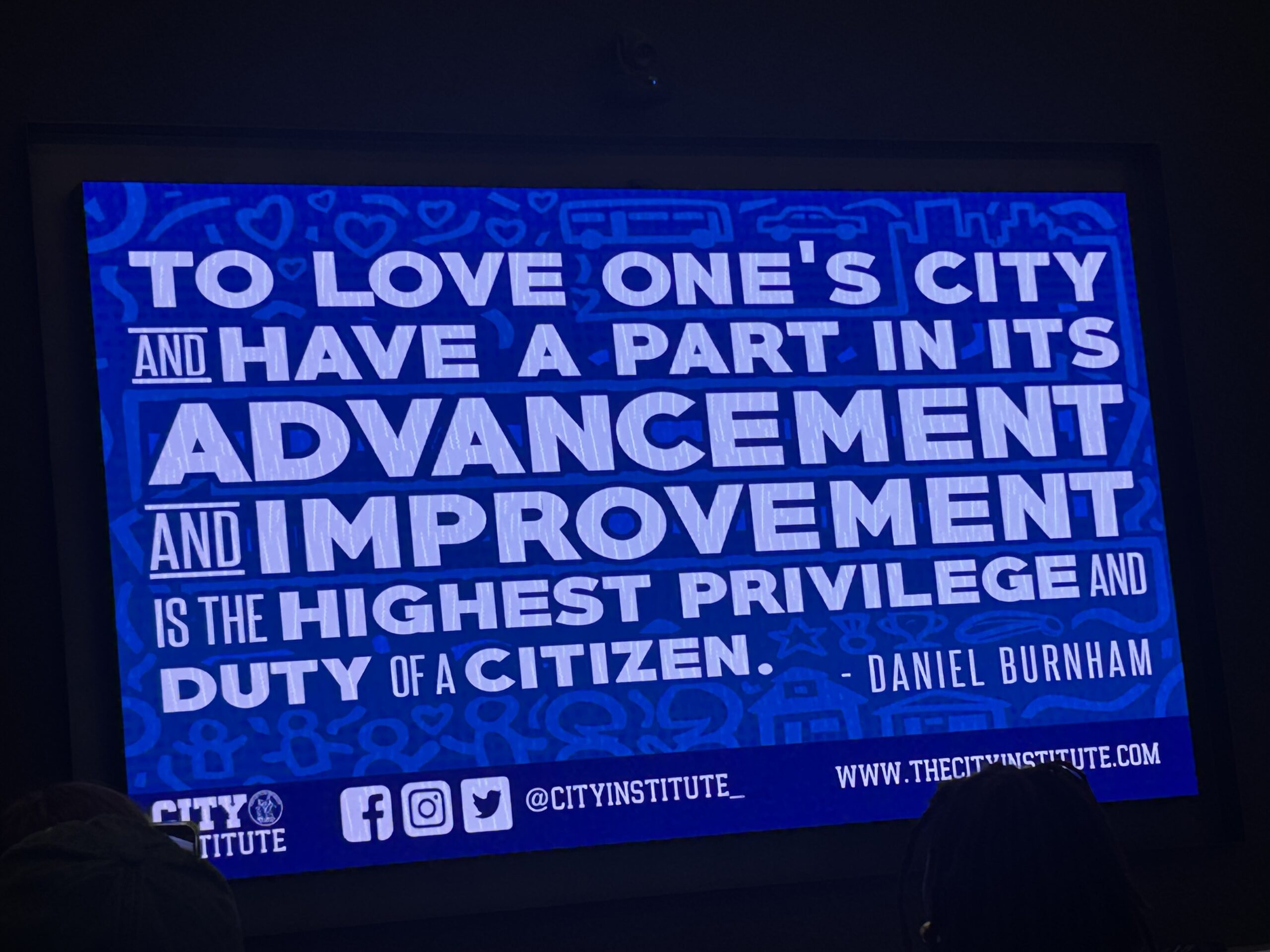
8. Experience > Stories > Data. The last session I attended at International Placemaking Week was a place-based storytelling workshop facilitated by Jeanette Pierce from City Institute. In the workshop, we identified the prevailing narratives in our own cities and brainstormed unique experiences we could facilitate to dismantle those narratives.
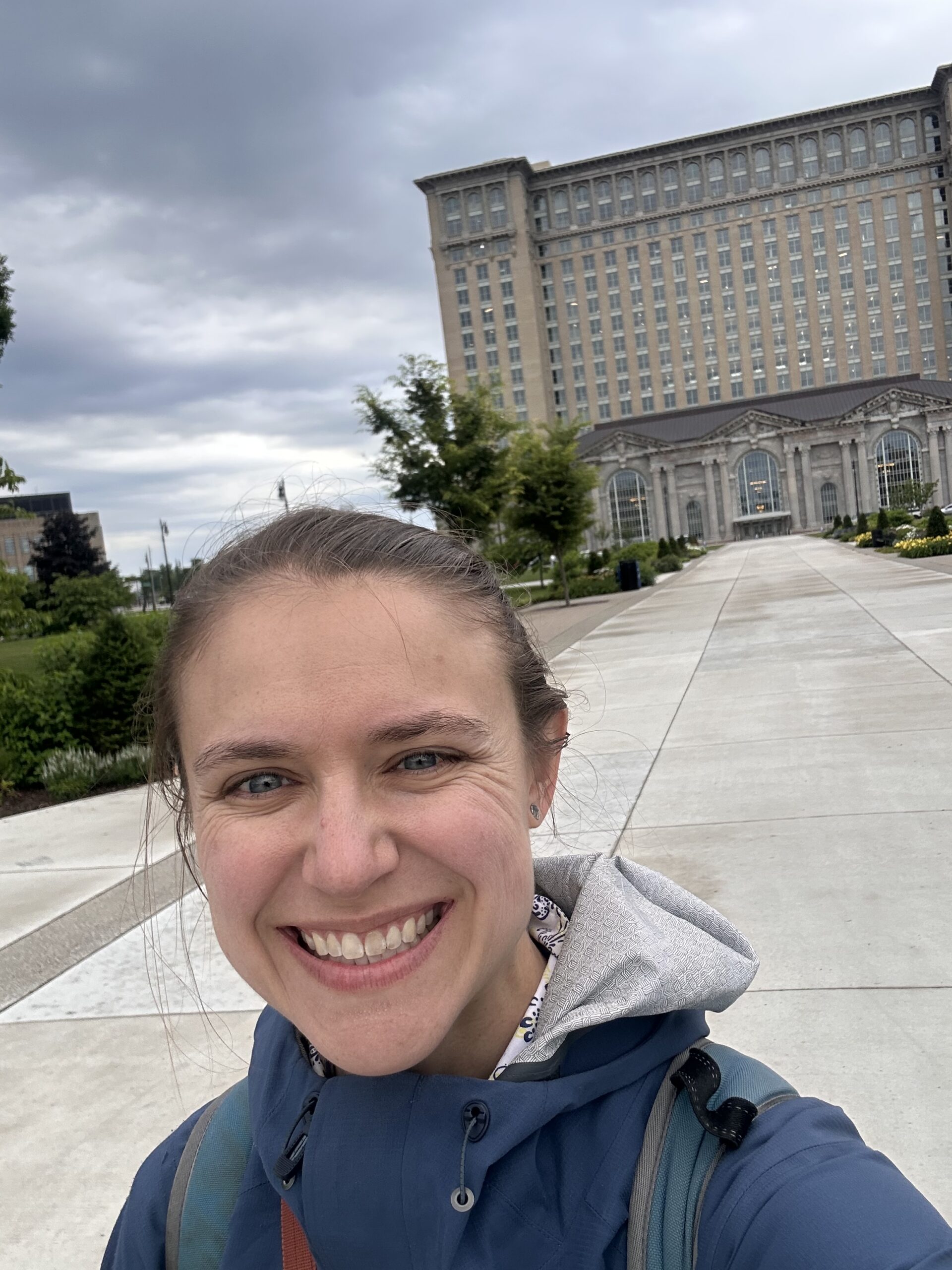
As Jeanette shared, challenges and assets are not mutually exclusive; they exist simultaneously. Michigan Central Station epitomizes this confluence. Once the “gateway to Detroit,” the building sat vacant for more than 30 years after the decline of railway travel. Having survived multiple demolition attempts, Ford Motor Company purchased the building in 2018 and renovated it into a 30-acre innovation hub that opened in 2024. I can read about this on the Detroit Historical Society. I can hear stories like the one from the vendor who sold me rainbow popcorn, who told me that Michigan Central Station was how he arrived in Detroit after immigrating from the UK. But nothing can compare to being in Michigan Central Station and experiencing the collective imagination of a community of designers, investors, and residents.
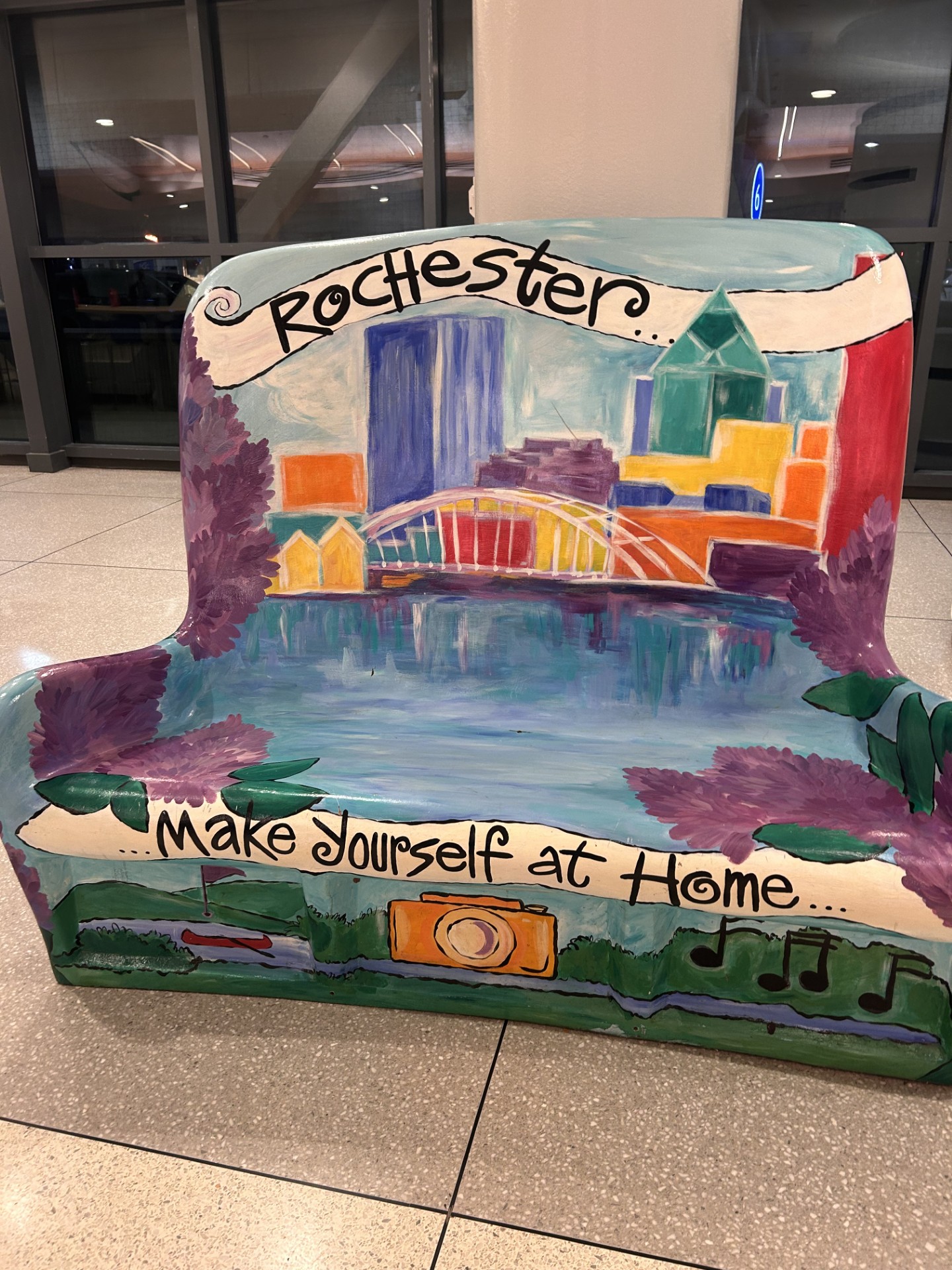
My flight landed at Frederick Douglass Greater Rochester International Airport at 10:50pm on June 26th and I noticed this welcoming bench by ground transportation that read, “Rochester – Make yourself at home…” In a session about urban agriculture in Detroit, I learned that the root ‘eco’ comes from the Greek word οἶκος, meaning ‘home.’ An ecosystem is the relationship we have with our homes. Placemaking is fundamentally about ecosystems, the relationship between people and the places that they call home. It is messy. It is joyful. It is vital.
written by Megan Lovely, Program Manager of Community-Engaged Learning