Read the Report
Download or print the committee’s full report and recommendations.
Meet the Committee
Comprised of faculty from across Arts, Sciences and Engineering and College staff members.
Contact Us
The committee welcomes your comments about the final report.
Curriculum Review Committee
During the Fall 2014 semester, Deans Lennie and Feldman appointed a Curriculum Review Committee. The Committee met regularly for the following year. Summarized below are its key findings and recommendations.
The Committee strongly endorses the fundamental principles of the Rochester Curriculum, which it believes provides a framework in which students identify and pursue their core interests while being enabled to explore additional academic areas.
The Rochester Curriculum is founded on three principles: freedom, passion, and discipline. Students have the freedom to select areas of study that interest them, the ability to pursue these interests with passion, and requires of them the discipline to design their course of study. The Committee recognizes that there is a potential trade-off between freedom and breadth of knowledge as encouraged by a core curriculum. However, it concludes that the benefits of the current structure clearly outweigh the costs.
The Committee made a total of 33 recommendations in 5 general areas:
General Education
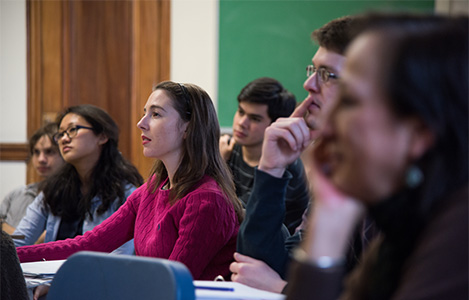
The Rochester Curriculum encourages and enables students to pursue subjects of greatest interest to them. The committee recommends a number of modest changes. These include, but are not limited to:
- Explaining the rationale and goals of the Rochester Curriculum clearly to freshmen and advisors
- Minimizing dead-end tracks that cannot be used to fulfill the requirements of a major or cluster
- Recognizing bonus clusters to encourage students to explore new areas and purse them in some depth
Writing and Communication
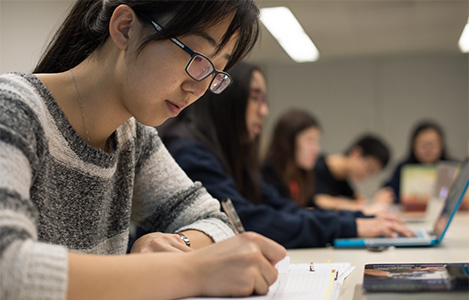
Writing is one of the key components of the undergraduate educational experience at Rochester. Specifically, the Rochester Curriculum features the writing requirement, which includes primary writing and upper-level writing within the student’s major. At the University, we believe effective writing is essential for both communication with others and clarifying one’s own thinking.
Among other recommendations, the committee highlights expanding the Writing Program’s role in partnering with academic departments to develop discipline-specific upper-level writing courses.
Experiential Learning
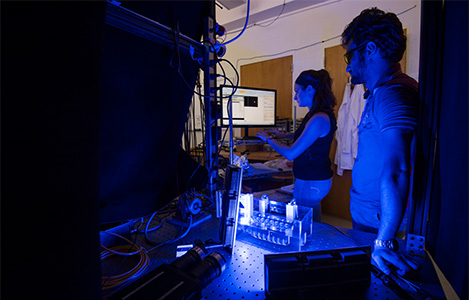
The College offers a variety of experiential learning opportunities, including Independent Study and Independent Research courses, as well as internships and community engagement opportunities. Although the College offers exceptional opportunities for experiential learning, several issues need addressing, such as barriers to student research, funding, and course numbering.
The committee mentions specific recommendations regarding each of these issues.
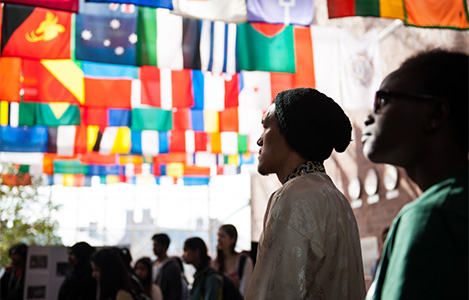
Global Engagement
Global engagement in the undergraduate curriculum is complex and multifaceted. It comprises:
- Study abroad
- Courses taught abroad by UR faculty
- Incorporation of a global perspective in our courses
- Study of foreign languages
- The large population of international students among our undergraduates
Among other recommendations, the committee encourages increasing student participation in globally oriented activities.

Career Preparation
The University is a liberal arts institution, and the College curriculum should strive to prepare students for successful and rewarding careers. The committee advocates supporting programs that will empower students to find and pursue the right career path. As a result, there are numerous career-related initiatives currently offered or being considered.
Want more information? Contact us.