The new role will help advance the computing, data, and AI capabilities that power research and discovery across the University.
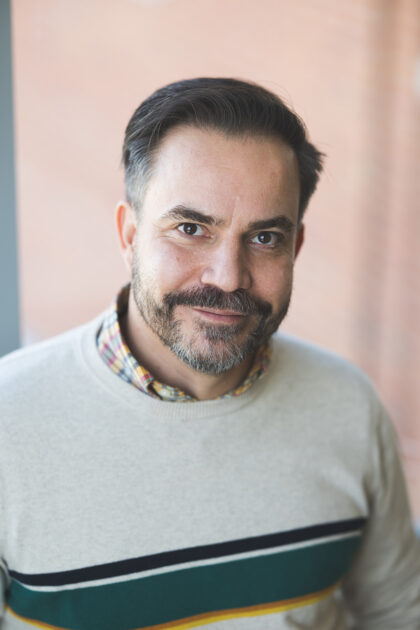
The University of Rochester has appointed Christian Darabos as its inaugural associate vice president for research computing, a new University-wide leadership position focused on advancing the computing, data, expertise, and digital infrastructure that support research and scholarship across the institution. He begins on November 1.
In this new role, Darabos will provide leadership for strategy, services, partnerships, and investments that support increasingly computational and data-intensive research. Working closely with faculty, research leaders, and University Information Technology, he will help strengthen research computing capabilities across the University and its academic medical center while advancing a coordinated and sustainable vision for research computing. His portfolio will include high-performance computing, research data services, artificial intelligence capabilities, secure research environments, cloud resources, and the expertise researchers need to use those capabilities effectively.
The creation of the position reflects the University’s commitment to strengthening the infrastructure, services, and expertise necessary to support discovery across disciplines. As research increasingly relies on advanced computing, data-intensive methods, AI, and secure digital environments, URochester is investing in capabilities that enable faculty and researchers to pursue ambitious questions, compete successfully for external funding, and accelerate the pace of discovery.
“Research computing is no longer simply a technology service; it is essential research infrastructure,” says Jim Forrester, interim enterprise chief information officer and vice president. “Advanced computing, data, and AI are becoming fundamental to research across nearly every discipline. Christian brings the research perspective, institutional leadership, and technical depth needed to help URochester build an innovative and sustainable research computing environment. Just as importantly, he understands that this work must be shaped in partnership with faculty and aligned with the University’s research priorities.”
Darabos joins URochester from Dartmouth College, where he has served as senior director of research computing and data services since 2021. In that role, he led institution-wide strategy, governance, and operations for advanced computing and research data infrastructure supporting more than 1,000 researchers across academic and health-system communities. He has overseen high-performance computing, secure research environments, AI initiatives, research data services, and sustainable funding models while leading a multidisciplinary team supporting research across a broad range of disciplines.
In addition to his administrative leadership, Darabos serves as a faculty member and course director in biomedical data science at Dartmouth’s Geisel School of Medicine. He is active in national research computing organizations, including the Coalition for Academic Scientific Computation (CASC) and the Ivy+ Research Computing and Data Directors community, and has contributed to national initiatives focused on research computing, AI, and research software.
“Research is increasingly dependent on sophisticated computing, data, and digital infrastructure, and our goal is to ensure that URochester researchers have the capabilities they need to pursue ambitious ideas and compete successfully for external funding,” says Stephen Dewhurst, vice president for research. “Christian brings a rare combination of deep technical expertise, experience leading research computing at an R1 institution, and an understanding of the research enterprise from the faculty perspective. He will be an important partner as we continue to strengthen URochester’s research ecosystem.”
“The University of Rochester has extraordinary strengths across its schools, centers, institutes, and medical enterprise,” says Darabos. “I look forward to listening to researchers, understanding the opportunities and challenges they encounter, and working with colleagues across the University to build the services, expertise, and infrastructure that help ambitious research succeed. The opportunities presented by computing, data, and AI are expanding rapidly, and I am excited to help position URochester’s researchers for continued success.
Darabos holds doctoral degrees in business information systems from the University of Lausanne and in molecular biotechnologies from the University of Torino, as well as graduate degrees in bioinformatics and computer science.