Lauren Ghazal: An advocate for young adult cancer survivors
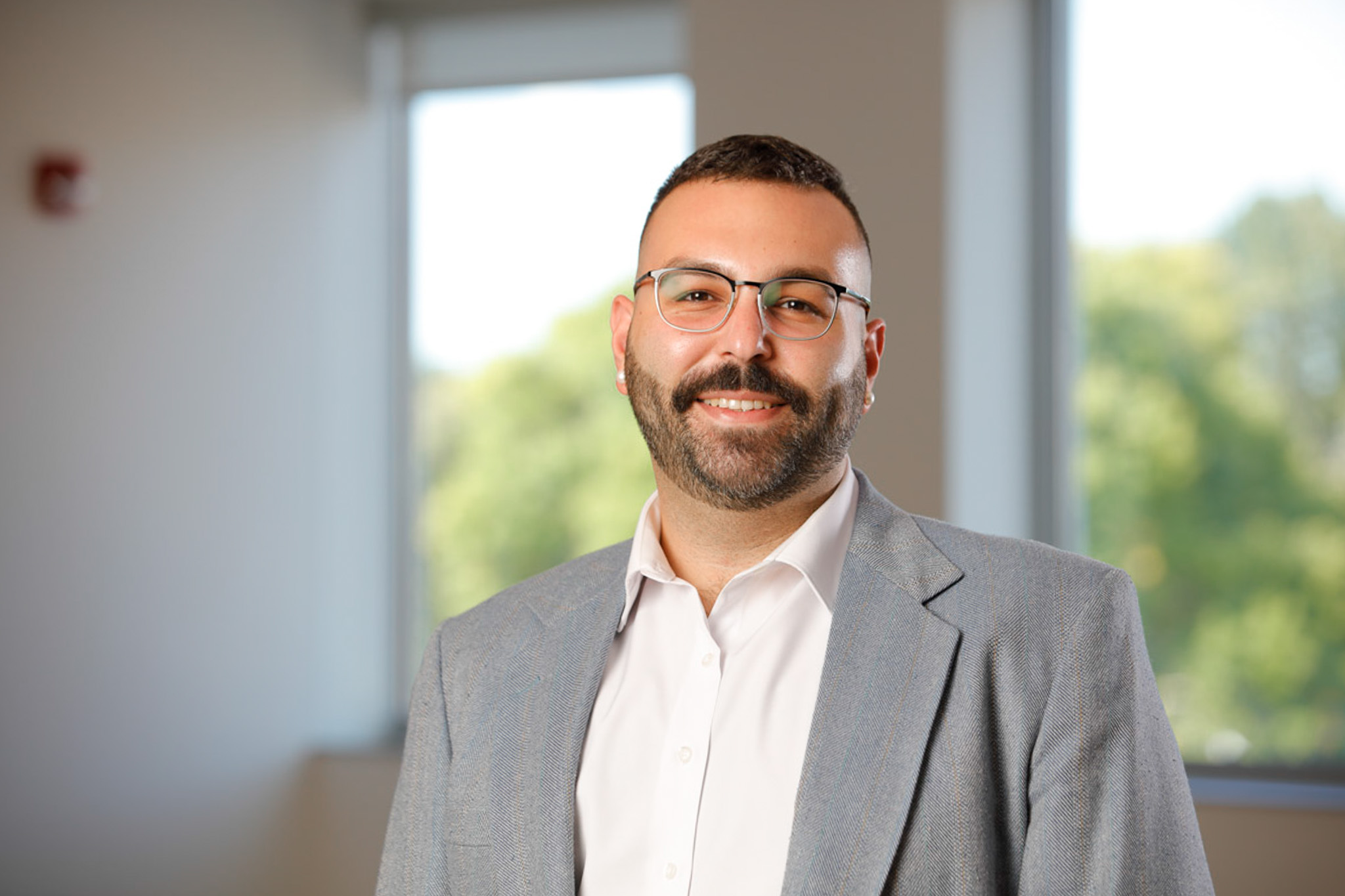
The nurse scientist has devoted her career to supporting fellow cancer survivors while expanding her research’s impact.
Lauren Ghazal, an assistant professor at the University of Rochester’s School of Nursing, spent her 20s living in New York City, pursuing a PhD, and working as a nurse practitioner (NP). Then, a cancer diagnosis disrupted her vision of what young adulthood would look like.
Now celebrating seven years in remission, Ghazal still remembers the moment she felt a node above her own collarbone while demonstrating a lymph node exam to an NP student who was shadowing her at work.
“Immediately, I thought back to my advanced health assessment class in my NP program, where we learned that supraclavicular nodes are pretty much always abnormal, and they always require a follow up,” she says.
Taking her own advice to follow up with her primary care provider, Ghazal learned that she had Stage 2 Hodgkin’s lymphoma. As she underwent treatment, she wondered how cancer would impact her life going forward.
“During adolescence and young adulthood, you don’t expect such an external shock to your health and financial well-being,” Ghazal explains. “How does one recover when you are in this period where you’re just trying to survive, you don’t understand the healthcare system or your insurance, and you may not understand how much it’s going to cost you?”
The questions she had about her own treatment and survivorship soon turned into research questions, helping Ghazal find a new sense of purpose as a nurse scientist. Ghazal—who had previously planned to study global nursing workforce issues as a PhD student—changed her research focus, dedicating her career to improving fellow survivors’ quality of life.
Amplifying AYA voices
Adolescent and young adult (AYA) survivors—generally, those between ages 15 and 39—are a population that have often gone overlooked in science and medicine, occupying an awkward space between pediatric and older adult cancer survivors. As a result, it can be easy for AYA survivors to feel invisible or out of place. Years before the field of AYA research rose to prominence in the 1990s and early 2000s, the age group lagged younger children and older adults in improved survival outcomes and representation in clinical trials.
“We may be treated in pediatric cancer centers or in adult cancer centers, so when we go in for treatments, we’re very old for the population or we’re very, very young,” Ghazal says.
As AYA visibility continues to grow, emerging scientific literature has also focused on this age group’s financial hardships. The more studies Ghazal read as a doctoral student, the more she could envision herself utilizing her lived experience and expertise in nursing and economics to advance AYA research even further.
“The biggest thing about my story is that I really leaned into when life happens, approaching it with all of the tools and skills that you’ve built up to that point,” she adds.
Now an associate member of the Wilmot Cancer Institute’s Cancer Prevention and Control research group, Ghazal has played a pivotal role in expanding the University of Rochester’s research in this area, leading and contributing to studies on cancer’s financial and quality-of-life impacts for AYA survivors.
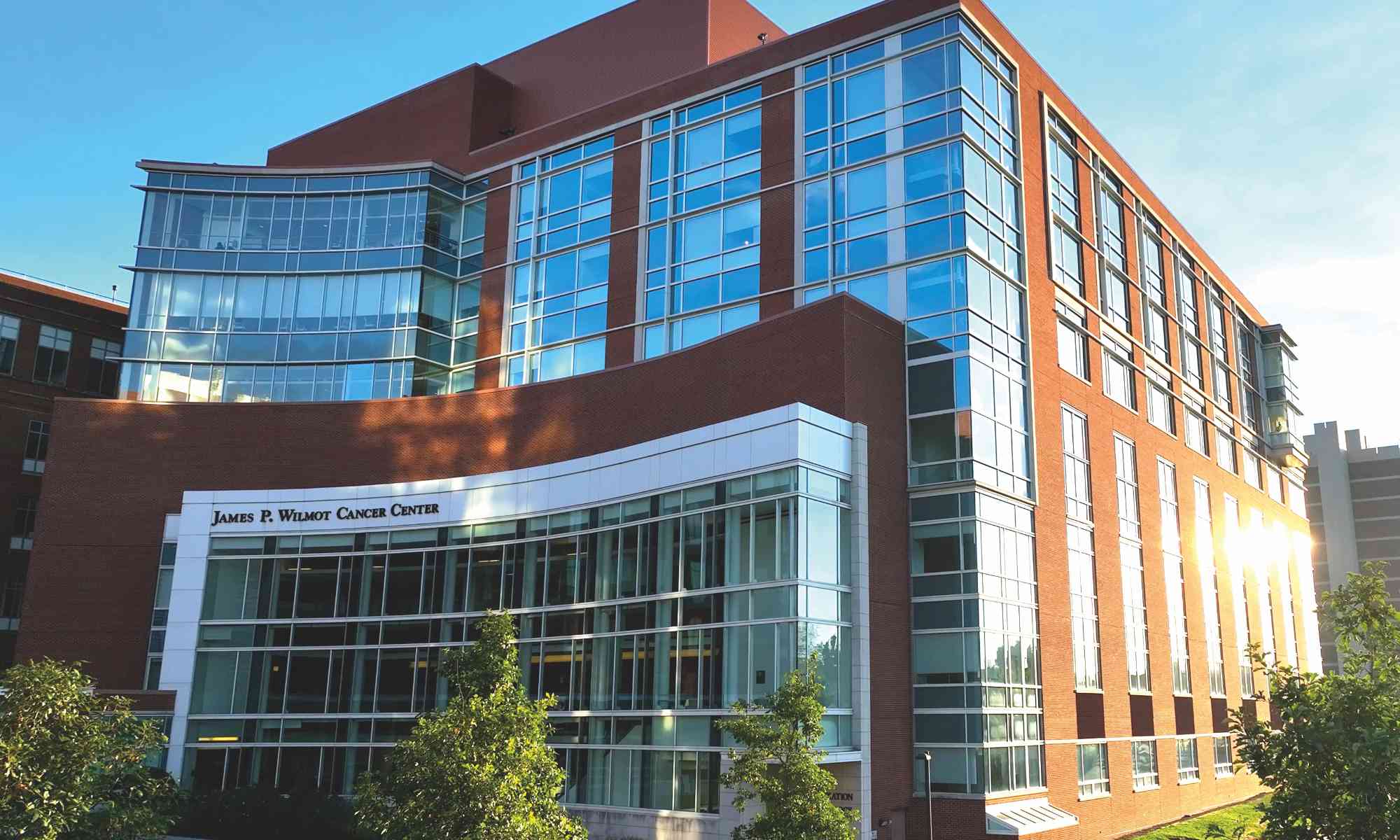
“I want to make cancer essentially suck less,” she says with a laugh. “I want to make lives better through research and implementing evidence-based and supportive care interventions. And I can do that here, in collaboration with the School of Nursing and with our newly NCI-designated cancer center across the street, and with phenomenal mentors.”
Bringing her research to URochester
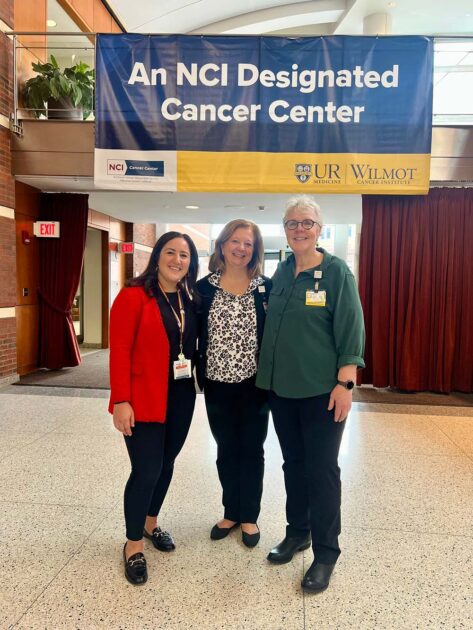
Ghazal first learned of the University after running into her friend and colleague, Meghan Underhill—a fellow School of Nursing researcher and nurse practitioner at Wilmot—at the Oncology Nursing Society’s annual Capitol Hill Days. Underhill spoke highly of the school’s welcoming atmosphere, its strong research community, and the advantages of having Wilmot down the street. She encouraged Ghazal to apply for a junior faculty opening.

After finishing a postdoctoral fellowship in cancer care delivery research at the University of Michigan, Ghazal joined the faculty in 2023. The decision to come to URochester helped her grow as both a researcher and person overall, and connected her with collaborators, close friends, and dedicated mentors who are invested in her success.
“It’s a very close-knit community that is doing impactful research to improve the lives of all cancer survivors and their families,” she says. “Rochester is a hidden gem that has some incredibly powerful, really compassionate players.”
A career shaped by curiosity
Ghazal encourages students and early-career professionals to keep an open mind and stay curious.
“Don’t be afraid to ask big questions that may scare you because you know that there’s a lot of work at the other end to be able to answer them,” she says. “And find great mentors who continue to allow you to ask those big questions.”
She also wants aspiring nurses to know that the lived experiences they bring to the profession are a strength. Ghazal, who earned her first bachelor’s degree in economics and once thought of becoming a lawyer, entered nursing as a career change by pursuing a second degree through an accelerated program.
“That uniqueness and individuality is what sets everyone apart, and that’s what has shaped me and helped me thrive in this environment,” she says.