
The $4.2 million in funding launches a new institute to investigate one of science’s biggest mysteries: the difference between life and machines.
What separates living things from machines?
Bacteria swim toward food. A bird builds a nest. A person plans for the future. Machines, on the other hand, do whatever they’ve been programmed by people to do.
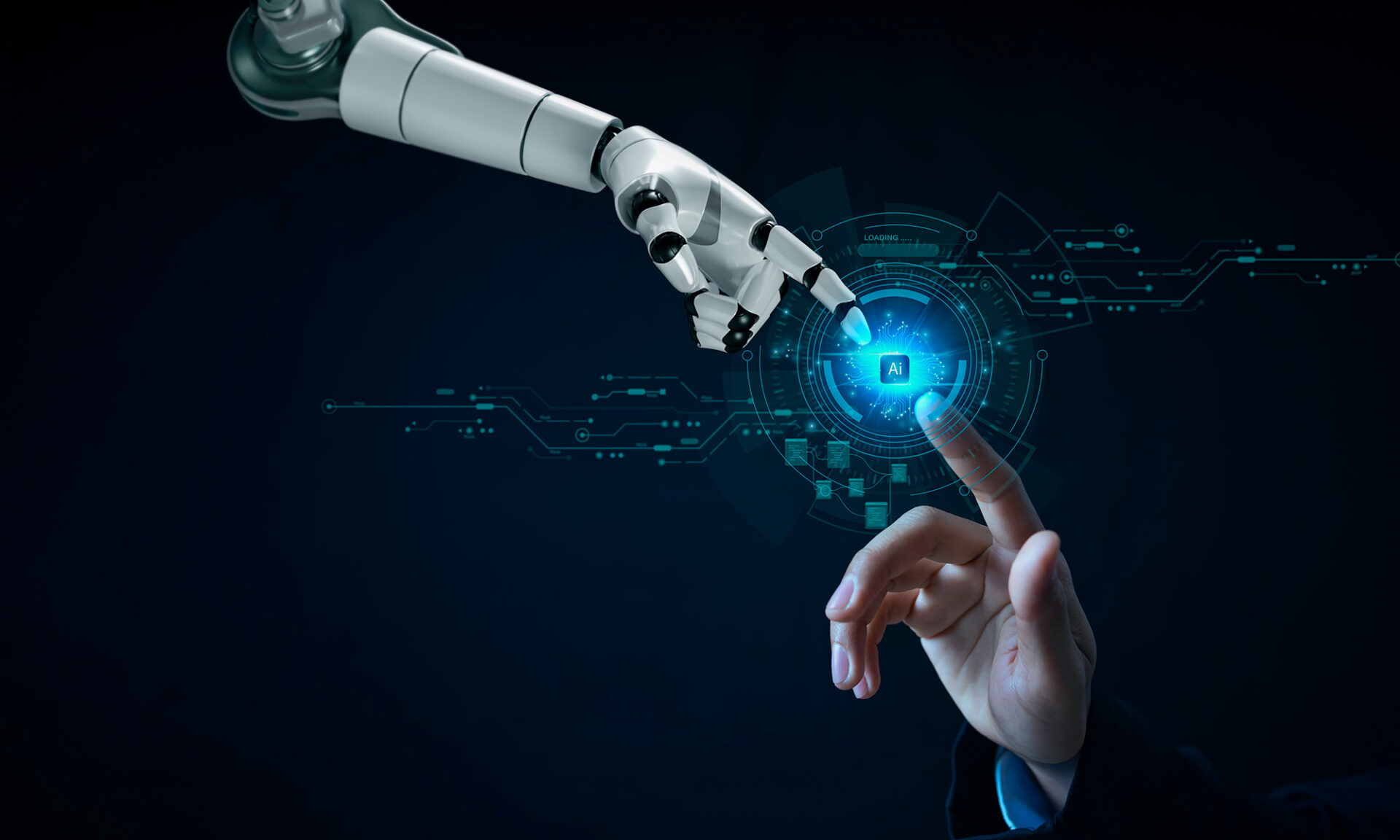
But today’s artificial intelligence systems can sometimes feel more like sentient beings than machines. They solve complex problems, write essays, compose music, create art, and provide companionship. They’re so smart—and learning more every day—that whether they might acquire capabilities akin to those of living things has become an urgent question for science and society.
Do they want anything? Could they need something? Might they ever act on their own?
These questions and others are being asked by a team of researchers led by the University of Rochester with the aid of a $4.2 million grant from the John Templeton Foundation to investigate the science behind the capacity of living things to generate and pursue goals. By understanding life and its ability to act as what scientists call “an autonomous agent,” the new grant also seeks to understand if there are limits to agency in artificial intelligence.
The three-year award will establish the Virtual Institute for the Physics of Agentic Intelligence (VIPAI), an international collaboration led by URochester physicist and computer scientist Gourab Ghoshal. Physicists, philosophers, biologists, and computer scientists from the Santa Fe Institute, Dartmouth College, the University of British Columbia, the University of Auckland, and the Basque Foundation for Science will join the effort, with URochester serving as the institute’s coordinating hub.
“Today’s AI is extraordinarily capable, but capability isn’t the same thing as agency and acting on one’s own behalf.”
“Today’s AI is extraordinarily capable, but capability isn’t the same thing as agency and acting on one’s own behalf,” Ghoshal says. “If we can discover what distinguishes living intelligence from today’s artificial intelligence, we’ll not only better understand ourselves, we’ll have a stronger scientific foundation for building the next generation of intelligent systems.”
The team’s work will span three complementary areas: developing philosophical foundations for agency and meaning; creating mathematical models that explain how autonomous systems arise and sustain themselves; and advancing theories to understand so-called “semantic information,” the information living things gather and organize to survive and adapt.
Within that framework, the team will investigate the conditions under which artificial systems might exhibit features associated with autonomous agency and how they compare with those observed in living systems. By comparing biological and artificial systems, the researchers hope to uncover general principles underlying agency, meaning, and intelligent behavior.”
The URochester team includes astrophysicist Adam Frank, the Helen F. and Fred H. Gowen Professor in the Department of Physics and Astronomy and a researcher who does popular science writing as a self-described “evangelist of science.” Frank currently works at the intersection of astrobiology and the physics of life.
“‘What is life?’ and ‘What is intelligence?’ are ancient questions that go hand in hand because life is the only physical systems which show real intelligence,” Frank says. “Now we’re at a moment where we can begin asking those questions in entirely new ways. Intelligence is not just the ability to solve problems, it’s knowing what problems you need to solve.”
He adds, “That’s the question of ‘agency.’ How can a bunch of molecules become organized in a way that they collectively have wants and needs. We want to know more than just how intelligence works. We want to know how it arises in the first place.”