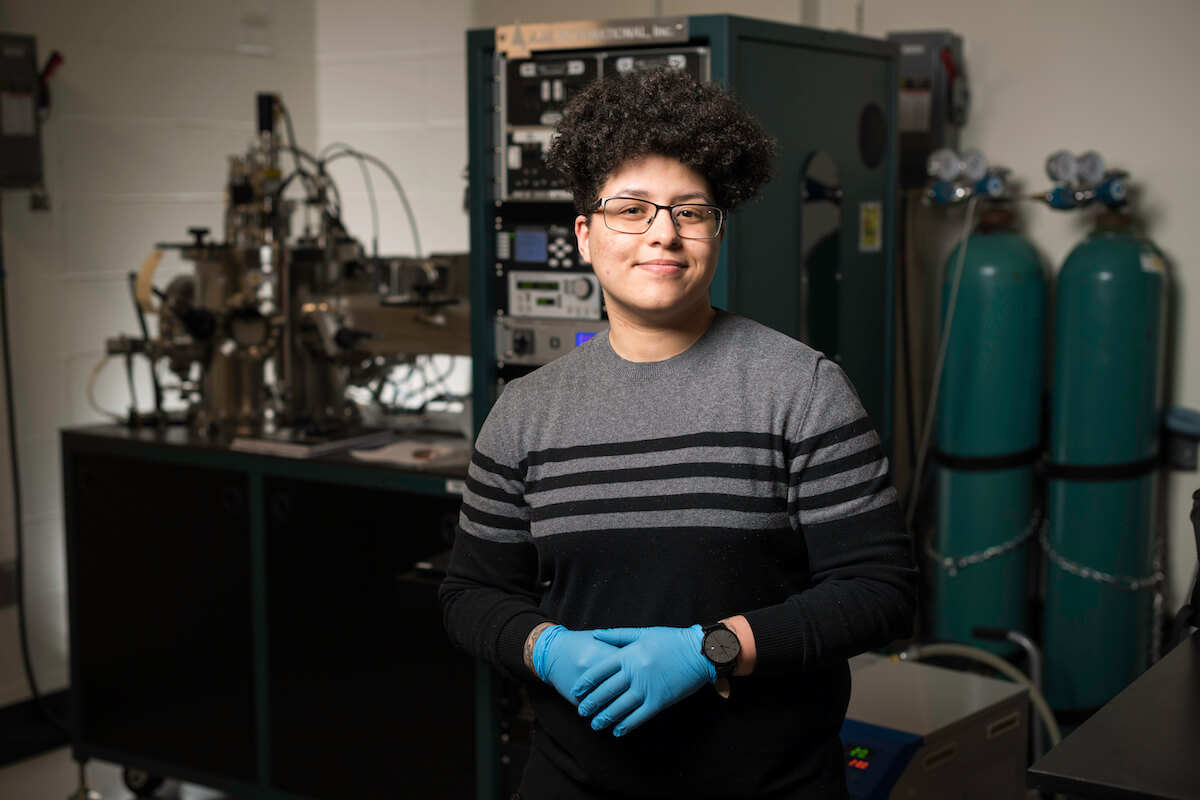
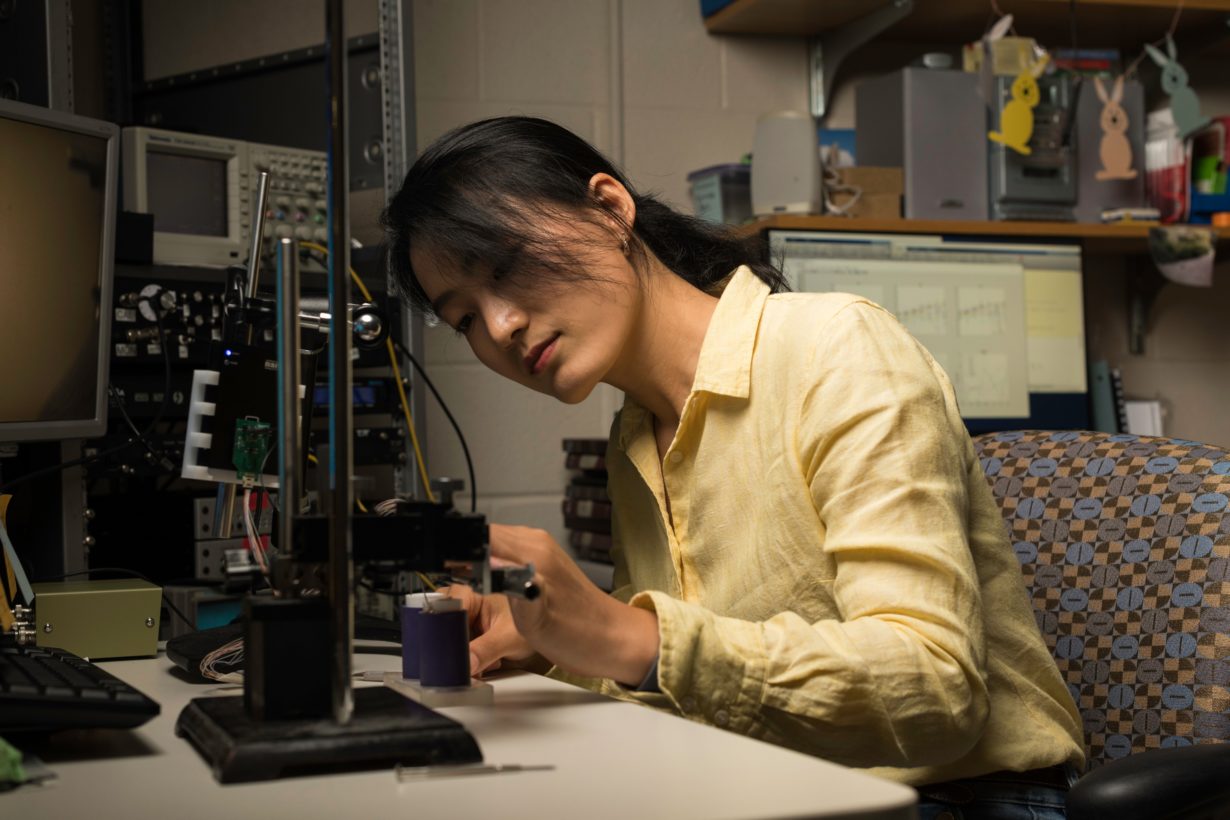
Outstanding scholarly and professional achievement: These are the goals of graduate study at the University. Admission is selective, the environment intimate and challenging. Here, promising candidates work closely with faculty to develop in-depth knowledge of their chosen fields as they establish themselves as independent, innovative scholars.
The University of Rochester offers graduate students the chance to pursue research at the highest level in an environment scaled to the individual. Graduate education is central to the mission of all schools and is an important vehicle for the missions of both research and professional preparation.
At one of the nation's leading universities, graduate students at Rochester work closely with faculty who are at the forefront of their fields. Students have exceptional opportunities for interdisciplinary study that few universities can match.
The University's libraries, research facilities, departments, and schools each offer unique opportunities for intellectual, scientific, and artistic growth. For example, the Sibley Music Library, in expansive quarters at the Eastman School of Music, is one of the major music research libraries in the world. The Laboratory for Laser Energetics operates the most powerful ultraviolet laser in the world. The Institute of Optics is widely considered the nation's premier optics school and leads the country in basic optical research.
Federally sponsored awards to Rochester’s researchers continue to do well annually, despite flat government funding recently in real dollars. In fiscal year 2011, Rochester was awarded $210 million from the National Institutes of Health, $72 million from the Department of Energy, and $14.5 million from the National Science Foundation, and expended in excess of $407 million for sponsored activities, an increase of 3.7 percent from fiscal year 2010.
The combination of research excellence and personal scale is seen when analyzing total award dollars of highly-competitive NSF grants normalized by the number of faculty. Year after year, this research productivity consistently puts Rochester in the top 15 funded institutions among universities nationwide when size is taken into account.
Evidence of the quality of Rochester's programs can be found in a variety of sources:
Rochester's faculty includes fellows of the American Physical Society, the Optical Society of America, the American Academy of Arts and Sciences, the American Association for the Advancement of Science, and the National Academy of Sciences. Several professors have been officers of the leading academic societies in their fields, and our faculty counts a number of John S. Guggenheim Fellowship and MacArthur Fellowship recipients among its ranks.
The approximately 4,500 graduate students at Rochester make up just under half of the total student body of about 10,000. About 1,200 graduate students (well over one-quarter) are from outside the US, with the largest numbers from China, followed by India, South Korea, and Taiwan. Students from all parts of the US and many nations collaborate and socialize in research groups, classrooms, and student organizations.
In addition to multiple Nobel laureates and Pulitzer Prize winners, our alumni also include scores of other prominent individuals, including:
The masters and doctoral programs of the University of Rochester are directed by the faculties of the separate Schools. Applications are reviewed by the program faculty, and each graduate program is designed and delivered by the faculty in individual fields.
The University Dean of Graduate Studies oversees PhD programs and selects chairs of PhDs’ final oral defenses. This central office also manages several highly selective fellowships offered to entering students. Dean Margaret H. Kearney welcomes your interest in the University of Rochester for graduate study.
For details about each program and application instructions, visit the pages of the graduate programs listed at the right on this page.