
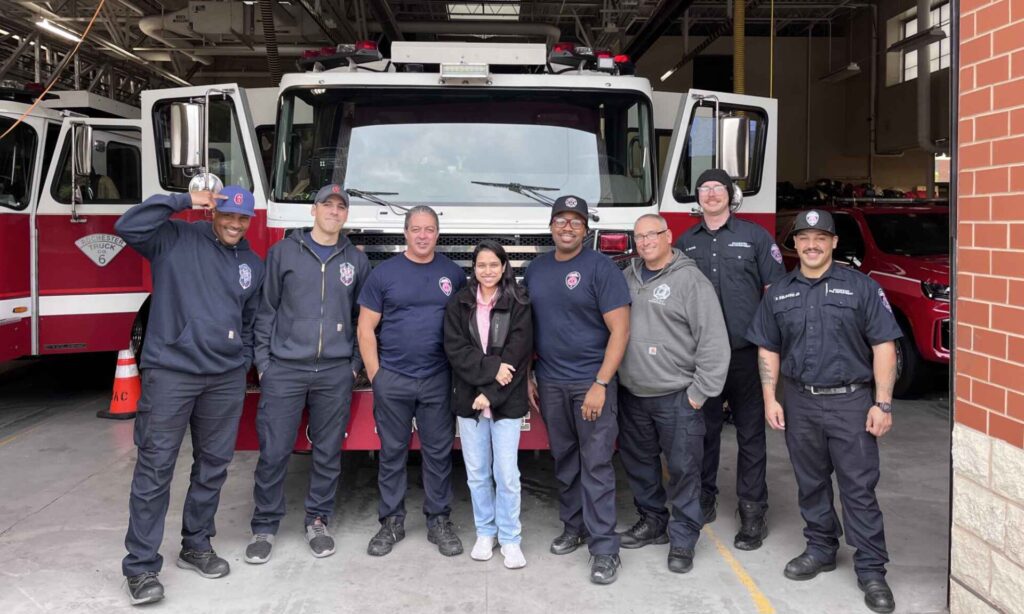
Team Members: Brynn Lee, Eugene Ayonga, Homayra Tabassum, Medhini Sridharr, Nour Assili
The Rochester Fire Department (RFD) serves over 211,000 residents and responds to
40,000 incident calls each year. This project aimed to improve RFD’s operational efficiency
by analyzing historical incident data and forecasting future trends to optimize resource
allocation. Using advanced geospatial analysis and predictive modeling, students identified key patterns in incidents and evaluated the allocation of personnel and equipment across 15
fire stations. The team utilized included time-series forecasting with the Prophet model and developed interactive maps to visualize response times and incident types. The model achieved strong predictive accuracy, capturing seasonal and spatial trends, and provided actionable insights for resource reallocation. Results included recommendations for relocating units to high-demand areas and implementing a low-acuity response program to reduce the strain on emergency resources. These strategies will position RFD to meet growing demands in their jurisdiction while maintaining timely and equitable service.