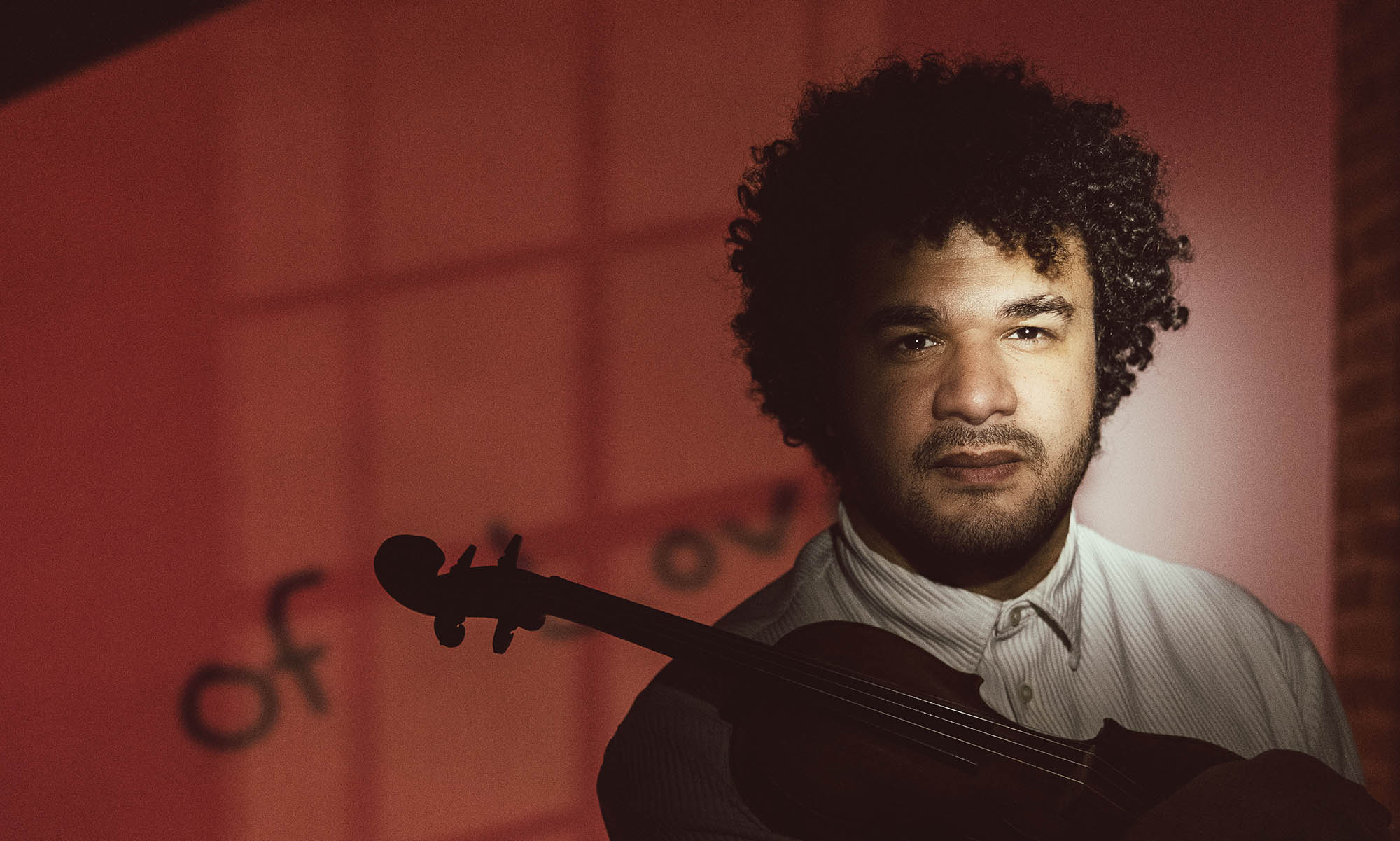
The Grammy nominee recalls the violin lessons at Eastman that at once terrified and inspired him.
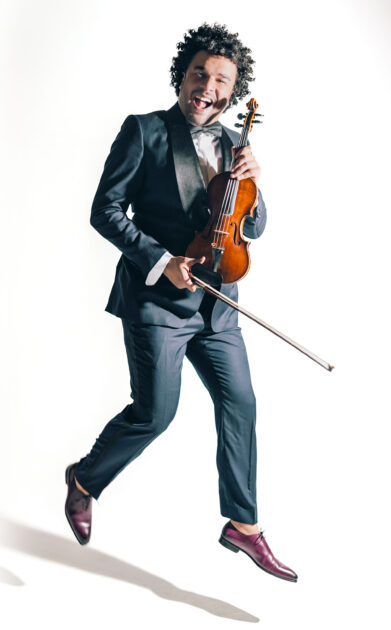
Editor’s note: This story was originally published online on December 1, 2025. It has been updated to highlight an August 2026 New York Times story about Stewart’s newest album, 24 American Caprices.
As a dual degree student majoring in mathematics and violin performance, Curtis Stewart ’08, ’08E was used to challenging coursework. But no class at URochester impacted or challenged him more than his weekly violin lessons with the late Lynn Blakeslee, an internationally acclaimed soloist and violin professor at Eastman.
“Each week, you’re one-on-one with this luminary violinist, and your self-esteem rides on her mood that day,” says Stewart, a seven-time Grammy-nominated violinist and composer and a professor at the Juilliard School in New York. “My hands would be trembling before every session.”
Stewart says Blakeslee, who died in 2015, wasn’t shy about expressing her feelings. “If she didn’t like it, she told you. But if she loved it, she’d get very excited. She thrived on improvisation. One time, I suggested I couldn’t be that creative. She looked me dead in the eye and said, ‘Don’t ever say that about yourself. You can do whatever you want.’”
Soon after, Stewart performed a version of an Astor Piazzolla tango instead of the usual classical piece. “Blakeslee loved it,” he says. “It was the most excited I ever saw her get.” Stewart says the weekly sessions made him a better musician and teacher. “The searing feedback made me practice harder, but it also sometimes made me play worse, because I was so afraid. In my own teaching, I try to be as honest as I can while making sure the student doesn’t want to run away. It’s a balancing act.”
Stewart has performed at Carnegie Hall, Lincoln Center, and the Kennedy Center and serves as artistic director of the American Composers Orchestra. He was also the featured speaker—and a performer—at Eastman’s graduation ceremony in May. “Talk about surreal,” he says. “I was playing at convocation, and all of my old teachers were sitting behind me.”
His message to graduates mirrored Blakeslee’s advice years before: Never sell yourself short. “I applied to so many things in college,” he says, “and didn’t get a lot of them. But that didn’t define me. I feel like my career is meaningful. No matter what you feel [now], your future is in front of you. You came from a great school, and you can build a meaningful career as well.”
This story appears in the fall 2025 issue of Rochester Review, the magazine of the University of Rochester.