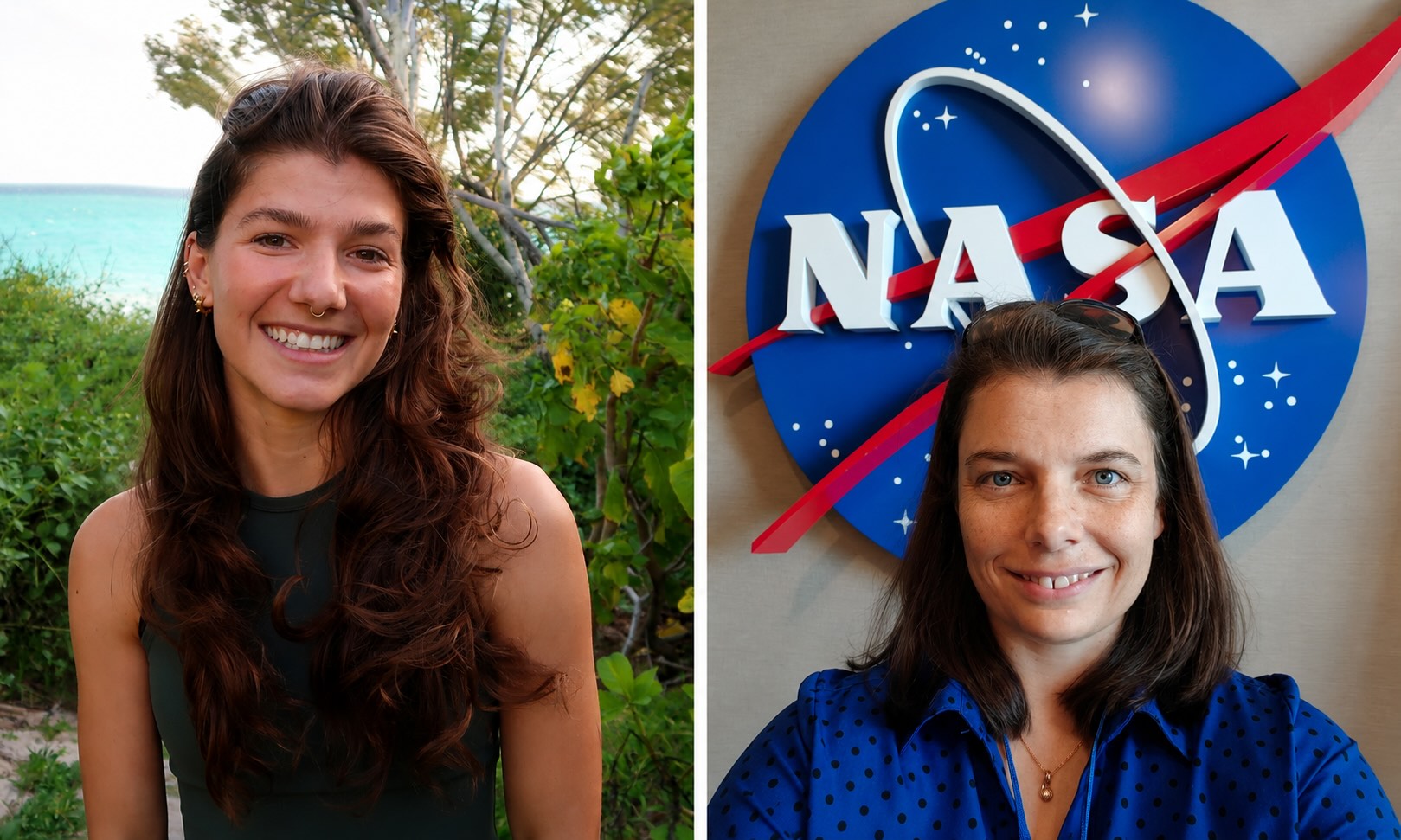
WORLDS APART: Marcelina Martynek ’18 (left) and Mary Skow ’07. (Photos provided)
From coral reefs to human spaceflight, two URochester alumni are asking questions—and finding answers—at the planet’s most demanding frontiers.
One University of Rochester alumna descends to the ocean floor to study coral reefs under stress. Another helps NASA anticipate the risks of sending humans beyond Earth’s orbit. Their workplaces could hardly be farther apart. But Marcelina Martynek ’18 and Mary Skow ’07 are guided by the same discipline: asking precise questions, testing assumptions, and using evidence to make decisions when the stakes are high.
Diving into the unknown
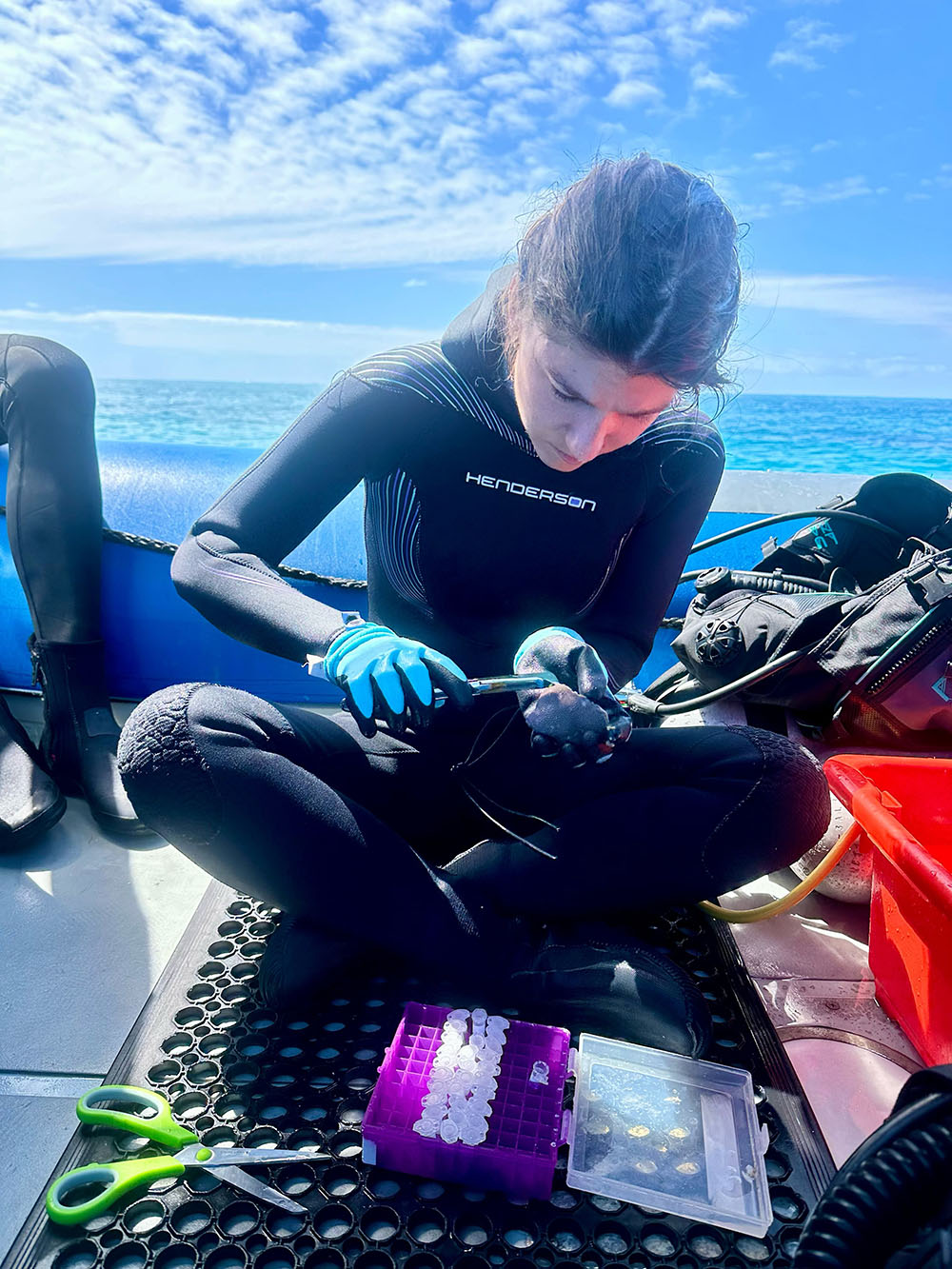
For Marcelina Martynek, now a PhD student at the University of Pennsylvania, the work begins underwater. In the Barott Lab, she studies how corals and other marine organisms interact with their surroundings and cope with climate change. She takes frequent trips to the Hawaii Institute of Marine Biology to conduct fieldwork.
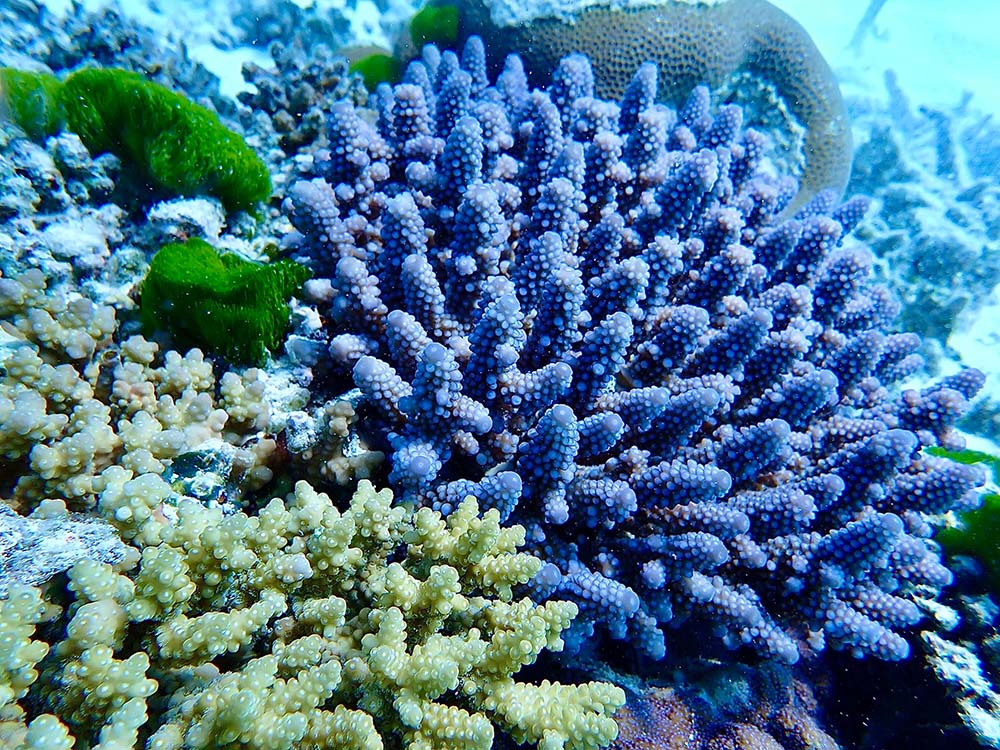
REEF RELIEF: “Marine organisms use [coral reefs] for food, nursery grounds, and protection,” says Martynek, who studied brain and cognitive sciences and computer science at URochester. (Photo provided)
Much of her time outside the lab is spent on the seafloor, an environment she had to learn to navigate. “Most marine biologists, you can’t get them out of the water. That was not me,” she jokes. “My initial diving experience was terrible, but there was never a question of whether I could do it. I knew I had to. It all changed at a fieldwork course in Bermuda, where they taught me to dive like a scientist. That flipped a switch.”
For Martynek, the difficulty of the dive mattered less than the purpose. She knew the impact her work could make. Some of the most prominent issues facing corals are heat stress and continuous marine heat waves. The stronger and more frequent these heat waves are, the more difficult it is for corals to recover. During her dives, Martynek harvests small pieces of coral and collects other data to determine how corals are damaged, how they can be protected, and how they can thrive in adverse conditions.
“It all changed at a fieldwork course in Bermuda, where they taught me to dive like a scientist. That flipped a switch.”
The preservation of these reefs is essential. If they continue to decline, there will be large-scale implications for both marine life and human life. “There are estimates that 30 percent of all marine species rely directly on coral reefs. Marine organisms use them for food, nursery grounds, and protection,” she says. “They’re tremendously important for coastline protection for small island nations and states like Florida. There are also major economic implications as an eighth of the world’s population—one billion people—rely on reefs for food or tourism.”
These are the problems research like Martynek’s seeks to solve. “Scientific research is not always about producing facts,” she says. “It’s rooted in giving society better tools for making decisions, and it’s ultimately about improving everyone’s lives.”
Good science is essential for progress. A dive off the coast of Hawaii may seem like an isolated endeavor, but the questions it answers can ripple outward to millions of people.
Travel tips from Marcelina
After repeated trips to destinations like Hawaii and Australia for fieldwork, Martynek has learned a thing or two about preparing for long flights. She shares a few tips for making your next trip easier.
Don some comfy clothes.
Bring a foot hammock and wear compression socks for extended flights.
Print out your work.
Always bring a book and come prepared with at least one movie on your device.
Get up from your seat and walk around.
Bring your own food.
Preparing for the unexpected
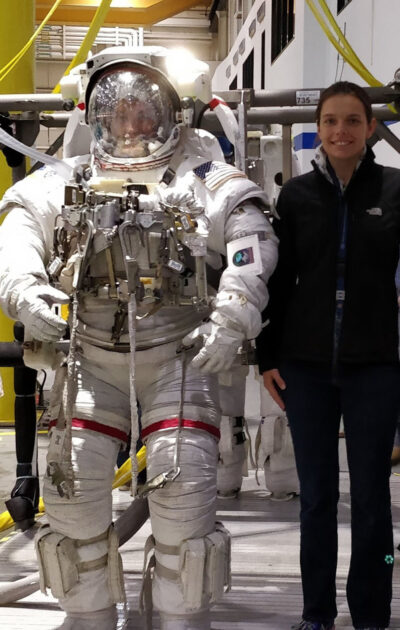
TECH TRANSFER: Everyday items like Velcro and GPS exist because of the work of teams like Skow’s at NASA. (Photo provided)
Mary Skow agrees and sees similarities in her own work. As the agency risk management officer at the National Aeronautics and Space Administration (NASA), her work contributed to the recent Artemis II launch, the first crewed mission beyond low Earth orbit since Apollo 17 in 1972.
Skow explains that Artemis II was 15 years in the making. While she’s now in a role that’s less hands-on, when planning began she worked directly on projects and systems built to keep astronauts safe.
“The area I worked in was called Emergency Life Support Systems. It’s part of the Environmental Control Life Support Systems (ECLSS),” she says. “We looked into different solutions if there was a fire. We made sure that there were backup systems to remove carbon dioxide from the air. We made sure there were backup sensors for temperature, for oxygen, for any gas that might indicate there was a problem, like an ammonia leak.”
The result of her team’s work was the anomaly gas analyzer, a handheld device that could read oxygen, pressure, and temperature—all vital metrics to track to ensure astronauts are protected. The device flew on Artemis II.
“It’s pure curiosity. I like to mess around and find out.”
Like a dive to the bottom of the ocean, a safety system for astronauts may not seem to have an obvious broader societal impact. But many tools and technologies designed for spaceflight have become everyday items here on Earth. Everyday items like Velcro and GPS exist because of the work of teams like Skow’s.
Skow, who studied chemical engineering as an undergraduate at URochester and earned a PhD in chemical engineering from Texas A&M, describes herself as naturally curious. Her joy for learning makes her a perfect fit for a job that constantly requires finding potential problems and then identifying solutions to those problems. “It’s pure curiosity. I like to mess around and find out,” she says. “We’re always asking, how can we test that strategy? How can we test that approach? How can we make this better?” That spirit drives missions into space and fuels so many innovations back on Earth.
The bottom of the ocean and the edge of space may seem worlds apart. But for Martynek and Skow, both are places where curiosity and discovery matter. They challenge themselves to ask better questions, test new ideas, and conduct work in service of something larger than themselves. Their work shows how a URochester education can prepare students not only to understand the world, but to help shape its future.
NASA spinoffs you might use every day
Not every space-age product was invented by NASA, but NASA-supported research has helped shape many technologies that moved from mission to mundane. Here’s a list:
Camera phones. In the 1990s, the Jet Propulsion Laboratory created cameras that were small enough for spacecraft and maintained scientific quality.
Athletic shoes. The blow-molding process used for spacesuits was adapted to create the modern athletic shoe.
Cordless vacuums. NASA approached Black & Decker to develop technology to collect samples on the moon. The company then used that tech to create the Dustbuster handheld vacuum.
Memory foam. Memory foam mattresses are the result of a foam developed by NASA to make shuttle seats more comfortable.
Enriched baby formula. The nutritional enrichment found in most modern baby formula was discovered in experiments conducted by NASA in the early 1980s.
Join the campaign
For Ever Better
This story originally appeared in the For Ever Better campaign edition of BUZZ magazine. Support the people, ideas, and innovations that make our world ever better.