From the classroom to the cockpit—and beyond
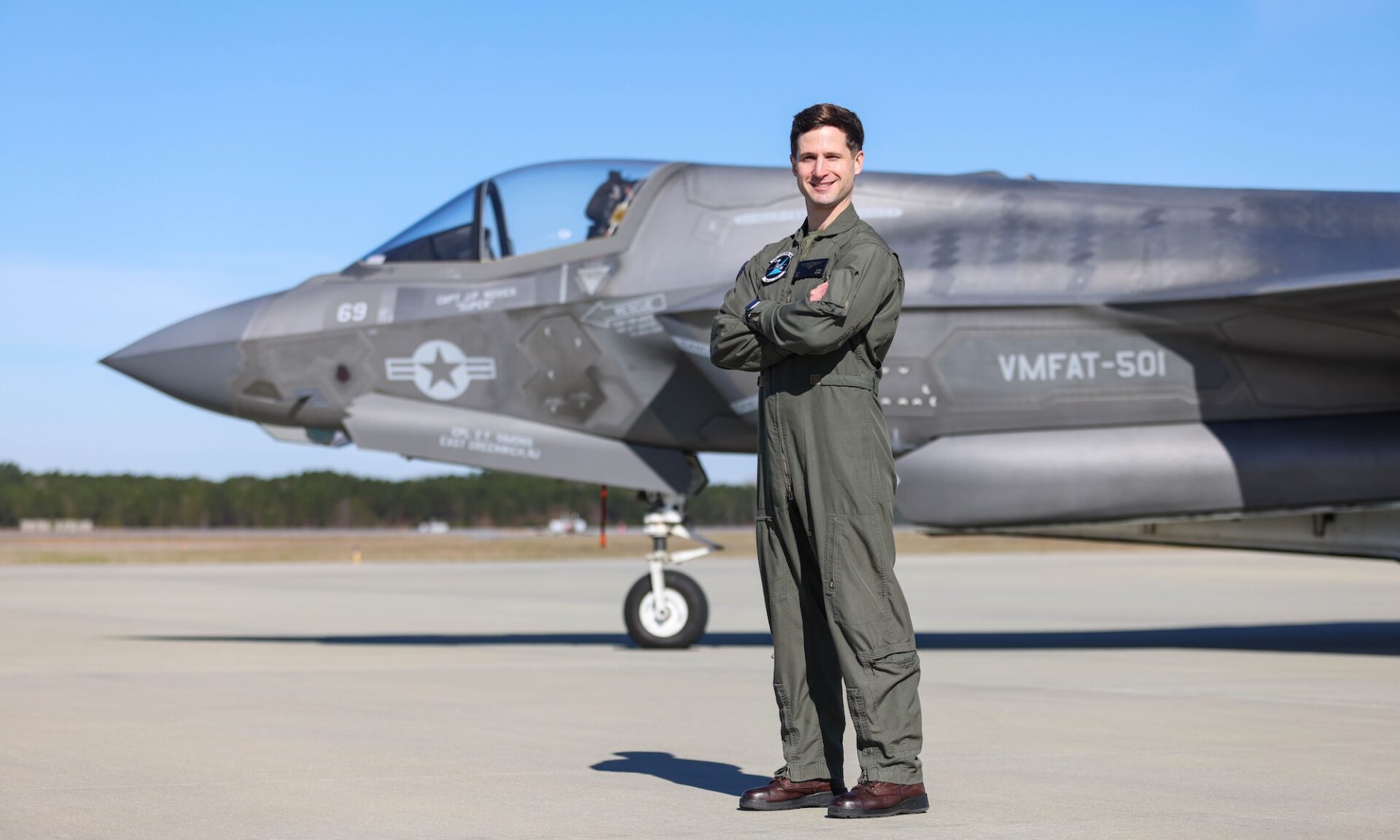
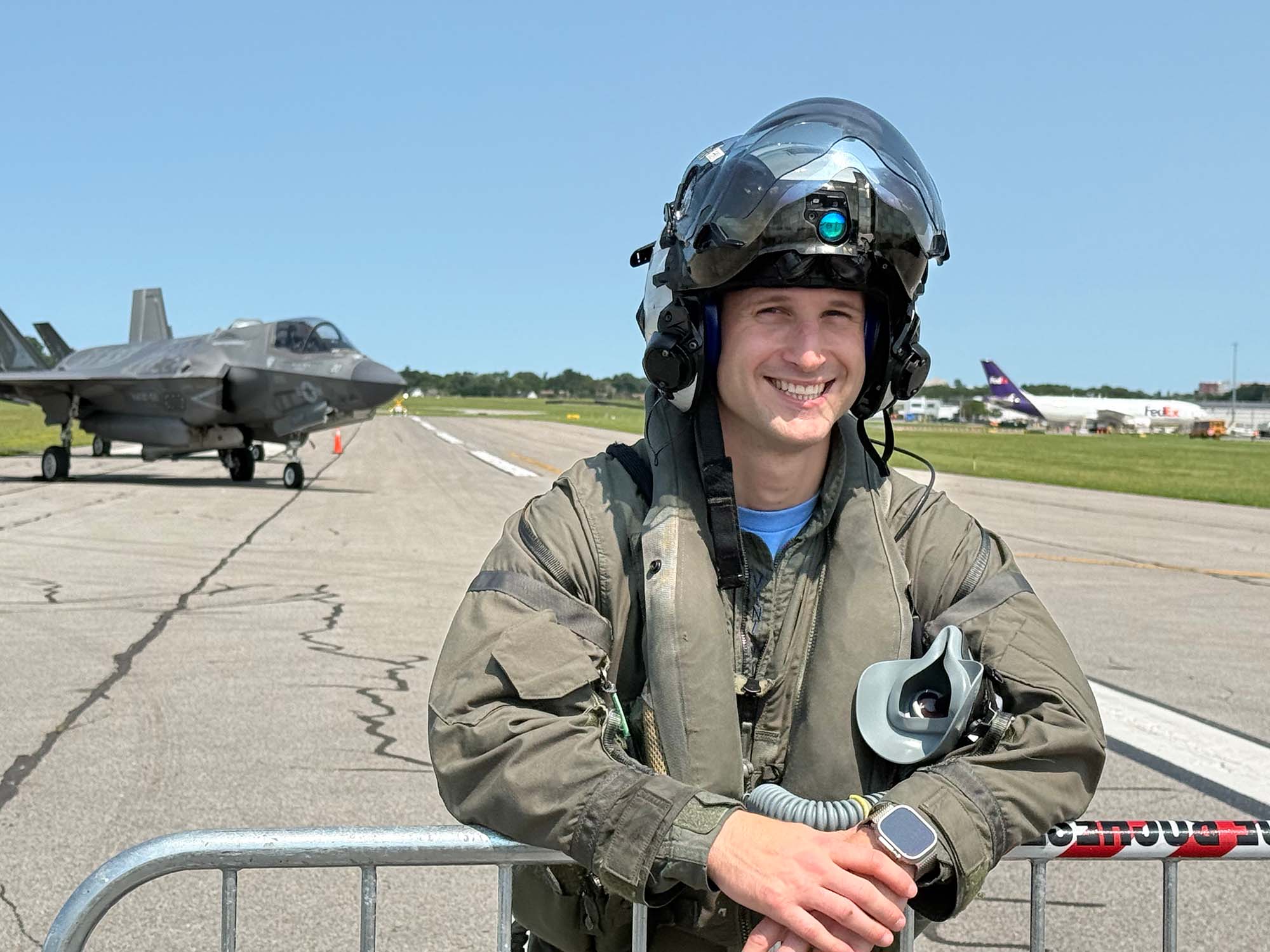
Rochester native and F-35B pilot William Horn ’14 returns home as a featured performer at this year’s Rochester International Airshow.
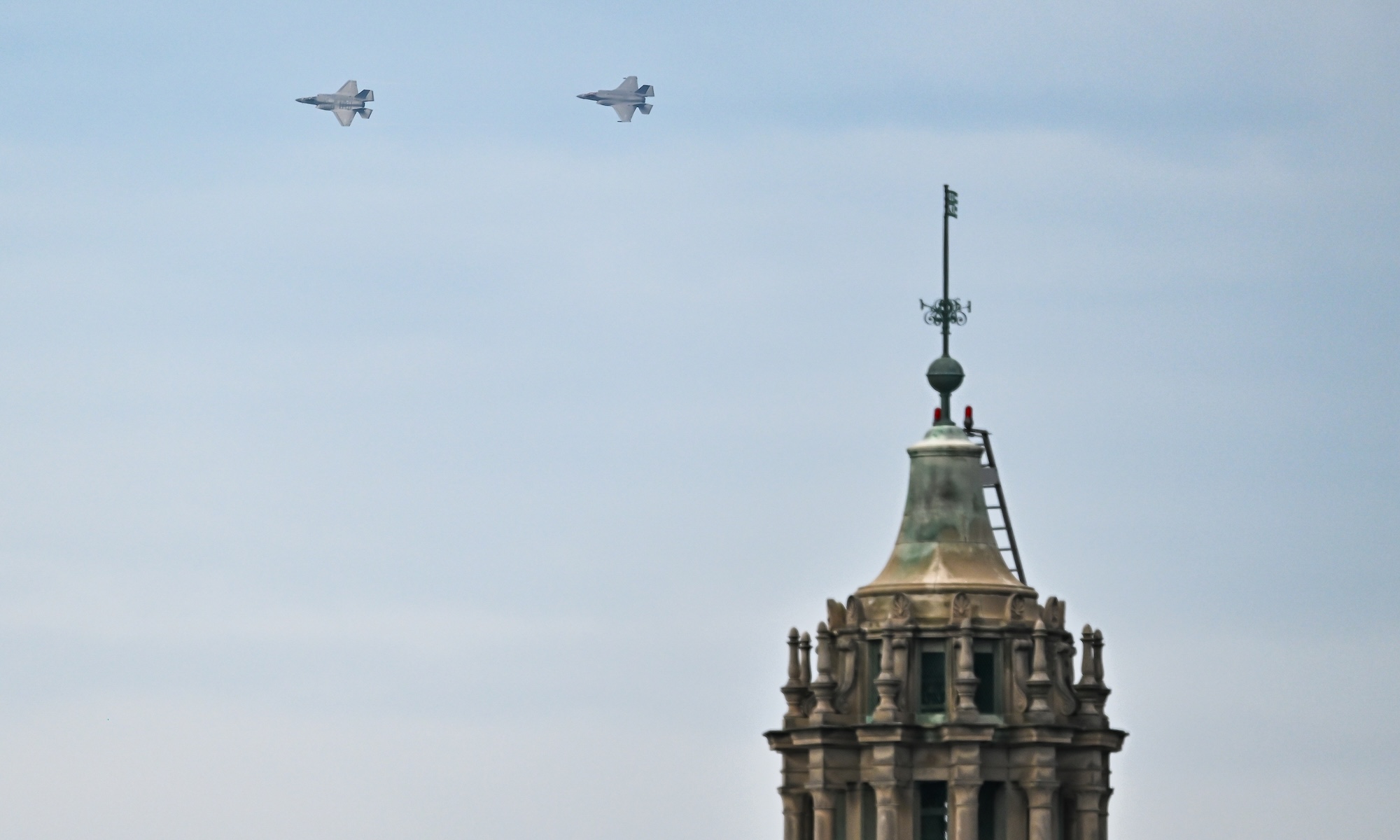
William Horn ’14 was among those gathered near the Washington Monument on July 4 to celebrate the nation’s 250th birthday. But the United States Marine Corps major, based in Beaufort, South Carolina, enjoyed a unique vantage point: the cockpit of an F-35B Lightning II fighter jet, where he performed complex aerial maneuvers in normally restricted airspace as part of the USMC F-35B Demonstration Team.
“It was definitely a surreal experience flying over such a historic area,” says Horn, who carried out 10 maneuvers around the marble obelisk. “It was almost hard to focus on the flying because I wanted to do a little sightseeing at the same time.”
Soon, Horn will be flying over more familiar ground. The Rochester native, who double-majored in biochemistry and psychology at the University of Rochester, will demonstrate the single-seat, supersonic jet’s midair hovers, vertical landings, and short takeoffs at the Rochester International Airshow on August 8 and 9.
A (flight) path to success
Drawn by an interest in the mind-body connection, Horn initially planned to study medicine at URochester—a school he knew was “great for science and a clear number-one choice.” But then, as a sophomore, he attended an on-campus career fair and discovered the path to becoming a Marine Corps pilot.
“I’d always felt like I had the flying bug in me and knew that would be cool to do,” he says. Horn says he caught that bug from his dad, who flew a C-130, and his uncle, who flew an A-4, for the United States Navy. Another inspiration: two sisters who were his childhood neighbors, each of whom married a Marine Corps pilot.
Marine Corps aviation contracts—which guarantee the opportunity to attend flight school—are highly competitive, so Horn took a year off after earning his diploma in hopes of landing one. He spent the summer living with his uncle (the A-4 pilot) and working on a commercial fishing boat in Alaska, then moved to Boston to work in research and development on moisturizing strips for razors.
Horn signed his contract in 2015 and completed a 10-week boot camp–style Marine Officer Candidate Course. Next came The Basic School, a six-month course in the fundamentals of being a Marine Corps officer, followed by two flight schools, one of which was featured in the National Geographic docuseries Top Guns: The Next Generation, filmed during much of Horn’s time there. Flight training continued at various locations through 2021.
While stationed in Japan, Horn earned his call sign, “Braankles.” He had been in the country only one week before rolling his right ankle and breaking his foot in a skateboarding accident. He had to wear a boot—and stay out of the pilot seat—for three months. (The first four letters stand for “broke-ass ankles.”)
Ground control to Major Horn
Horn estimates he has logged 1,000 hours flying in the military. Most have come as a Fleet Replacement Squadron instructor, training aviators just out of flight school to be ready for combat.
He joined the USMC F-35B Demonstration Team in 2025, traveling the country to showcase the fighter jet’s cutting-edge features—along with his wife and fellow F-35B pilot, Major Simone Romano. His favorite airshow maneuver is the inverted-to-inverted roll, in which the plane begins upside down, completes a 360-degree roll, and finishes upside down.
“I’d always felt like I had the flying bug in me and knew that would be cool to do.”
These days, every hour Horn spends in the air requires four to six hours of preparation on the ground. Just as he did during flight school, he draws on skills he developed at URochester. For example, memorizing the series of biochemical reactions that break down molecules and release energy our bodies can use is similar to the effort required to memorize federal aviation regulations.
“And being in a lab, just like we do before a mission,” he explains, “is about having a theory, testing it, figuring out what went right or wrong, making a new plan, and continuing to improve the process for future iterations.”
When Horn takes to the skies for his Rochester International Airshow debut, the performances will bring him home—both to the place he grew up and to the University where his ambitions came into focus.
“Being at the school and seeing the talent around put me in the mindset to achieve more than I would have otherwise,” he says. “It turned me from someone who had never thought about this stuff in high school into someone who shoots for the stars.”