URochester joins a new NSF–funded center to find the answers by combining experiments, theory, simulations, and AI.
Researchers at the University of Rochester are part of a new $30 million National Science Foundation–funded Science and Technology Center, or STC, focused on one of science’s most stubborn problems: predicting—and ultimately controlling—turbulence.
Led by Michigan State University, the STC for Transformative Explorations in Multi-Physics and Engineering of Scientific Turbulence (TEMPEST) brings together physicists, mathematicians, engineers, and AI researchers from eight universities. The STC launches on September 1 with a five-year, $30 million grant from the NSF, with more than $2.7 million going to researchers at URochester.
“What makes this center especially promising is the unusual breadth of expertise assembled around a common scientific challenge,” says Jessica Shang, an associate professor at URochester’s Department of Mechanical Engineering and staff scientist at the Laboratory for Laser Energetics (LLE). “By putting theorists, computational scientists, and experimentalists in a continuous feedback loop, the center can rapidly test ideas, refine and validate models against experimental evidence, and pursue breakthroughs that no single discipline or institution could achieve alone.”
Why turbulence is so difficult to predict
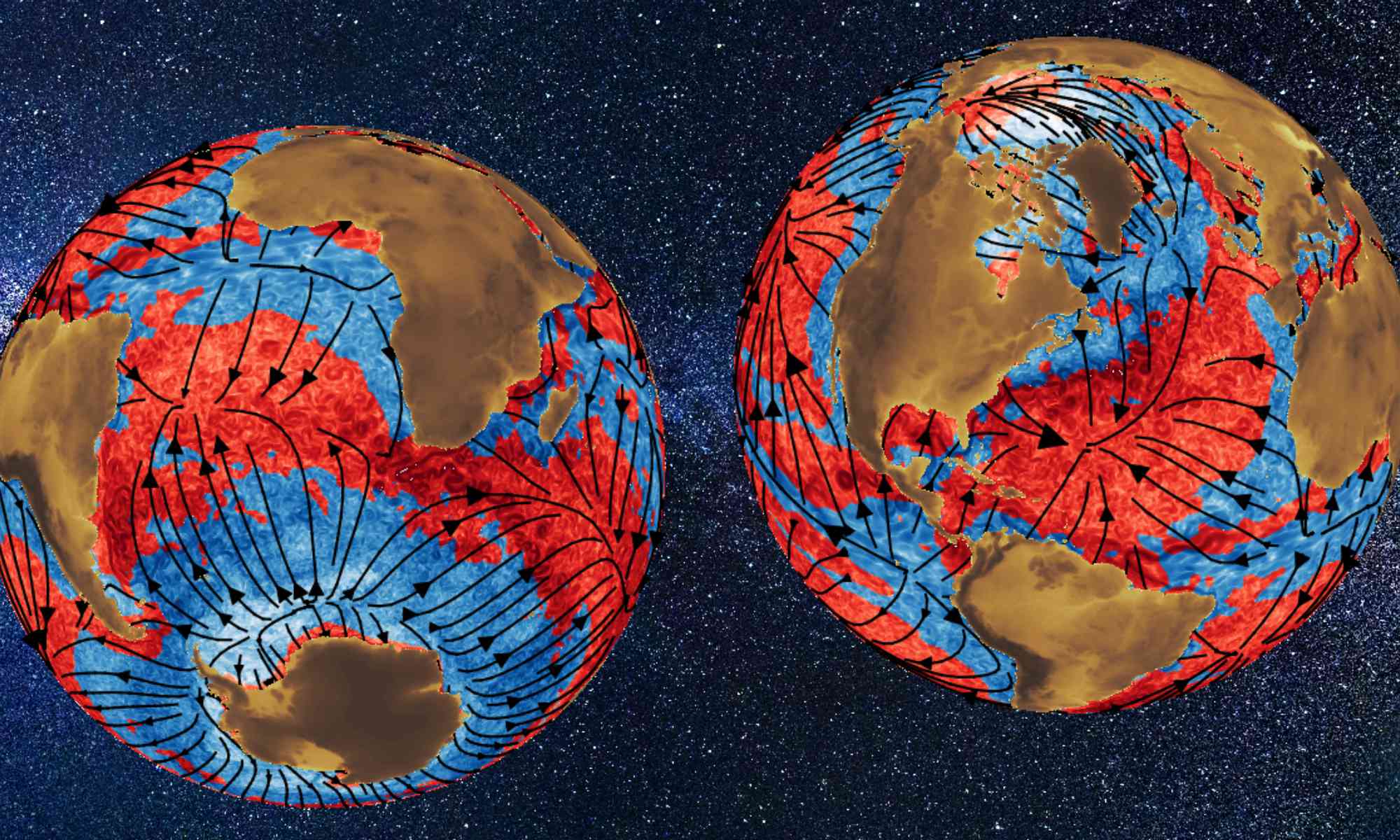
Turbulence is all around us—in the atmosphere and oceans, industrial systems, and the plasmas inside experimental fusion devices. Understanding it is critical to predicting how energy, heat, and pollutants move and how fluids and plasmas behave under extreme conditions.
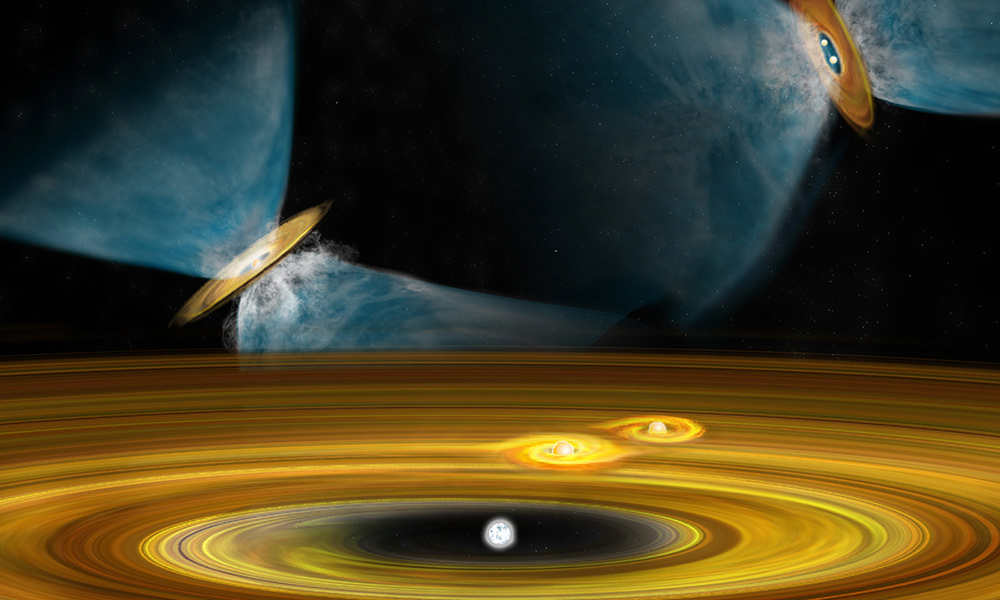
“Turbulent systems are extraordinarily difficult to predict and probe because they involve complex physical interactions that span an enormous range of spatial and temporal scales, from microscopic, ultrafast dynamics in fusion to astrophysical flows extending across light-years,” says Hussein Aluie, a professor of mechanical engineering and of mathematics, a senior scientist at LLE, and URochester’s principal investigator on the initiative. “By linking fundamental theory, advanced computation, and experiments under extreme conditions, we aim to develop the predictive understanding needed to advance fusion and other extreme-flow applications.”
What URochester brings to TEMPEST
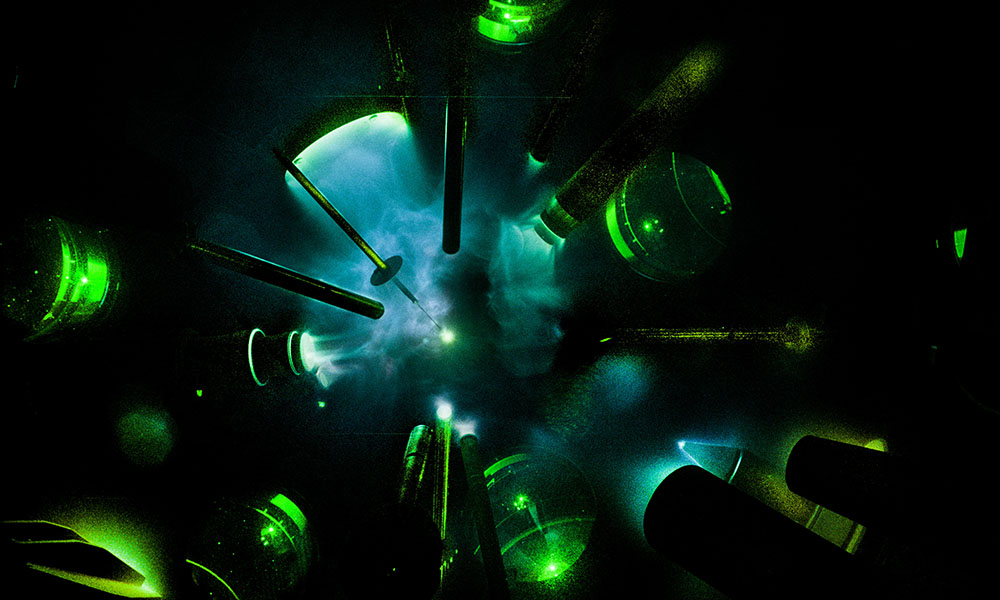
URochester brings a distinctive combination of expertise in turbulence and multiscale flows across fusion plasmas, high-speed flows, and astrophysical plasmas, Aluie and Shang say, as well as the capability to conduct laser-driven experiments at major national research facilities, including LLE’s Omega Laser Facility.
The teams at URochester and MSU will collaborate with researchers from Baylor University, Auburn University, San José State University, Yale University, Texas A&M University–Corpus Christi, and the Georgia Institute of Technology to combine theory, computation, AI techniques, and experimentation to build trustworthy predictive models of real-world turbulence for high-consequence applications. Unfunded partners include Los Alamos National Laboratory, Sandia National Laboratories, Lawrence Livermore National Laboratory, Pacific Fusion, and General Atomics.
Together, TEMPEST researchers will test theoretical and computational predictions against real-world observations, then use those results to refine predictive models. The goal is to move researchers beyond understanding why turbulence behaves as it does toward reliably predicting—and eventually controlling—its behavior.
The center will make its data and software broadly available and engage the public through museum exhibitions, immersive media, and educational programs that are expected to reach more than 10,000 K–12 students annually. TEMPEST will also help train an AI-fluent scientific workforce prepared to tackle complex problems across disciplines.