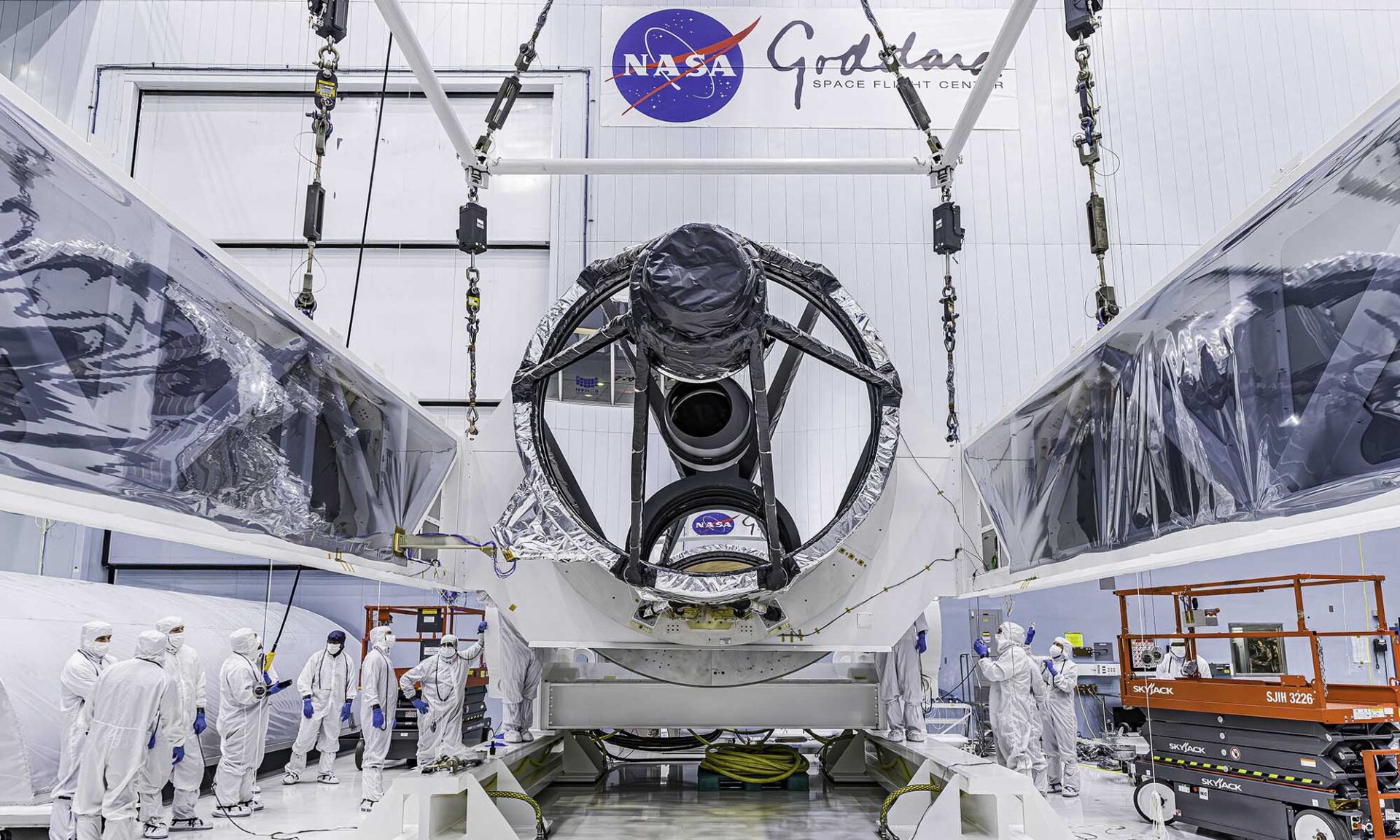
The Nancy Grace Roman Space Telescope will let scientists survey the cosmos like never before, thanks in part to the expertise of dozens of URochester alumni.
When NASA’s Nancy Grace Roman Space Telescope begins transmitting images from a million miles away in outer space, few people back on Earth will be more eager to see them than Rebecca Borrelli ’12 (PhD).
She is one of dozens of University of Rochester alumni who helped design, build, and test the telescope.
“It’s the best telescope that NASA has ever created in terms of performance,” says Borrelli, the chief technologist for space superiority and imaging at L3Harris Technologies. “It’s going to take beautiful images.”
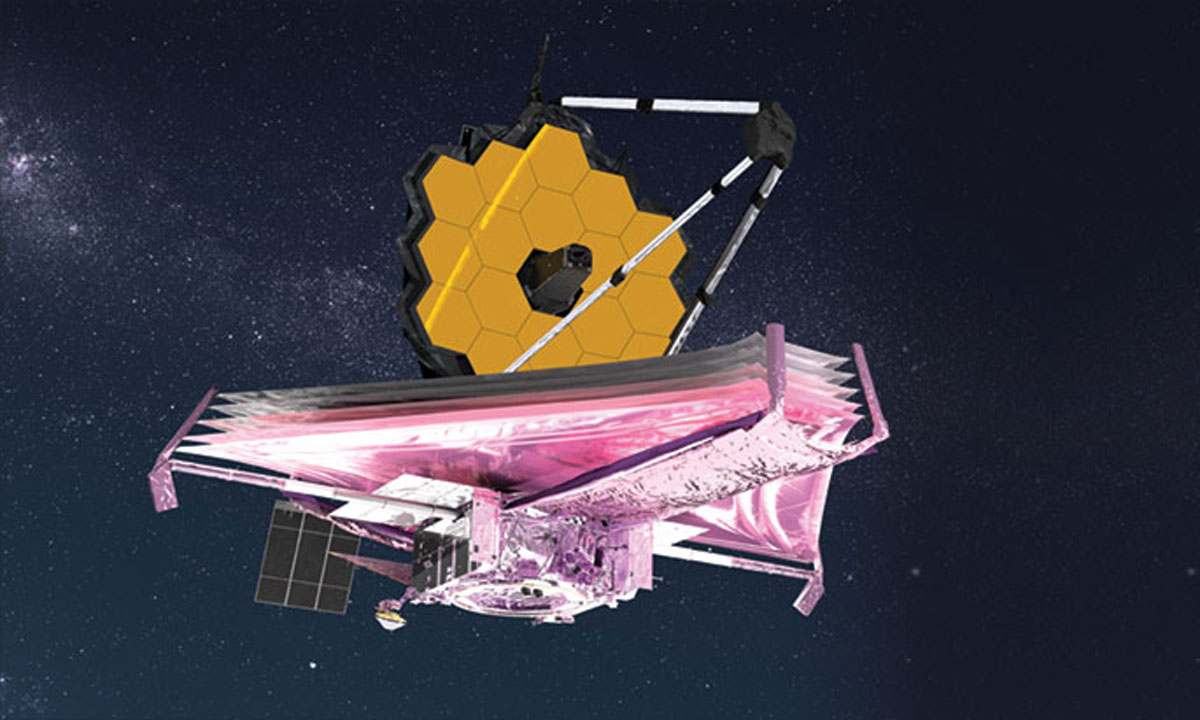
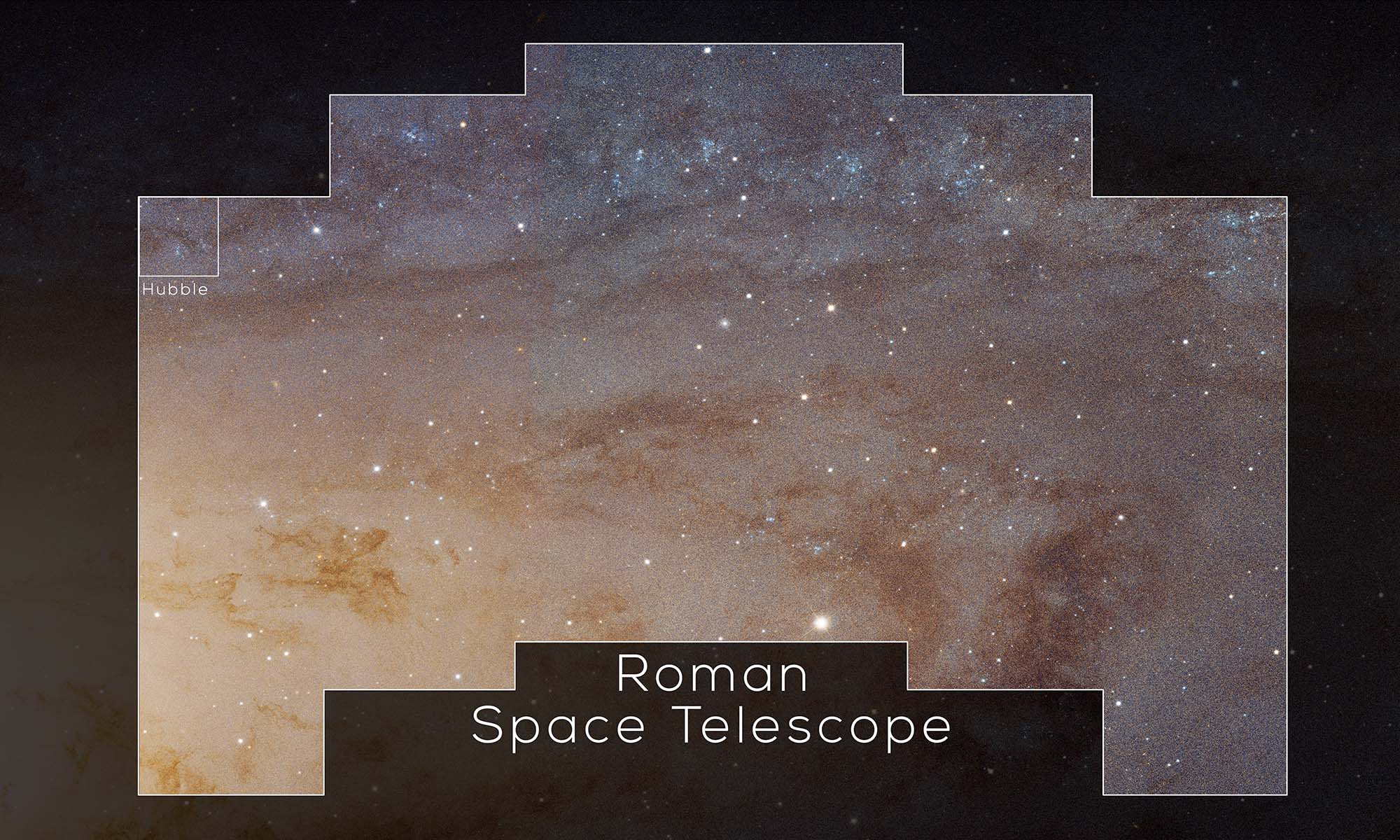
With a field of view at least 100 times larger than that of the Hubble Space Telescope and crisp infrared vision, Roman could measure light from a billion galaxies over the course of its mission, offering humanity a powerful tool for exploring dark matter, dark energy, and planets outside our solar system.
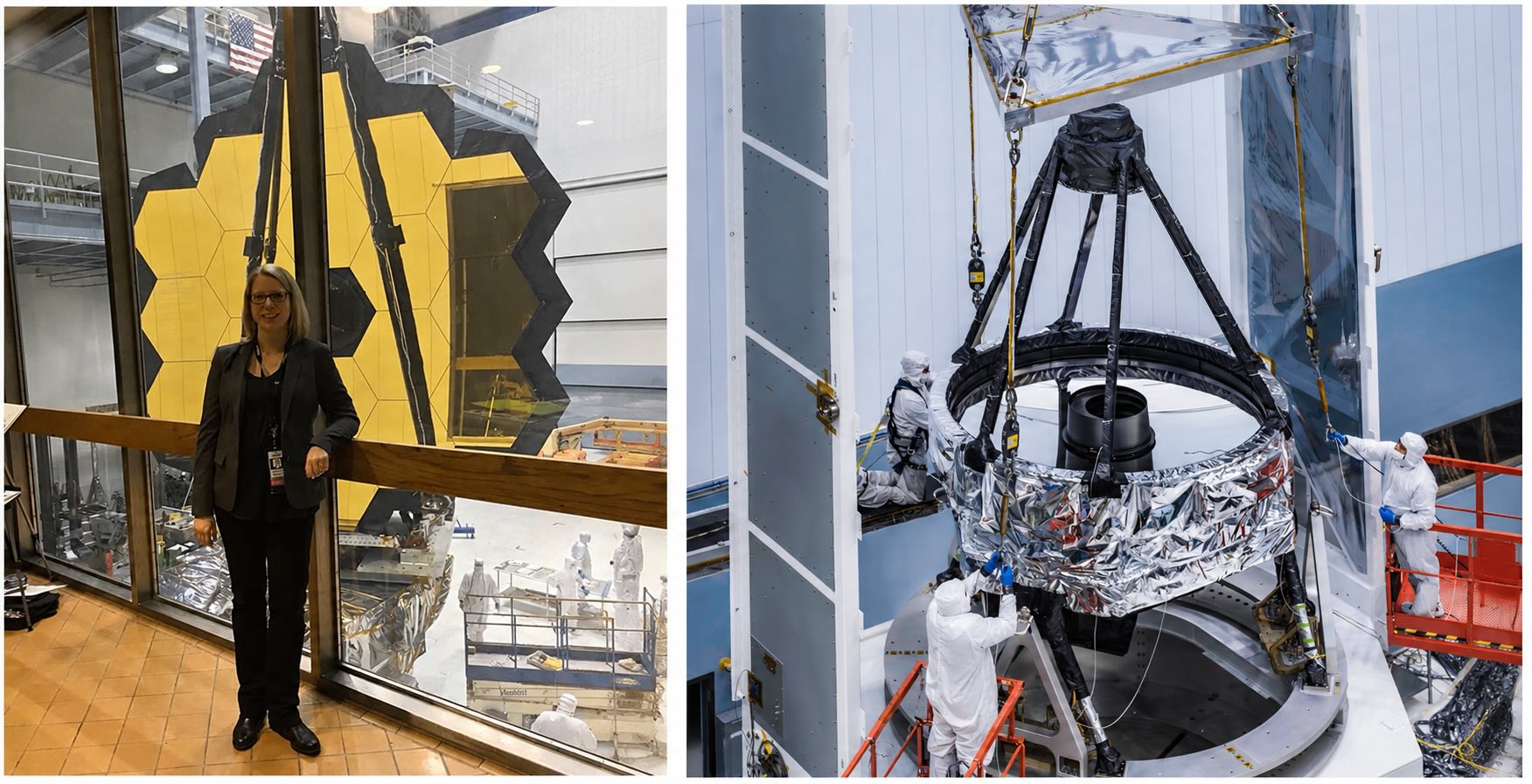
That could not have been done without people like Borrelli and other URochester alumni at L3Harris who designed and built Roman’s optical eye, communication systems, guide sensors, and electronic components. Dozens more alumni at NASA’s Goddard Space Flight Center and Jet Propulsion Laboratory, as well as California-headquartered Teledyne Technologies, had a hand in designing and refining the telescope, from work on its coronagraph to its flight detectors.
Shooting for the stars
URochester’s connection to space optics dates back decades. In the 1960s, James Webb, the head of NASA during the Kennedy and Johnson administrations, asked Brian O’Brien, the former director of the University’s Institute of Optics, to form a committee to advise NASA on future programs—one of which would eventually become the Space Shuttle program.
When a flaw was discovered in the primary mirror on the Hubble Space Telescope, Duncan Moore, the Rudolf and Hilda Kingslake Professor Emeritus in Optical Engineering Science, chaired the independent review panel charged with determining what had gone wrong, and James Fienup, the Robert E. Hopkins Professor of Optics, helped correct what was determined to be the telescope’s nearsightedness.
That success continues to shape the newest generation of space telescopes, including the James Webb Space Telescope and Roman.
Some of Fienup’s former optics students, including Matthew Bolcar ’09 (PhD), Thomas Zielinski ’11 (PhD), Alden Jurling ’15 (PhD), Matthew Bergkoetter ’17 (PhD), Scott Paine ’19 (PhD), and Scott Will ’22 (PhD), have played significant roles with Roman, applying and advancing techniques developed for earlier missions.
Compared with the intricate design of Webb, which launched in 2021, Roman—named after NASA’s first chief astronomer and one of the architects of the agency’s modern science program—is a throwback.
Joe Howard ’00 (PhD), an optical engineer at NASA Goddard who helped design the telescope since its early days, calls it a “stubby Hubble.” But Roman’s simplicity and sawed-off appearance give it distinct advantages over Hubble and Webb.
The bigger the better
“If you’ve ever looked closely at a wide-angle camera lens, you’ll see the same sort of shorter design,” says Howard. “Placing the secondary mirror a lot closer to the primary mirror helps Roman to have a gigantic field of view that enables a lot of different science than either of its predecessors.”
How gigantic? Roman was designed to capture a patch of the sky bigger than the apparent size of a full moon. That allows it to survey the universe 1,000 times faster than Hubble.
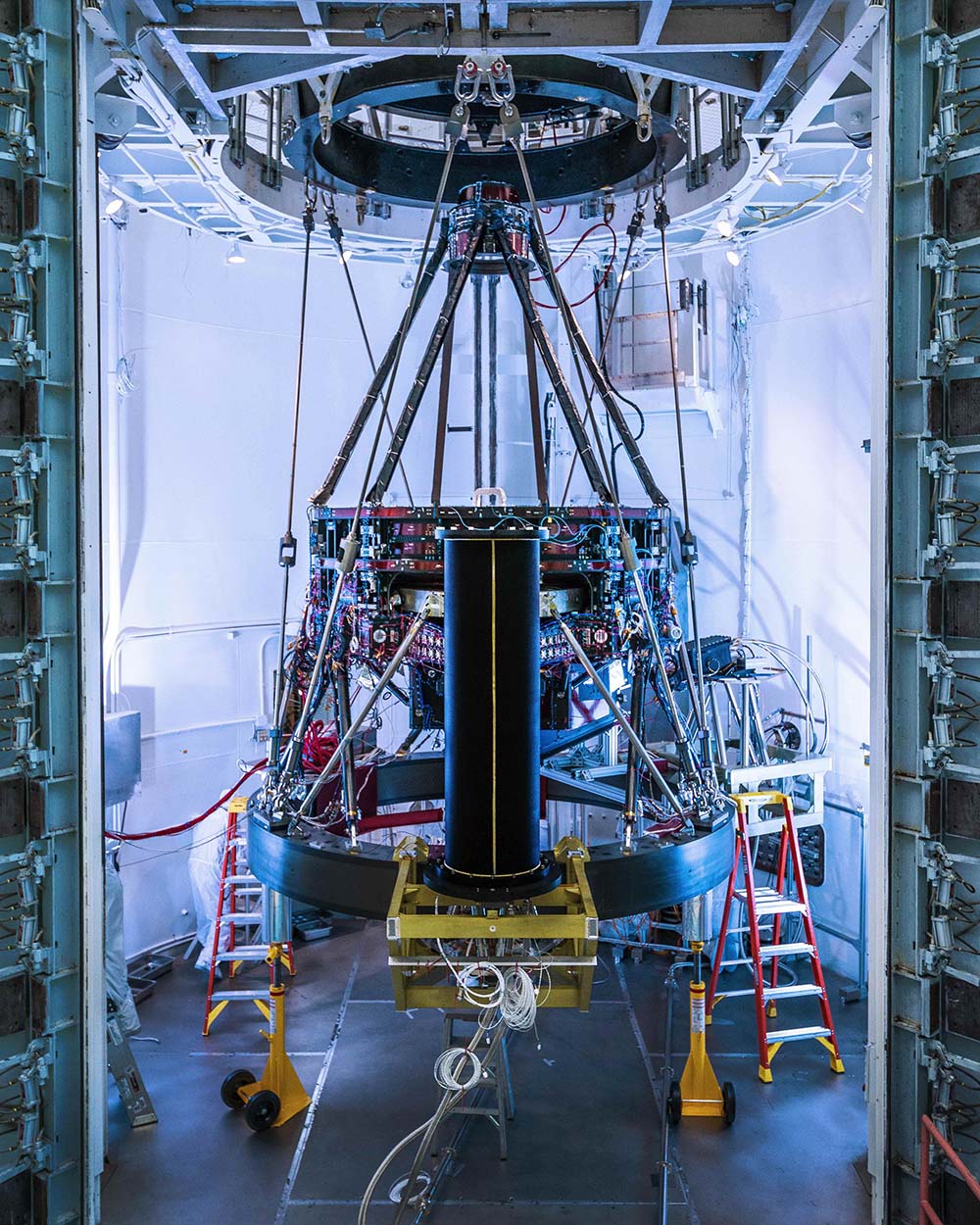
The telescope was also designed to test a new instrument that astronomers believe will supercharge the search for planets outside our solar system—the coronagraph. The coronagraph uses a system of optics, masks, self-flexing mirrors, and sensors to block the light emitted by a star.
“The best analogy I’ve heard is that it’s equivalent to someone in Rochester trying to take a picture of a lightning bug next to stadium lights in Los Angeles, except it’s 100 times harder,” says Paine, an optical engineer at L3Harris who worked on wavefront error measurements for Roman.
Going to extremes
Roman’s creation followed an unusual path and did not start from scratch. While Howard and others had initially designed a telescope with a lens half the size of Hubble’s, plans pivoted when the National Reconnaissance Office (NRO) gifted NASA a telescope it no longer needed.
“It was half-built for a different use, so we had to sort of repurpose it,” says Howard.
Reconfiguring NRO’s telescope allowed NASA to expand the scope of the project, but getting there required a lot of work.
“We had to reshape all of the mirrors because they had a completely different prescription,” says Borrelli. “Then they also had to develop the integration, the testing, refinish the mirrors, flight electronics, and thermal controls.”
“A mantra we follow is ‘test as you fly, fly as you test.’”
L3Harris built the optical telescope assembly in Rochester but designed it to operate one million miles away, which meant it had to handle extreme thermal ranges.
“Materials do really well if you keep their temperatures stable, but the second your temperatures start shifting, materials grow and shrink as they get hotter or colder, and that means things move and shift,” says Borrelli. “For an optical system, that’s not something you can tolerate. If you think about Hubble, for example, the error they had on their primary mirror was only one micron across the whole surface, which is about one one-hundredth the width of a human hair.”
After the optical telescope assembly was built in Rochester, it was shipped to NASA Goddard in Maryland, where it was combined with other components, including the coronagraph, before being shipped to the Kennedy Space Center in Florida for takeoff.
Putting it to the test
Alumni at NASA and L3Harris who worked on Roman say they are much less nervous for Roman’s launch than they were for Webb’s, when any one of the telescope’s 344 single-point failures could have doomed the mission.
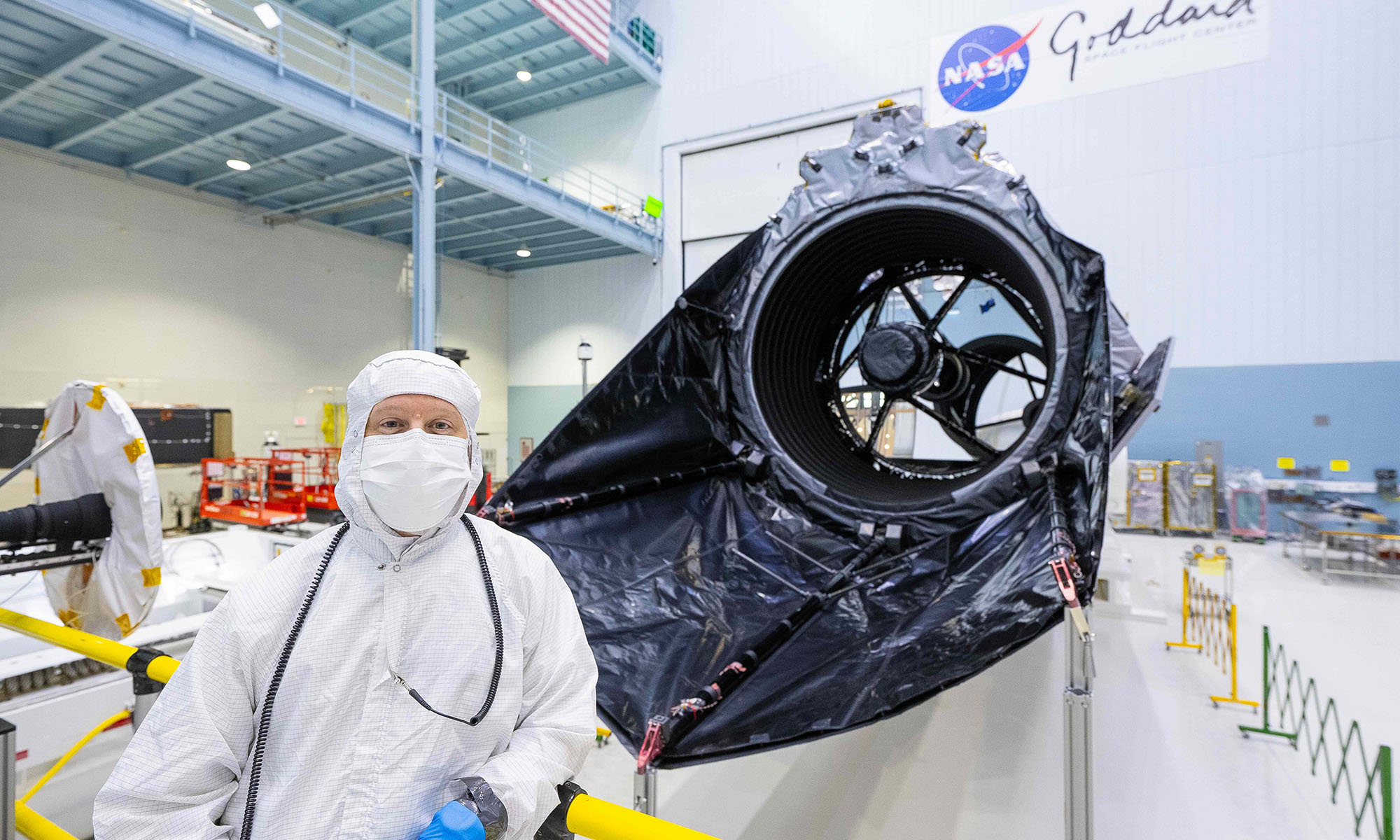
But testing was still a massive undertaking.
Bolcar joined the Roman project in 2020 as NASA Goddard’s optical systems lead. His job mainly focused on testing the telescope to ensure it met requirements for wavefront error, alignment, and overall optical performance.
“A mantra we follow is ‘test as you fly, fly as you test,’” says Bolcar.
That meant testing the optical telescope assembly before and after it was mounted, after it was aligned, and after the wide field instrument was added. They subjected it to vibration and acoustics testing and simulated a launch. Once the telescope was assembled, it went through a 65-day thermal-vacuum test. It wasn’t easy.
“Working here in Rochester, there are highways all over the place, and a truck going by on a highway a mile from the facility creates vibrations in the ground that you can see in the test,” says Borrelli.
Because conditions on Earth are so different from those in space, the team had to get creative. As NASA Goddard’s wavefront sensing lead engineer for Roman, Jurling heads a team of software and optics experts who measure the alignment and performance of the telescope’s optics. For them, gravity is a major obstacle.
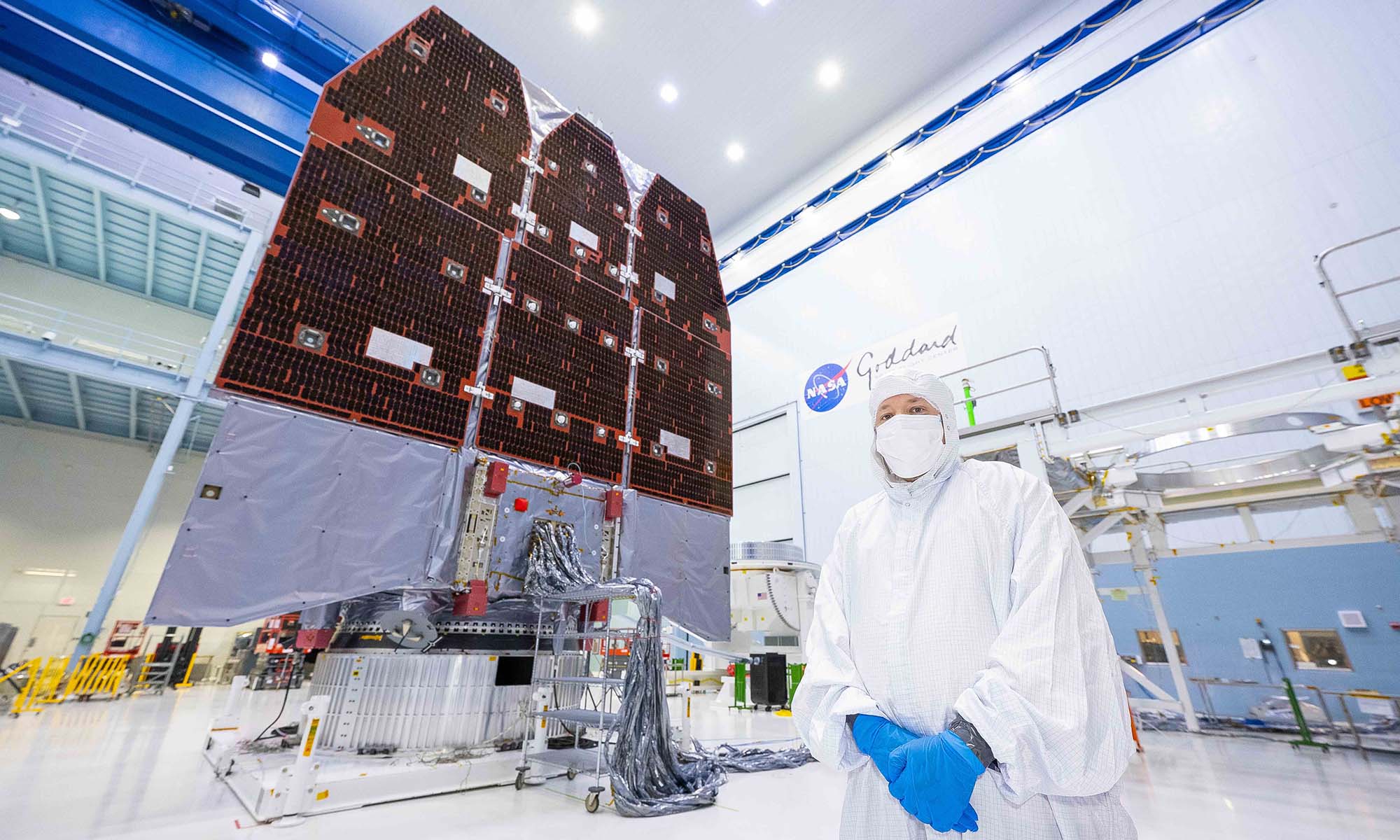
“The primary mirror for Roman is very lightweight, about a quarter of the weight of Hubble’s, and because of that, on the ground it sags a lot more than we would like,” says Jurling. “My team had to develop a novel gravity sag measurement technique that we used in ground testing very successfully.”
Seeing is believing
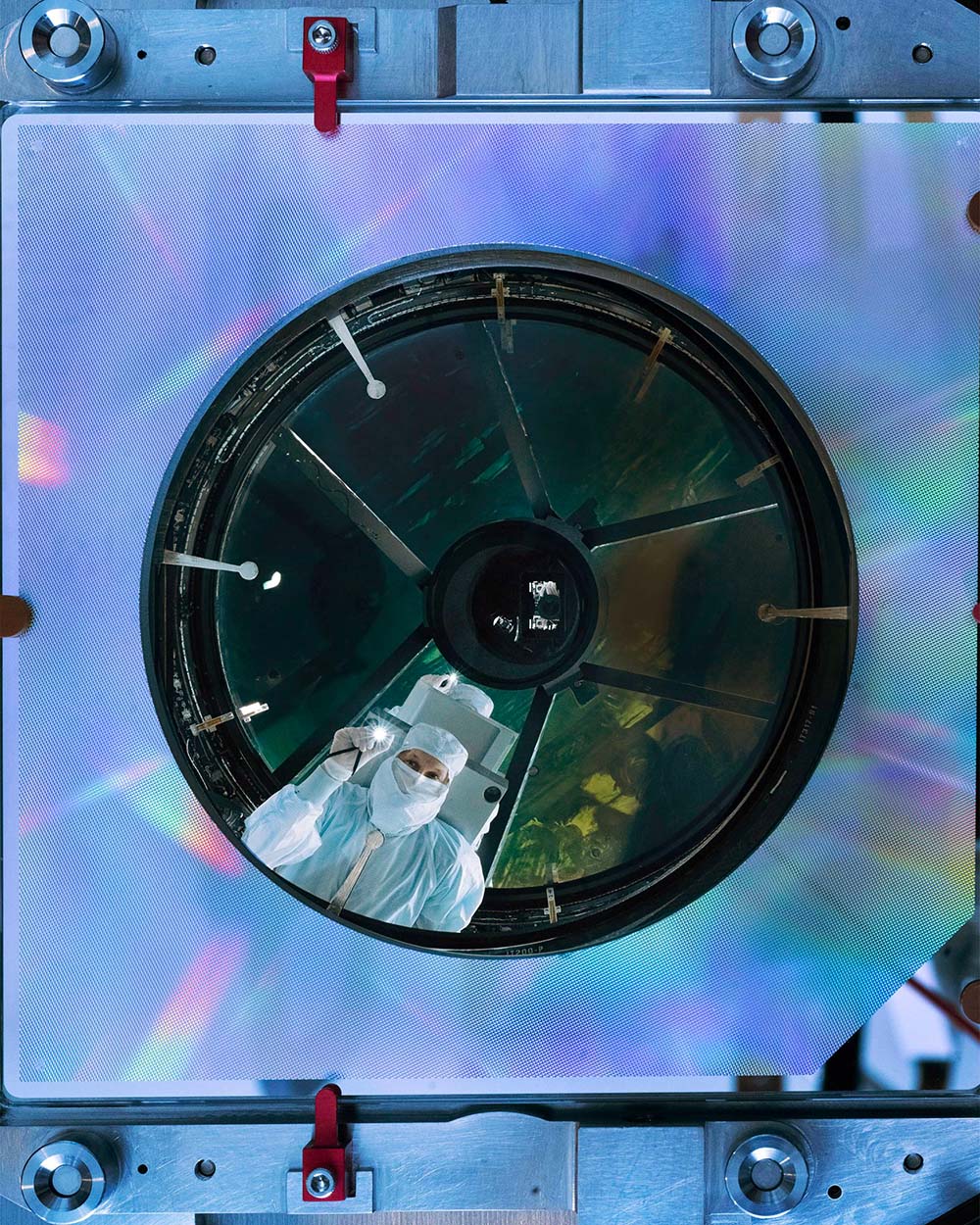
For the people who contributed to Roman, seeing their handiwork launch into outer space will be a once-in-a-lifetime opportunity.
“For Webb, it was during [COVID-19], so not many people could go at all, plus it was in South America at the European Space Agency launch facility,” says Howard, who has worked at NASA for more than 25 years. “For a lot of us, this will be our first launch to actually go to.”
After launch, Roman will take about three months to reach its destination and deploy, calibrate, and test its instruments. The team at NASA Goddard, including Howard, Bolcar, and Jurling, will be busy during this christening period adjusting the alignment of the optics and mechanics to get the best possible performance.
Then comes the part they’ve been waiting for.
“Once we make sure the telescope is in focus and the image quality is good, we hand over the keys, so to speak, to the scientists,” says Howard. “By the end of the year, knock on wood, our scientist friends will be reaping new and great ideas and lots of awesome images.”