URochester researchers use mathematical modeling to explore how wave-like soil patterns form—and what they could reveal about landscape stability.
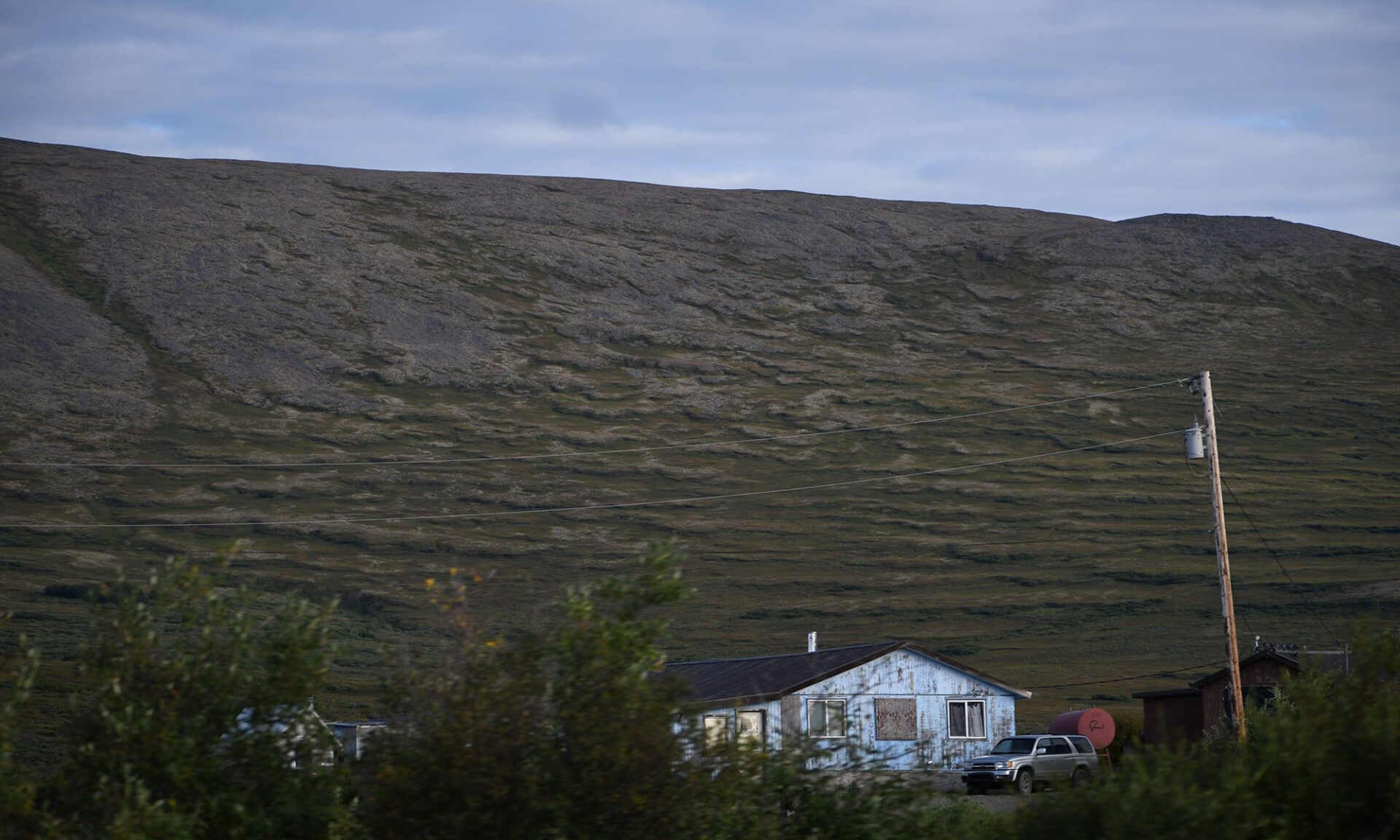
In some of Earth’s coldest places, soil freezes, thaws, and slowly creeps downhill, creating large, wave-like patterns across entire hillsides. The patterns resemble those made by familiar fluids—think paint dripping down a wall or icing down the side of a cake. But the physics behind those everyday materials can’t explain how the icy landscapes form.
So University of Rochester researchers went looking for a better comparison. They found one in an unlikely place: oobleck.
In a study published in AGU Advances, Rachel Glade, an assistant professor in the Departments of Earth and Environmental Sciences and Mechanical Engineering, and her URochester colleagues used mathematical modeling to compare how different fluids behave. Their analysis suggests that solifluction patterns—the ripples formed as frost-heaved, water-saturated soil slowly moves downhill—form through a process analogous to the unusual behavior of oobleck, a mixture of cornstarch and water that becomes harder to move the harder it’s pushed.
“This demonstrates how patterns in everyday fluids can be compared and contrasted with complex patterns in sediment to better understand how Earth’s surface evolves,” Glade says.
What is solifluction?
Solifluction is a gradual process where soil freezes and heaves upward. When there is a thaw, saturated soil turns to icy sludge and creeps downhill at a few centimeters per year, forming large-scale patterns that resemble fluid-like ripples. Over time, the movement can sculpt entire hillsides. The behavior of the frost-heaved soil and the formation of solifluction patterns are complex because of seasonal variability in water and ice in the soil.
To understand the behavior of solifluction patterns, the researchers used computer and mathematical models to examine a range of fluids, from paint dripping down a wall to folding lava and rolling waves. But these fluids could not account for the solifluction patterns in icy soil. So researchers turned to something more unusual: a strange substance called oobleck.
Predicting the movement of icy soil
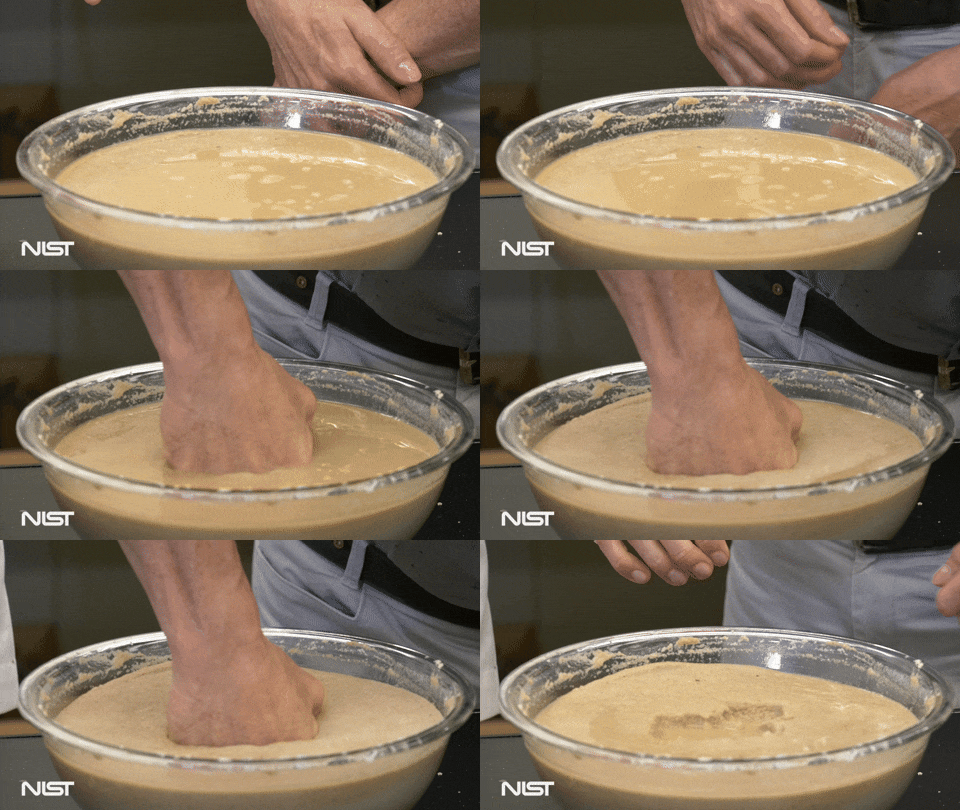 Oobleck may be familiar from children’s science experiments, but its unusual physical properties have also made it useful for scientists studying how certain fluids move. Unlike ordinary fluids, oobleck becomes harder to move when force is applied. The mixture thickens as it flows downhill and hits bumps, causing a pileup of material behind the bump, which ultimately forms waves.
The researchers found that solifluction patterns look similar and form through a somewhat similar process. Variations in moisture and other properties can cause frost-heaved, water-saturated soil to move at different speeds around small bumps, creating wave-like patterns on hillsides in cold regions.
“By having an equation that is similar to the oobleck waves, we were able to find something that gives us these patterns.”
Using this information, the researchers developed an equation that could reproduce solifluction patterns.
“By having an equation that is similar to the oobleck waves, we were able to find something that gives us these patterns,” says Glade.
Developing an equation for soil movement could help determine whether a hill will have a landslide or predict the probability of an oil pipeline burst caused by heaving soil.
While the model has not yet been tested in real-life applications, it is a step toward developing processes that could help researchers better understand how landscapes change.
“It’s improving our understanding of this fundamental system so that we can try to better predict things in the future,” says Glade. “Landscapes are always changing.”
Other URochester researchers who contributed to this research include Alice Quillen, a professor of physics and astronomy and a Laboratory for Laser Energetics senior scientist; PhD student JohnPaul Sleiman; research scientist Fernando David Cúñez; and postdoctoral associate Sara Williams.