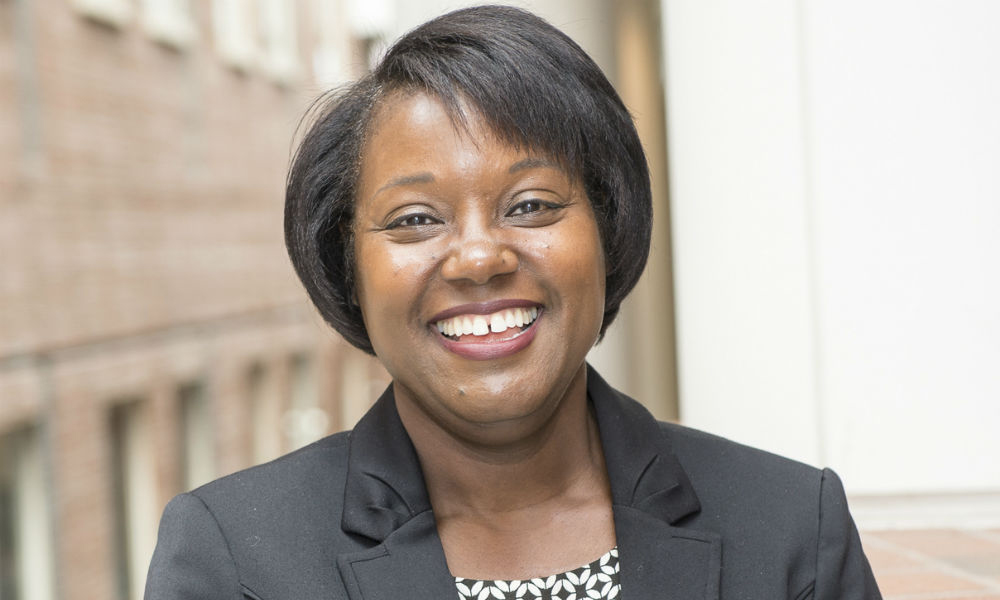
Interim Dean Mitch Lovett discusses how AI, shifting enrollment patterns, and evolving workforce needs are reshaping business education.
Chris Marquis, a professor at the University of Cambridge Judge Business School, wants to dismantle the Simon Business School at the University of Rochester. But not just Simon—all business schools.
In his New York Times op-ed, Marquis argues that business schools attract altruistically minded students who seek to change the world through noble pursuits, then turn them into profit-obsessed dealmakers through curricula that prioritize corporate values over society’s. “We don’t need to ‘fix’ business schools,” he says. “We need to abolish them.” (In a subsequent Poets&Quants interview, Marquis clarified he seeks reinvention, not abolition.)
Mitch Lovett, Simon’s interim dean, posted an indirect response on LinkedIn. His main point: not all business schools take the same approach to education. While Marquis is concerned that business schools are manufacturing agents who will perpetuate practices that contribute to inequality and other societal problems, Lovett argues that schools like Simon equip students to question those same practices. Lovett writes, “The frameworks and critical thinking skills learned in business school prepare students to challenge assumptions, identify what is missing, and develop the capacity for independent judgment rather than simply accept a company’s version of events.”
Lovett’s commentary is built around the importance of intellectual rigor—a foundational quality of a Simon education. It’s a hallmark the school will lean into as it navigates a period of significant change driven by the rapid emergence of artificial intelligence, employers rethinking the skills they need, uncertainty around international student enrollment, and rising skepticism about the value of a graduate degree.
In a recent Leadership Conversation, Lovett discussed these forces, Simon’s response, and why critical thinking will be more valuable than ever to future business leaders.
Here are five takeaways.
Enrollment challenges have created a branding opportunity.
For decades, students from around the world have chosen to pursue a graduate education in business schools across the US. However, the 2025 Application Trends Survey by the Graduate Management Admission Council (GMAC) found that international applications to programs in the US—along with Canada and the United Kingdom—declined, while other regions experienced increased interest.
International enrollment has been particularly important to Simon, which has long drawn students from overseas. But changes in immigration policies, visa restrictions, and international relations are creating new obstacles, a trend backed by a report from the Association to Advance Collegiate Schools of Business. It’s Lovett’s biggest concern.
“The biggest challenge we’re facing comes from the geopolitical environment. And it really manifests primarily as challenges with significant international enrollment impacts.”
Lovett shared that Simon is taking a three-pronged approach to address this uncertainty. The first piece involves partnering with the Office for Global Engagement to expand the school’s international recruitment beyond the regions where it has traditionally concentrated its efforts. The second is exploring ways to bring Simon programs to international students where they are; here, Lovett pointed to an ongoing program in Bern, Switzerland, as an example of how the school is thinking about this.
Although Simon has long taken pride in being a global business school, Lovett sees the current climate as a transitional moment. So the third prong focuses on rethinking its strategy at home.
Working with University Marketing and Communications, the school is taking a more coordinated approach to recruiting students, building its reputation, and reaching new audiences. Efforts include building Simon’s brand with a renewed value proposition through a national campaign (targeted launch: January 2027), enhancing the school’s regional visibility by working with media outlets in Syracuse and Buffalo, and reimagining the website to better align with how students make decisions. Additionally, as part of the Business Master’s Pathway, the school has developed a network of partnerships with regional and national colleges and universities to give undergraduates a streamlined route into Simon graduate programs.
AI can’t be treated as an elective; it’s foundational business knowledge.
Few developments are reshaping business education—and really, any industry—as rapidly as artificial intelligence. The 2025 GMAC Application Trends Survey found that more than 50 percent of graduate management education programs are teaching AI as a tool for decision-making and strategy development.
But AI is no stranger to Simon.
Simon used machine learning and advanced analytics to tackle business challenges long before generative AI became mainstream. So, when OpenAI launched ChatGPT in 2022, Simon was ready to adapt and launched the Simon AI Initiative a year later.
Lovett explained that Simon has been focused on integrating AI into the curriculum in various ways. Students participate in workshops, take core modules in every program, and enroll in many AI-oriented courses where they can do a deep dive into specific AI components. Adding to two master’s programs in AI, Simon recently bolstered its AI offerings with a new online graduate certificate in AI in business, which gives participants the skills and strategic fluency to apply generative AI to their workflows immediately.
“It’s not about the tools. It’s about the approach and implementation and how they enhance productivity and create value in an organization.”
Lovett also touched on how AI is changing how faculty assess learning. There’s concern that traditional homework assignments may no longer demonstrate whether students understand course material because it may end up being a lot of AI-generated answers. He noted that a lot of thought has gone into this issue and that he’s been working to give faculty guidance and tools to adjust their teaching and assessment methods—particularly for exams that require students to use digital platforms, such as Excel, to solve real-world business problems.
Critical thinking reigns supreme.
Here’s the thing about AI, and it’s been said many times: It is currently as dumb as it will ever be; it’s going to get better and better at complex analytical tasks. But it remains a tool, which is why Lovett sees convincing students that critical thinking skills are essential as one of the biggest challenges he and faculty have. Students need to know how to evaluate AI outputs, identify and challenge assumptions, and use their judgment to determine if proposed solutions are the best solutions, let alone make sense.
“AI is just a technological competence. What really drives success in the long run is critical thinking.”
Simon is building on that foundation by expanding its leadership development efforts. Lovett highlighted the Integrated Leadership Initiative, led by Carol Shuherk, a clinical professor and faculty director of the integrated leadership initiative. This effort expands the school’s communication curriculum by emphasizing rigorous thinking, collaborative skills, and practical experience, which alumni mentors also help to cultivate.
Lovett sees the development of these capabilities as crucial complements to technical expertise. Simon students must not only know how to analyze a business problem but also how to communicate their ideas, influence decisions, and lead people through change.
That philosophy reflects Simon’s broader educational mission: developing analytical thinkers who can adapt their knowledge to unfamiliar challenges and translate insight into meaningful results.
Rigorous education needs real-world experience.
In its 2025 State of Business Education Report, the Association to Advance Collegiate Schools of Business identified experiential learning as a defining feature of future business schools, highlighting it as a bridge between knowing and doing. Lovett answered how Simon connects rigorous classroom instruction and practical application by pointing to the Ain Center for Entrepreneurship and Innovation.
A resource for all of URochester, the Ain Center gives students across disciplines opportunities to gain valuable hands-on experience developing businesses and navigating the challenges that come with them as well as mentorship and resources. The center empowers students through initiatives such as the Ain Foundry Program and entrepreneurial competitions.
“Students need the frameworks and approach and experiences that allow them to adapt to whatever the world throws at them.”
Lovett also called attention to Simon Vision Consulting, which connects graduate students with Rochester-area professionals through short-term, high-impact consulting projects. This lets students work with clients on real business problems, applying classroom knowledge while building the communication and collaboration skills needed to influence decisions.
Business research is about more than business.
Not long ago someone asked Lovett, “What is business research?” He immediately understood the question stemmed from the fact that people generally associate research with scientists and labs. Business research is harder to visualize.
Lovett offered a straightforward explanation: Business researchers study how companies and markets function, why people and organizations make particular decisions, and how those decisions influence the economy.
“Ultimately, we look for ways that businesses can make better decisions or create the public policy for business to be better.”
To clarify business research, Lovett provided a few faculty examples.
Federal administrations use regulation and deregulation to shape the US economy, but historically, there haven’t been good ways to measure the regulations. Joseph Kalmenovitz, an assistant professor of finance, is developing new approaches to measuring government regulation, creating tools that could help researchers better understand how changes in public policy affect businesses and markets. Kalmenovitz’s paper “Regulatory Fragmentation” received a 2025 Brattle Group Prize in Corporate Finance.
One aspect of AI that has drawn much discussion is “AI tokens,” units of text and other information that AI models process. Finance professor Yukun Liu, the William H. Meckling Associate Professor of Business Administration, is examining the relationship between AI usage and stock market performance. Using a dataset that tracks consumption, Liu is investigating how AI adoption relates to stock price movements across industries, with early findings suggesting retail and wholesale businesses may benefit more than healthcare and pharmaceutical companies.
Marketing professor Janine Miklós-Thal, the Fred H. Gowen Professor of Economics & Management, studies algorithmic pricing, in which companies, such as Amazon, use computer algorithms to automatically adjust prices based on factors such as demand and competitors’ prices. Some outcomes resemble coordinated pricing—even when companies aren’t in direct communication—raising important questions about potential collusion. Miklós-Thal’s research examines how these technologies should be regulated and how they might be weakening competition.
Lovett also expressed a desire for more collaboration between Simon faculty and researchers in other parts of URochester.
“I would say we haven’t leveraged the opportunities as much as we could,” Lovett said. But he noted that a lot of that collaboration is born out of putting together grants. “Part of the challenge is business schools generally don’t get the same level of grant support other areas have historically gotten. So, there just hasn’t been that same culture, and I’m thinking about how we start to engage in this way. I’m very excited about that possibility and where it can take us.”