The secret to happiness? Feeling loved
 Sandra Knispel
|
Communications Specialist
Sandra Knispel
|
Communications Specialist Two psychologists—one a happiness researcher and the other a relationship expert—say love isn’t found. It’s created, one mindset at a time.
 Once Sonja Lyubomirsky, a distinguished psychology professor at the University of California, Riverside, was asked on live TV what the secret to happiness was.
“It’s ridiculous, it’s reductive, and it’s restrictive,” the happiness researcher recalls thinking. Worse, she didn’t have an answer she really believed in.
That changed when Sonja met Harry.
Harry Reis, a professor of psychology at the University of Rochester and the Dean’s Professor in Arts and Sciences, has studied social connections and close relationships for many years. When Lyubomirsky told him the TV anecdote, Reis didn’t offer a pat answer. Instead, he shared an observation: “I do know people who are happy, and I know people who are unhappy, and I can tell you the main difference between them: Happy people feel loved.”
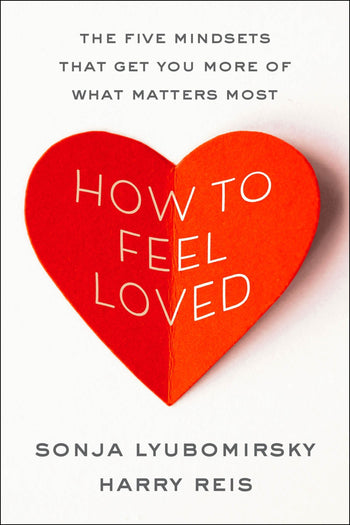
That single sentence became the jumping-off point for their book, How to Feel Loved: The Five Mindsets That Get You More of What Matters Most (Harper, 2026), which blends decades of research on happiness and human connection. Its thesis is both comforting and confrontational: If you don’t feel loved, you might be looking in the wrong direction.
Do we know how to feel loved?
Reis draws a distinction that many miss. People often focus their lives on being loved, but what’s more important, he says, is feeling loved. The difference matters. “Many of us are actually loved by other people, and yet we don’t feel it,” says Reis, who has spent the last five decades studying how close and romantic relationships work.
It isn’t that people have lost the capacity to recognize love or the absence of it. The problem, he argues, lies in the strategies people use to try to generate that feeling. For that feeling to take hold, three things must happen:

- You reveal something real about yourself—not a performance, but a glimpse of the real you.
- The other person listens with genuine interest.
- And, most crucially, the other person cares, responding in a way that makes what you’ve shared matter.
Miss any one of these, and love remains present but unfelt.
“Many people believe that in order to feel love, they need to make themselves more lovable,” Reis says—by becoming more impressive, more attractive, more successful. While these strategies can be effective in the short term, they’re more likely to create distance in the long term. The feeling people are after, he says, doesn’t come from polishing the surface. Instead, the way to feel more loved is to build a loving connection with another person.

The ‘relationship sea-saw’
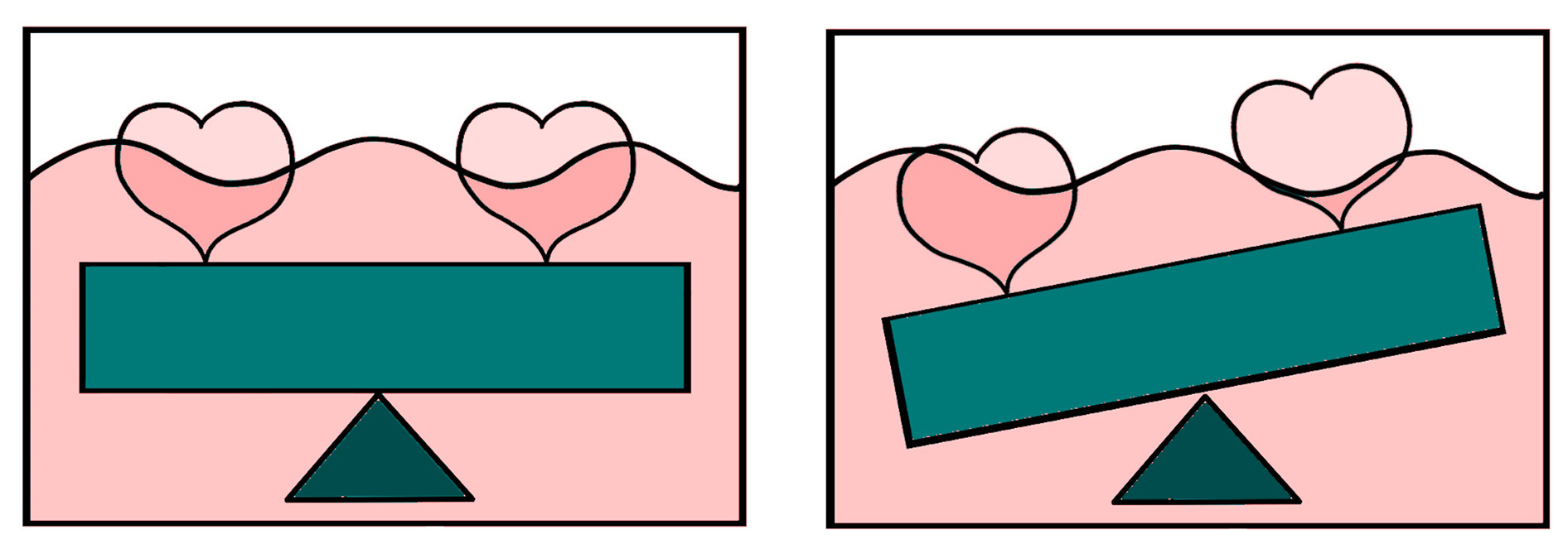
To explain how connection works, Reis and Lyubomirsky use what they call the “relationship sea-saw.” The spelling with its water allusion is intentional. The idea is that in our connections with others, it can seem as if we’re sitting on a see-saw with part of us submerged under water—hidden.
“When we lift up the other person, it’s as if we lift them above the waterline,” Reis explains. “All of a sudden, parts that were previously hidden are now visible.” That act of paying attention and showing care creates momentum, which in turn encourages the other person to lift us up and above the imaginary water level.
In short, the way to begin to feel more love is to show more love to the other person, setting off a cycle of mutual responsiveness.
Five mindsets, not five steps
The book organizes that cycle into five mindsets—not a checklist, but a way of approaching interaction.
Reis and his coauthor offer five mindsets, or ways of entering conversations with others (significant and otherwise), that make love more likely to land:
- The Listening-to-Learn Mindset: Start by listening to the other person. Not to reply, but to understand. Put the phone away, make eye contact, ask open-ended questions, and paraphrase what you hear.
- The Radical Curiosity Mindset: Be curious. Follow what lights up the other person. Go deeper. Interested, it turns out, is interesting.
- The Open Heart Mindset: Lead with an open heart. Show the other person that you care about them, make room for difference, and let go of the need to be right.
- The Multiplicity Mindset: See the whole person. Complexity and contradictions exist in all of us—you, too. Recognize and accept them.
- The Sharing Mindset: And then, when they reciprocate, share. Offer something true, with care and discretion.
Taken together, these mindsets create a dynamic back-and-forth that promotes real connection: one person lifts, the other rises; what was hidden becomes known. And then they switch roles, taking turns lifting and being lifted.
“It’s not like, okay, the next two minutes I’ll do mindset number one,” Reis says. “It’s a mentality.”
Attention in an age of screens
All these ways of building connection depend on something increasingly scarce—undivided attention. Even small distractions can erode it. In one study, simply having your cell phone—untouched—on the table made conversations less fulfilling.

Why? “We’re always looking to see what signal comes through,” Reis explains. Even a glance can communicate absence. “When I see your eyes glance down at your phone, I feel you’re not 100 percent involved.” The effect is magnified online, where people often multitask during Zoom conversations. “You can tell,” Reis says, and the connection immediately thins.
Can AI make us feel loved?

As artificial intelligence becomes ubiquitous and more conversational, some are turning to chatbots for connection. Reis understands the appeal. “Many people rely on chatbots to fulfill their need for connection,” he says. These chatbots are remarkably good at it, trained to express empathy and understanding.
But Reis draws a firm boundary. “The problem is that chatbots can’t really love.” An AI bot doesn’t genuinely care about anything other than carrying out its program.
To explain why that matters, Reis turns to biology. “If you’re really hungry and you have a candy bar, that will satiate your hunger for a time,” he says. “Will it provide nutrition? Provide long-term well-being? No.” Chatbots, he argues, can offer short-term relief without the ingredients for long-term sustenance.
They also remove friction, which can become a human problem. Chatbot interactions are frequently one-sided. “You can do all the opening up,” Reis says, “and the chatbot will do all the empathic responding.” Real relationships, by contrast, require reciprocity—and discomfort. Real-life partners complain and make demands on you. Those human moments, Reis argues, are not flaws. Instead, they provide the seeds for relationships to grow.
 The choice that matters
What ultimately separates human love from its digital imitation is choice. What makes human love such a powerful experience, according to Reis, is the recognition that the other person is choosing to love us.
And, when people feel loved, Reis says, “they’re happier and healthier. They’re more productive. They’re more successful in what they do.”
Illustrations by Nishant Choski, unless otherwise credited. Additional reporting by Sofia Tokar ’20W.
A version of this story appears in the spring 2026 issue of Rochester Review, the magazine of the University of Rochester.