
Undergraduates turn Martian air into plastics and fertilizer—earning top honors internationally.
In the 2015 film The Martian, astronaut Mark Watney survives on Mars by engineering biological solutions with limited supplies. At the University of Rochester, a team of undergraduates is turning that science fiction into a real-world possibility.
Their vision? Use bacteria to transform carbon dioxide into materials that may one day help astronauts build a sustainable life on Mars. Dubbed “PHAntom” by the team of 14 URochester students, the project earned top honors at the 2025 International Genetically Engineered Machine (iGEM) competition, where the team was the number one most-recognized college team in the United States.
Transporting supplies millions of miles into space is costly and inefficient, and traditional plastics are unsustainable on Earth and impossible to produce on Mars. Team PHAntom’s solution? Engineer bacteria that can make biodegradable plastics and fertilizers locally, paving the way for more sustainable living on Earth and beyond.
In October, Team PHAntom submitted their research to the 2025 iGEM competition, a global event where student teams tackle real-world challenges using synthetic biology—a field that applies engineering principles to create biological systems inspired by nature.
The URochester team competed against 421 teams worldwide and was awarded a gold medal and four nominations in categories including “Best Space Project” and “Best Hardware” for their innovative approaches. With these honors, the team received more awards than any other college team in the US.
“Our Rochester 2025 iGEM team broke new ground this year by thinking beyond the needs of life on Earth,” says Anne S. Meyer, an associate professor in the Department of Biology and one of the advisors of URochester’s iGEM team. “The establishment of a human settlement on Mars will only be possible if it can be self-sustaining, which is not currently feasible,” she adds. “Team PHAntom thought about what local resources would be available on Mars, and then cleverly figured out a way to engineer bacteria to use the carbon dioxide in the Mars atmosphere to produce essential resources.”
Where undergrads run the synthetic biology show

As members of iGEM, undergraduate students are responsible for all aspects of their project, from choosing the research focus and running experiments to managing finances, securing funding, and sharing their progress via social media and a project website.
Team PHAntom began brainstorming project ideas in the spring, spent the summer and early fall developing and testing their ideas in the lab, and submitted their project for evaluation in the iGEM competition later in the year. Some team members were drawn to the idea of a space-focused project, and others wanted to pursue a biomanufacturing approach, so the team ultimately decided to combine the two. The result is a project that integrates sustainable biomanufacturing with applications in space exploration.
From pollution to potential
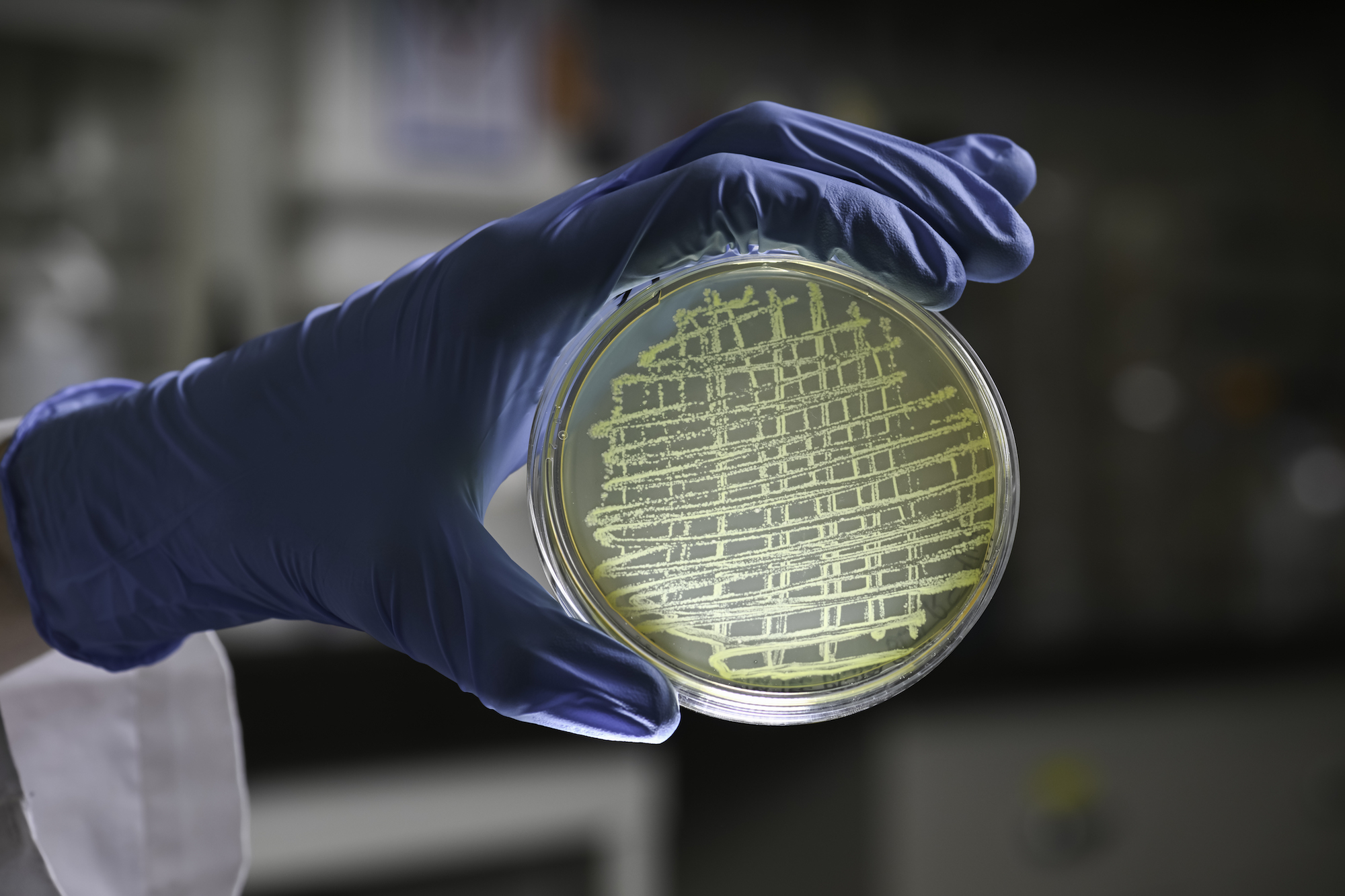
The team used engineered E. coli bacteria to convert carbon dioxide (CO2) into acetate—which can be used as a fertilizer additive that helps plants absorb nutrients through their roots—and into a biodegradable co-polymer known as PHBV, part of a family of eco-friendly plastics called polyhydroxyalkanoates (PHAs—hence the project name, “PHAntom”).
Unlike traditional plastics, PHBV is fully biodegradable: soil bacteria can break it down into CO2 and water without leaving behind toxic chemicals or microplastics.
“Part of what makes PHBV so exciting is that it can return safely to nature and won’t release chemicals into the air and water that are harmful to the environment or to human health,” says Owen Oxley ’27, a biochemistry major minoring in music, who is a member of Team PHAntom.
Building for Mars, inspired by Earth
Beyond its Earth-friendly benefits, the same process could help humans produce essential materials on other planets, including Mars. The Martian atmosphere is about 95 percent carbon dioxide, which is exactly what the team’s engineered bacteria used to grow and make acetate and plastic. On Mars, the system developed by Team PHAntom could transform Martian air into materials such as fertilizer, plastics, building supplies, and more, without costly shipments from Earth.
The concept of harnessing local resources on astronomical objects such as the Moon or other planets is known as in-situ resource utilization and is central to space exploration.
“Transporting single-use materials to Mars is incredibly expensive and energy inefficient,” Oxley says. “If we can use natural resources on Mars to make what we need, it makes long-term space missions far more sustainable and efficient.”
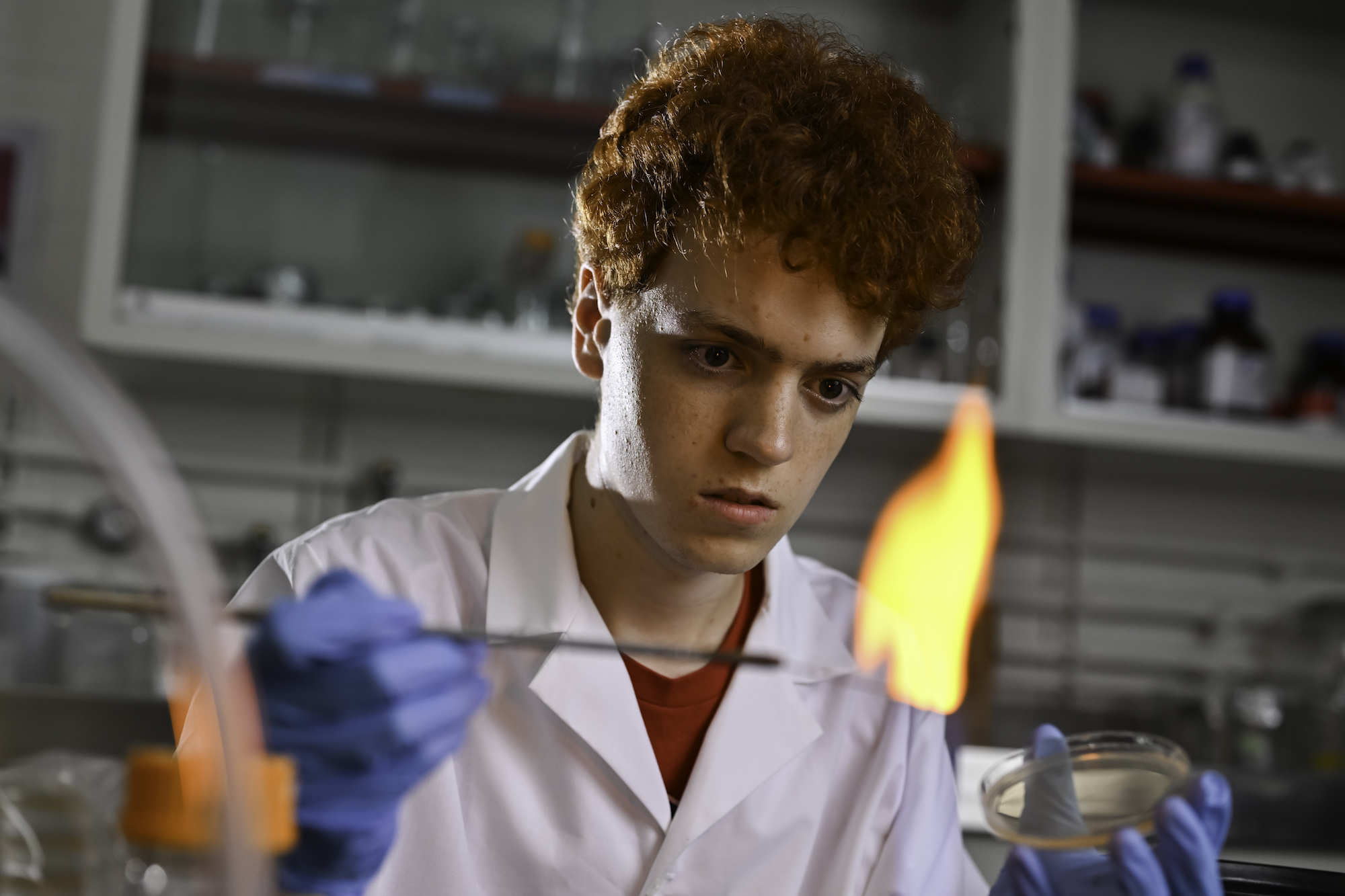
Team PHAntom also thought about how their bacterially produced plastics could be converted into a usable form. They developed a filament extruder capable of turning PHBV into a 3D-printable filament under low-gravity conditions. This makes PHBV ideal for a range of applications, from manufacturing to medicine, and allows for the on-demand creation of tools and parts in remote, resource-limited environments, including space.
“These new technologies could truly enable a Mars settlement to take its first steps toward independence, without needing to rely on costly, slow resupplying from Earth,” Meyer says.
Testing Mars-ready tech right on campus
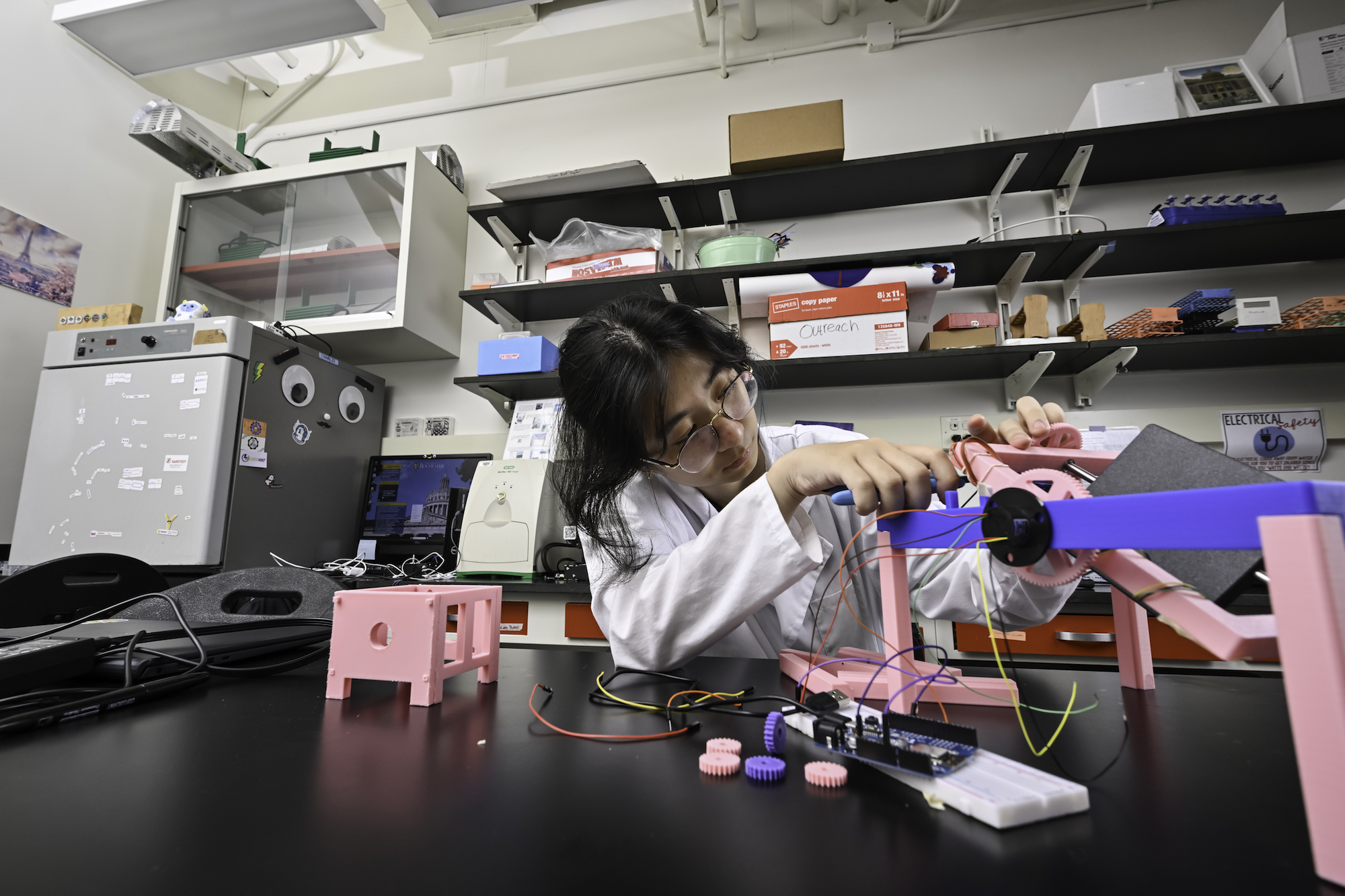
To better understand how the bacteria might behave in space, the team built their own microgravity simulator called a clinostat. The clinostat mimics low-gravity conditions by spinning the biological samples around two different axes of rotation at the same time. Using the clinostat, Team PHAantom was able to estimate how well their system might perform under Martian-like conditions—all from their campus lab.
“It’s one of the unique parts of our project,” Oxley says. “Building this piece of hardware allowed our team to model bacteria behavior in microgravity conditions without having to leave Earth’s atmosphere.”
From curiosity to breakthrough in one year
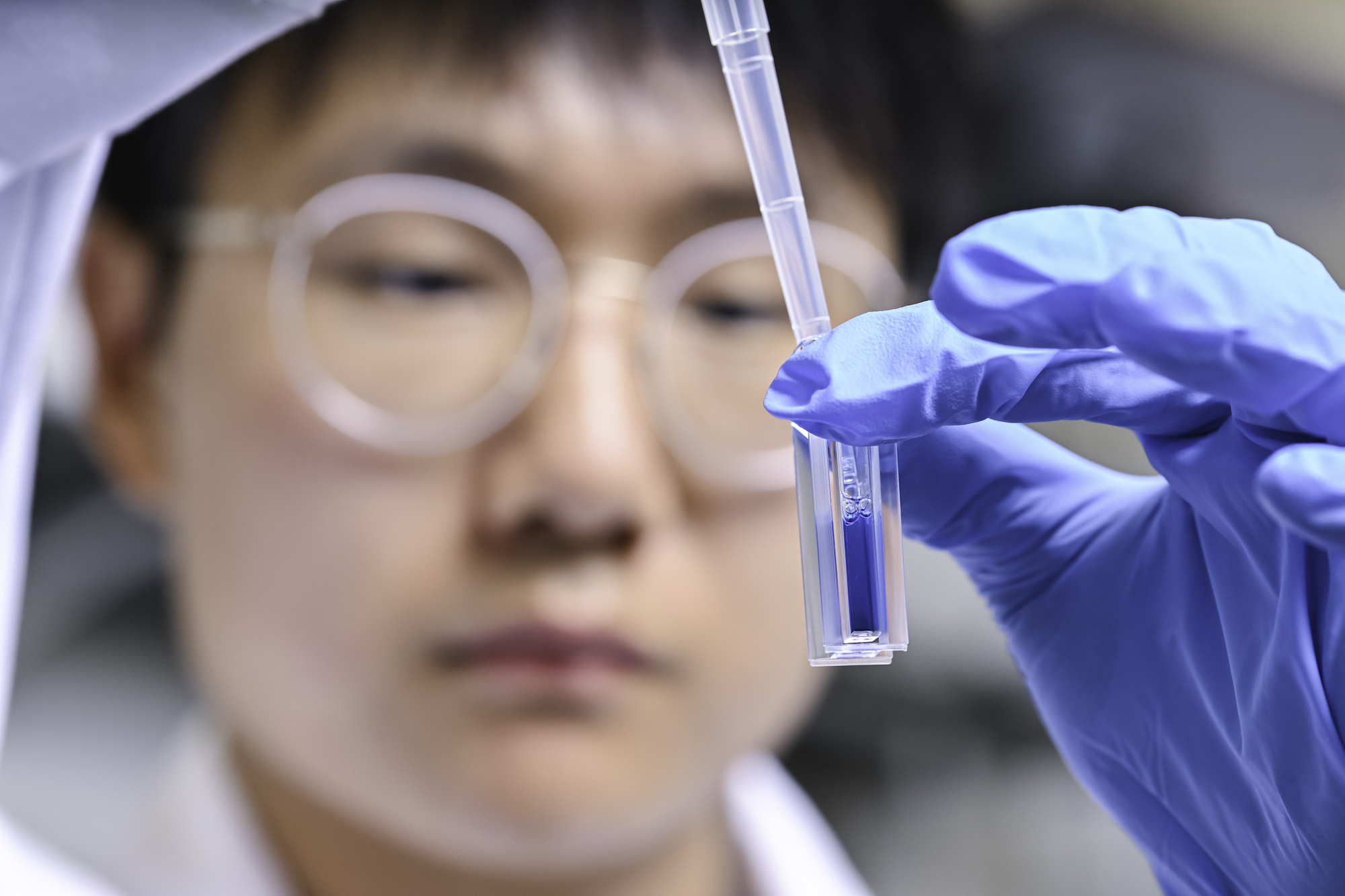
For the students on Team PHAntom, the project has been much more than a research competition; it’s been a hands-on experience in teamwork, problem-solving, and applying research skills, Oxley says.
“Their amazing success is really a tribute to the team’s innovative thinking, strong teamwork, and persistence throughout the course of their project,” adds Meyer.
Because the iGEM competition runs for a single year, which is a fraction of the time most research projects take to yield results, the students had to take their idea from concept to completion on a tight timeline, learning new lab techniques and adjusting their approach along the way.
“With iGEM, we receive guidance, but we don’t have a grad student, post-doc, or principal investigator looking over our shoulder, so we have to troubleshoot problems ourselves,” Oxley says. “This means we learn a ton about molecular biology and genetics techniques in a very short amount of time. As an undergrad, it’s a unique experience that those of us interested in research are very grateful to have.”
And the best part? No Hollywood effects required.