What crime and prison reveal about incarceration—and about us
URochester researchers are studying how childhood trauma, parental incarceration, and even discipline in schools shape criminal justice outcomes.
In a cramped room with stale air on North Carolina’s death row, John Blackshear decided to go off-script.
It was 2003, and Blackshear, vice president for student life at the University of Rochester, was a staff psychologist at Duke University. He had walked deep into the prison, past checkpoint after checkpoint, door after bolted door, to reach this cell on death row. He now sat across from a man who had refused to speak to anyone: not his attorneys, not his legal team, not the psychologists sent before.
The man’s name was Paul Brown. He stared at Blackshear. Blackshear held his gaze. He remembers thinking: What am I supposed to do with this guy?
Blackshear had developed a reputation for taking the cases no one else wanted. Here he was, sitting across from a man who was afraid for his life, who had no obvious reason to trust a stranger.
On an impulse, Blackshear did something his training had not covered. He started talking about basketball: “Duke or UNC?”
Brown bristled. “UNC, of course.”
“Then you and I are not going to get along.”
And somehow, that broke the ice.
As a forensic psychologist, Blackshear’s caseload has taken him from civil lawsuits to capital crimes and into federal prisons. Over the course of a career spanning hundreds of cases and millions of pages of records, he has arrived at a conclusion: “I’ve met a ton of babies in this world, and none were born to kill.”
Over their sessions together, Blackshear learned what Brown had never revealed to anyone: that when he had lost his temper and fired a gun, a small‑caliber bullet had ricocheted and killed a baby in the room. He had been born of a rape. He had experienced abuse from his earliest years—physical, psychological, emotional, sexual. He had never, not once in his life, been given what most people take for granted: someone who showed up and stayed.
In one of their final sessions, Brown broke down. Through his tears, he said something that Blackshear has never forgotten: “I wish I’d met you when I was 12.”
How childhood trauma drives incarceration risk
That counterfactual animates research across URochester. What if someone had been there, at 12, or at 8, or at birth?
The United States incarcerates more people per capita than any other nation; more than 2 million people are currently held in US jails and prisons, and more than 2.7 million children have an incarcerated parent. What begins as incarceration—the confinement of a person in a jail or prison as legal consequence—seeps outward through families, neighborhoods, and generations in ways the criminal justice system was never designed to address.
Jennie Noll has spent three decades studying exactly that spread.
“Our research follows people over time,” says Noll, a professor of psychology and the executive director of URochester’s Mt. Hope Family Center. “We engage those who have been traumatized and follow them for decades, even generations.”
“I wish I’d met you when I was 12.”
What she and her colleagues have mapped is a pipeline: one that begins not in a courtroom, not in a classroom—but in the highchair. Early life trauma, which Mt. Hope researchers define broadly to include not only abuse and neglect but also the loss of a parent to incarceration, interferes with the brain’s developing architecture. It disrupts the capacity for emotional regulation, for sustained attention, for the kind of trust that allows a child to learn from adults. By the time these children reach kindergarten, their struggles can look like defiance or disorder. They are, in fact, the neurological imprint of early pain.
“Early life trauma that goes untreated can manifest in behavioral problems in school, cognitive problems—interfering with one’s full potential,” Noll says. “You can imagine those things unchecked in adolescents could result in significant behavior issues: suspensions, detentions. And that is the pathway you see when educators are not trauma‑informed, when they don’t understand the roots.”
Scholars and advocates have come to call that pattern the school‑to‑prison pipeline, which describes the way discipline policies—suspensions, expulsions, and on‑campus arrests—pull students out of classrooms and toward the juvenile and criminal justice systems. National analyses by civil rights and education researchers have found that these policies fall hardest on Black and Brown students and students with disabilities, who are suspended, expelled, or referred to law enforcement at rates far higher than their white peers for comparable or even less serious behavior.
Moreover, when a parent is incarcerated, an older child may struggle with both painful knowledge and social stigma. For a younger child, Noll says, “they simply understand that a parent is gone. That can be traumatic, or at least disruptive developmentally, in terms of how children attach to caregivers.” Her observations are echoed in developmental research showing that parental incarceration exposes children to chronic stress and increases risks for attachment disruptions, cognitive delays, and later behavioral and mental health.
Attachment is the biological foundation of the capacity for relationship, for trust, for self‑regulation. When disrupted early, the consequences “can impact the developmental course of relationships,” Noll says. “It can make it difficult to attach, or to understand the nuances of social situations, which can feed into behavior, isolation, depression, and anxiety in ways that set the stage for this pipeline.”
For children of color, the risks compound. Racism, neighborhood violence, and the discriminatory application of school discipline and law enforcement policies layer onto existing trauma in what Noll calls “intersectionality: race, trauma, incarcerated parents.”
And yet the pipeline is not inevitable. Mt. Hope’s resilience research has identified the factors that interrupt it.
“The top predictor of resilience,” Noll says, “is having one supportive individual—a parent, a sibling, an older mentor—who is looking out for you.”
Early intervention can start before birth
Within Mt. Hope’s Building Healthy Communities program, a nationally recognized preventive initiative that has served families for more than a decade, the intervention starts as early as the second trimester.
Building Healthy Communities provides home‑based services for pregnant women in their second or third trimester. A family support provider with lived experience helps with the most concrete threats to stability—food, safe housing, transportation, school and work goals—while a clinician delivers evidence‑based trauma-informed services such as the Parents as Teachers home‑visiting curriculum for parenting skills, child‑parent psychotherapy to repair attachment after trauma, and interpersonal psychotherapy to treat maternal depression. For up to three years, that team stays at the kitchen table and in the pediatric clinic, woven into well‑baby visits and immunization schedules, quietly working to keep those families connected to care and out of child protective services.
Meanwhile, Mt. Hope’s afterschool and summer camp youth empowerment programs offer therapeutic, peer‑led skills training for children already showing signs of emotional dysregulation: teaching them, concretely and practically, how to manage what they feel before what they feel manages them. Its parenting programs teach caregivers, including parents reentering from incarceration, to replace punitive responses with social‑emotional learning strategies.
“We are teaching parents how to have productive parenting strategies that change a child’s behavior,” Noll says, “as opposed to escalating the fight.”
In these programs, opportunities abound for music, art, and play.
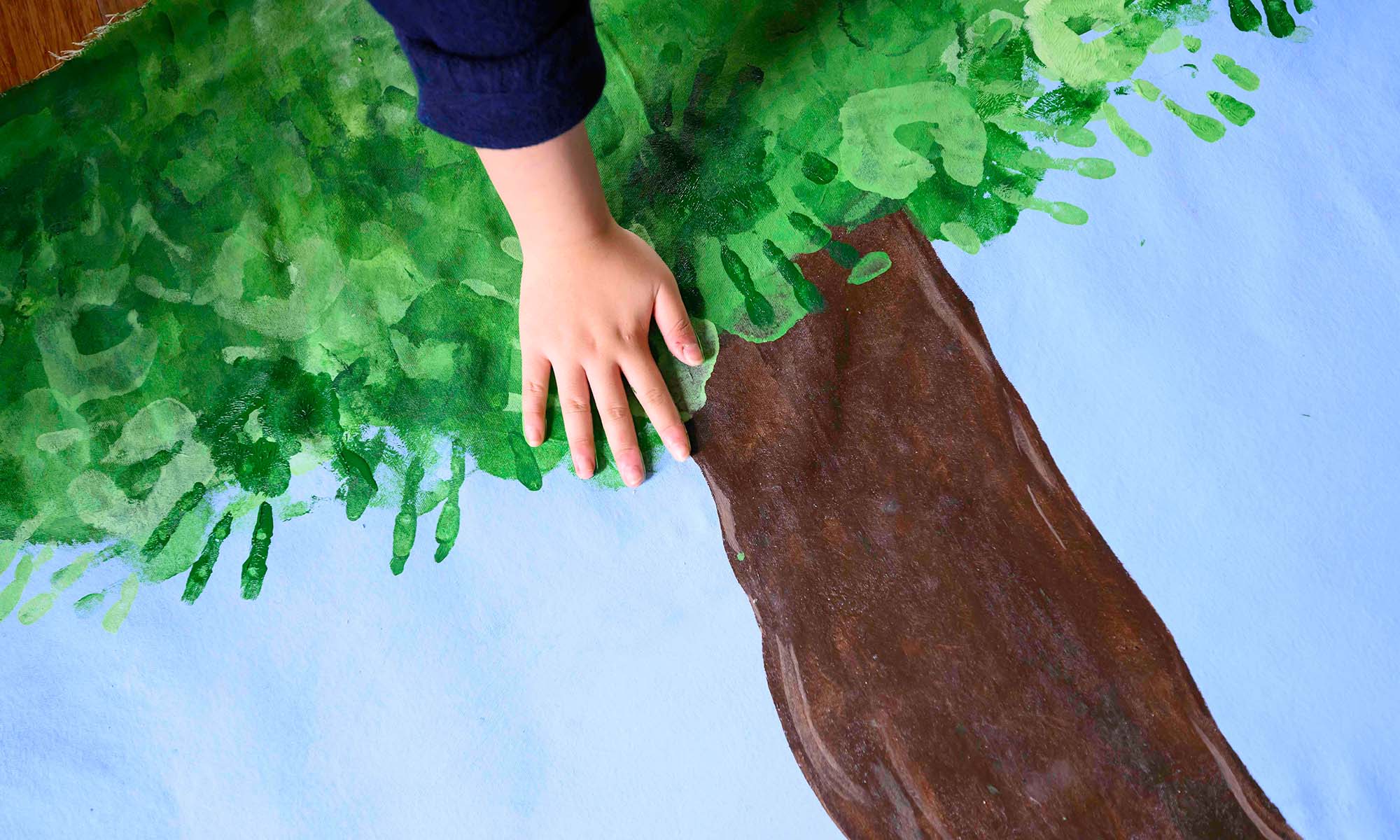
“One of the biggest diversion tactics is getting involved in something prosocial: sports, clubs, music, belonging,” Noll says. “If children discover an outlet early on, they can pour themselves into activities that form the foundations of self-esteem, self-confidence, and self-identity.”
Through the M.K. Gandhi Institute for Nonviolence, a URochester affiliate, schools and community partners experiment with responses to harm that focus on accountability, relationship, and repair rather than punishment alone. Each year, the Gandhi Institute trains thousands of people in nonviolence and restorative practices and facilitates restorative conversations with students in school “Help Zones,” giving educators concrete, restorative alternatives to suspension, expulsion, or arrest.
Blackshear is himself living proof of what one caring network can do. He grew up in Savannah, Georgia, born to a teenage mother, his parents’ marriage short‑lived, his house full of people and short on space. By most demographic measures, his story could have gone another way.
His mother insisted that he and his stepfather go to therapy in the mid‑1980s. There was also his great‑uncle Willie. When Willie died, family legend holds that his last words were, “Take care of John. He’s going to be somebody special.”
“No matter what dark moment I was going through, I could tap into that story,” he says. “Uncle Willie saw something in me that I cannot disappoint.”
Prison, jail, and reentry care in Rochester
On the other side of the pipeline, where people are emerging from jails and prisons back into the world, Diane Morse has built something rare: a clinic that was waiting for them.
Jails and prisons serve distinct functions; jails typically hold people awaiting trial or serving short sentences, while prisons, including federal facilities, house those convicted of more serious offenses, sometimes for decades. People cycle through both, and health consequences compound with every transition. A landmark medical study found that people coming out of incarceration have nearly 13 times the mortality rate of the general population in the first two weeks after release; the leading causes were drug overdose, cardiovascular disease, suicide, and homicide.
Morse, an internal medicine physician at URochester’s School of Medicine & Dentistry, helped build a response. She was among the first physicians in the country to establish a transitions clinic: a primary care practice specifically designed for people in that precarious window after release. The WISH (Wellness Initiative Supporting Health) Clinic, now at the Rochester-based Jordan Health, serves people reentering from state and federal incarceration. When Morse audited her first hundred patients, she found that only 20 percent had had a primary care physician.
Her research with women in Monroe County’s Opioid Intervention Court—modeled on Buffalo’s Opioid Intervention Court, the first such court in the nation—found that 24 of 31 participants (77 percent) described child, adolescent, or adult victimization and traced, in their own words, a path from early abuse to addiction to incarceration. “A lot of times people have a conviction, and they may not even be guilty,” Morse says. “We focus on moving forward.”
Beyond the concert hall
In spring 2024, Eastman School of Music students, faculty, and Rochester Philharmonic Orchestra musicians took chamber music to places it rarely reaches—including the Monroe County Jail.
“All people, regardless of their current life circumstances or the choices they have made, deserve the chance to feel human, and experiencing live music is one of the best ways to feel alive,” says Elinor Freer, associate professor of piano and chamber music.
Studying more than patient charts
On Saturday mornings at Monroe County Jail, URochester medical students do something unusual: They sit down, ask questions, and listen.
The Health and Incarceration Connection, which includes an elective pathway in the University of Rochester School of Medicine and Dentistry, enrolls roughly 50 students who rotate through the jail across four years of medical training. Two of those students went on to found the URWell RAWNY Clinic, a free, student‑run primary care clinic that URWell operates in partnership with the Reentry Association of Western New York (RAWNY), with Morse as faculty supervisor. The model is built on trust developed before release: students meet patients inside, tell them where the clinic is, and promise to be there when they get out.
“We thought we were the teachers. It was our patients who were teaching us how to listen—listening to understand a human being,” says Anthony Pamatmat ’26M in a TEDxRochester talk. “We learned to second‑guess every preconceived judgment that we form.” For example, in reviewing patient charts, terms like substance abuse, incarcerated, or drug‑seeking can create unconscious bias that may affect care. “But when you care for people with these lived experiences,” Pamatmat continues, “it becomes very clear that the chart can never fully capture the person behind it.”
A different kind of care
Working with incarcerated and formerly incarcerated patients changed the way Jack Bookbinder ’26M and Anthony Pamatmat ’26M think about medicine. In this TEDxRochester talk, they share how those experiences led them to create a student-run clinic that helps bridge the transition from incarceration back to the community.
The death row case that shaped a career
Blackshear still thinks about Paul Brown.
He thinks about Brown when he meets a baby in a grocery store—which happens often, because he’s convinced that babies are drawn to his face. He looks at them and thinks: Not one of you was born for this. Not one.
He thinks about Brown when he walks into jails and federal prisons to work with men whose stories he will spend years excavating. He thinks about him when he testifies before juries, laying out a life in full—not to excuse what happened, but to explain it, and to ask everyone in the courtroom to reckon with their own share of responsibility. “I want to implicate myself for negligence,” he says. “I want to implicate the jury, the judges, the attorneys, the gallery—because I do believe it doesn’t have to be that way.”