The biomedical engineering professor builds student confidence through high expectations and personal attention.
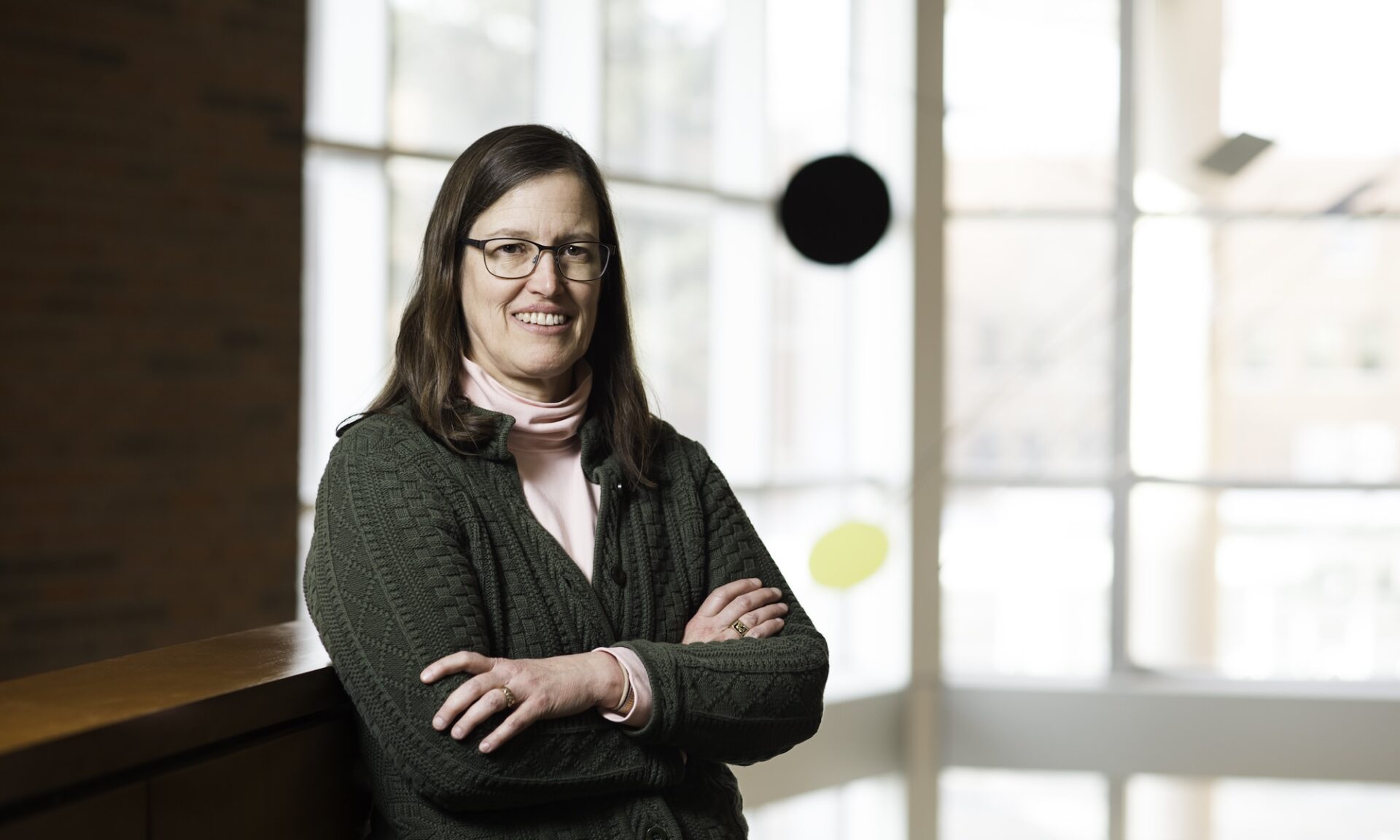
On its face, Laurel Carney’s best-known teaching tool might seem better suited to blackjack than bioelectronics. At the top of every semester, she writes each student’s name on a playing card, shuffles the deck, and draws cards to determine who answers a question in class.
The Marylou Ingram Professor of Biomedical Engineering and a professor of neuroscience at the University of Rochester adopted the technique from a colleague to encourage participation while minimizing unconscious bias. At the end of the semester, she hands students their cards as keepsakes. Some have kept theirs for years, a tangible reminder of Carney’s impact. “You never stop being Laurel’s student,” one undergraduate wrote in an evaluation.
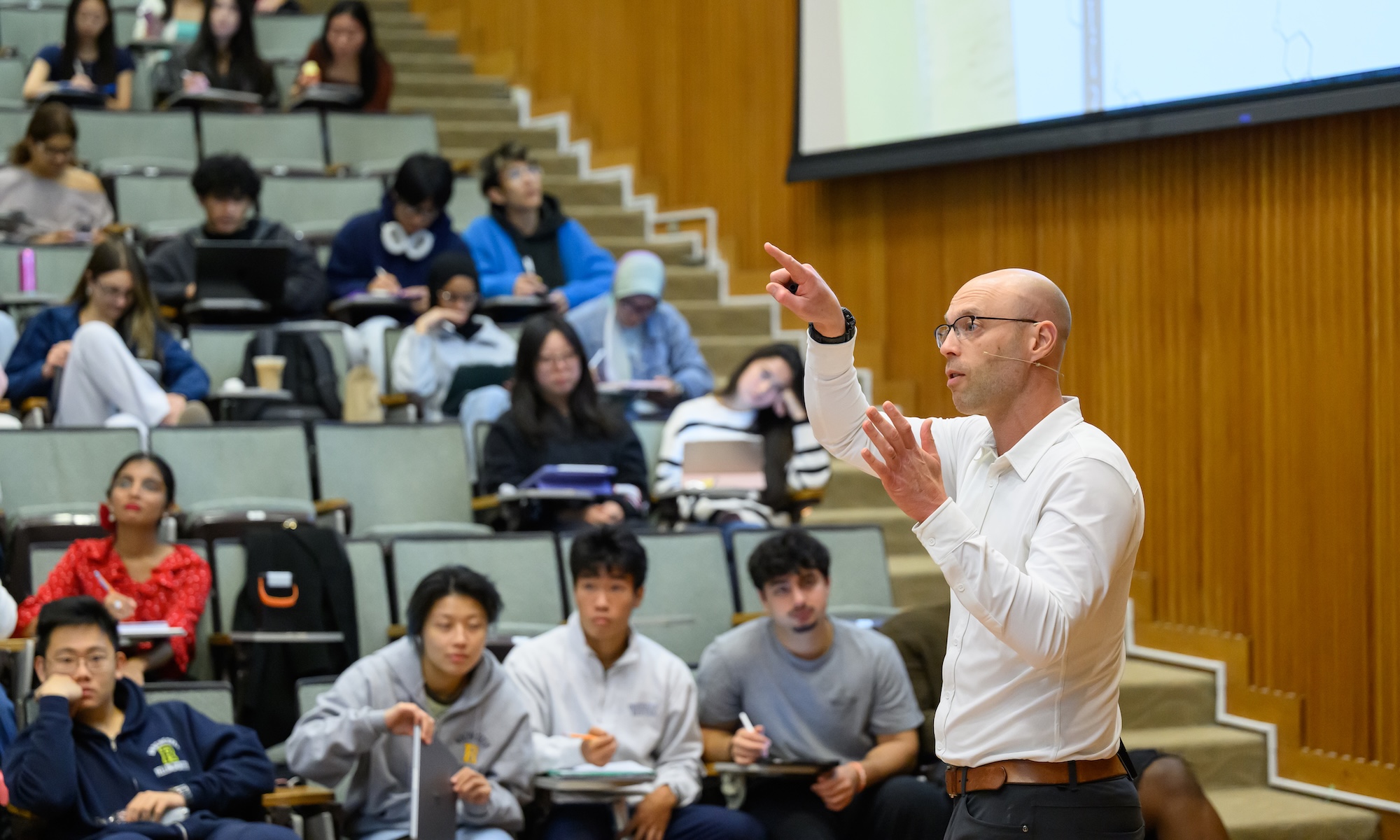
The cards also help Carney learn her students’ names and ensure that she gives them ample—and equal—opportunity to answer questions and engage with material. “Every student knows they’re all fair game,” she says. “I’ve found, if you learn their names, they work so much harder.”
That practice exemplifies Carney’s approach to teaching: Know your students, challenge them, and build their confidence to succeed. And it’s that commitment that earned her a 2026 Goergen Award for Excellence in Undergraduate Teaching, which recognizes outstanding teaching and innovation among URochester faculty.
From high expectations to lasting lessons
Carney believes that success in engineering requires more than memorizing equations or passing examinations. Students must understand concepts thoroughly enough to explain and apply them.
In one memorable assessment, she asks students to explain the Hodgkin-Huxley model, which describes electrical activity in nerve cells, to four audiences: a young sibling, a mathematics student, a college peer, and a professor.
“I want them to use different languages to explain the same ideas,” she says, whether through words, graphics, or mathematical representations.
Precision matters just as much. Former students recall Carney scrutinizing even minor rounding and measurement-unit errors, explaining that engineering mistakes are sometimes a matter of life or death.
Carney reinforces that responsibility through hands-on learning. When students in a neuroengineering laboratory recorded neural signals from crickets at an incorrect sampling rate, she guided them through questions until they discovered the mistake themselves. Then they repeated the experiment.
Learning together in the age of AI
Carney’s teaching continues to evolve as technology changes how students learn.
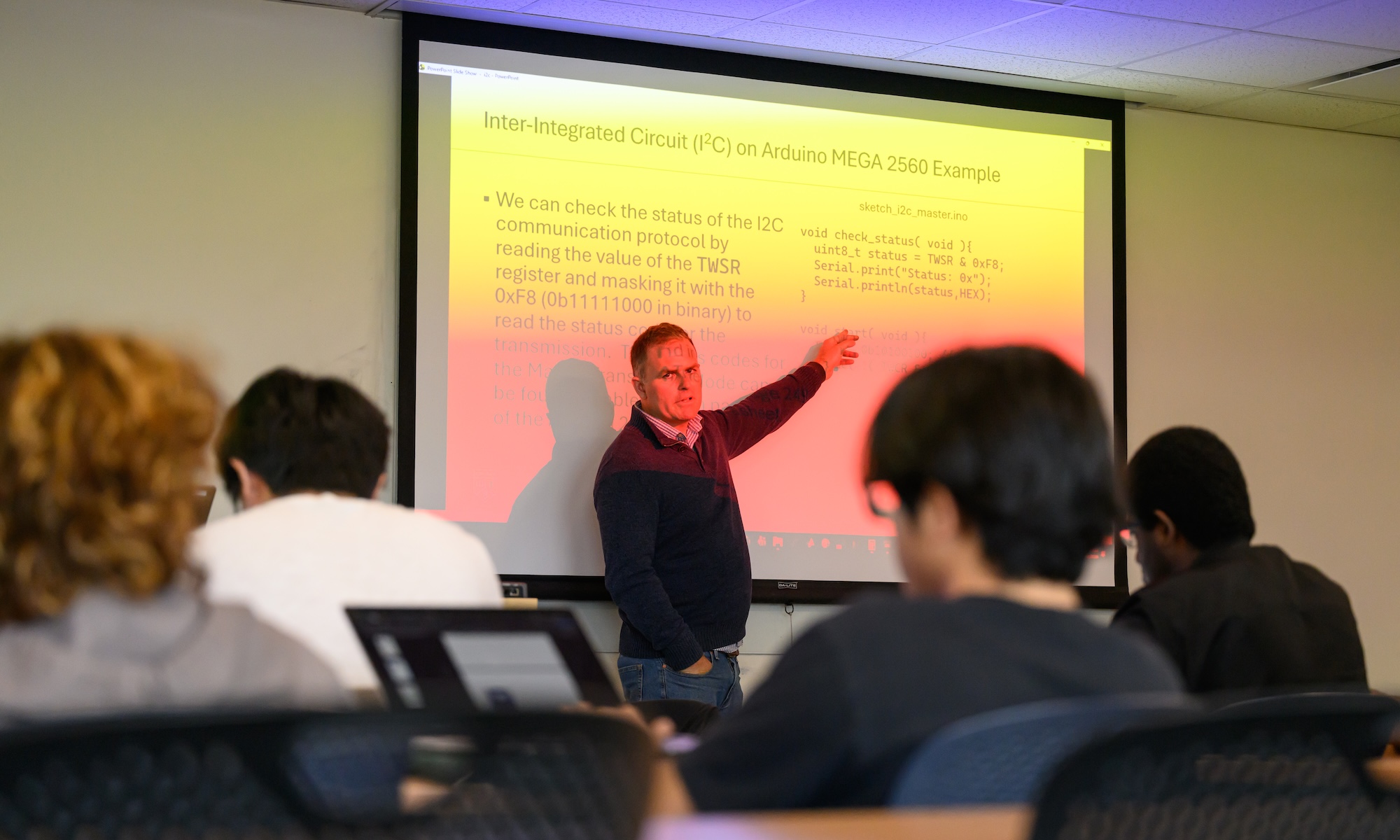
Concerned that artificial intelligence could undermine students’ mastery of foundational concepts, she helped redesign an introductory MATLAB programming course around peer-led workshops. Students begin by solving problems together using paper, pencils, and whiteboards before turning to computers.
The workshops also build community. Carney has watched students who barely knew one another at the start of a semester become comfortable collaborators.
Interdisciplinary teamwork likewise anchors BME/LIN 216: Speech on the Brain, a course Carney developed with linguistics professor Joyce McDonough. Students from biomedical engineering, neuroscience, linguistics, and other disciplines work together to investigate how the brain processes speech, then work in teams on a final project. The course grew out of the professors’ own collaboration, which revealed both the challenges and opportunities of examining scientific problems from different perspectives.
“You won’t understand everything, and we don’t expect you to,” Carney advises students. “That’s why you’ll have to trust each other.”
What URochester alumni say about Laurel Carney
“Professor Carney challenges her students to think critically and deeply about the material she teaches. She cares about students building real-world skills and not just about their performance on exams, but their ability to truly engage with problems.”
—Megan Bell ’26“I kept my playing card as a reminder that someone expected great things from me. I’ve tried to follow Laurel’s example: convince each and every student that you are paying attention to them, that you expect their hard work to yield success, and that you will hold yourself to the same high standards.”
—Madeline Cappelloni ’17, ’22 (PhD)“Laurel excels in supporting students outside of the classroom just as robustly as she supports them inside the classroom. Her unending dedication as an educator serves as a constant reminder that we are here to serve our students and help them achieve all that they can.”
—Daniel Guest ’26M (Pdc)