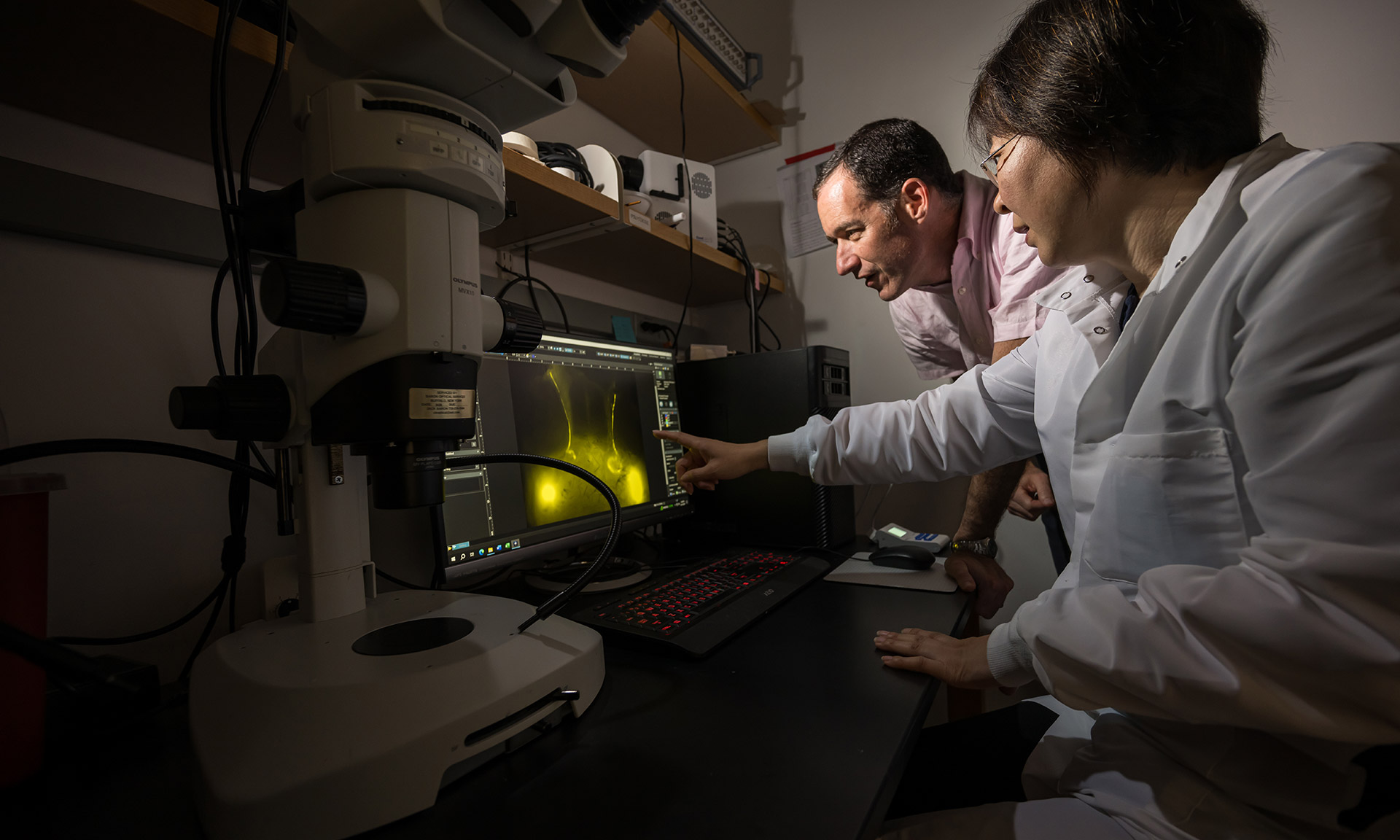
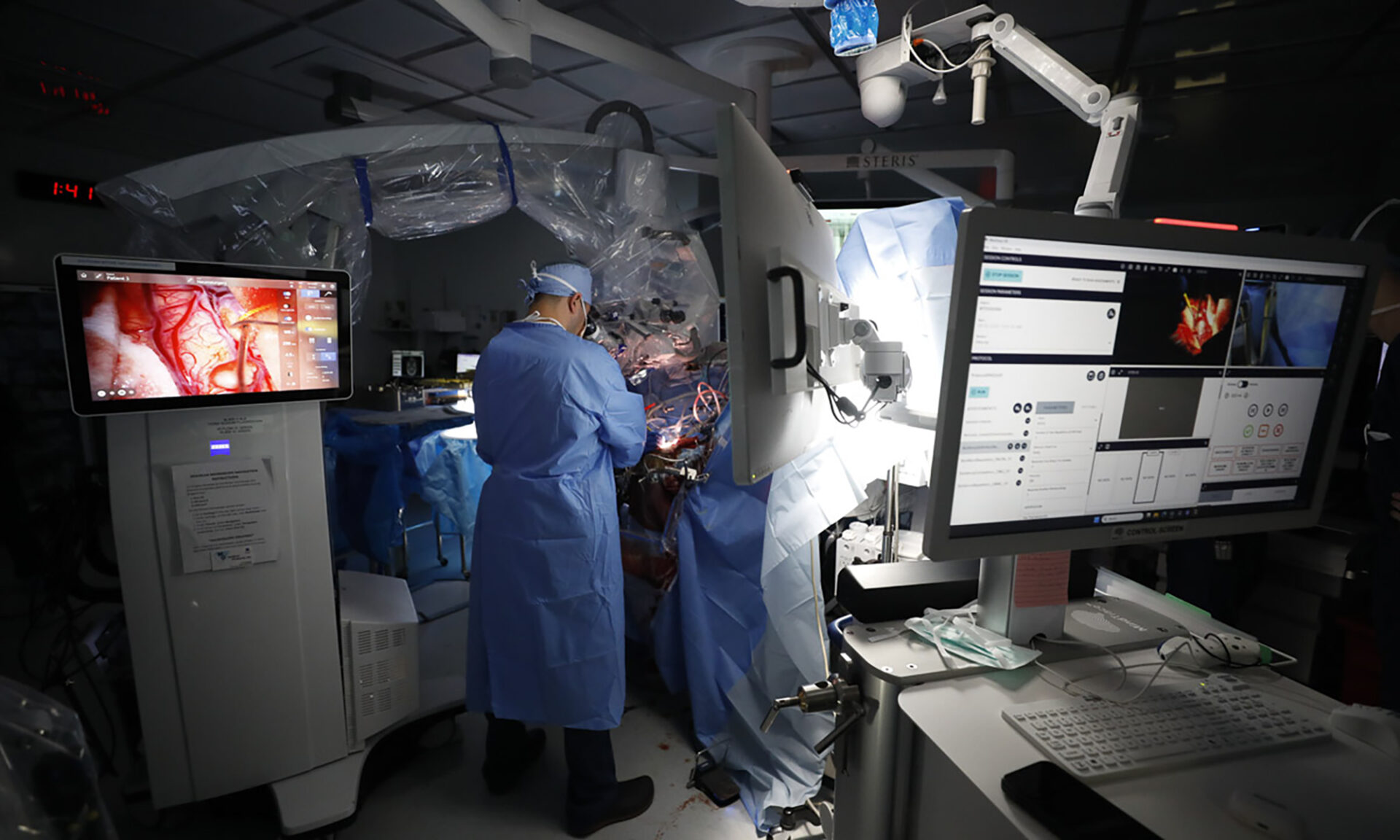
Built on decades of URochester research, MindTrace helps surgeons predict and protect critical brain functions during tumor operations.
When brain surgeons at the University of Rochester Medical Center plan a tumor operation, they’re increasingly guided by more than scans and experience alone. A next-generation platform called MindTrace—developed from decades of neuroscience and neurosurgical research rooted at the University of Rochester—helps surgical teams predict how different surgical decisions could affect a patient’s speech, movement, and other vital functions before tissue is removed.
The technology grew out of the University’s Program for Translational Brain Mapping, founded by cognitive neuroscientist Brad Mahon and neurosurgeon Webster Pilcher. Working alongside collaborators, including Simon Business School alumnus Max Sims, now the CEO of MindTrace, the team developed early prototypes that integrated neuroimaging and behavioral data into a single, practical tool for the operating room. The system is now deployed at six major medical centers nationwide, with the Medical Center among the first to implement it clinically.
By combining functional MRI, brain stimulation mapping, and neuropsychological testing, surgeons can visualize and replay brain-mapping data in real time, helping clinicians optimize their care decisions and patients better understand their surgeries.
Read the full story about MindTrace and the future of brain mapping at URochester.