URochester astrophysicist Adam Frank searches for traces of advanced technology—and, by extension, alien life—on exoplanets.
In 1995, a pair of scientists discovered a planet outside our solar system orbiting a solar-type star. Since that finding—which won the scientists a portion of the 2019 Nobel Prize in Physics—researchers have discovered more than 5,000 exoplanets, including some Earth-like planets that have the potential to harbor life. These are worlds in the “habitable zone” where liquid water could exist and may be the key to answering questions about whether life exists beyond Earth.
Illustration by Michael Osadciw
In order to detect if planets are harboring life, however, scientists must first determine what features indicate that life is (or once was) present.
Over the last decade, astronomers have expended great effort trying to find what traces of simple forms of life—known as “biosignatures”—might exist elsewhere in the universe. But what if an alien planet hosted intelligent life that built a technological civilization? Could there be “technosignatures” that civilization on another world would create that could be seen from Earth? And, could these technosignatures be even easier to detect than biosignatures?
A NASA technosignature grant could help answer the questions: Are aliens real? Do aliens exist?
In 2020, Adam Frank, a professor of physics and astronomy at the University of Rochester, received a grant from NASA that has enabled him to probe these questions by studying technosignatures—detectable signs of past or present technology used on other planets. The grant was the first NASA non-radio technosignature grant ever awarded, representing an exciting new direction in the search for extraterrestrial intelligence (SETI). The grant has allowed Frank—along with collaborators includingJason Wright from Pennsylvania State University, Manasvi Lingam from Florida Institute of Technology, and Ravi Kopparapu from the Goddard Space Flight Center—to produce the first entries in an online technosignature library, a tool that future astronomers can use when scanning promising exoplanets for alien technology.
“SETI has always faced the challenge of figuring out where to look,” Frank says. “Which stars do you point your telescope at and look for signals? Now we know where to look. We have thousands of exoplanets including planets in the habitable zone where life can form. The game has changed.”
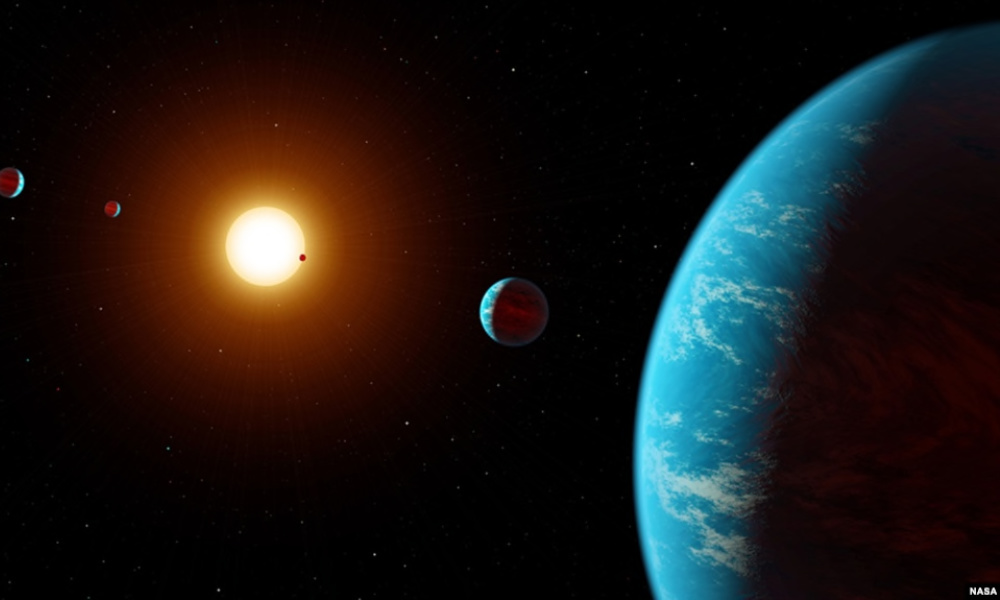
THE TRUTH IS OUT THERE—WAY OUT THERE: Scientists have discovered more than 5,000 planets outside our solar system. astrophysicists including URochester’s Adam Frank are seeking the physical and chemical signatures that would indicate advanced technology. (NASA/JPL-Caltech)
The nature of the search for alien life has changed as well. A civilization, by nature, will need to find a way to produce energy, and, Frank says, “there are only so many forms of energy in the universe. Aliens are not magic.”
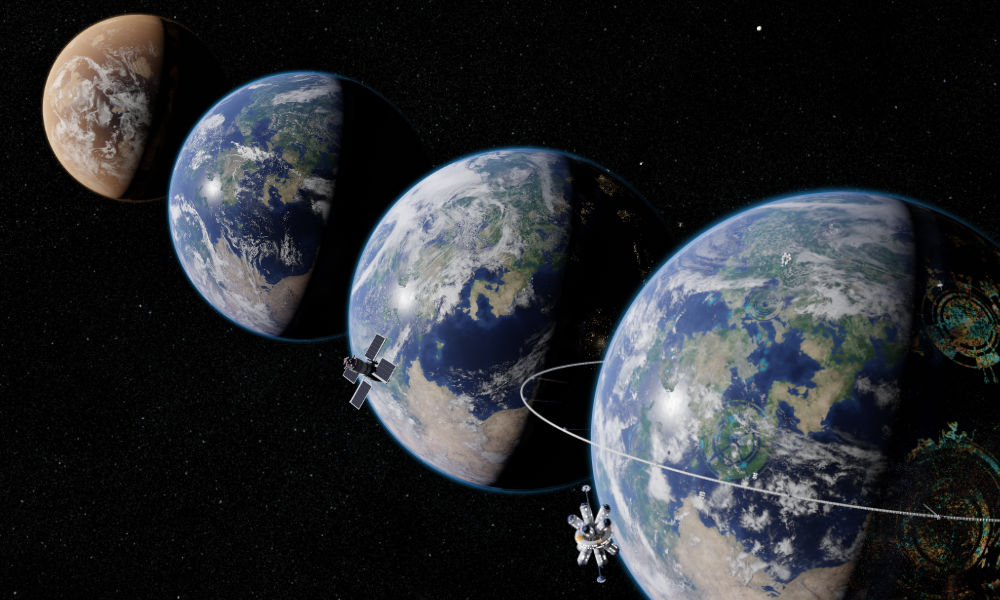
Illustration by Michael Osadciw.
Although life may take many forms, it will always be based on the same physical and chemical principles that underlie the universe. The same connection holds for building a civilization; any technology that an alien civilization uses is going to be based on physics and chemistry. That means researchers can use what they’ve learned in Earth-bound labs to guide their thinking about what may have happened elsewhere in the universe and to answer the question, do aliens exist—and to begin looking for specific, measurable atmospheric and surface features rather than vague anomalies.
The information is gathered in an online library of technosignatures that astrophysicists will be able to use as a comparative tool when gathering data to answer the questions, do aliens exist and are aliens real.
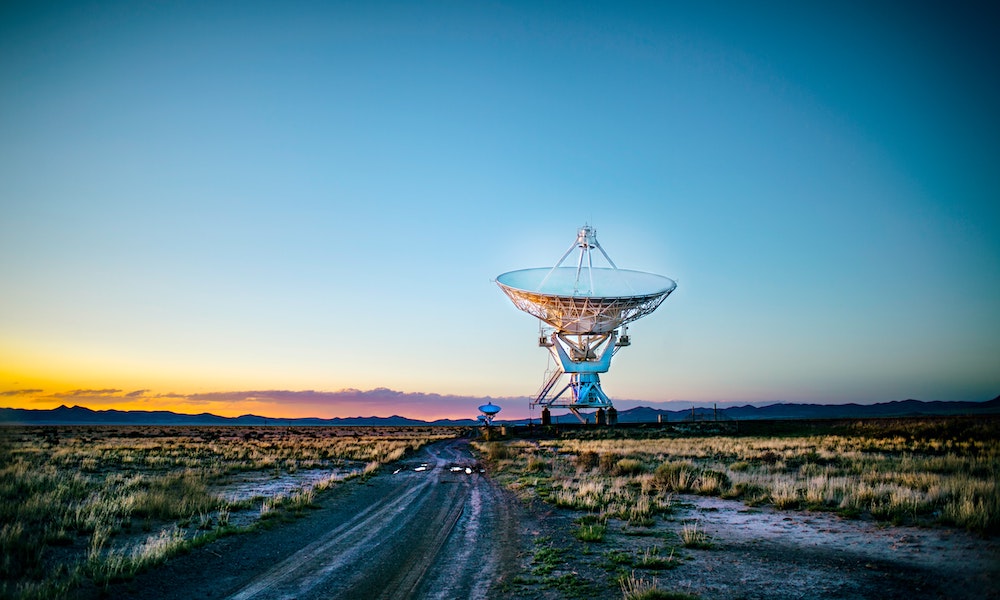
“Our job is to say, ‘this wavelength band is where you might see certain types of pollutants, this wavelength band is where you would see sunlight reflected off solar panels,’” Frank says. “This way astronomers observing a distant exoplanet will know where and what to look for if they’re searching for technosignatures.”
Signs from a distant world
While unidentified flying objects (UFOs) and unidentified aerial phenomena (UAPs) often capture popular imagination, Frank cautions that the most promising scientific path lies in the rigorous analysis of data from exoplanets, not in ambiguous sightings.
The search for life outside Earth recently took a promising leap with the study of a planet called K2-18b, about 124 light-years away from Earth. This “sub-Neptune” planet is roughly eight times the mass of Earth and may have a thick hydrogen atmosphere overlying an ocean that is hundreds of miles deep.
“It’s an entirely new class of planet,” Frank says. “There’s no kind of planet like this in our solar system.”
“When we think about alien life, we should be prepared to be surprised—and grossed out.”
Astronomers using advanced telescopes detected tentative evidence of dimethyl sulfide in K2-18b’s atmosphere, which is a chemical on Earth that is only produced by ocean plankton.
If this result were to hold up, “that would be very exciting,” Frank says, “like we are really in the game.”
Still, Frank emphasizes the need for caution and more data to confirm these findings.
The odds of life beyond Earth
Asked whether he believes aliens exist, Frank responds with a scientist’s perspective:
“As a scientist, I don’t want to believe, I want to know. That’s why I went into science. But my intuition is that the universe is big and the universe is old, and we are not the first time in the history of the universe that intelligent life has formed.”
He suggests microbial life may be common across the cosmos, but intelligent civilizations could be rare and short-lived. For scientists to find another civilization, he says, “we have to overlap with them in time.” If technological civilizations last only a short time, the galaxy could lack technological civilizations at any given moment.
As for what aliens might look like, Frank warns against expecting familiar human forms.
“The idea of shoulders with a head and two eyes is evolution,” he says. “There are too many accidents that led to our specific human form. When we think about alien life, we should be prepared to be surprised—and grossed out.”
The challenge of contact
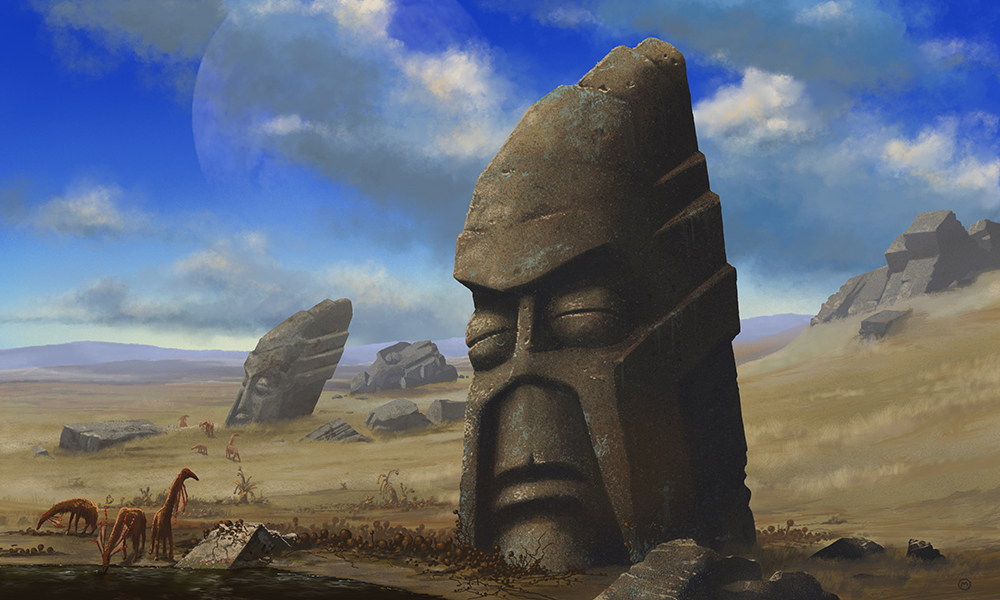
Illustration by Michael Osadciw
But the challenge of contact remains daunting. Even if scientists detect intelligent life 124 light years away, the time for messages to travel—in this case, 124 years each way—means meaningful conversation between humans on Earth and beings on other planets is unlikely.
Instead, Frank says, what is more likely is that we will observe other civilizations from afar and learn about their history and behavior through their technosignatures.
Thanks to advances in telescope technology, growing exoplanet catalogs, and focused research on biosignatures and technosignatures, humanity is entering an unprecedented era in the quest to answer whether we are alone in the universe, Frank says.
“We are on the road, after 2,500 years of speculation, to actually scientifically having the answers to the most profound question you could ever ask: Is there life elsewhere in the universe?”
The work is a continuation of Frank’s previous research on theoretical astrophysics and SETI, including developing a mathematical model to illustrate how a technologically advanced population and its planet might develop or collapse together; classifying hypothetical “exo-civilizations” based on their ability to harness energy; and a thought experiment asking if a previous, long-extinct technological civilization on Earth would still be detectable today.
This story was originally published on June 18, 2020. It has been updated and republished.