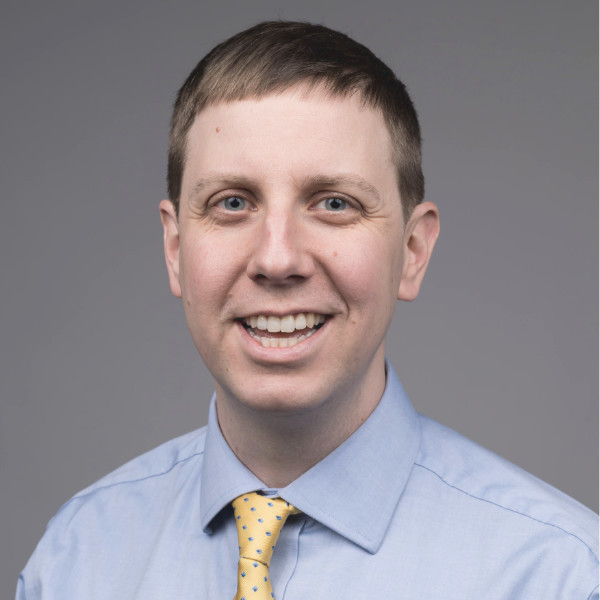
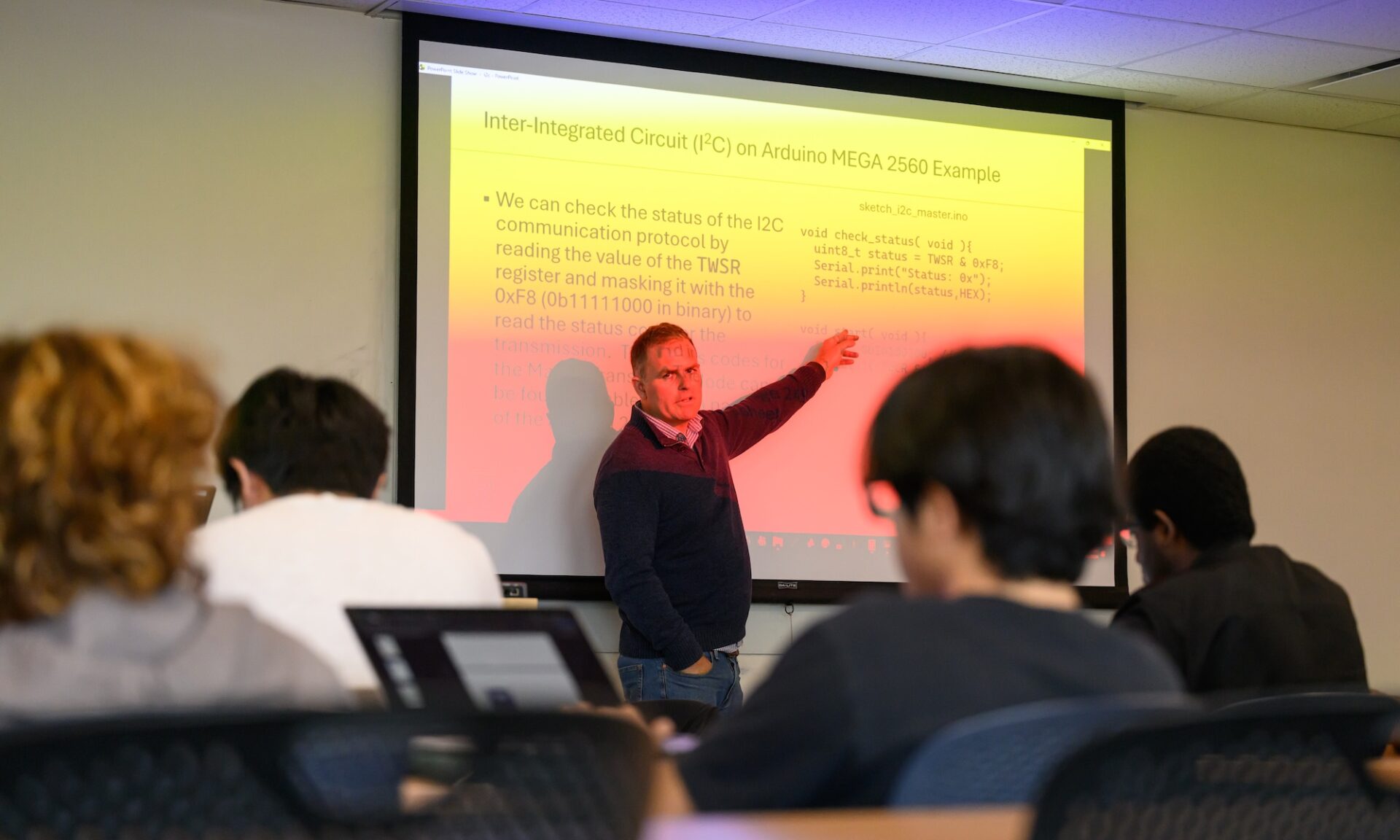
Embracing change in the ever-evolving field of robotics earned Howard URochester’s highest award for teaching.
When Thomas Howard graduated from the University of Rochester in 2004 with degrees in mechanical engineering and electrical and computer engineering, he told the Department of Electrical and Computer Engineering in an exit survey that they should hire a faculty member in the burgeoning field of robotics.
Eleven years later, the University took his advice, hiring a promising scholar who earned a PhD in robotics at Carnegie Mellon University, worked at NASA’s Jet Propulsion Laboratory, lectured at the California Institute of Technology, and contributed as a postdoctoral associate and research scientist at MIT’s Computer Science and Artificial Intelligence Laboratory. It was Howard.
Now a full professor in the Department of Electrical and Computer Engineering, Howard says that his time as an undergraduate at URochester was always a draw for him to return. He still fondly remembers classes taught by faculty members who are his colleagues today and the time he spent working in research laboratories as a student. He founded the Robotics and Artificial Intelligence Laboratory on his arrival in 2015 and has mentored dozens of undergraduates, about a third of whom have gone on to robotics-focused PhD programs.
Howard found his calling as a faculty member, and this year he earned the Goergen Award for Excellence in Undergraduate Teaching, the University’s highest award for teaching.
Digital love
“Robotics is a field that has changed dramatically since I was a student, and it continues to evolve,” says Howard. “I always tell my students to find a big problem that is hard enough that it will not be ‘solved’ in just a decade or two. The methods and approaches may change, but working on difficult engineering problems over long periods of time can be very rewarding.”
Students and colleagues revere Howard for the way he constantly reimagines his courses, integrates hands-on learning in the classroom, and seeks feedback to ensure students are getting the skills they need to thrive in the modern workplace.
While Howard’s pair of elective courses in robotics are popular, he takes pride in helping to shape the department’s curriculum more broadly as the undergraduate committee chair and by updating and teaching required courses on mechatronics and embedded systems and C/C++ programming. Howard will also teach the department’s ethics course this spring, which is being revised to include content on how artificial intelligence is impacting engineering.
“AI has had a major impact on how students learn and will eventually practice engineering in their careers,” says Howard. “We need to make sure that our undergraduate program is responsive to this.”
Beyond above-and-beyond
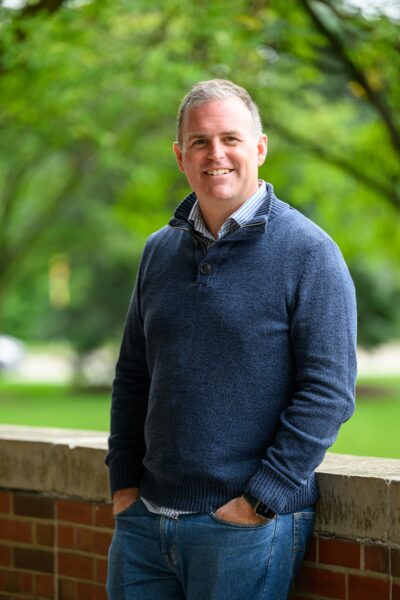
Howard’s faculty profile in many ways fits a traditional mold. He leads a research laboratory that has received more than $4 million in sponsored research funding and has supervised many PhD theses; he has received national recognitions for his research, including a Best Paper Award from Robotics: Science and Systems, a NASA Early Career Faculty Award, and an NSF CAREER Award; and his teaching has been recognized with several department-level teaching awards and a Wilmot Assistant Professorship.
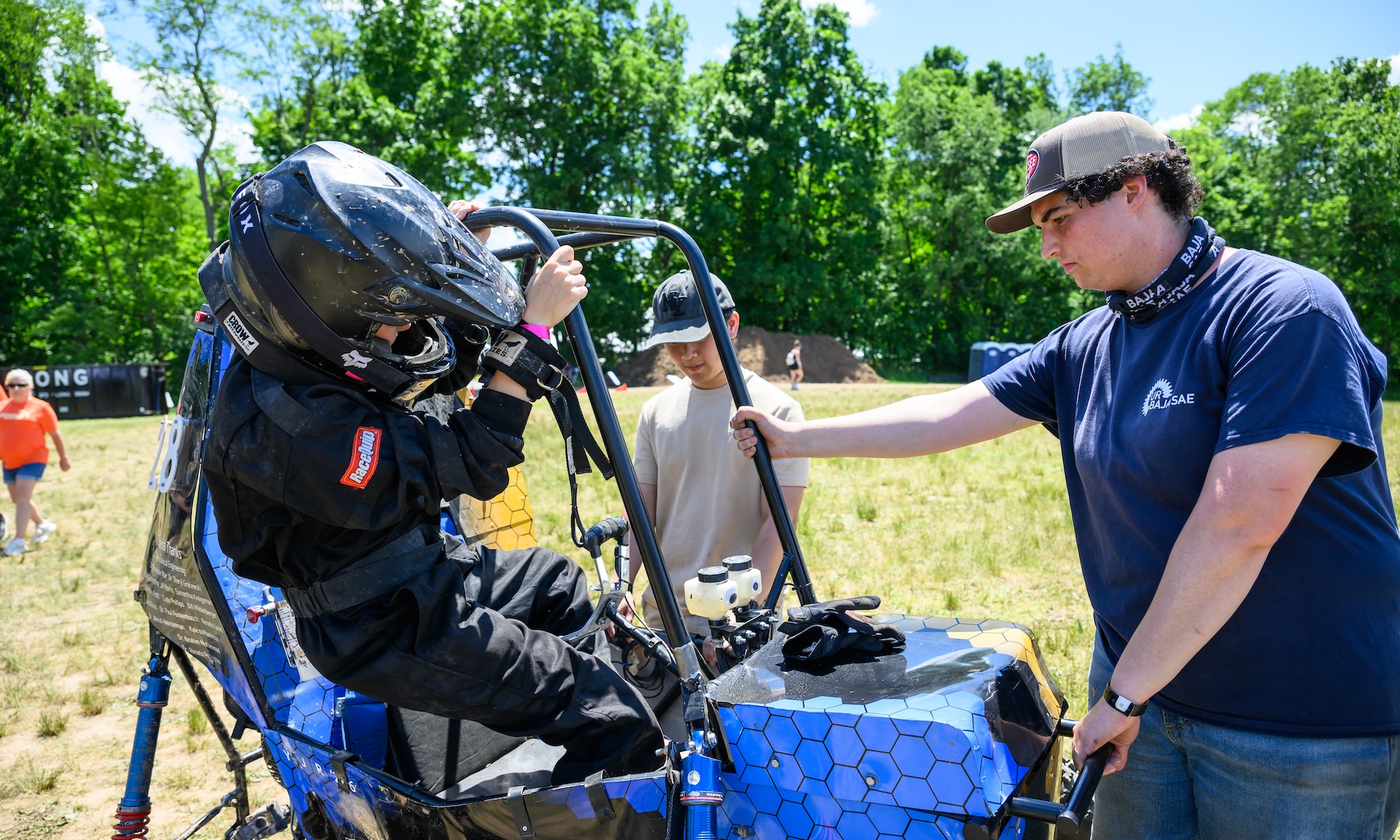
But he finds ways to engage students that go above and beyond what he is expected to do. He regularly participates in mechanical engineering senior design as an advisor/customer. He also teaches a cycle of advanced electives that allows juniors and seniors to take both courses. Plus, he serves as the faculty advisor for UR Robotics Club and the University’s undergraduate student team in the annual NASA Lunabotics Challenge competition in Florida.
“Having support from the University to participate in competitions like NASA Lunabotics is hugely beneficial for our undergraduates as they practice applying what they are studying in the classroom to real-world engineering problems,” says Howard. “Seeing our students take on big challenges like this is a regular highlight of each academic year and is experiential learning at its best.”
Howard’s classes are no walk in the park. Laboratory work is an essential part of his courses to ensure students understand the connection between theory and practice, and he says no one would describe his written exams or laboratory assessments as fun. But that is part of Howard’s appeal.
“What is especially impressive is that Tom’s courses are known to be demanding, but also deeply respected by students,” says Mark Bocko, the William F. May Professor of Engineering. “He sets high expectations, asks students to master difficult material, and expects them to engage seriously with the engineering realities of autonomous systems. Yet his teaching evaluations and reputation reflect the fact that students recognize the value of this rigor. They know that he is not simply asking them to complete assignments; he is training them to think like engineers and roboticists.”
What URochester students say about Thomas Howard
“Professor Howard is continuously looking for ways to innovate his courses and his teaching methods. He utilized his Career Award from the National Science Foundation to design and 3D-print small mobile robot platforms. His vision is to allow students to get both hardware and software experience by designing low-level motor controllers for his ECE 216 class and high-level robot planning algorithms in his ECE 217 and ECE 218 classes. He also spends a significant amount of time mentoring students by advising them on their college classes, on their senior design projects, as well as their college applications for graduate studies.”
—Tabib Wasit Rahman ’23 (electrical and computer engineering), PhD student in the Howard Lab“Professor Howard has an approachable persona that promotes students to ask questions without worrying about how they might sound to an expert. Between his late-night review sessions at the campus Starbucks before exams and his extended lab periods to help with projects, I always felt that he genuinely cared that I and the rest of the class truly understood the material and could do well in the course.”
—Katelyn (Kas) Shakir ’24 (electrical and computer engineering), PhD student in the Howard Lab“I first saw Professor Howard teach on a campus tour, and his energy in that classroom is a big reason I chose Rochester. Over three classes and years of research in his lab, he taught me the foundations of robotics and showed me what research and an academic career really look like. Years later, he still makes time to talk through my research and share his experience. Professor Howard’s dedication to teaching and mentorship has transformed my career and set my standard for what a professor should be.”
—Ethan Fahnestock ’21, robotics PhD student in MIT CSAIL