How animals make group decisions—without a leader
 Lindsey Valich
|
Senior Communications Specialist
Lindsey Valich
|
Senior Communications Specialist From pigeons to chimpanzees, cognitive biologist Dora Biro shows how individual minds scale into collective intelligence—and what that reveals about us.
Anyone who lives with a dog or a cat has probably asked some version of the same question: What is my pet thinking? When a dog hesitates at a doorway, or a cat fixes its gaze on something invisible, the behavior feels deliberate and even thoughtful. But without a common language, how can we know what is going on inside an animal’s mind?
For cognitive biologist Dora Biro, a professor in the University of Rochester’s Department of Brain and Cognitive Sciences, the question of animal thought extends beyond pets. She studies how individual minds come together in coordinated groups, from pigeons navigating home in flocks, fish shifting direction in unison, and primates negotiating social life.
“As humans, when we have to make a collective decision, we often do this by using verbal language,” Biro says. “Animals don’t have that, but they still manage to coordinate.”
By tracing how thinking individuals produce intelligent groups, and how those abilities change across species, her work asks a broader question: What can other species’ minds reveal about our own?
Thinking, separately and together
Biro approaches that question by observing non-human animals both in their natural habitats and in the laboratory. Her work spans species and continents, from chimpanzees and baboons in Africa to fish shoals and homing pigeons closer to home in Rochester, New York.
One major focus of her lab is studying collective behavior, a field that explores how aggregations of animals coordinate their actions to produce interesting group-level phenomena. The inspiration originally came not from biology, but from physics.
“The phenomena we’re studying here with fish and pigeons is a physics-inspired approach to studying animal groups,” Biro says. “The basic tenet is that you can view individuals in groups as particles that interact with their neighboring particles, following certain rules of interaction.”
Some of those rules are surprisingly basic: stay close to your neighbors—but don’t get too close—and align your direction of movement with those around you. When thousands of individuals follow these local rules simultaneously, group-level patterns emerge—such as the synchronized flights of swarms of starlings, known as murmurations. Researchers have found that each bird in a murmuration coordinates its movements with its closest neighbors, leading to a rippling effect that allows the entire group to act as a single, fluid entity.
A murmuration of starlings moves as if it shares a single mind. In reality, each bird is following three simple rules—stay close, avoid collisions, align direction—that scale into collective intelligence. (Getty Images)
“Each individual doesn’t necessarily know who the leader is—and in fact there is no leader,” Biro says. “The structure emerges from local interactions. The initial efforts in our field had to do with explaining how these really complex-looking, group-level phenomena might emerge from relatively simple rules that individuals within that big collective follow.”
These same principles apply beyond animals to areas such as traffic flow and human crowd behavior, where each person primarily responds to their immediate surroundings—the people they can see—rather than the crowd. This can explain why pedestrians naturally flow along streets or how large crowds can move in coordinated patterns without anyone directing them. The same simple local interactions scale up, producing complex group behaviors, whether in birds, fish, or people.
More recently, researchers—including Biro—have begun to ask what happens when individual animals are no longer treated as identical particles. Animals, like humans, differ in experience, motivation, and knowledge. And those differences matter, especially when trying to incorporate individual variation and cognition in understanding collective behavior.
Birds of a feather
“The kinds of questions we are now interested in include the role of individual cognition in collective phenomena,” Biro says. “Simple rules can generate very complex collective behaviors, but if you add additional cognitive abilities like social awareness and communication, how does that affect the quality of the solutions a group can produce?”
At URochester, Biro mainly studies this collective decision-making using homing pigeons—an ideal species for exploring questions about how individual cognition shapes group navigation, leadership, and learning.
When pigeons fly alone, each bird develops its own unique route home, shaped by landmarks and personal experience. But pigeons prefer not to fly solo because they feel much safer in groups. In a group, however, they must reconcile competing preferences and settle on a single path.
To study how that happens, Biro and her team use a campus pigeon coop, located behind the University’s Laboratory for Laser Energetics and the Larry and Cindy Bloch Alumni and Advancement Center. Here, the researchers outfit pigeons with lightweight GPS trackers small enough to be worn as leg bands. They release the birds from sites around the Rochester area. By the time the team drives back to campus, the pigeons are often already back in their home coop.
Home, sweet homing pigeons
At URochester, Dora Biro and her team fit homing pigeons with GPS trackers. Analyzing the data from the trackers reveals how flocks balance individual preferences to reach collective decisions. Photos by J. Adam Fenster.

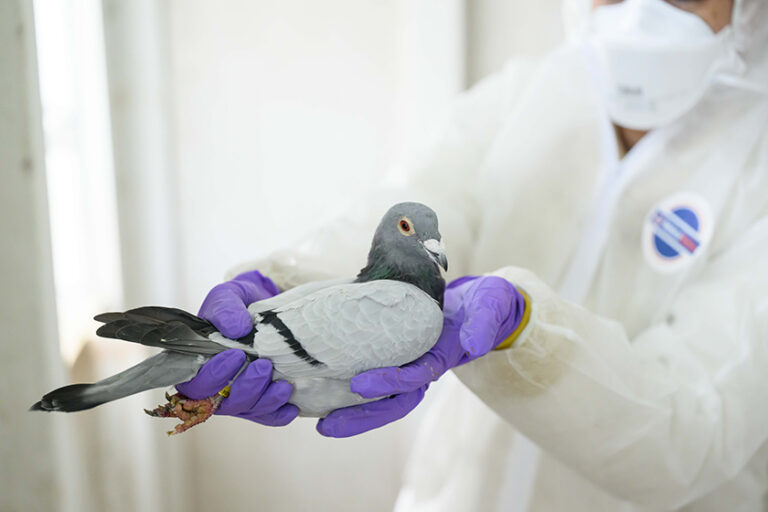

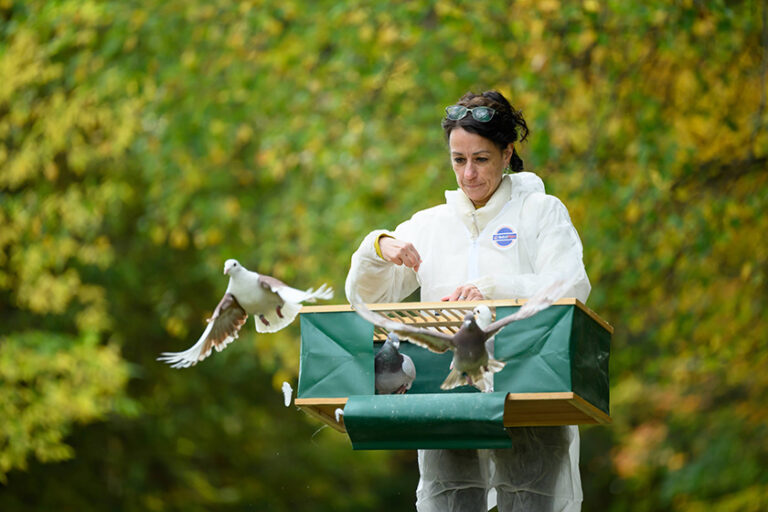

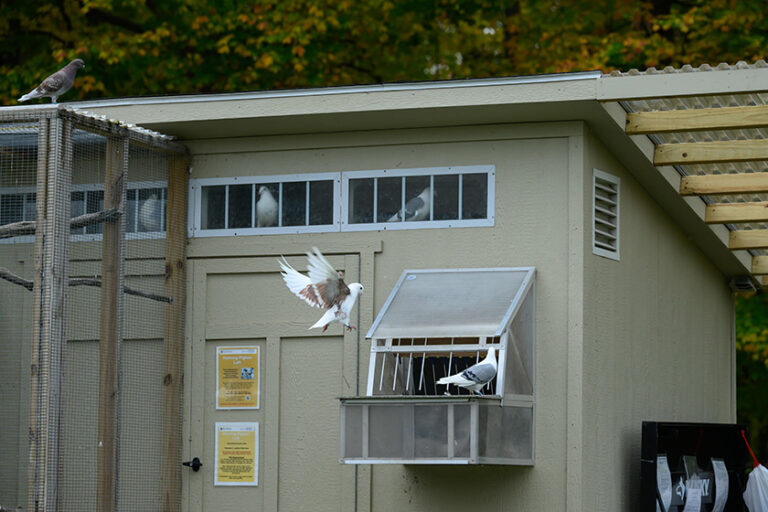

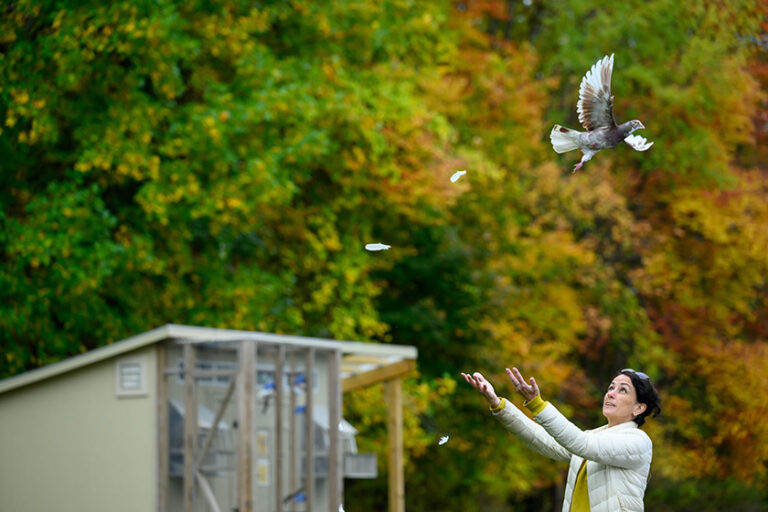
As experimental manipulations, the researchers release the birds individually or in different group configurations, such as groups composed of naïve pigeons with more knowledgeable pigeons, young birds with older birds, and so on.
The GPS data reveals something remarkable: Group decisions often represent a compromise, but not always an equal one. Sometimes the flock’s route more closely matches one bird’s preferred path than another’s.
“In that case, we can designate as the leader the bird whose preferred route the other birds are flying closer to,” Biro says. “Not because it announces itself as the leader, but because others follow.”
Leadership, she notes, isn’t a fixed trait. It can arise because one individual is more knowledgeable, more motivated, or simply less willing to give in. Or the leader could be the one who is the least resistant and leads by default because everyone else wants to follow. There are benefits to leading—like getting where you want to go—but there are also risks, especially if danger lies ahead.
“Being at the front isn’t always desirable,” she says. “In many species, that’s where danger is more likely to be encountered and where predators strike first.”
The power of collective intelligence
Groups, in general, tend to make better decisions than individuals—a principle supported by both mathematical theory and data from both humans and non-human animals. With more members comes more independent pieces of information, and errors can cancel each other out.
“Living in groups allows you to use not just the information that you yourself have collected, but also information that others in your group are willing to share with you,” Biro says. “The group becomes a kind of distributed sensory network—also called the ‘many eyes’ hypothesis—allowing individuals to rely not only on their own senses but on the senses of others. Between them, they can monitor a much larger area than each individual on its own.”
If, for example, one individual spots a predator and starts fleeing, this fleeing response can spread to the rest of the group.
But collective behavior isn’t always beneficial.
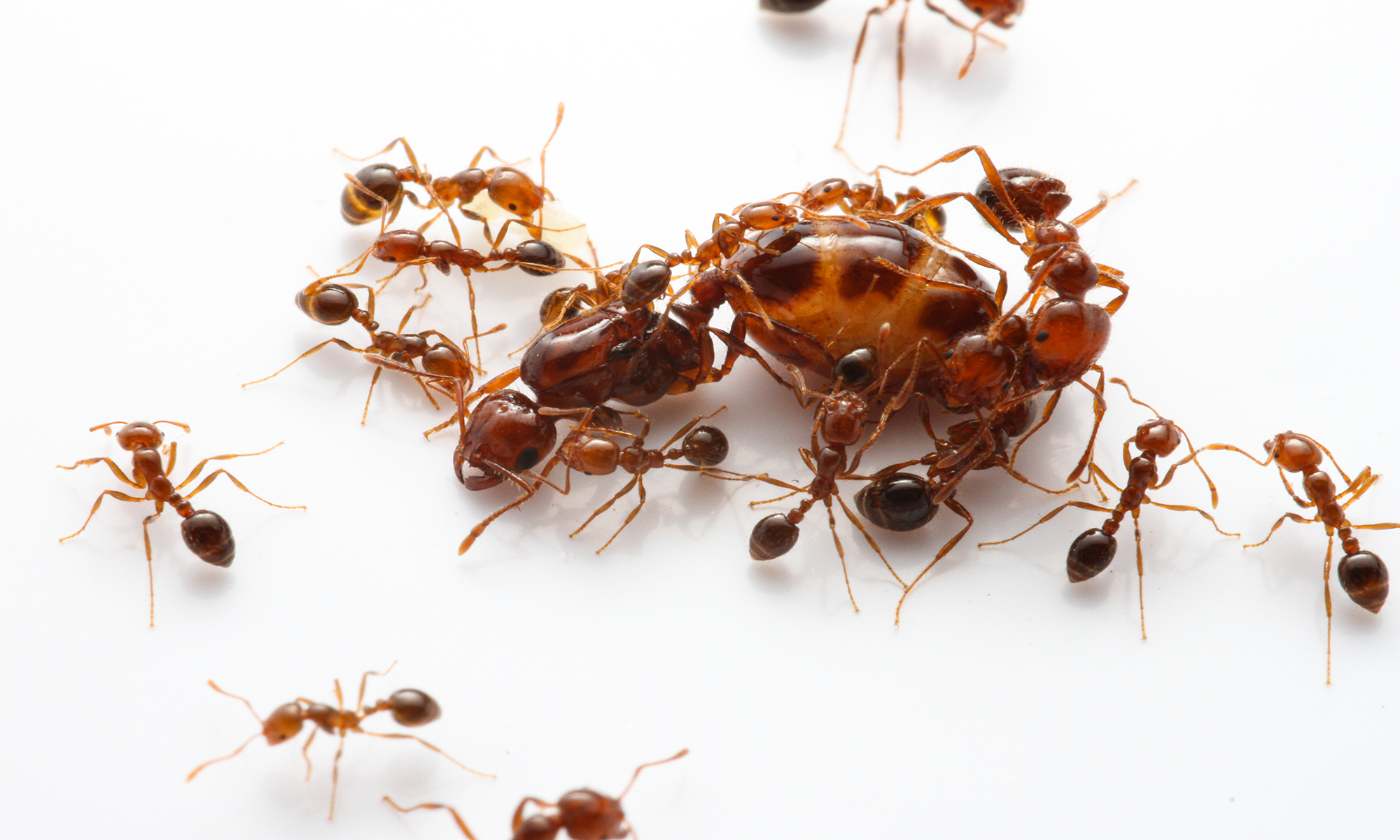
Biro points to “ant mills,” where columns of ants form endless loops, marching until they collapse from exhaustion. The same rules that normally allow ants to efficiently follow each other to food sources can, under the wrong conditions, become deadly.
Similar dynamics can occur in human crowds. In emergencies, people often rush toward exits, creating dangerous bottlenecks. Slowing their approach can actually improve flow and help people get out faster, but achieving this is counterintuitive and challenging. Research inspired by collective animal behavior has helped scientists and architects understand dangerous crowd phenomena and inform the design of emergency exits, pedestrian flow, and evacuation strategies.
Cognition across species
Pigeon and crowd dynamics, however, are only part of the picture. To understand intelligence and behavior, Biro looks not just at how animals move together but also how cognition evolves across species.
Studying species that are both closely and more distantly related turns out to be especially powerful, she explains. By comparing primates to other mammals—and even to fish—researchers can begin to reconstruct evolutionary histories and identify broader “design principles” of intelligence.
A loose social group of fish, known as a shoal, often stays together for protection, foraging, or mating, such as these zebrafish in a tank. Schooling occurs when fish demonstrate synchronized or coordinated movements. (Getty Images)
Some mechanisms underlying collective intelligence may be shared across even distantly related species. Researchers can then ask what makes those mechanisms so effective and how different species implement them, given their different cognitive abilities.
When closely related species share similar mechanisms, they likely inherited them from a common ancestor. But when distantly related animals—such as fish and primates—arrive at similar solutions, it may reflect convergent evolution, where natural selection independently shapes comparable strategies.
“These latter cases are particularly interesting,” Biro says, “because they can reveal common themes in evolution, specifically the selective drivers in the environment that might favor similar solutions in different species.”
In that sense, fish shoals become more than just examples of coordinated motion. They are an additional data point that helps researchers learn more about what collective behavior reveals about primates and, ultimately, humans.
Our evolutionary relatives
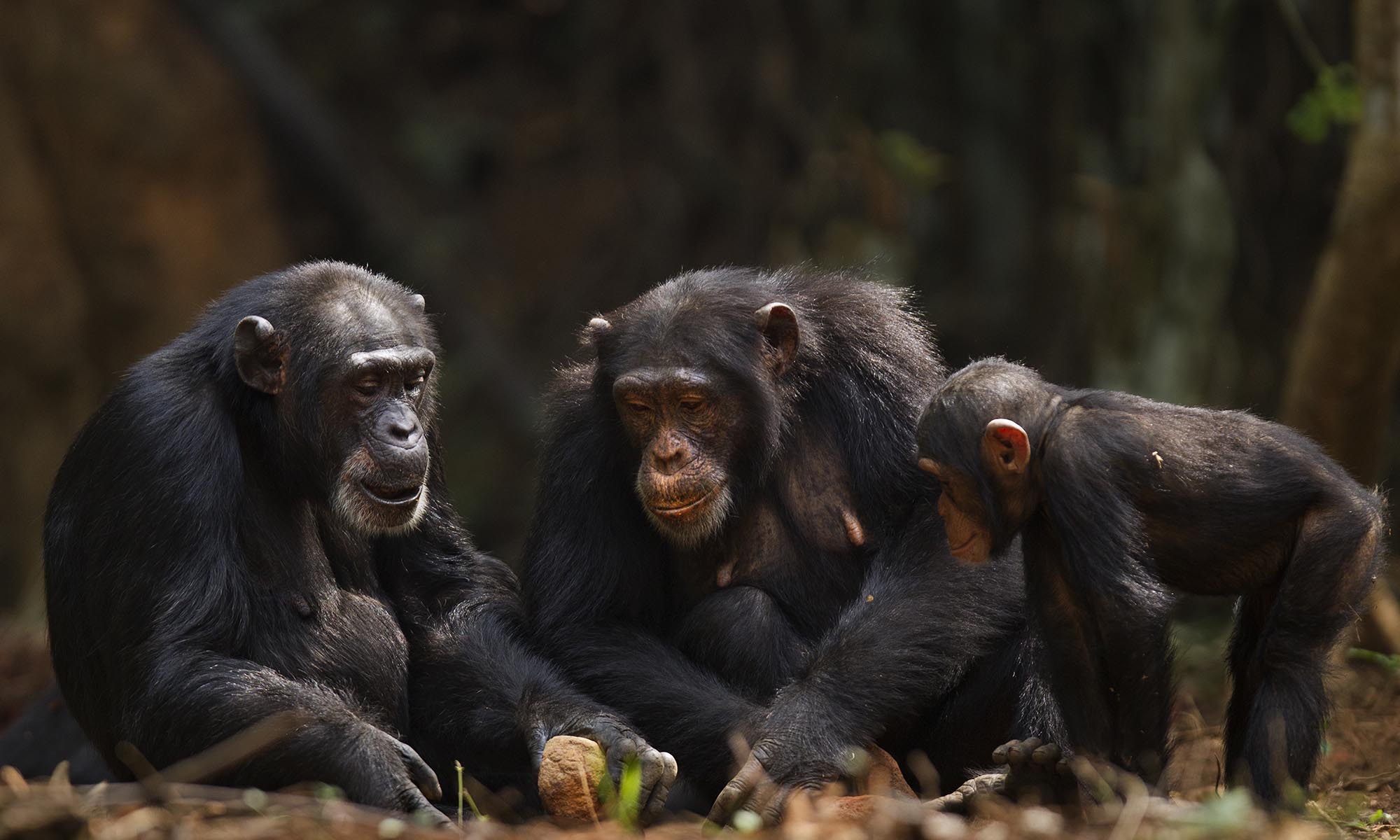
To understand how cognitive mechanisms play out in species most like humans, Biro turns to long-term field studies of primates. She is involved in one of the world’s longest-running chimpanzee cognition studies, based in the Bossou forest in Guinea, West Africa. Decades of video footage allow researchers to track how chimpanzees—our closest living evolutionary relatives, along with bonobos—learn, age, and change over time in the wild.
Biro and her colleagues recently observed cognitive decline in one older female chimpanzee who had previously excelled at problem-solving. As the years passed, she began to struggle and seemed confused, mimicking the cognitive decline that befalls many humans as they age.
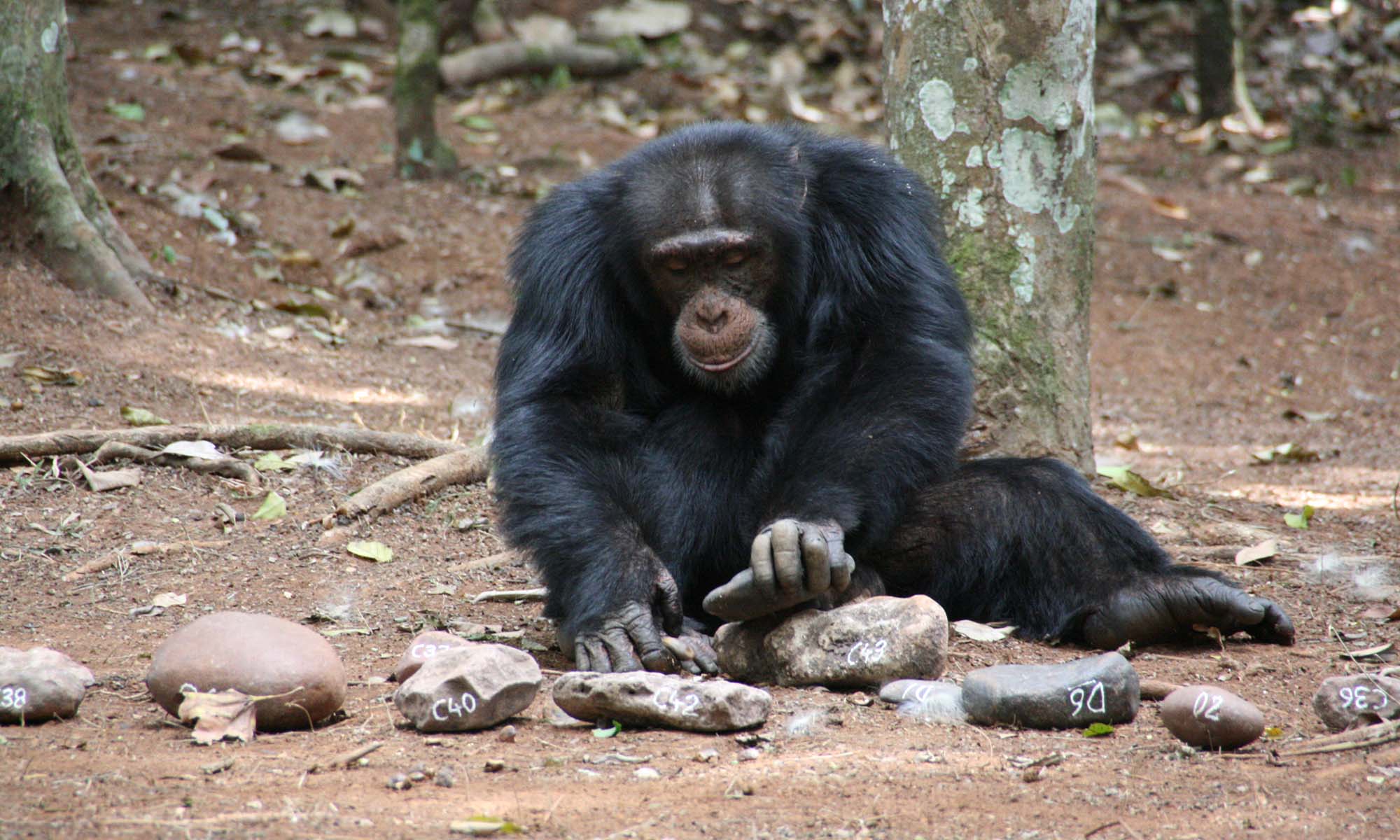
Chimpanzees and humans share a last common ancestor that lived approximately six to eight million years ago. By observing aging chimpanzees at Bossou, researchers can begin to determine whether conditions such as dementia existed in our shared evolutionary past or whether they emerged more recently in humans. If dementia and cognitive decline appear in chimpanzees, it suggests the origins of Alzheimer’s are deeper than previously thought, offering clues that could shape how we understand, prevent, and treat aging-related disorders in people.
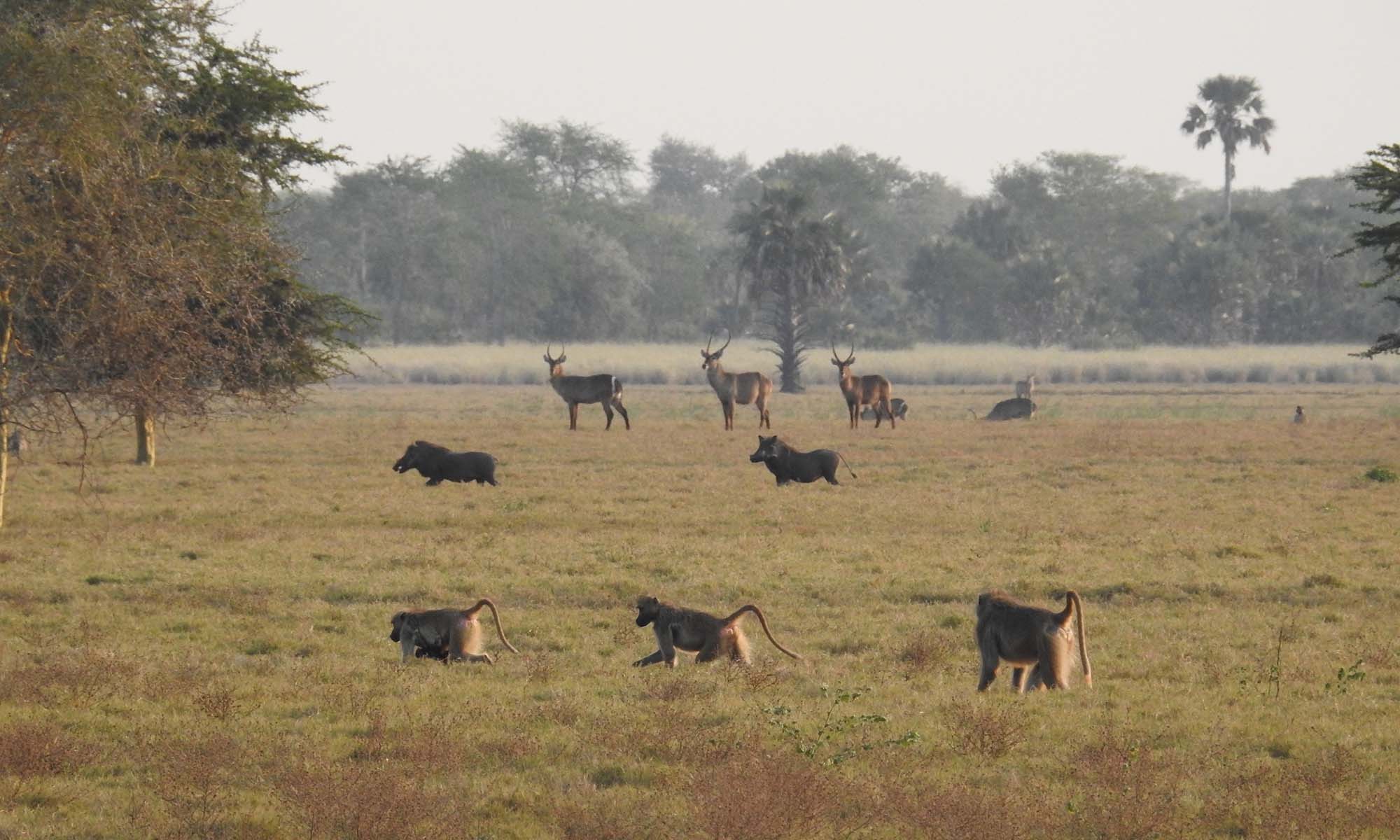
Biro also studies baboons in Mozambique’s Gorongosa National Park, part of a large international project investigating the evolutionary roots of cognition. The baboons live in an area thought to resemble environments in which early humans evolved, where habitats are shaped by fluctuating resources and pressure from predators.
For years, predators such as leopards were absent from the national park due to civil war. As the leopards are reintroduced, Biro and her colleagues are watching closely to see how the baboons respond.
“There’s a hypothesis that there was a certain time prehistorically when predator numbers and variety dropped in Africa, and that seems to coincide with an explosion in human tool creation and use,” Biro says. “There’s a question of whether the two things are related: If there is reduced predation, is there more time to devote to playing, being creative, and inventing things?”
The answers could shed light not only on animal minds, but on our own evolutionary history.
“We can try to understand what any similarities or differences between species might tell us about the evolutionary history of certain abilities and behaviors,” she says. “It could also inform us of the minimal cognitive requirements for a certain behavior or cognitive expression.”
Rethinking our place in the animal world
People often ask Biro whether animals think the way humans do, and she acknowledges that some aspects might forever remain a mystery.
“I think there will be some part of this that we’ll never know,” she says. “But almost certainly there are deeper thoughts going on in the minds of these animals that we currently may not have access to.”
Yet, for Biro, this uncertainty is not a reason for indifference. Learning how animals think shapes how humans ought to treat them, she says, from the environments we build to the ecosystems we manage. It also reframes our own place in nature.
“We can build hypotheses about why certain aspects of our cognition have been enhanced,” she says. “We can think about why we might lack certain cognitive skills that other species have. And through understanding these things, I think we will gain a much better understanding of ourselves and our place within the world.”