Science & Technology
A tiny poke gives molybdenum a new structure
 Luke Auburn
|
Director of Communications, Hajim School of Engineering & Applied Sciences
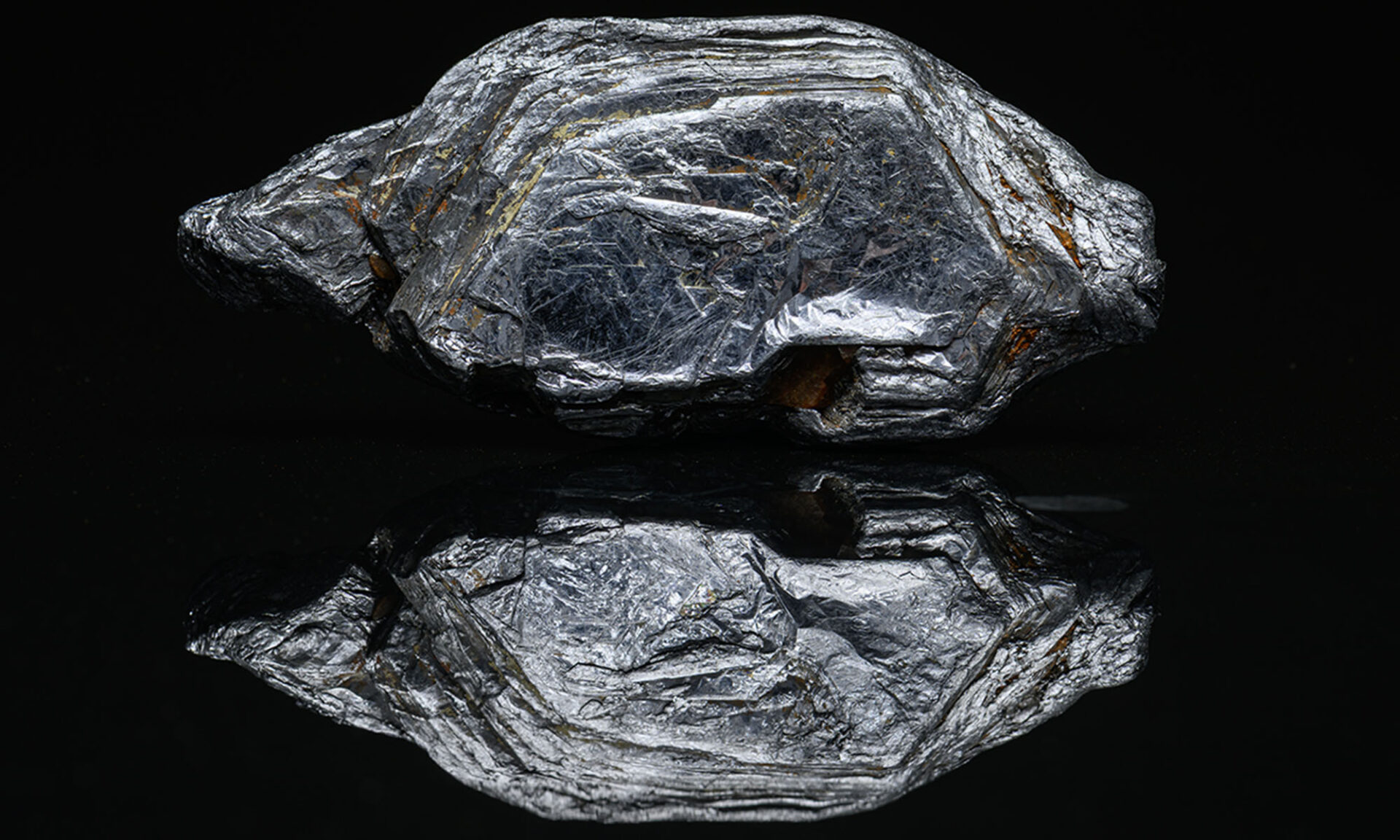
IN THE HEAT OF THE (Mo)MENT: A molybdenite (MoS2) mineral sample, the natural rock from which the chemical element molybdenum (Mo) is extracted. (URochester photo / J. Adam Fenster)
Main takeaways:
- Researchers at URochester and Technion discovered a way to alter the atomic structure of molybdenum at room temperature.
- Molybdenum is a heat-resistant metal used in nuclear reactors and jet engines and is a promising material for semiconductors and AI technologies.
- Pressing a tiny diamond tip into the metal can trigger new crystal grains, but only if the pressure is carefully controlled.
- This new technique could help repair defects in molybdenum and tailor the metal’s properties without extreme heat, expanding its applications.
Researchers at the University of Rochester and Technion–Israel Institute of Technology accidentally discovered a new way to rearrange the internal structure of molybdenum—an extremely heat-resistant metal—at room temperature. Molybdenum is typically used to reinforce nuclear reactors, jet engine turbine blades, and rocket nozzles because it doesn’t melt until it is heated to more than 2,600 degrees Celsius. Controlling its atomic structure at room temperature could open the door to more applications, including next-generation semiconductors.
The engineers found that pressing a fine diamond tip a few nanometers into molybdenum can reform the crystals inside molybdenum, giving the metal new properties. The results, published in the Proceedings of the National Academy of Sciences, took the researchers by surprise.
A happy accident
“We had a hypothesis that applying extreme pressure to molybdenum would cause it to transform to a new solid phase,” says Associate Professor Niaz Abdolrahim from URochester’s Department of Mechanical Engineering. “But then we found this interesting phenomenon of an entirely different stress-driven mechanism.”
Abdolrahim says that while metals look uniform to the naked eye, zooming in on their microstructures reveals that they are made of many small atomic regions called crystal grains. Changing the shape, orientation, and size of crystal grains redefines how a material behaves—affecting things like its strength and malleability. And normally, molybdenum’s crystal grains cannot be changed—or recrystallized—until it is heated to about 1,000 degrees Celsius.
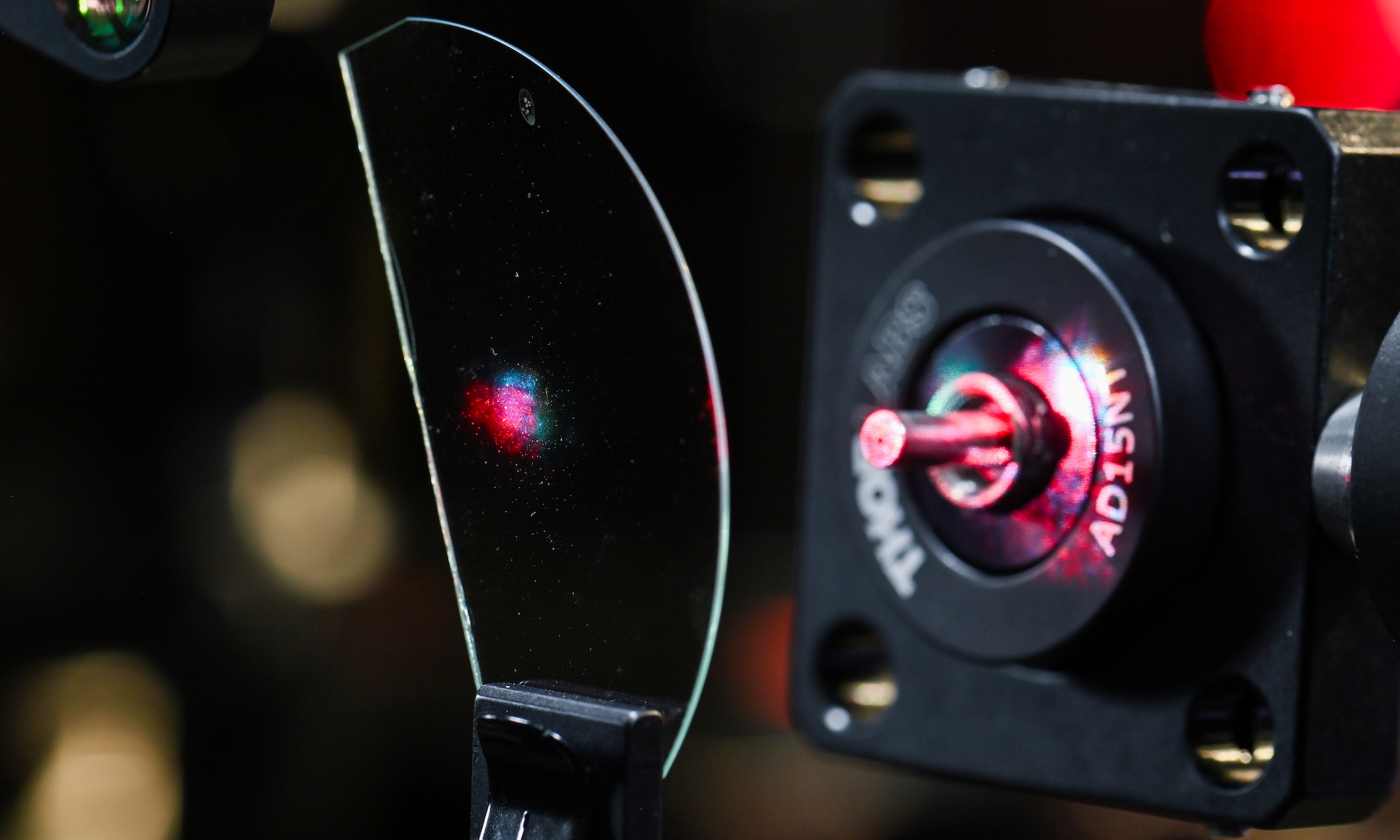
Through experiments and computer modeling, the researchers found that molybdenum can be recrystallized at room temperature using a tiny, calibrated probe called a nanoindenter, which has a diamond tip that is used to test material properties. But recrystallization requires precision. Just a little force from the nanoindenter creates extreme pressure that causes the diamond tip to push through the metal’s surface in a quick movement known as a “pop-in.” Entering this pop-in phase causes the metal to recrystallize. But applying too much pressure—and moving past the pop-in phase—causes the new grains to disappear.
Manually stopping the test right after the pop-in event causes recrystallization in a tiny region surrounding the dent left in the material. Researchers say the technique can be useful for fixing defects within a larger sample of molybdenum, changing the properties of the defected area to the desired state without affecting the rest of the sample.
“Currently if you have a damaged sample, to fix it or form new grains, you have to heat the whole sample up to 1,000 degrees Celsius or more,” says Afnan Mostafa, a mechanical engineering PhD student in Abdolrahim’s lab. “Here we show you don’t need to heat up the whole sample. You just need to know where to poke, how much, and when to stop.”
Putting the chips on molybdenum
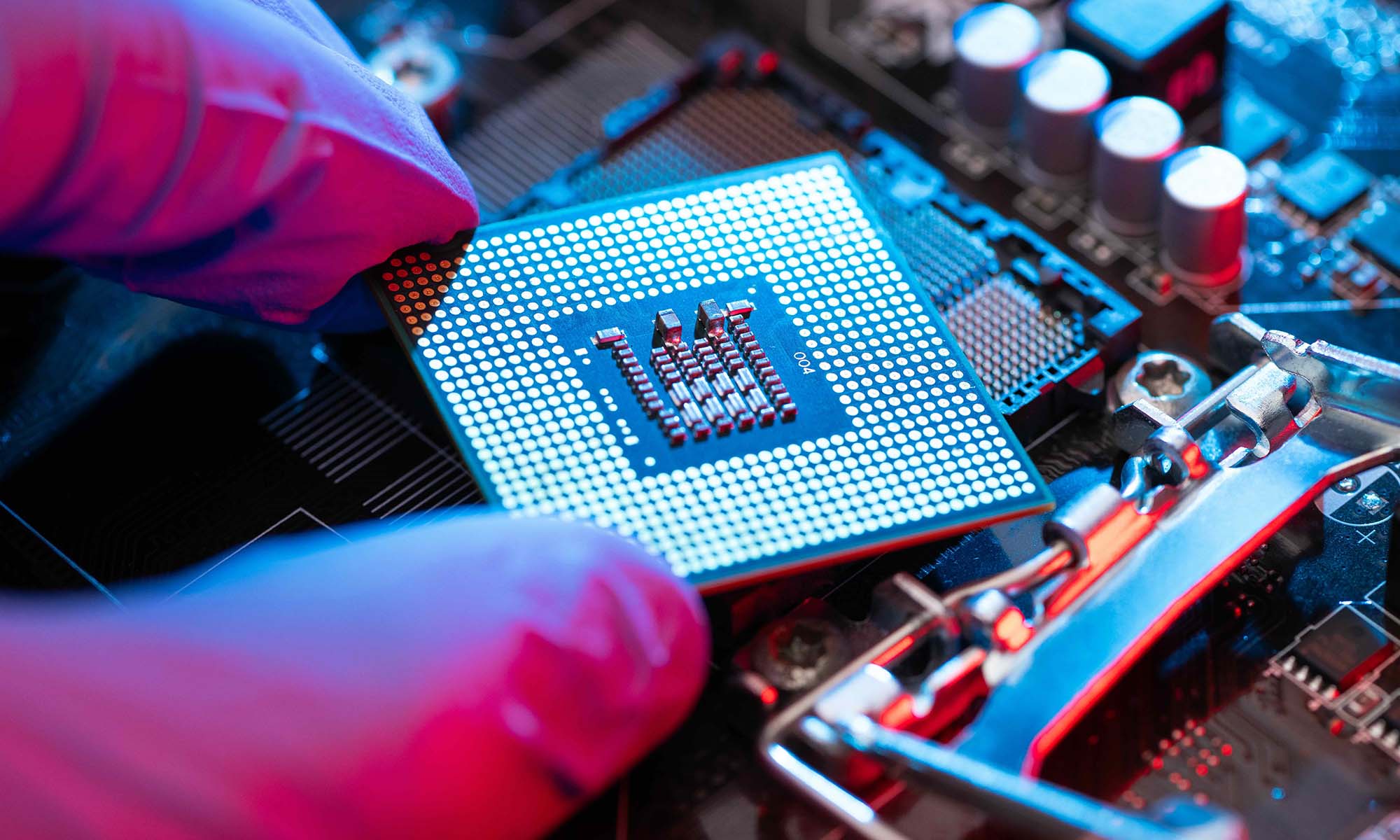
The researchers say semiconductor manufacturers are exploring molybdenum as a potential material for next-generation semiconductor interconnects, the tiny wires that connect millions of components on a microchip. As artificial intelligence systems demand more and more computing power, manufacturers are trying to make smaller and more powerful microchips. To achieve this, researchers are exploring replacing the copper in semiconductors with molybdenum.
“Copper usually has a resistance increase at nano scales, which means electricity doesn’t flow through it as well,” says Mostafa. “Molybdenum doesn’t have that problem, which makes it appealing for the next generation of tiny microchip interconnects.”
But molybdenum currently has its own drawbacks, which the researchers’ new technique may help address.
“While molybdenum is extremely durable at high temperatures, at room temperatures, it can snap without any warning that it’s going to break,” Mostafa says. “So, we want to explore if we can improve that. If we can find new ways to recrystallize the material at room temperature, it could give us new uses for molybdenum that are currently only available at high temperatures.”
The National Science Foundation supported this research.