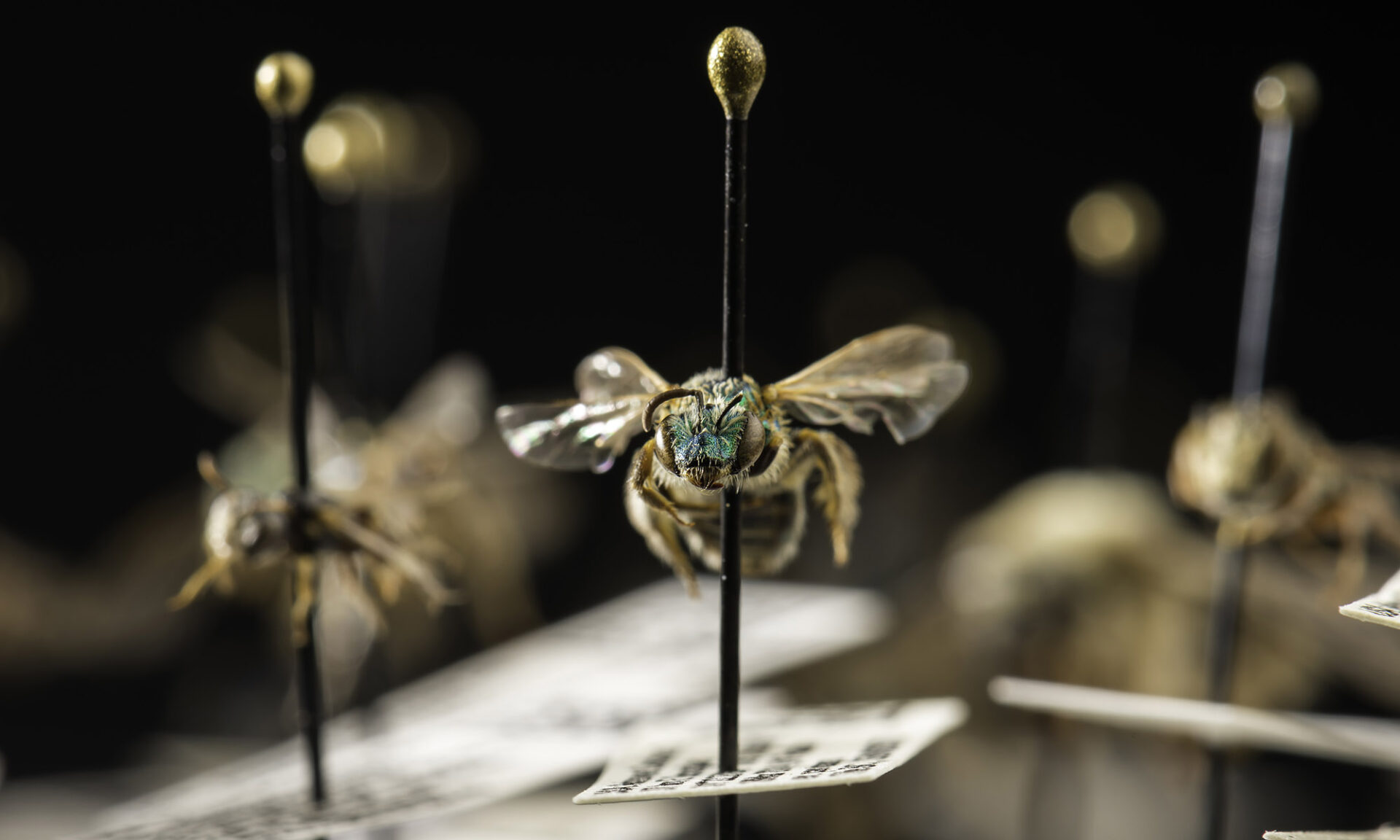
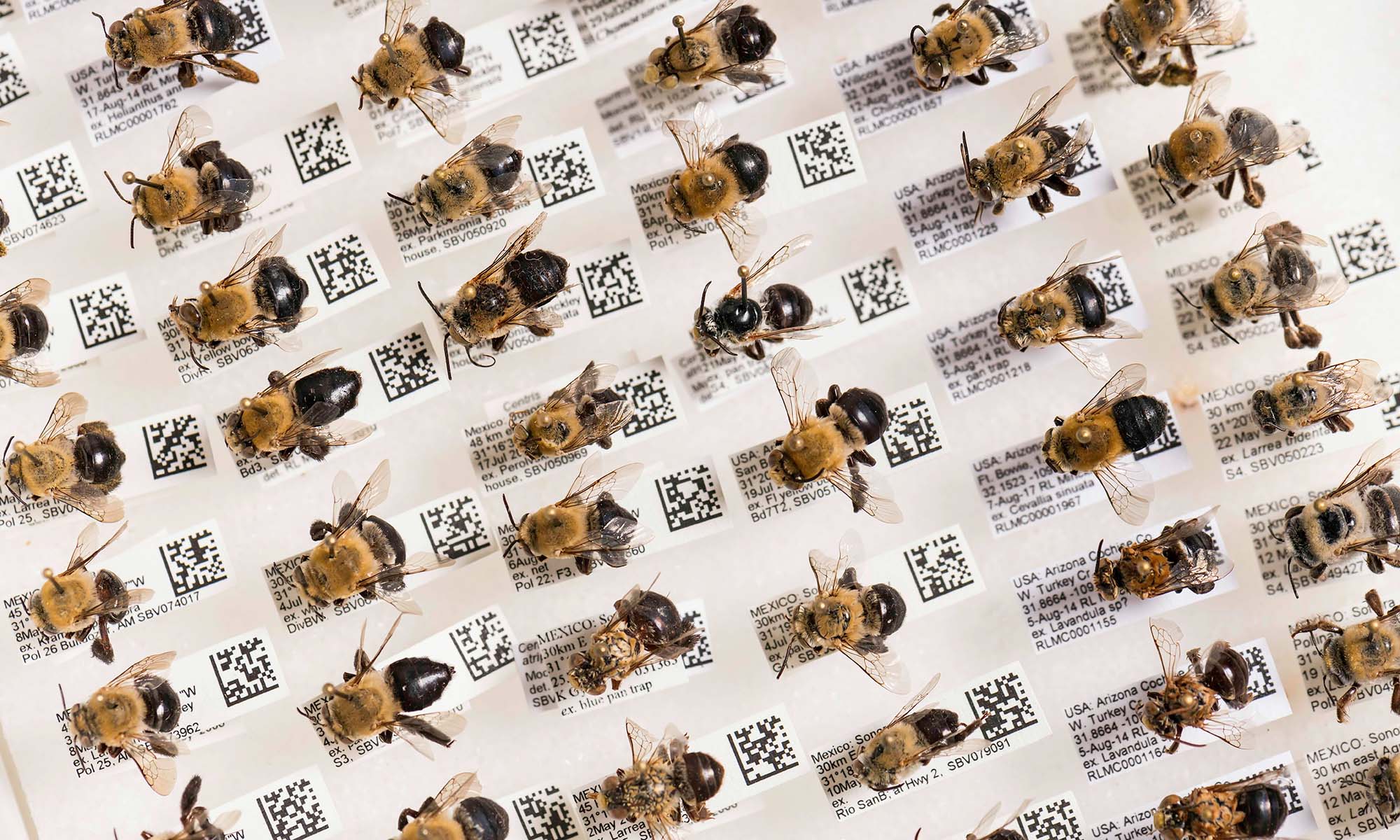
GOTTA CATCH ’EM ALL: Bob Minckley’s collection of bees contains approximately 62,000 specimens—one of which is even named after him: a sweat bee, Lasioglossum minckleyi. (URochester photo / J. Adam Fenster)
Professor Bob Minckley answers common questions about the surprisingly diverse—and downright weird—world of Anthophila.
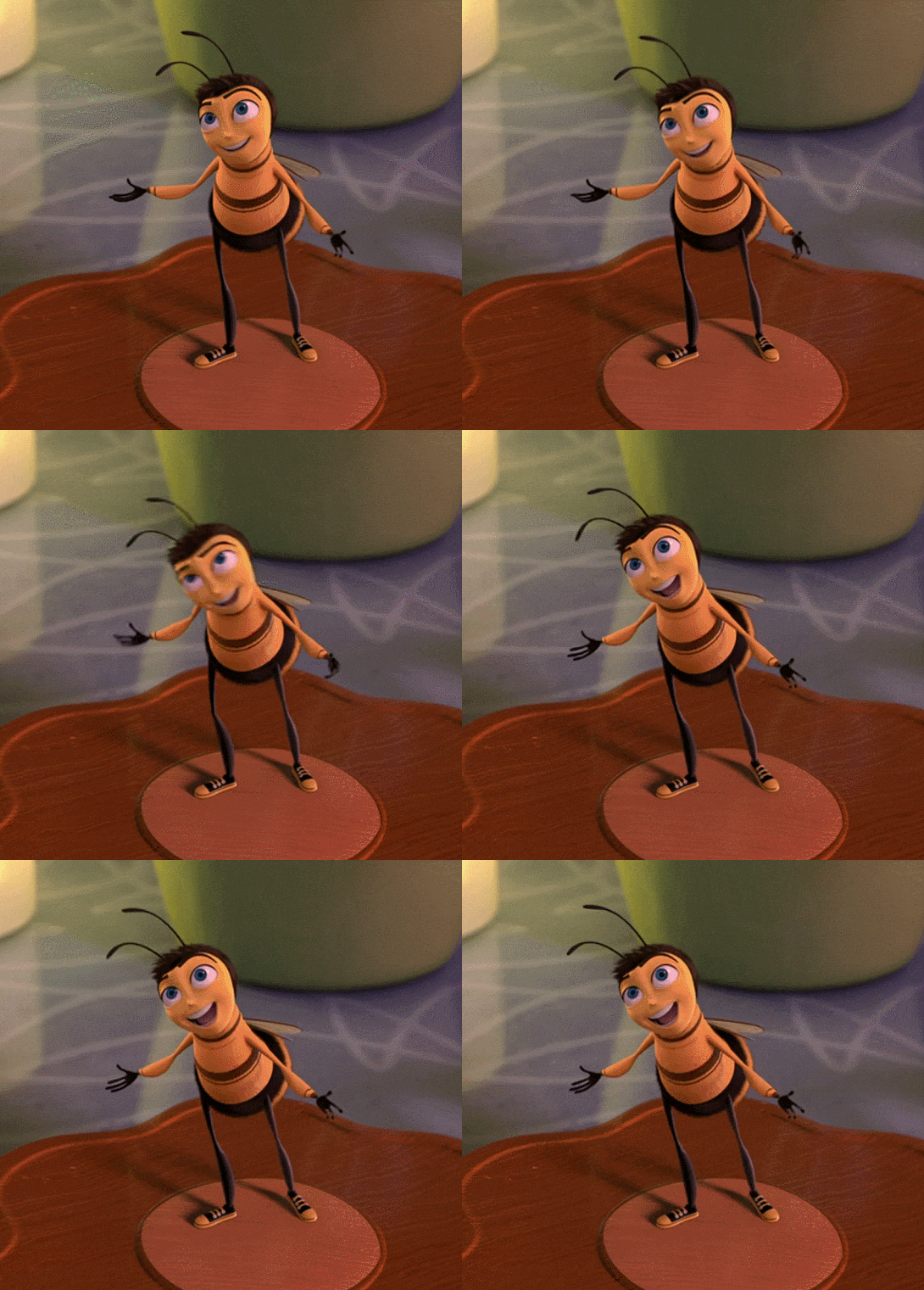
Nearly everyone knows the western honeybee (Apis mellifera)—that fuzzy, golden brown, black-banded bee. It’s a top-of-mind bee for its honey production and broad importance in agriculture. Not to mention the way it gutted a generation that grew up having seen the 1991 film My Girl and, more recently, the way Jerry Seinfeld’s Bee Movie (2007) anthropomorphized the insect. But those also happen to be among the reasons why entomologist Bob Minckley, a professor of instruction in biology at the University of Rochester, didn’t include them in his new edited book, The Book of Bees: A Life-Size Guide to Bees Worldwide (University of Chicago Press).
Biology and entomologist Bob Minckley (URochester photo / J. Adam Fenster)
Minckley’s book celebrates the differences of more than 400 kinds of bees with bold photography and details about each species’ history, behavior, and interactions with flowers and humans. While the western honeybee didn’t make the cut, two subspecies did: the Cape honeybee (Apis mellifera capensis) and the Africanized honeybee (Apis mellifera scutellata).
“When I decided I wanted to work on bees, I also decided I wasn’t going to work on honeybees,” Minckley says. “So, I really never paid attention to social bees because there are so many solitary bees. Then I decided to write this book, and I had to read all this literature on social bees that is actually very cool. I thought, ‘Why didn’t I read this when I was 25 years old?’ It was a lot of fun—and a little embarrassing—learning about all the bees I had been ignoring.”
Minckley is well known for his long-term field studies on solitary bees and bee biodiversity, documented in his coauthored book The Solitary Bees: Biology, Evolution, and Conservation (Princeton University Press, 2019). He has also amassed a collection of 62,000 bees, one of which is a sweat bee, Lasioglossum minckleyi, named in his honor.
Have a question about bees? Minckley’s an excellent resource.
BEE-T THE HEAT: The specimens in Minckley’s collection have established that the greatest concentration of bee species in the world occurs in the desert areas of western North America. (URochester photo / J. Adam Fenster)
Q&A with Bob Minckley
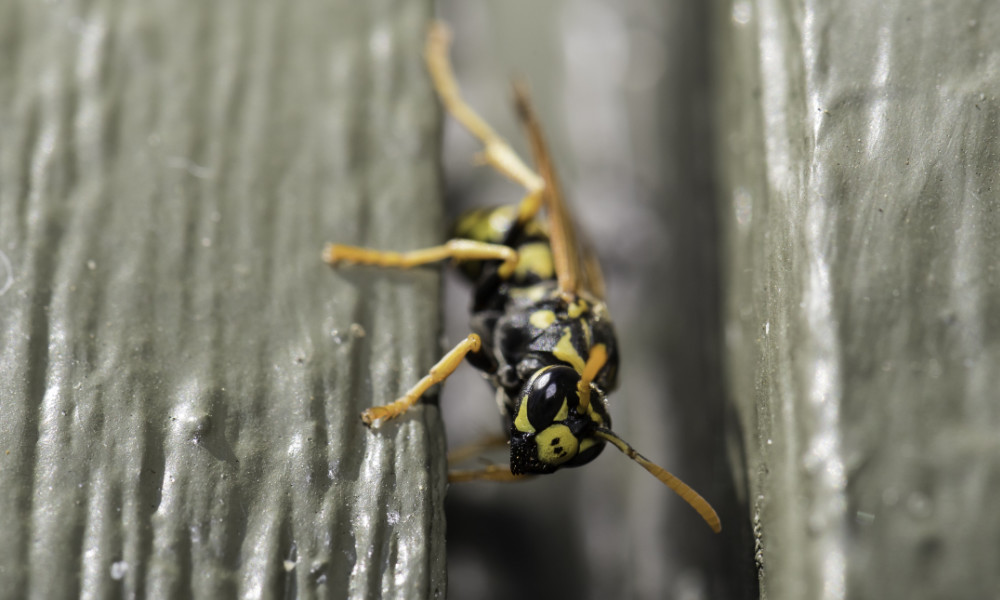
What is the difference between bees and wasps?
The difference between bees and wasps comes down mostly to their diets. Wasps are carnivorous and feed their young other insects. Bees subsist on pollen and nectar. Bees also tend to be hairy, due to the need to carry pollen.
Minckley: Good question. It really boils down to what they feed their young. Wasps are basically carnivores that feed their babies insects. But that doesn’t mean you won’t see wasps around flowers; they’ll be there, collecting nectar. Bees are vegetarian wasps that feed their young pollen.
Those dietary differences come with physical differences. Needing to gather pollen means needing to be hairy. And there are all kinds of behaviors associated with harvesting pollen that wasps don’t exhibit because they don’t tend to be very hairy. Take tomato flowers, for example. The pollen is inside a tube that bees will grab onto and then buzz its flight muscles to eject the pollen. It then combs the pollen off the bottom of its body, puts it onto its legs, and flies home. You don’t see all of that scraping and cleaning behavior in wasps.
“Bees are vegetarian wasps that feed their young pollen.”
Another commonly known difference is exclusive to a honeybee. Worker honeybees have barbed stingers. The barbs get lodged in your skin when they sting you, consequently eviscerating the bee when it attempts to fly away. And the stingers are attached to muscles and a venom gland that will continue to function even when they are no longer attached to the bee. It’s a very evil mechanism.
All other bees—and wasps—have smooth-sided stingers, allowing them to sting a person or animal repeatedly without dying.
Do all bees make honey?
No. This is solely the function of social bees that are feeding a lot of young. Solitary bees don’t produce enough babies or exhibit the kind of behavior to require making and storing honey.
Minckley: Most bees don’t. The only bees that make honey are social. There are 20,000 species of bees, which is about how many species of fish there are, and there are about 5,000 species of mammals. So, bees are a pretty big group for an insect group! Of the 20,000 bee species, only a very small minority, maybe 1,200, are social. Social bees are part of a colony that has a female that does the egg-laying, a queen, and sterile or partially sterile workers. All other bees are solitary.
The bees that make and store honey—concentrated nectar—do so because they have thousands of mouths to feed. A healthy honeybee colony can have 60,000 individuals. Honeybees are kind of weirdos in that they stay in their colony and feed on that honey over the winter. Most bees don’t feed over the winter.
Solitary bees don’t have a reason to make or store honey. The typical female solitary bee will live for about a month and die. She comes out in the spring or fall, flies among the flowers, mates, and then digs a nest in the ground completely by herself. She goes out and collects pollen and nectar, makes a little pollen ball, and lays an egg on it. She’ll make somewhere between five and twelve young that will never see her. The food she leaves behind is all the young bees have until they come out the next spring or fall, starting the cycle over again. Most bees in this region are solitary bees.
LIFE TASTES GOOD: “Nectar … is really just Coca-Cola for bees,” says Minckley. (URochester photo / J. Adam Fenster)
Are honeybees native to North America?
No. Honeybees were introduced to the Americas by Europeans and are unusual among bees for their large, highly social colonies and complex behaviors.
Minckley: No. They are also not native to South America. Honeybees were brought to North America by Spanish explorers around the 15th century. And it wasn’t to pollinate the crops because they weren’t coming here to start farming. They put a colony of bees on their ships to keep their honey fresh so they would have sugar for their journey.
Most social bees, like honeybees, live in the tropics. The honeybee is an incredibly unusual bee. They’re in the top echelon of strange for the bee world.
For example, all the workers are sterile. They can’t mate. They have this big egg-producing queen that can’t fly for most of her life. She sits in the nest and creates hundreds of eggs a day, and contrary to what people might think, she doesn’t control much. She’s at the mercy of the workers. It’s a pretty sad existence. But the workers are also in trouble if there’s no queen.
That said, it is a really neat animal.
Something that has always impressed me is that when a bunch of bees go for pollen and come back, there are bees that have to put the pollen somewhere in the nest and store it. When there’s too much pollen coming in, and the receivers can’t find a place to store it, the foragers slow down. So, the bottleneck condition is something they’re all sensitive to.
“I’M A POLLEN JOCK!” Jerry Seinfeld’s 2007 film Bee Movie anthropomorphizes the honeybee with protagonist Barry B. Benson. (via Giphy)
It also turns out that when honeybees leave the nest, they actually know how far they went and in what direction because they count the objects they fly past. Honeybee workers called “scouts” will go out each morning to survey the surroundings for flowers. And when they return to the colony, they do a little figure-eight dance. The intensity and direction of their waggles tell the other bees where they can find a lot of flowers. They even account for the sun moving. It’s beautiful! An ethologist named Karl von Frisch discovered the dance language by doing all these incredibly simple but elegant experiments. He was one of three peopleever to share a Nobel Prize in animal behavior. It was just stunning work.
Why are bees so important?
Bees are critical pollinators, transferring pollen between flowers as they collect food for their young, helping plants reproduce.
Minckley: Because when they’re collecting pollen for their young, they pollinate. That’s critically important to our existence.
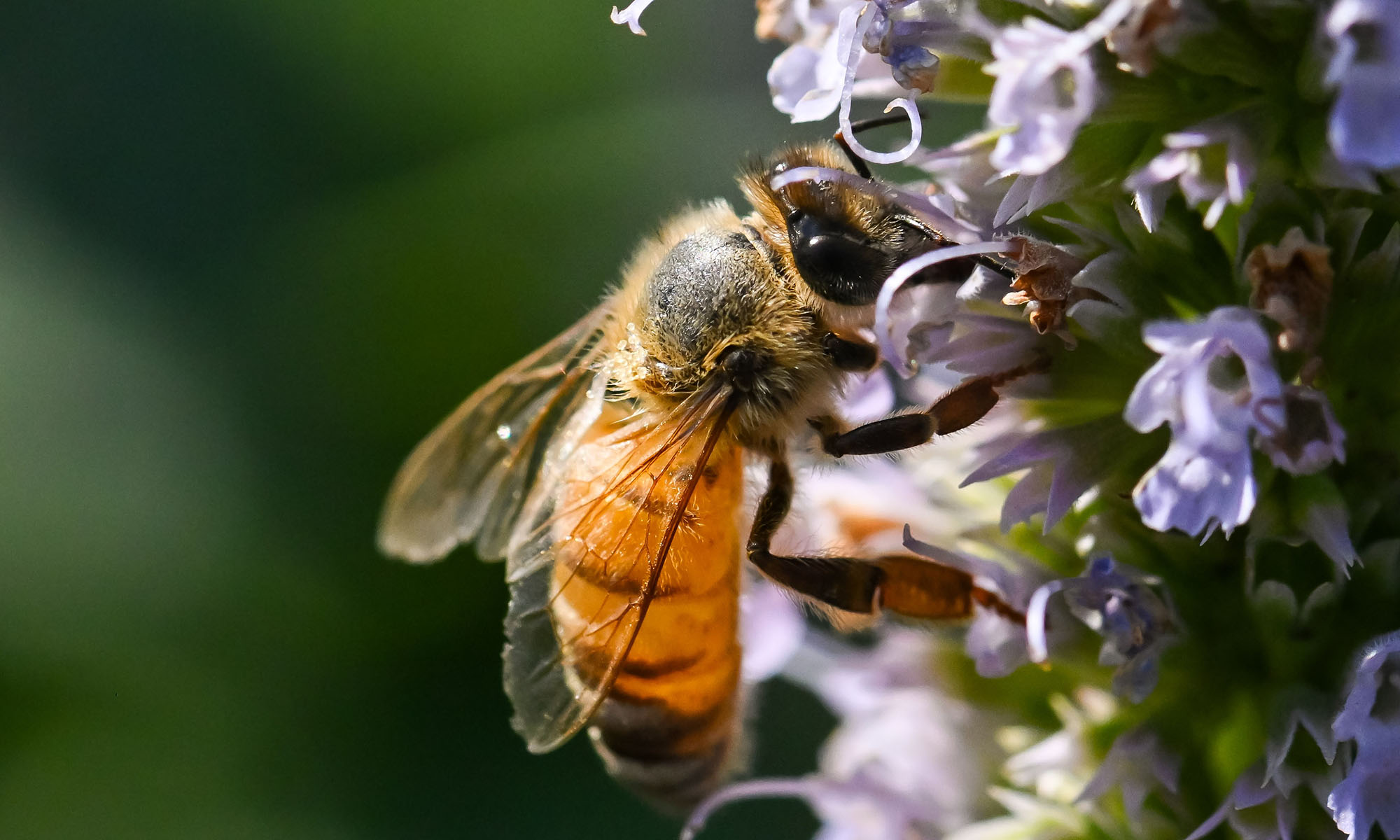
Plants have a really big problem: They can’t move. They’re stuck in one spot. So, if they’re going to fertilize another plant, they either have to throw their pollen up into the air and hope it lands on another flower of the same species or get an animal to stop by and then “deliver” that pollen for them. To attract animals and insects, plants make this really beautiful, appealing structure we know as a flower, and those flowers hold nectar in, which is really just Coca-Cola for bees. They also offer pollen. Bees want both, and in the process, they pollinate the plants.
Plants play all kinds of games to get bees to show up. It’s amazing how smart plants are. They really are. They’re doing everything they can to get bees to stop in and go to another plant of the same species. Sometimes it’s really wild scents. Sometimes they produce oils, which some bees use for their nests. There’s a long list of strategies plants use to attract attention.
Are bees disappearing?
Largely, no. Bees are doing fine. However, there are places where the loss of diverse habitats, brought on by large-scale agriculture and insecticide use, is making it difficult for wild bee populations to survive.
Minckley: They are in places in the US, such as the Midwest, where you have these massive valleys of monoculture that use a lot of insecticide. If you only have one plant, even if it needs bees, that means when it blooms, that’s the only game in town. In that situation, you’ve got to bring honeybees in to pollinate them because wild bees need different flowers at different times. They’re not all perfectly synchronized with a crop, so we lose the capability to take advantage of our native pollinator fauna because it just can’t persist in that kind of ecological condition. That large-scale, high-efficiency agriculture will allow you to grow a lot of food quickly and make a lot of money, but it’s hard on bees.
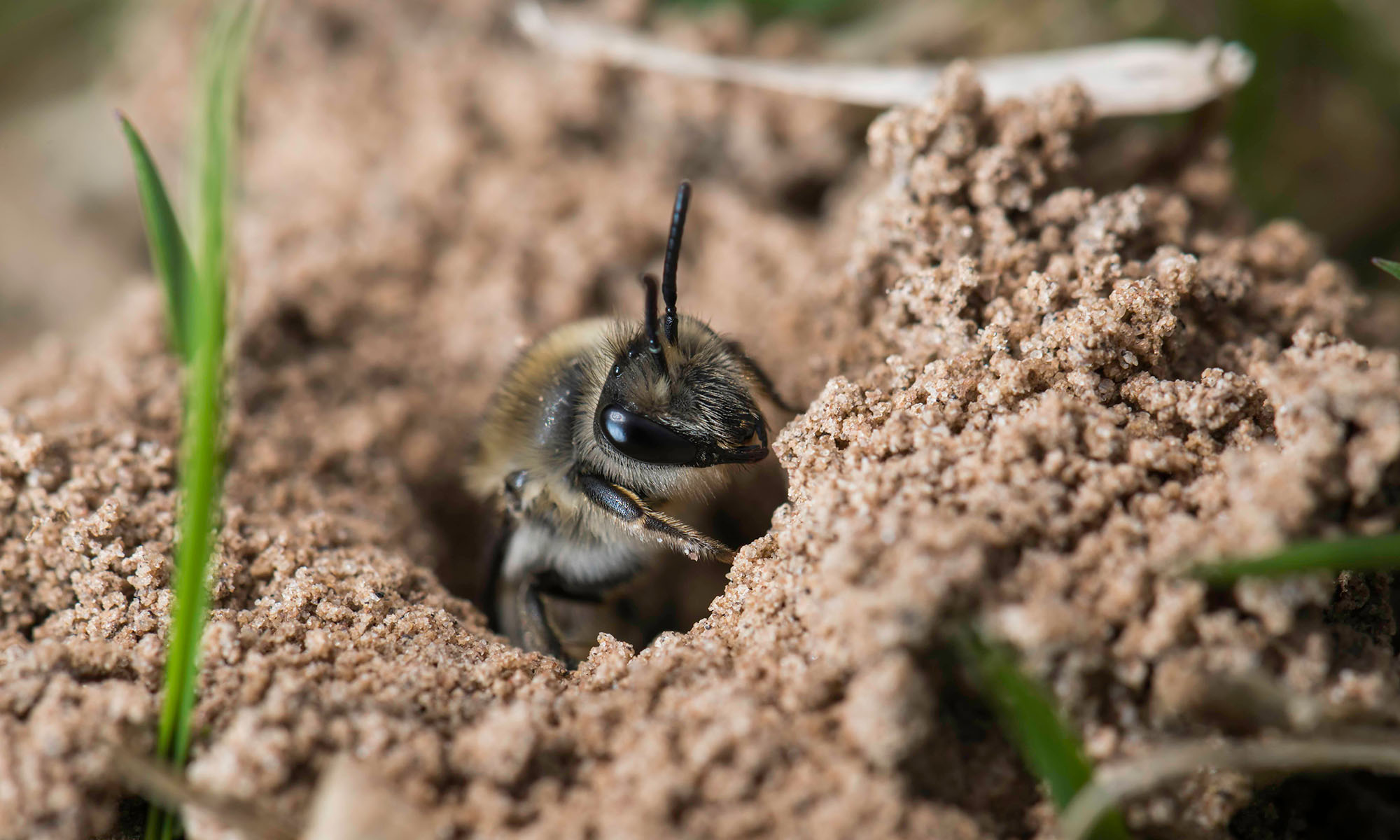
LAWN SOLO? A plasterer bee inside its burrow in nearby Mt. Hope Cemetery. Solitary bees like the plasterer bee “are supporting most of the terrestrial ecosystems of the world by pollinating, and nobody notices them,” laments Minckley. (URochester photo / J. Adam Fenster)
One year, a whole bunch of colonies disappeared over the winter, and it was covered by the New York Times. This was in 2007. Suddenly, everyone went, “God, if we don’t have any honeybees, what are we going to do about our crops?” And so, this pollinator crisis began, and the interesting thing about that is that honeybees are the only agricultural commodity not tracked by the US Department of Agriculture. So, there was almost no data behind the panic.
That single event brought bees to the public’s attention like nothing else had. It used to be nobody cared what I did. Now I can’t go to a party without getting cornered.
But if you go to the East Coast, where there are small farms or areas of New Jersey, where the fields are really small, and there’s a lot of shrubby edges, bees are fine. When everyone got concerned about honeybees disappearing—even though it’s not a native species—people started saying, “Well, we’ve got 5,000 wild bee species in North America. What are they doing for agricultural pollination?” Depending on the area, wild bees can do most of the work.
How can you make your yard more bee-friendly?
Let it get a little wild. Growing a variety of flowering plants—especially native species—can provide food and habitat for wild bees.
Minckley: You can keep it a little weedy and have plants that are flowering. I recommend looking up plants that attract bees anywhere that you live—there’s a ton of those websites. And there are a lot of native plants that attract bees. Two cool things about native plants: They’re a little more tolerant of poor care, such as forgetting to water them, and some of them attract specialized bees that you wouldn’t get otherwise.
One of the main things I study is why some bee species specialize on only one plant or several closely related plants. In New York, about 15 percent of the bees are specialists, some going to native cranberries and blueberries. There’s an interesting set of bees called “miner bees” that only go to willows. A willow is one of the plants that has a lot of nectar and pollen early in the year, and it flowers pretty consistently, so that might be why miner bees specialize on it. It’s a little mysterious why bees do this. There are a lot of theories, but most are poorly tested.
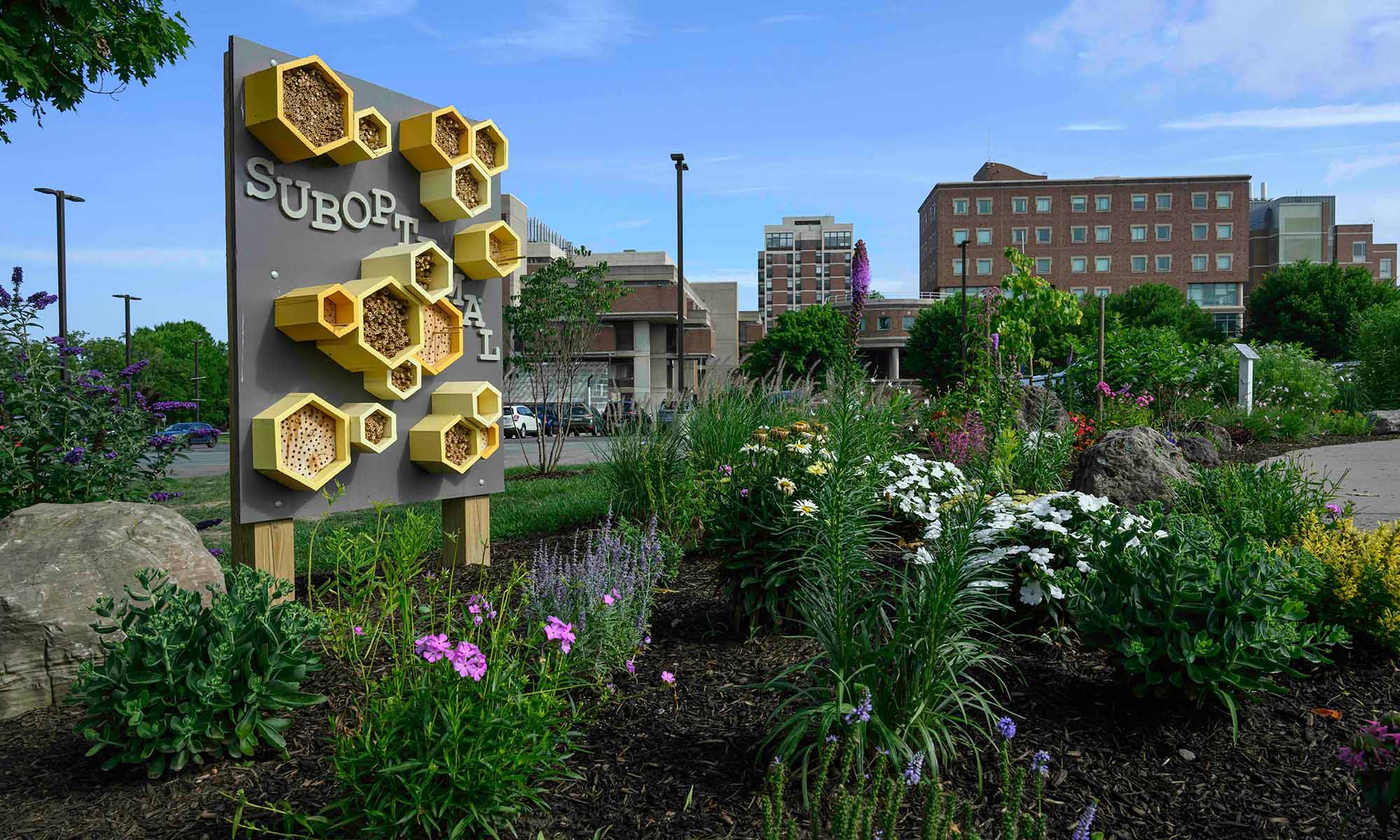
REST STOP: URochester art students partnered with Minckley to create an art installation on the River Campus that provides solitary bees and other pollinating insects a place to nest. (URochester photo / J. Adam Fenster)
What does it mean to be a Bee Campus USA?
Bee Campus USA designation means that the organization supports pollinators by reducing pesticide use, creating bee-friendly habitat, and raising awareness about native and wild bees.
Minckley: That you’re part of a group that’s trying to raise awareness of pollinators and the importance of reducing pesticide use and enhancing plantings that support bees. Our certification comes from the Xerces Society, which is a conservation group for invertebrates. It started fairly small but has exploded in size. People are really interested in conservation of small, non-mammal, non-bird animals. So, being a Bee Campus is just trying to spread the word that you can do very easy things and support wild bees.
But it’s all student-driven work. There needs to be a faculty sponsor, but students decide what we do every year. And we’ve got this great collaboration with grounds and facilities through John McIntyre, who’s really interested. Student ideas really empower him to reduce pesticide use and determine if an area of grass can be turned into a pollinator garden. The way Bee Campus started at URochester was this one student who was just a force of nature. She got John on board, and I said I’d be the faculty sponsor. We got a few more people to join, and we had a planting on a really cold day right by Library Lot on Intercampus Drive, and 150 people showed up.
STRIVE FOR THE HIVE: When it comes to URochester’s Bee Campus USA designation, “it’s all student-driven work,” Minckley says. (URochester photo / J. Adam Fenster)
It’s been great. There are some really motivated students who are interested in this issue. Every year we try to get two or three first- or second-year students on board. It’s not up to me, but if it’s not happening, I’ll say something. I taught a general biology class, and it was one of the biggest classes on campus, and some of the students thought I was talking about bees too much just because I mentioned them in four different lectures.
What about bees surprises people most?
Most bees are solitary—and their lifestyles are far more diverse and unusual than the familiar honeybee might lead you to believe.
Minckley: That most of them are solitary. And solitary bees are supporting most of the terrestrial ecosystems of the world by pollinating, and nobody notices them. They’re just out there performing a really critical ecological function, and they deserve a lot more attention than they get.
They’re interesting, they’re fun to watch, and they’re beautiful.
“Some bees … only lick the eye secretions on mammals—most people blink when I say that.”
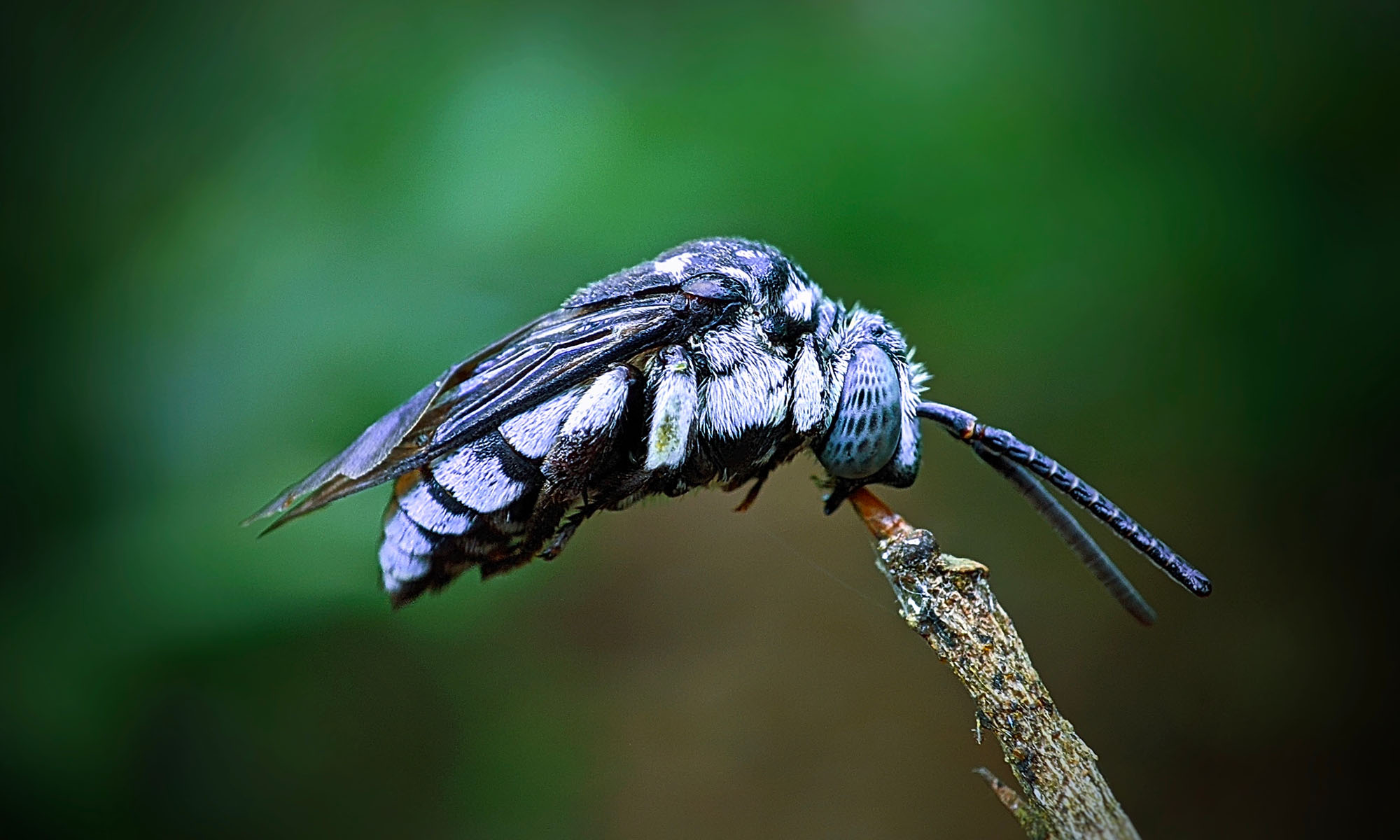
People might also be surprised to learn that 13 percent of the 20,000 species are parasites of other bees. These bees can’t collect pollen or dig a nest, so the way they live is by sneaking their eggs into another bee’s nest. Birders will understand why these bees are called “cuckoo bees.”
Some bees, meanwhile, only lick the eye secretions on mammals—most people blink when I say that.
There are millions of great bee stories.
LOOK WHO’S TALKING CUCKOO: 13 percent of the 20,000 species are parasites of other bees, known as “cuckoo bees.” Per Minckley, “The way they live is by sneaking their eggs into another bee’s nest.” (Getty Images photo)
What should people do if they find a bee nest?
Social bees, such as honeybees and bumblebees, are very defensive. Give their nests plenty of space. Solitary bees won’t defend their nests, so if you see a nest in the ground, pull up a chair and watch.
Minckley: This goes back to social bees and solitary bees.
When a bee has a nest with a bunch of honey and resources, mammals want that. So, social bees are very defensive. Honeybees get attacked by bears; they get attacked by people constantly. But most bees don’t have these behaviors. Solitary bees, like sweat bees, have a sting, but it probably won’t even pierce your skin, and they won’t defend their nest. They’ll just fly off.
If you’re lucky enough to find a ground nest, and you need a pretty good eye because they’re pretty cryptic, you can just about stand on top of it and watch it. They might be cautious around you for a while, but they’ll eventually go back to going in and out.
“If you’re lucky enough to find a ground nest … you can just about stand on top of it and watch it.”
It’s fun to stand around a patch of flowers on a nice day and watch bees. At a flower, even the more defensive social bees won’t attack you. Once they’re at the flower, there’s no problem because there’s nothing to defend. So, you can watch everybody there. If you sit in any garden or near a flower patch for a while, you’ll be surprised how many bees show up that you haven’t recognized before.
But you shouldn’t get near a honeybee nest. You shouldn’t get near a bumblebee nest. You don’t want either near your front door, or anywhere you’re going to disturb them and have them attack you. I’ve seen a wasp nest in the eaves of my neighbor’s house, and it was fine all year. You need to figure out what you’re comfortable with and take care of it. You don’t want to get stung.
When was the last time you were stung?
While teaching a bee course in Arizona, Minckley was stung twice in two minutes by squash bees.
Minckley: I got stung last year teaching “The Bee Course,” a 10-day workshop in Arizona at the American Museum of Natural History’s Southwestern Research Station.
There’s a bee that only goes to squash plants called the “squash bee” that can be found in New York up to southern Ontario. Squash blossoms open really early in the morning, and squash bees will fly into them before they close to sleep inside overnight. I was squeezing the flowers to see if there were bees in them.
Two of my students did their PhDs on squash bees. In five years, they were never stung by a squash bee. They watched me get stung right in front of them twice in two minutes. So they got a big kick out of that.
PARTING SHOT: “They’re interesting, they’re fun to watch, and they’re beautiful,” says Minckley. (URochester photo / J. Adam Fenster)