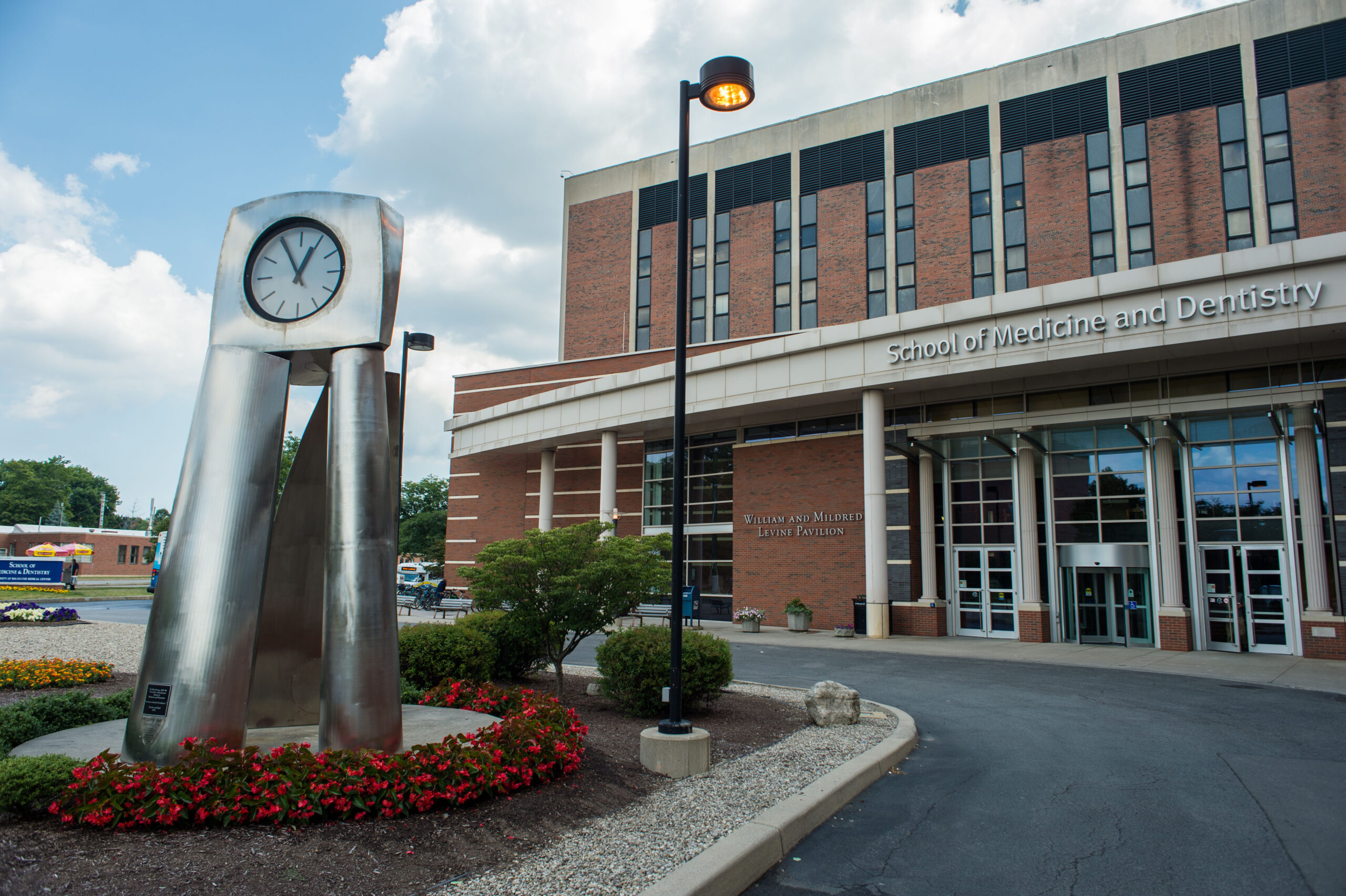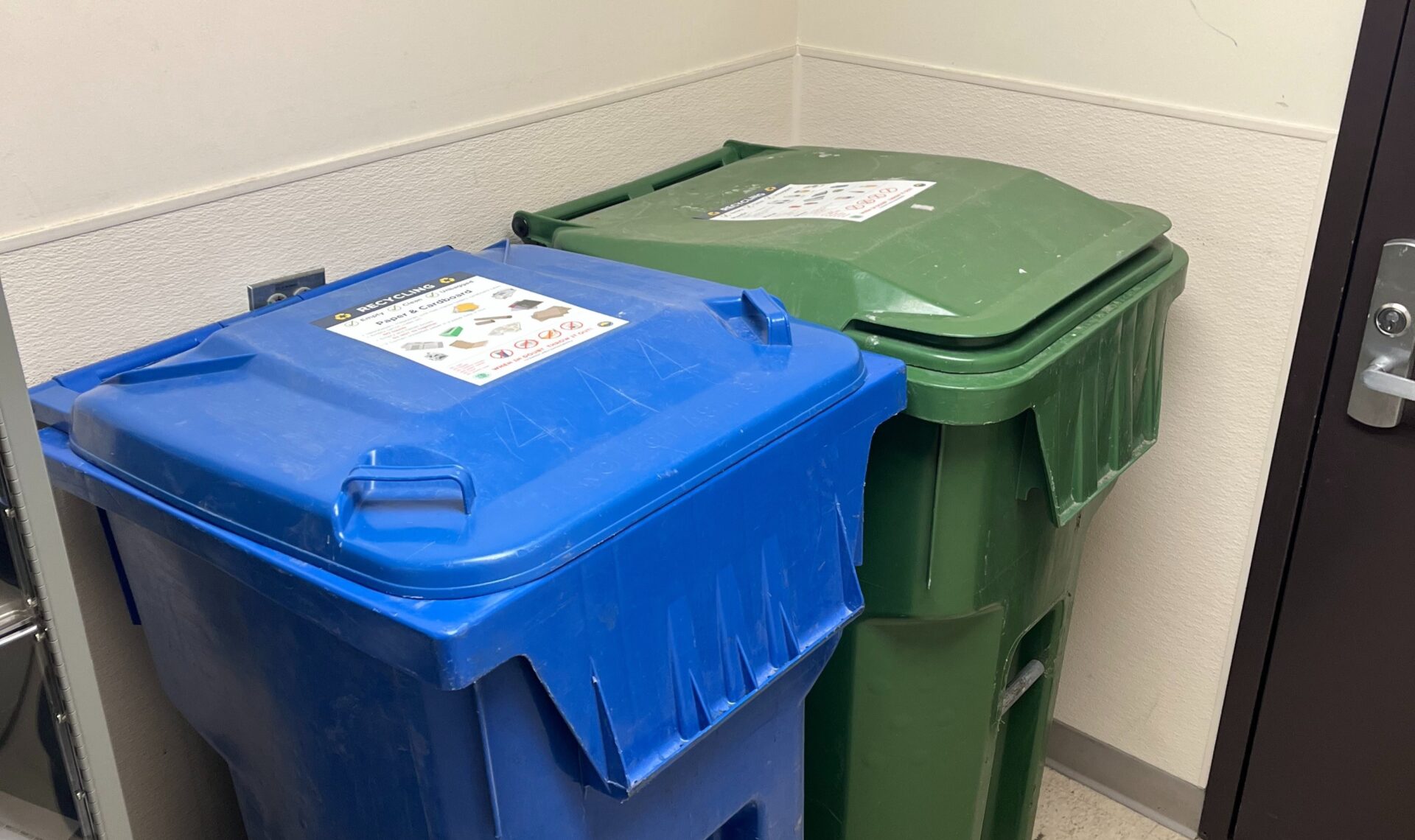
Earlier this year, the Sustainability Office coordinated a pilot program to improve recycling at the School of Medicine and Dentistry (SMD), (academic and research areas, including the Kornberg Medical Research Building and the Del-Monte Neuromedicine Institute/MRBX). Participation of SMD community members and compliance with recycling procedures is vital to achieving a successful pilot, which will pave the way to improved recycling across the Medical Center.
Progress
Since February, cardboard recycling has had zero contamination. Normally, contaminated loads must be landfilled. By keeping cardboard clean, an estimated 51-136 tons have been saved from the landfill compared to 2024. This is great news!
Unfortunately, the plastic, metal, and glass stream has been highly contaminated. This means that most of these materials went to the landfill instead of being recycled. The Sustainability Office shared positive updates via email about the recycling program from March through July without knowing about this contamination issue. The Office learned the truth from the University’s waste and recycling vendor only recently, and we apologize for the incomplete information. We’re committed to addressing this and are looking for the support of all at SMD as we work to improve.
What’s next?
We are trialing new improvements on the back end, with the goal of decreasing the plastic, metal, and glass contamination rate and obtaining better data. However, in order for the program to be successful we need your help to reduce contamination.
How can you help?
- Follow the guidance. Labels based on Monroe County guidelines are on recycle bins. You are welcome to print out the labels attached to this email. You can also view this training video for more information. For laboratory settings, please view this video to learn about lab-specific recycling. If you have questions or have high-volume items that you are not sure about, you can always email us to ask.
- Keep these OUT of the recycling: Plastic bags, plastic film, and Styrofoam. These are the most common and problematic contaminants.
- If you notice that totes and/or guidance labels are missing in your area, let us know or talk to your Environmental Services coordinator.
If you have any questions, concerns, or are interested in more background information about the successes and challenges of the pilot, please reach out to us at sustainability@rochester.edu. Thank you for helping us keep recyclable materials out of the landfill.