As winter arrives, you may start noticing blocked off staircases or salt out on University walkways before the sun even rises. Though these may seem like typical winter management techniques, they are crucial parts of Horticulture & Grounds’ efforts to use salt sustainably, which were recently recognized with a Sustainable Winter Management (SWiM™) certification.
Horticulture & Grounds (H&G) operates with a mission to be stewards of the University’s land while supporting conservation, inspiring learning, and fostering community connections. The department integrates these practices into the management of the University’s outdoor spaces, including the River Campus, Medical Center, Eastman School of Music, the Memorial Art Gallery, and other off-site properties.
Sustainability through the seasons
As part of its responsibility for de-icing the walkways and roads across campus, H&G has recently adopted a measurement-based approach to de-icing, earning them the Sustainable Winter Management (SWiM™) certification in 2025. The key is the use of brine (liquid salt) to pre-treat the pavement so that ice doesn’t form on the ground. This method is effective at keeping pavement safe, and it is better for the environment than traditional solid salt.
“Essentially, salt doesn’t actually disappear. It goes into our waterways…just because it dissipates, it doesn’t go away. You can’t really reverse salt once it’s in the waterways,” explains John McIntyre, Manager of Horticulture & Grounds at the University of Rochester.
As water flows from the Genesee River into Lake Ontario, excess salinity threatens native fish populations and promotes the growth of invasive species like zebra mussels. By tracking the pounds of salt used and following SWiM™ practices, the department has successfully reduced its overall salt usage by approximately 30% over the past two years, dramatically lessening the environmental impact while maintaining safety on campus. Additionally, by blocking off some staircases and paths, H&G reduces the need for salt in these areas.
Recognized excellence and data-driven management
The department’s commitment to environmental best practices has earned significant external recognition, affirming its leadership role in campus grounds management. In addition to the SwiM™ Certification, recent awards include:
- Accredited Arboretum through Morton Arboretum ArbNet (2021) – Recognized for excellence in horticulture, conservation, and education
- Tree Campus USA – Acknowledged for 15 consecutive years of engagement in tree and environmental stewardship
- PGMS “Grand” Green Star Award (2024) – Honored for leadership in beauty, safety, and sustainability in grounds maintenance
Cultivating community
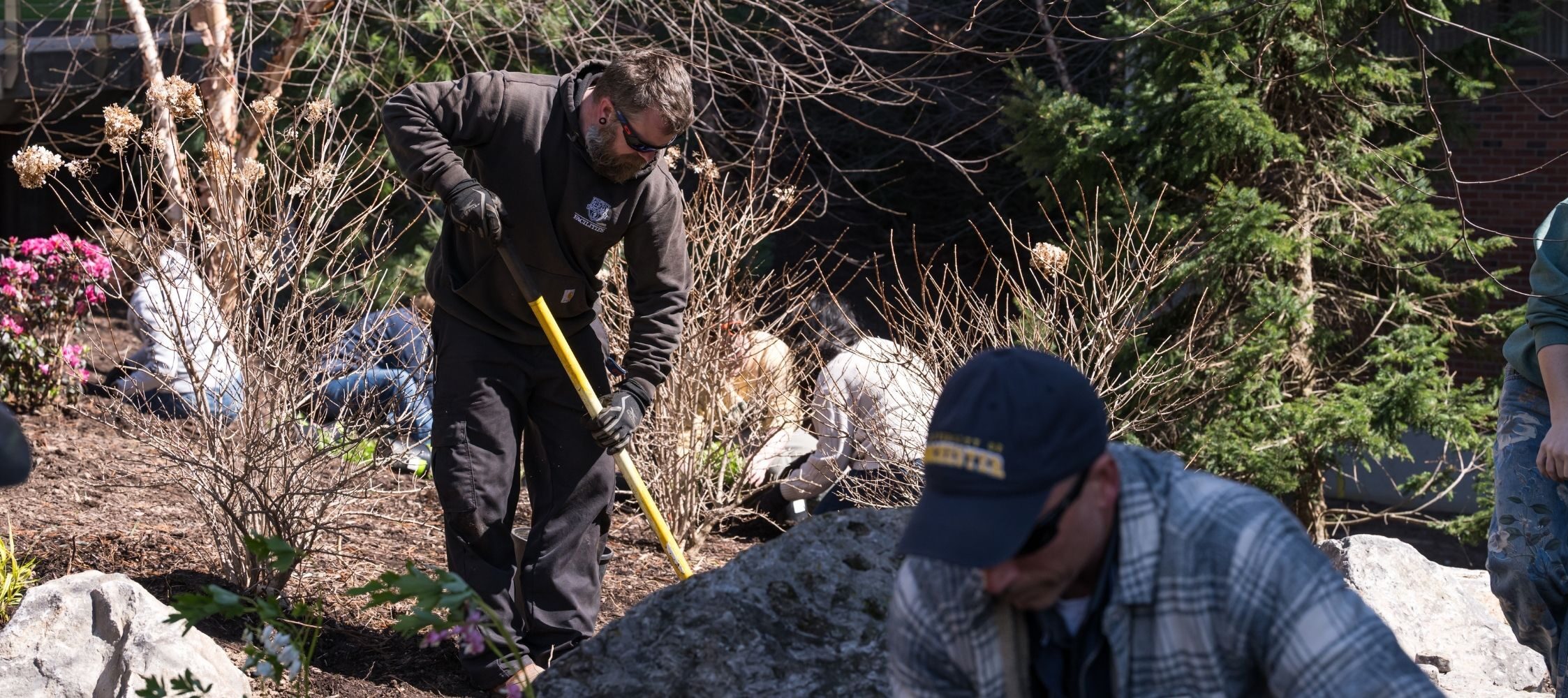
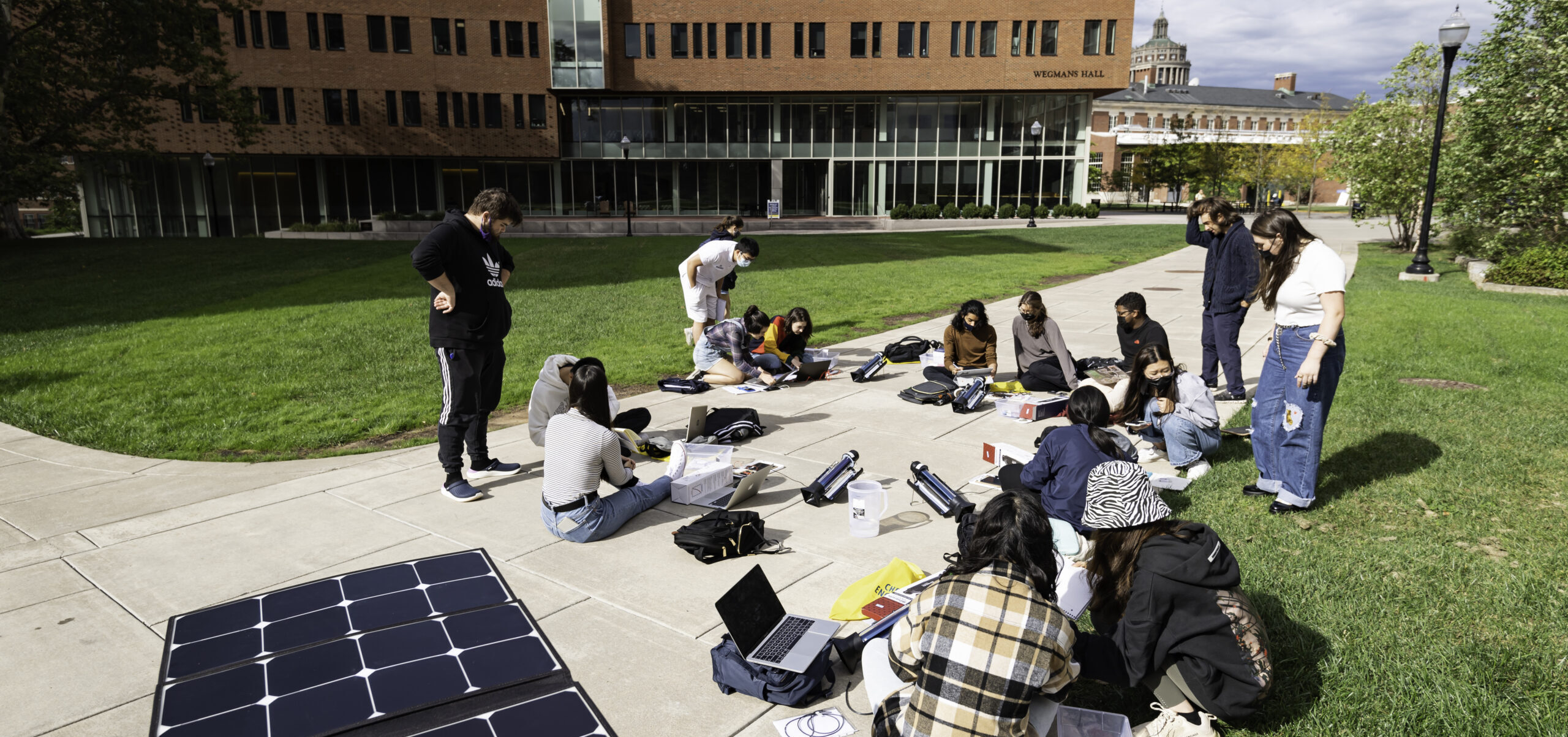
Hand-on education is an additional focus for Horticulture & Grounds. The team leads and supports numerous hands-on initiatives that engage students, faculty, and community members. This includes recent projects like creating a rain garden with Hydrology students, developing pollinator gardens alongside student groups, and hosting tree tours. McIntyre is passionate about these collaborative efforts. “We want students to be able to enjoy these areas, and we want to know that they’re enjoying them in a very clean way,” he says.
The department recently partnered with the City of Rochester on the “Tree Equity Through the City of Rochester” initiative, planting 43 trees with students at School 17. They also planted 50 native perennials with third-grade students from Anna Murray Douglass Academy, School No. 12, behind the Provost House, creating an accessible learning garden.
“This initiative embodies our mission to connect education, equal access, and sustainability, ensuring that every community has access to the health and environmental benefits of trees,” says McIntyre.
The department has much to be proud of, but to McIntyre, the thing he takes the most pride in is his team. “None of these initiatives can happen without the team…if we rely on one person, then we’re bound to fail.”
Written by Kylin Roberts, ’26