The University of Rochester has once again earned StormReady status from the National Weather Service (NWS), for its systems and practices in preparing for and responding to hazardous weather. The voluntary program recognizes organizations that have established strong capabilities for monitoring weather, communicating warnings, maintaining emergency plans, and educating their communities about severe weather. Part of being StormReady is about preparing for the community’s increasing vulnerability to extreme weather events, which is of growing concern with climate change.
Severe weather events are typically not on everyone’s radar daily, but when they occur, they affect nearly every part of life. For Tom Saunders, emergency preparedness manager with Environmental Health and Safety, pursuing StormReady certification provided an opportunity to evaluate and strengthen the University’s existing weather practices. The process involved reviewing weather-monitoring, warning, communication, planning, training, and exercise capabilities, followed by a formal application and verification walkthrough with the National Weather Service.
Strengthening campus resilience
As weather patterns and climate conditions continue to change, preparing for severe weather is an important part of building a resilient campus. For the University, that means not only responding to weather events as they happen, but also considering how preparedness can help the campus adapt to changing conditions over time.
“StormReady helps make weather preparedness part of the University’s long-term culture rather than something considered only when severe weather is approaching,” Saunders said. The certification process helped the University identify opportunities to strengthen its preparedness. Existing weather plans were reviewed and formalized to align with NWS standards.
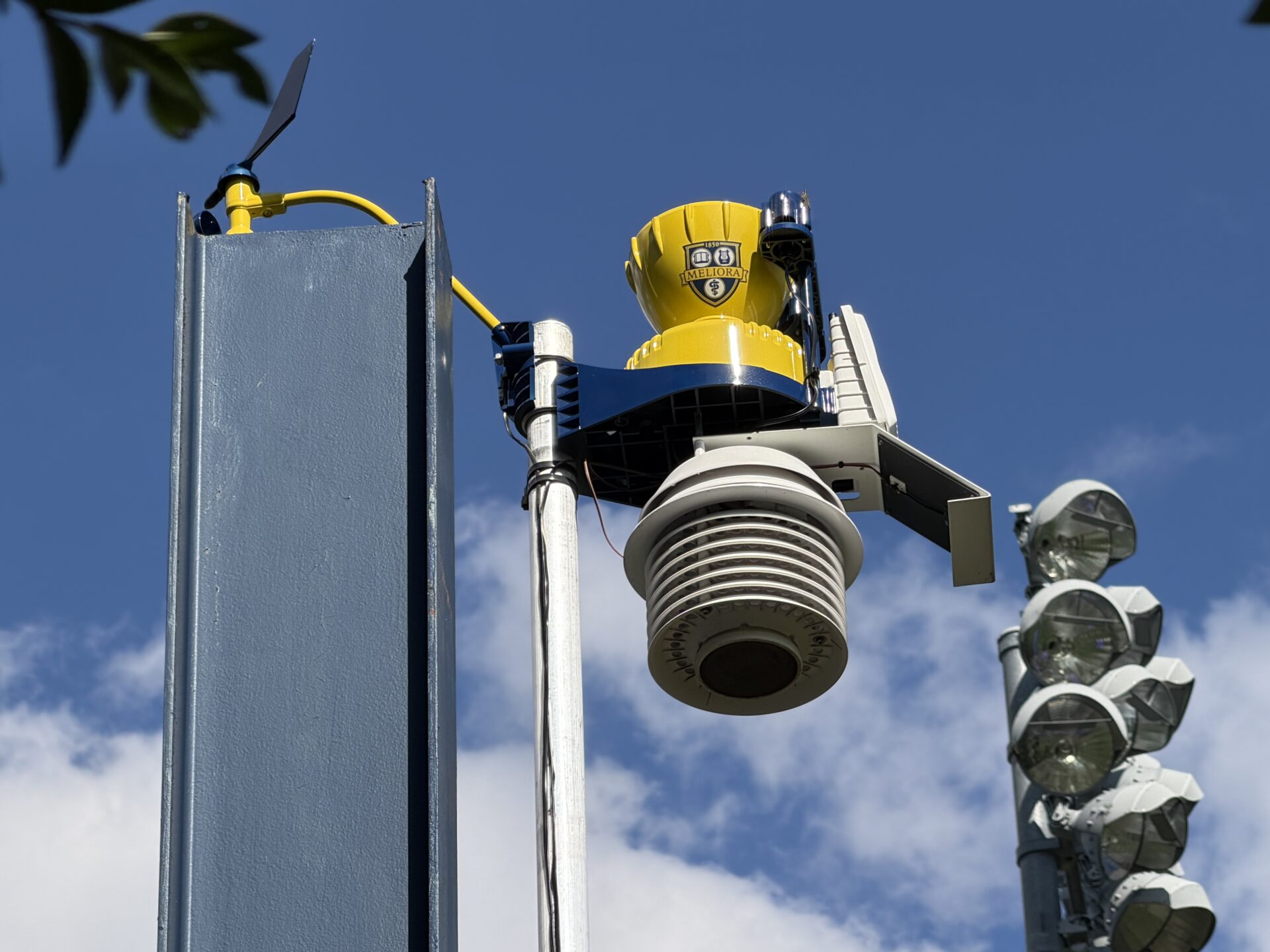
One tangible improvement was the installation of a weather station at the Towers Field complex. The station provides real-time, campus-specific weather information, while connected horns and lights can alert the community to hazards such as lightning and tornadoes. Data collected from the station is publicly available online. The system can also support proactive weather alerts for designated outdoor events. “Rather than waiting for severe weather to affect campus before responding, we now place a greater emphasis on monitoring conditions, planning, communicating early, and taking protective action before conditions become dangerous,” said Saunders.
Preparedness as a shared responsibility
Members of the University community also received SKYWARN Weather Spotter training to help recognize and report severe weather conditions. StormReady brings people, planning, and technology together to strengthen the University’s ability to proactively anticipate and respond to hazardous weather. The certification is an ongoing commitment, with the University required to maintain its capabilities and renew its recognition every four years. The University has maintained its StormReady status since 2015, when it became the first private University in New York to receive the certification.
StormReady is a representation of taking another step toward a more resilient University, one that is prepared not only to respond to severe weather, but to anticipate risks and take action before emergencies arise.
Written by Anu Ravi, ‘29