Location
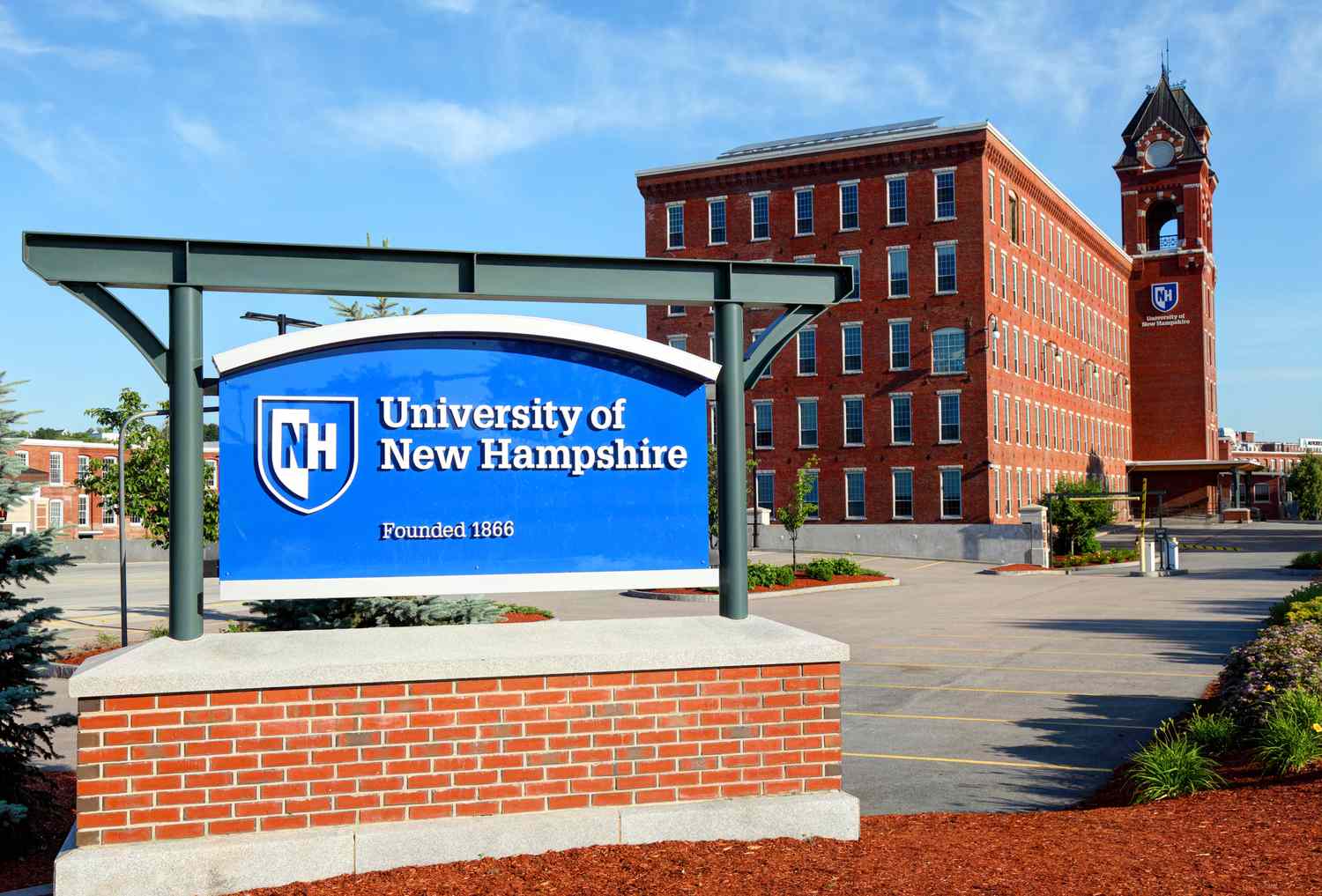
University of New Hampshire-Manchester Campus
88 Commercial St.
Manchester, NH 03101
Free Parking is available (map will be provided a week prior)

The Northeast Noyce Professional Learning Network Presents
University of New Hampshire – Manchester Campus
88 Commercial St.
Manchester, NH 03101
This teacher-led and designed conference highlights the successful and transformative practices of secondary STEM teachers working in three very distinct districts in New Hampshire. Reflective, collaborative practice, innovative STEM pedagogies, and student-involved curriculum are featured across the three conference strands.
Strand I: Centering Student Success
Ignite every learner’s potential by putting students at the center of the STEM classroom. This strand highlights practical, student-centered strategies that build ownership, confidence, and curiosity. Explore ways to empower students to lead their learning, strengthen their voices and make connections to content; in order to create a collaborative, supportive classroom culture.
Strand II: Strategies for All Learners in STEM
This strand highlights strategies to deepen educators’ instructional approaches, assessment practices, and knowledge of students who have a variety of learning needs. These research-based strategies are geared towards increasing student ownership of their own work, building literacy and problem-solving skills, and generating productive classroom discussion.
Strand III: Viewing STEM Through Multiple Lenses
What does STEM mean to you? Workshops in this strand highlight the ways that interdisciplinary practices and community-responsive learning invite students to see the connections between the real world and typical classroom experiences. Participants will leave with actionable methods for making STEM visible, relevant, and connected to the issues and opportunities students face every day.

Abstract: Humans are natural sensemakers. We learn by noticing patterns, asking questions, testing ideas, and building understanding together. Yet many classrooms are still designed as if learning were primarily the transfer of information, rather than a shared process of meaning-making.
Research on learning consistently shows that understanding develops through engagement with meaningful phenomena, productive struggle, and conversation. When instruction is organized around compelling questions and real-world experiences, learners have multiple ways to enter the work, contribute ideas, and refine their thinking over time. Classrooms become places where evidence matters, explanations evolve, and knowledge is built collectively.
The same principles apply beyond students. Educators deepen their practice through collaboration, shared inquiry, and reflection on evidence from classrooms. When schools are designed as communities for learning—rather than systems for delivery—understanding grows, participation widens, and discovery becomes a common pursuit.
Sue is a science education leader whose work focuses on supporting teachers in designing student-centered, phenomena-driven, and NGSS-aligned learning experiences. At NHLI, she designs and facilitates professional learning in science curriculum, instruction, and assessment for K–12 educators. She currently leads the Science PLACE (Performance Learning and Assessment Consortium for Educators) project, a collaborative network of teachers committed to advancing high-quality performance-based instruction and assessment.
Before joining NHLI, Sue spent 28 years teaching Chemistry and AP Chemistry at Souhegan High School in Amherst, New Hampshire. During her career, she served as science department coordinator, senior project coordinator, and a content lead for the NH-PACE initiative. Sue is a recipient of the 2019 Presidential Award for Excellence in Mathematics and Science Teaching and the 2021 New Hampshire Excellence in Education Award for Science. She holds a BA in Chemistry from Saint Anselm College and an MS in Physical Chemistry from Boston College.
If you are a Noyce participant in and around the New Hampshire/Vermont/Maine region, we encourage you to register starting January 1, 2026. If you are a non-Noyce participant, you will be able to register starting March 9, 2026
University of New Hampshire-Manchester Campus
88 Commercial St.
Manchester, NH 03101
Free Parking is available (map will be provided a week prior)
Saturday, May 9, 2026 (Breakfast & Lunch included)
Any participant requiring overnight accommodations are expected to make them on their own. Participants can be reimbursed up to $130 per night to partially cover the cost of the hotel (hotel receipt required)
Parking is free for participants
**A parking map will provided a week prior to the event.