About the Research and Faculty :: March 2006
The New Yorker (April 3)
The God Project
"The religious opinions of scientists are, of course, a separate matter from a science of religion. And yet, whatever else religion may be, it's something that happens in the real world in real time. So why not approach it as a natural process? Why not study it scientifically?" writes H. Allen Orr, professor of biology, in a review of Daniel Dennett's Breaking the Spell: Religion as a Natural Phenomenon. (Also reported by Science & Theology News.)
NPR: Talk of the Nation (March 31)
Avian Flu Vaccine
"So, we're gonna top this hour by talking about this vaccine study with the principal investigator. Our number is 1-800-989-8255, 1-800-989-TALK. John Treanor is the director of the Vaccine and Treatment Evaluation Unit and professor of medicine and of microbiology and immunology at the University of Rochester School of Medicine and Dentistry in Rochester, New York. He joins us from WXXI in Rochester. Welcome to the program."
New York Times (March 30)
Doubt Cast on Stockpile of a Vaccine for Bird Flu
Dr. Fauci and Dr. John Treanor of the University of Rochester, the lead investigator of the study, discussed the results on Tuesday in a telephone news conference. The vaccine, developed by government and other researchers, is being made by Sanofi Pasteur under a government contract. It is designed to prevent the disease caused by the A(H5N1) virus, which has been spreading rapidly through Asia, Europe and Africa. The disease has not reached the Americas. (Also reported by ABC News, Chicago Tribune, Boston Globe, The Los Angeles Times, Washington Times, CNN International, Newsday, Forbes, WHEC-TV NBC (Rochester), WROC-TV CBS (Rochester), Democrat and Chronicle, and others.)
myDNA.com (March 30)
Lead Affects Bone Development
Bolstered by recent laboratory findings, researchers at the University of Rochester Medical Center (URMC) in New York are embarking on a National Institutes of Health-funded clinical study to better understand the deceptive role that environmental lead exposure plays in bone maturation and loss. (Also reported by Science Daily, UPI, Innovations Report (Germany), and FoodConsumer.org.)
ABC News (March 29)
Bird Flu Vaccine: Safe, but Not Effective
The fact that it takes so much virus to induce such a small amount of immune system reaction is not good news for producing a vaccine in large quantities. Lead researcher Dr. John Treanor of the University of Rochester is very encouraged by the results but says there is a long road ahead. His team and others are now working on ways to boost the effectiveness of the vaccine with chemicals called adjuvants, which may allow the vaccine to be used at lower doses. (Also reported by Canada.com.)
Time (March 29)
Can We Fend Off Bird Flu?
"We had hoped the result would be better than this," says Dr. John Treanor of the University of Rochester in New York. But Treanor, who led the study, says he was neither surprised nor discouraged by the result. A previous test of a more experimental avian flu vaccine reached a similar conclusion last year.
The New York Times (March 29)
Using an Iceberg to Tell the Colorful Tales of Alaska
Not every art expert is convinced that the museum's radical approach will succeed. Janet Berlo, a professor of art history and visual and cultural studies at the University of Rochester, said that despite recent efforts at the National Museum of the American Indian to display crafts alongside fine art, the Fairbanks strategy of putting disparate genres together could attract criticism.
The Los Angeles Times (March 29)
Most ER Patients Are Insured, Study Says
"We've cut hospital budgets so much, the only way they can be efficient is by operating as close to capacity as possible, like airlines," said Sandra Schneider, head of the emergency medicine department at the University of Rochester in New York.
Georgia Tech Newsroom (March 29)
New Polymer Shows Promise for Drug Delivery
Murthy presented information on the development and potential applications of polyketals March 27 at the 231st American Chemical Society National Meeting in Atlanta. His collaborators are Emory University immunologist Bali Pulendran, University of Rochester physician Robert Pierce, and Georgia Tech graduate students Michael Heffernan and Stephen Yang. Their research—under way for the past two and a half years—is funded by the National Institutes of Health and the National Science Foundation. (Also reported by AZoNano.com (Australia) and PhysOrg.com.)
The Advocate (March 29)
Antiseizure Drug May Treat HIV-Related Dementia
Valproic acid, an antiseizure drug, has shown promise in treating HIV-related dementia, reports the Omaha World-Herald. A safety and efficacy trial of 22 HIV patients suffering from dementia showed that valproic acid helped improve nerve cell function and boosted cognitive performance, researchers from the University of Nebraska and the University of Rochester, N.Y., write in the journal Neurology. Brain scans also showed improvements in brain metabolism, the researchers report.
Reuters (UK; March 28)
Pregnancy Can Be Safe for Cystic Fibrosis Patients
"Improvements in the health and survival of patients with CF have led to increasingly normal lifestyles, including successful pregnancies in women with CF," Dr. Ann H. McMullen of the University of Rochester School of Nursing, New York, and colleagues write. "Concern exists among care providers about the impact of pregnancy on the health of women with CF."
The New York Times (March 28)
A Chance Find, and Voilą! Goodbye, Hot Flashes. Hello, Sleep.
The researchers, led by Dr. Kishan J. Pandya of the James P. Wilmot Cancer Center at the University of Rochester Medical Center, found that "only the higher dose of gabapentin was associated with significant decreases in hot flash frequency and severity." They recommended that the drug "be considered for treatment of hot flashes in women with breast cancer." Dr. Pandya undertook this study after Dr. Thomas J. Guttuso Jr., a neurologist then at the university's medical center, published findings in February 2003 in Obstetrics & Gynecology. Dr. Guttuso and his colleagues had randomly assigned 59 postmenopausal women who suffered from seven or more hot flashes a day to receive gabapentin or a placebo for 12 weeks.
The Chronicle Herald (Halifax, Nova Scotia; March 28)
Scatterday Conducts Acadia Band
Mark Scatterday, principal conductor of the Eastman Wind Ensemble, will conduct the Acadia University Band in concert on April 4 at Acadia's Festival Theatre at 8 p.m. The program will include a new work by an Eastman composer, and a complete performance of Mussorgsky's Pictures at an Exhibition.
The Daily Targum (New Jersey; March 27)
Experts Discuss Stem Cells
"Around the world [stem cell] research is going on, and people are using the best self sources they can to produce treatment," said panelist Mark Noble, a professor of biomedical genetics at the University of Rochester. "The cells we get from developing organisms have the ability to develop tissue."
Medical News Today (UK; March 26)
Pregnancy Research Leads to Progress on Premature Delivery
The University of Rochester has filed a patent on several ideas to help prevent early labor and the premature delivery of low-birth-weight babies. The discovery is an incremental step in an area of obstetrics that has seen little improvement in 20 years. Mark Plessinger, Ph.D., assistant professor of Obstetrics and Gynecology at the University of Rochester Medical Center, discovered that certain proteins known as toll-like receptors (TLRs), located in the amniotic membranes of pregnant women, sometimes fuel a harmful inflammatory response. The inflammation, in turn, may cause the fetal membranes to rupture and lead to preterm labor.
The Wall Street Journal (March 25)
New Ways to Stand Tall
High wedges look more stable than stilettos, but some doctors fear injuries. "You're already on a pretty high pedestal . . . walking on your tiptoes and then you put a rocker underneath it—I don't think that's a very stable construct," says Judith Baumhauer, chief of foot and ankle surgery at the University of Rochester. (Also reported by PR Newswire.)
Forbes.com (March 23)
Teens' Use of Herbals May Raise Drug Abuse Risk
"Though we found that adolescents in this sample who said they'd tried herbal products were more likely to try drugs, we're not saying that one causes the other. It's an association," said researcher Dr. Susan Yussman, an assistant professor of pediatrics in the division of adolescent medicine at the University of Rochester, Rochester, N.Y. (Also reported by News-Medical.Net (Australia), NewKerala.com, Consumer Affairs, Medical News Today (UK), Family News in Focus (Colorado), and Fox News.)
News-Medical.Net (Australia; March 23)
Stem Cells, Gene Therapy and Allograft Applications Show Promise for Treating Orthopaedic Conditions
Gene therapy is another cutting-edge technique with the potential to mend damaged bones and tissues while sparing patients from undergoing multiple surgeries. Regis J. O'Keefe, MD, PhD, professor of orthopaedics and director of the Center for Musculoskeletal Research at the University of Rochester (NY) Medical Center and treasurer of the ORS, said his laboratory works on methods to introduce genes into bone-forming to improve the cells' function and increase bone formation. (Also reported by Medical News Today, Yahoo! News, and PR Newswire.)
Orlando Sentinel (March 23)
Throwing Sand in Gears of New, Small Firms
As Sun Microsystems CEO Scott McNealy said, Sarbanes-Oxley effectively throws "buckets of sand into the gears of the market economy." How much sand is shown by a University of Rochester study that concluded that the total effect of Sarbanes-Oxley was to reduce the stock value of American companies by $1.4 trillion.
UPI (March 22)
Ped Med: Environmental Triggers of ADHD
"There are environmental factors that can cause childhood behavioral problems, such as lead exposure during childhood, substance and alcohol abuse and smoking during pregnancy, an impoverished environment, malnourishment, physical abuse, traumatic brain injury, seizures," said neuropsychologist Donna Palumbo. Research shows children of tobacco users face a higher risk of ADHD. Palumbo is associate professor of neurology and pediatrics at the University of Rochester School of Medicine and Dentistry in New York and principal investigator on a multi-site, government-funded study looking at the appropriateness of diagnosing and treating ADHD in preschoolers.
The Wall Street Journal (March 18)
Two Cheers for Nancy Pelosi
Beyond the direct cost of compliance to individual companies, a recent University of Rochester study concluded that the total effect of the law has reduced the stock value of American companies by $1.4 trillion. That is $1.4 trillion that could be invested in infrastructure improvements, jobs, innovative technologies or research and development. As Sun Microsystems CEO Scott McNealy says, Sarbanes-Oxley throws "buckets of sand into the gears of the market economy."
Medical News Today (UK; March 18)
Study Highlighted at ACC Better Identifies Which Children and Teenagers Are at Risk for Sudden Cardiac Death
"LQTS impacts communities nationwide each year as young people die during football games and track meets, or just as tragically, in their sleep," said Ilan Goldenberg, M.D., Research Assistant Professor of Cardiology in the Department of Medicine at the University of Rochester Medical Center and first author of the JACC paper. "The condition runs in families and can remain undiagnosed until the victim's brother or sister dies as well. We believe our study will provide powerful new tools for protecting these patients. Beyond LQTS, the study shows that rethinking how we define risk has the potential to save the lives in several major heart diseases." (Also reported by News-Medical.Net (Australia) and Science Daily.)
PhillyBurbs.com (Pennsylvania; March 18)
Pa.'s Low Legislative Turnover Rate Raises Questions About System
One of their findings: While term limits have increased the number of new faces in the legislatures, the freshman lawmakers aren't necessarily citizen legislators. Instead, they tend to come from municipal or county government. "There hasn't been an obvious change in the direction of better government. It's a difficult thing to judge," said University of Rochester political science professor Richard Niemi, who has studied state legislatures and election trends.
Atlanta Journal Constitution (March 16)
'Smoking Room' at Home Won't Shield Asthmatic Kids
"Of course, the best case scenario is if the parents or guardians can quit smoking," says lead author Jill Halterman, assistant professor at Golisano Children's Hospital at Strong, about the results of a new study that suggest extra care must be taken in the home to protect children with asthma from secondhand smoke. "But that's not always immediately possible. Another option is for parents to institute a 'no-smoking' rule in the home and the car, and allow no exceptions to this rule. It is best if smokers always go outside to smoke, and this strategy may also help the parents to eventually quit." (Also reported by News-Medical.Net (Australia) and UPI.)
The Wall Street Journal (March 15)
n Earlier Open May Be in Store for the New York Stock Exchange
This report cites a study published in 2004 by Michael Barclay, Alumni Distinguished Professor and professor of finance at the Simon School, and Terrence Hendershott of the University of California at Berkeley suggesting after-hours trading can have higher trading costs.
Omaha World-Herald (March 15)
Anti-Seizure Drug Could Ease HIV-Linked Dementia
"The bottom line is that not only is it safe and well-tolerated in this particular population of patients, but using a really small dose, we were actually able to restore nerve connections in an area of the brain that is really ravaged by HIV," says lead investigator Harris Gelbard, professor of neurology, about results that suggest a seizure drug may be helpful in treating dementia caused by HIV.
Cleveland Plain Dealer (March 14)
'Hybrid' Rocker Breaks Out
Singer-songwriter and former Del Fuegos guitarist Warren Zanes '02 (PhD) is profiled. In addition to teaching a rock 'n' roll seminar at Case Western Reserve University, Zanes is vice president of education at the Rock and Roll Hall of Fame and Museum in Cleveland. His latest CD, People That I'm Wrong For, releases today on the indie record label Dualtone.
News24.com (South Africa; March 14)
Grammar 'Should Come Naturally'
"We're starting to see that the grammatical concept of 'subject' is part of the bedrock on which languages form," says Elissa Newport, George Eastman Professor and chair of brain and cognitive sciences, whose research team has identified certain grammatical traits that appear to exist in most forms of human language.
Ithaca Journal (New York; March 13)
Pharmaceutical Sales Reps Face New Ethical Challenge
Dr. Donald Bordley, associate chairman of education in the department of internal medicine at the University of Rochester Medical Center, says pharmaceutical companies have been permitted to sponsor lunch at educational seminars for medical residents but are usually limited to just that. Personally, Bordley limits his professional interactions with sales reps.
ABC News (March 13)
A Bit of Context on the Bird Flu Threat
Comments from John Treanor, professor of medicine, are included in a roundup of statements by government and public health officials regarding the potential for a bird flu pandemic.
The Los Angeles Times (March 9)
FDA Panel Recommends Return of MS Drug
Karl Kieburtz, professor of neurology, is chair of a federal advisory panel that unanimously recommended yesterday to return the multiple sclerosis drug Tysabri back to the market. The drug was withdrawn about a year ago for causing a deadly brain disease called PML. "It is likely there will be cases of PML and likely we are going to see deaths," said Kieburtz. "Is there a reasonable balance that physicians and patients can reach together? The answer is yes, with some restrictions." (Also reported by The New York Times, Forbes, CBS News, ABC News, Bloomberg, and Medical News Today.)
Newsday (March 9)
Local Officials Want Answers from State on Flu Plan
Some critics say that local agencies simply don't have the resources to react, however. For example, the state plan calls for vacant facilities to be transformed into care units. In the Rochester area, there aren't resources to stock such facilities with the appropriate beds, supplies and staff, said Sandra Schneider, board member of the American College of Emergency Physicians and chair of the department of emergency medicine at the University of Rochester.
Bloomberg (March 3)
DeLay, Ney, Burns, Linked to Abramoff, See Campaign Gifts Surge
"Scandals often activate the party faithful on both sides of the aisle, especially those who perceive government investigations to have a partisan motivation,'' says David Primo, assistant professor of political science, about increased campaign contributions to politicians linked to lobbyist Jack Abramoff. "Members of Congress who are scandal ridden often face competitive races, and these battles bring in the cash.''
The Wall Street Journal (March 1)
A Good Night's Sleep
In the newspaper's "Tricks of the Trade" feature, Donald Greenblatt, director of the Strong Sleep Disorders Center and Sleep Services at the Medical Center, outlines the routines he follows to help get a good night's sleep. For snacks, try carbohydrates, Greenblatt says, because they are less stimulating to the body than proteins and easier to digest. And he doesn't follow the homegrown remedy of drinking warm milk. Milk contains tryptophan, which encourages sleep, but most people would have to drink two gallons of milk to feel its effects.
Montreal Gazette (March 1)
Pilot Study Suggests Antibiotic, Creatine May Aid Parkinson's
"We are not concluding that these agents are useful, just that they are not useless," says Karl Kieburtz, professor of neurology, who investigated the antibiotic minocycline and a substance produced in muscle tissue called creatine to determine if the compounds have potential as treatments for Parkinson's disease.
LOCAL NEWS COVERAGE
Democrat and Chronicle (March 31)
Scientists Learn How to Profit from Ideas
Universities in the Rochester area have produced a wealth of ideas and inventions, but getting those innovations to the market remains a hurdle for local economic development. To tackle that challenge, the University of Rochester and Rochester Institute of Technology are again teaming up with Greater Rochester Enterprise, High Tech Rochester and other organizations today for a Pre-Seed Workshop, where high-tech academic innovators can learn the business acumen needed to commercialize their ideas.
Democrat and Chronicle (March 31)
Communitywide Care Guidelines Are Paying off in Healthier Patients
In the early 1990s, Rochester's health care system was viewed nationally as a model of high quality at a reasonable cost. At that time we enjoyed a degree of collaboration between physicians and their organizations, the University of Rochester Medical Center, community hospitals, area health insurers and the business community. Our physician organizations are striving to regain that spirit in projects like the one that is creating communitywide clinical guidelines to help keep greater Rochester one of the nation's healthiest communities.
Democrat and Chronicle (March 30)
Eastman School's Dean Back for Five More Years
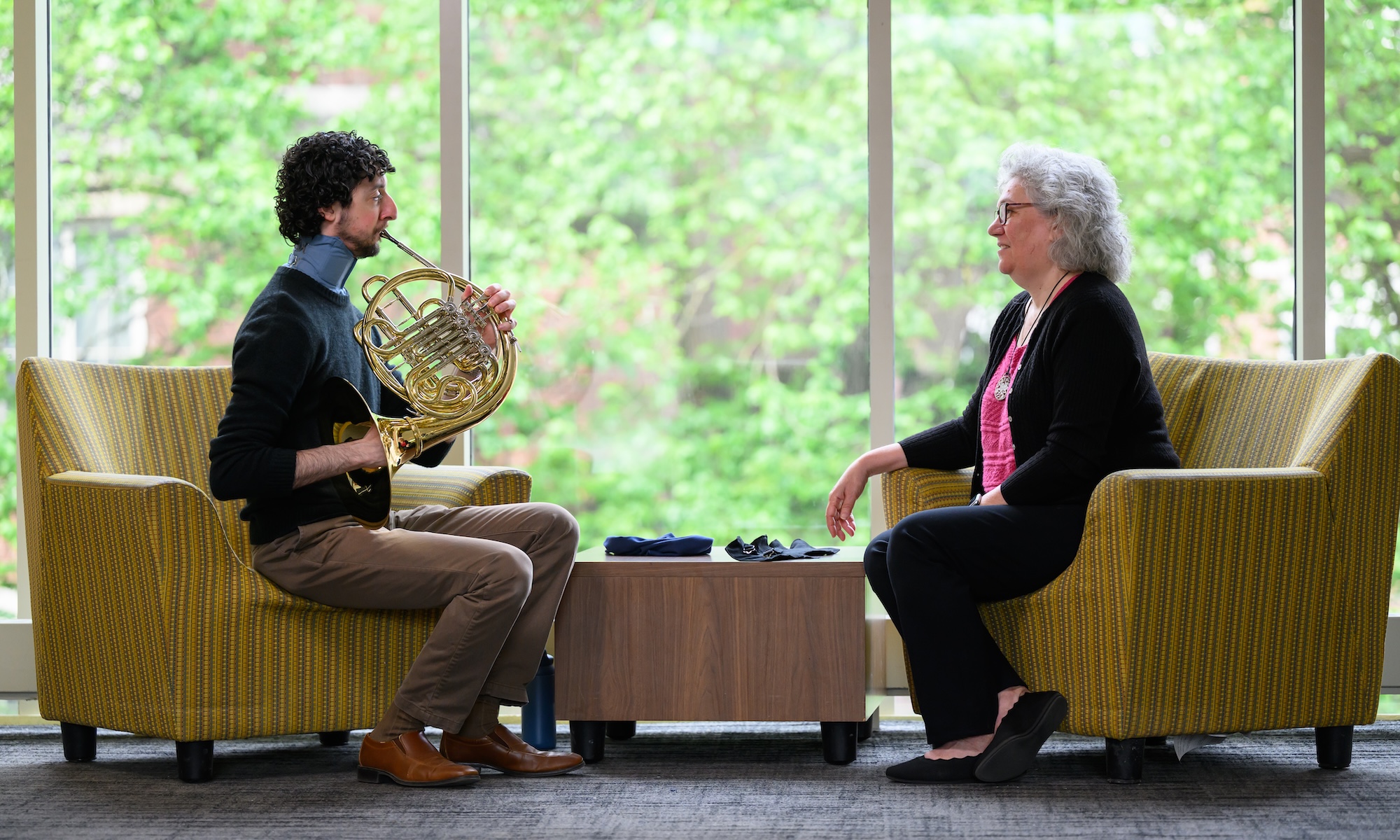
James Undercofler, the innovative and influential dean of the Eastman School of Music, has been reappointed to a five-year term at the conservatory, University of Rochester President Joel Seligman announced Thursday. A horn player and noted music educator, Undercofler has been a driving force behind Eastman's Institute for Music Leadership, a first-of-its-kind center providing students with cutting-edge music and business skills for the 21st century. He also has played an influential role in the recent expansion of Eastman's Community Music School, and in last year's multi-million-dollar renovation of the Eastman Theatre." After careful consideration of all of the evidence, I am convinced that Jim Undercofler is the wisest possible choice to be dean of the Eastman School of Music," Seligman wrote in a prepared statement. "Dean Undercofler enjoys a position of national leadership among music educators, has established strong working relationships with community and political leaders, and enjoys the deep admiration of leading alumni and friends of Eastman."
WHAM-TV ABC (Rochester; March 30)
New Pediatric Surgical Unit at Golisano Children's Hospital
Construction is underway on the new pediatric surgical unit at Golisano Children's Hospital at Strong Memorial. The new suite will provide surgical rooms built for and dedicated to young patients.
WROC-TV CBS (Rochester; March 30)
[In] All but Two Suburban Districts, Whites Do Better Than Minorities
"I'm not sure if standardized tests really measure achievement. So I'm not sure if the discrepancies in the test scores really give us an accurate account of what students' intellectual or academic ability is," explained Urban Education Professor Sonia James Wilson of the University of Rochester.
City Newspaper (March 29)
Hyphenated Identities, Fractured Lives
Traumatic disorders [of refugees] compound present-day stresses: the guilt of abandoning loved ones, the expectation of happiness, and the strains of poverty. "Another cause of mental problems that emerged is the theme of post-migration stress, such as protracted economic strain in the United States with the pressure to provide for family members remaining in Africa," wrote [assistant professor of family medicine Jennifer] Carroll in a University of Rochester-funded study of how mental illness is understood, expressed and treated among Somali refugees.
City Newspaper (March 29)
Music Reviews
"The Eastman School of Music's guitarist extraordinaire Bob Sneider has been a busy man lately, co-headlining two new albums this month. Sneider and vibraphone giant Joe Locke share top billing on their wonderful new album conjuring the moods of film noir, but every member of the band gets time in the [spotlight]. Sneider's slinky guitar lines, wrapping themselves around tunes like 'Les Modernes' and 'Promenade Sentimentale,' are beautifully complemented by Locke's gorgeous cascades on 'Katya' and his own 'Fallen Angel.' But it's trumpeter John Sneider who plays the wrenching solo on the brilliant theme from Chinatown. And saxophonist Grant Stewart joins him in igniting 'Body Heat.' Pianist Paul Hofmann, bassist Phil Flanigan, and drummer Mike Melito contribute masterfully throughout."
WHEC-TV NBC (Rochester; March 27)
Wilmot Cancer Center Gets $1 Million from Federal Government
Some good news Monday for the University of Rochester's Wilmot Cancer Center. Congresswoman Louise Slaughter announced $1 million in federal funding for the center. The money will be used for the construction of a new centralized cancer treatment and research center and for the purchase of a new state of the art piece of equipment called the Trilogy Radiosurgery System. (Also reported by Rochester Business Journal and Democrat and Chronicle.)
Democrat and Chronicle (March 27)
Eastman Concerts Focus on Women
University of Rochester's Eastman School of Music will feature a weeklong series of concerts focusing on women in music starting today. The Women in Music Festival will feature male and female Eastman students and faculty performing daily concerts at noon. All concerts are free and open to the public.
Democrat and Chronicle (March 27)
A New Focus (Editorial)
The University of Rochester Medical Center has long been involved in urban health issues—witness its roles with the Westside and Jordan health centers—but last week's announcement about the creation of a new center raises that admirable profile still higher. The task for this new organization, to be headed by Dr. Nancy Bennett, now Monroe County's deputy health director, is to link research and insight to real outcomes. After all, a lot is already known about the health problems of city residents, many of them poor, many of them people of color. For instance, hundreds of city children are poisoned by exposure to lead paint each year. The problem has not been assessing the risk or the number of kids exposed. It has been getting care to those affected and controlling the risk factors. UR has budgeted $2.6 million for the center and hopes to raise an additional $1.8 million.
Democrat and Chronicle (March 25)
Thumbs Up, Thumbs Down
Thumbs up: For students and faculty who participated in the Fourth Annual Kirk Road School Bulldog Benefit Basketball Game held on March 3. The event, which pitted Greece Arcadia High School students against faculty, raised $3,200 for Golisano Children's Hospital at Strong.
WHEC-TV NBC (Rochester; March 24)
Poison Prevention
Poison educator Nancy Warburton from the Poison Control Center at Strong Memorial Hospital in Rochester brought her puppet friends to school for a special lesson—ask a grown-up first, before putting anything in your mouth.
WHAM-TV ABC (Rochester; March 23)
Health Initiative Aims to Better Educate Public on Resources
Many people in the Rochester community aren't aware of how to access some of the various health-related programs that are available to them. As a result the University of Rochester Medical Center, along with the Rochester City School District and the mayor and county executive, announced Thursday a new community initiative aimed at spreading awareness of these programs. (Also reported by WROC-TV CBS (Rochester), WHEC-TV NBC (Rochester), and Democrat and Chronicle.)
Democrat and Chronicle (March 22)
Tea's Antioxidant Values Aren't Clear, But Most Agree It's a Soothing Sip
The University of Rochester's Nellie Wixom agrees. The antioxidant levels of teas are promising, but more research has to be done to form a conclusion—not only on tea's definite health benefits, but also on which tea might be the most healthful. "We're in the midst of all this wonderful research going on," says Wixom, program director of the nutrition and weight management center at the UR's School of Nursing. "But we still need to have more data before we make any recommendations."
City Newspaper (March 22)
Embryonic Politics
A delegation of Rochester-area Catholics, led by Bishop Matthew Clark, joined other New York State Catholics in Albany last week, opposing the use of embryonic stem cells in research. They urged legislators instead to expand the use of adult stem cells which, they said, is "morally sound and ethically beneficial." The move is in opposition to pleas by the University of Rochester and others that Albany support embryonic stem-cell research.
Democrat and Chronicle (March 21)
Black GOP Backers Are Boosting City Profile
Valeria Sinclair-Chapman, a political science professor at the University of Rochester and at its Center for the Study of African-American Politics, said as more African Americans gain affluence, including younger adults, more are looking beyond the Democratic Party, either by enrolling as unaffiliated or, in smaller numbers, as Republicans.
WKBW News 7 (Buffalo; March 15)
Bush Visits WNY to Defend Medicare
"George Bush is in upstate New York not because it matters politically. It doesn't. This is among the bluest of blue states," says Curt Smith, a senior lecturer in the English department and political commentator. "He is here because he's sinking. He's at 35 percent approval rating and his base is leaving him in the Republican party."
Brighton-Pittsford Post (March 9)
Closing the Gender Gap in Science
There has been talk on the national and local levels of changing schools' curriculum to be more math and science driven, but a University of Rochester scientist (April Luehmann) has taken steps to improve science in schools and its accessibility to girls.
WHAM-TV ABC (Rochester; March 8)
President Bush Will Address Health Care Reform During His Visit to Canandaigua Next Week
Larry Van Horn of the University of Rochester's Simon School of Business said, "You'll be seeing real prices and paying real dollars…You'll all of a sudden start caring that Lipitor costs $110 a month."
Democrat and Chronicle (March 2)
Cutting Eating Disorders Down to Size
Getting a handle on eating disorders: being comfortable in your genes: That theme of National Eating Disorders Awareness Week, Feb. 26–March 4, illustrates the internal conflicts that can lead to eating disorders. The experience of hope and possibility for change continue to grow with the recent creation of the Western New York Comprehensive Care Center for Eating Disorders based in Rochester. This center is a partnership of Golisano Children's Hospital at Strong (for children and adolescents) and Unity Health System (for adults). It will provide developmentally appropriate services and settings; community outreach to facilitate referral and prevention education; and it will do research.