
A five-year NSF-funded project will examine how universities can better support low-income engineering and computer science students.
The University of Rochester’s Warner School of Education & Human Development is leading a new national research collaboration with Rochester Institute of Technology’s (RIT) Golisano College of Computing and Information Sciences to understand how universities can improve outcomes for low-income undergraduate students in engineering and computer science.
Supported by a five-year, $3 million grant from the National Science Foundation (NSF), the Advancing Understanding & Resilience Actions (AURA) S-STEM Research Hub will bring together researchers at 10 universities. The project will examine how institutional support systems, coordinated interventions, and campus partnerships shape student resilience, persistence, academic achievement, and workforce readiness.
A national effort to improve STEM student success
AURA is one of only eight projects funded through the NSF S-STEM Research Hubs initiative, which builds on the foundation’s longstanding Scholarships in STEM (S-STEM) program. The S-STEM program provides scholarships and access to institutional resources to support academically promising domestic students from low-income backgrounds to persist in STEM degrees and enter the scientific and technical workforce.
The NSF S-STEM Research Hubs are designed to identify which strategies and supports contribute to S-STEM student success—and where gaps remain. The AURA Research Hub will focus on engineering and computer science S-STEM students, investigating the relationships among holistic interventions, resilience, persistence, and students’ experiences of imposter syndrome and stereotype threat.
For many students, these experiences are shaped by financial, social, and institutional factors. By identifying which interventions are most effective, the AURA Research Hub will generate evidence to inform institutional policies and practices that foster student success.
Expanding opportunity in STEM education
Kimberly Fluet, an assistant professor in the Warner School’s Center for Professional Development and Education Reform and the principal investigator on the grant, says expanding access to STEM requires more than opening the door to higher education.
“Capability and potential exist in every community, but opportunity does not,” says Fluet. “When students from different backgrounds and life experiences are supported in STEM programs and fields, they bring their unique perspectives and contribute to more creative problem-solving. Expanding and supporting opportunities for low-income students not only strengthens their pathways to college and careers—it also strengthens the future of science and innovation itself.”
Research across 10 universities
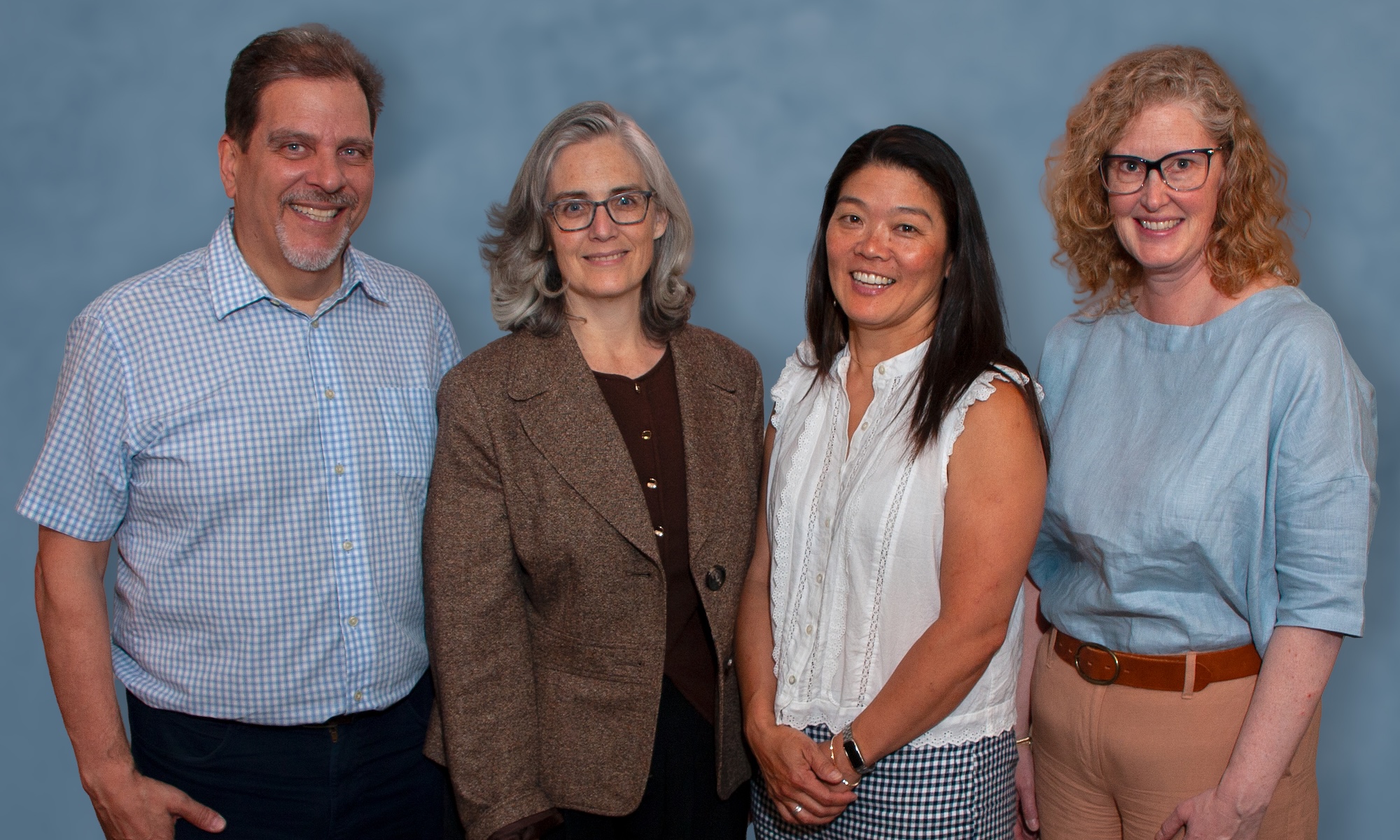
Joining Fluet as URochester co-principal investigators are Michael Occhino, director of STEM research impact and university engagement, and Nahoko Kawakyu O’Connor, associate professor and director of program evaluation, both with the Warner School’s Center for Professional Development and Education Reform.
The RIT co-principal investigator is Sharon Mason, professor and director of the iSchool in the Golisano College of Computing at RIT. Mason leads the Enhancing Growth-Mindset Academic Experiences (ENGAgE) S-STEM program, which studies the impact of institutional structures on mindset, provides scholarships and supports for low-income students in RIT’s College of Computing, and informed the design of AURA.
The AURA Research Hub team will study engineering and computer science students across 10 partner universities to identify how factors like self-determination, mindset, campus support systems, community connections, and learning environments impact resilience and persistence. Self-determination theory, a psychological framework pioneered by longtime URochester faculty members Edward Deci and Richard Ryan, focuses on the conditions that foster people’s motivation, development, and well-being.
Initial university partners include the University of Cincinnati, California State University–Long Beach, University of Connecticut, and SUNY Polytechnic Institute. Six additional institutions are expected to join during the first two years of the project.
“We are at a watershed moment for technology and education,” says Mason. “As artificial intelligence reshapes how we learn, work, and solve problems, the AURA Research Hub has an opportunity to generate knowledge that supports educators in creating teaching and learning environments where more engineering and computing students can succeed.”
Translating research into practices that better support students
Using surveys, interviews, and other mixed-methods research approaches, AURA researchers will identify programs and strategies that effectively support engineering and computer science students from low-income backgrounds. The AURA Research Hub will build STEM pathway support toolkits and share its findings through conference publications, journal articles, spotlights, and other resources for faculty and student affairs professionals at higher education institutions.
The hub will also establish professional learning communities using the Project ECHO model and develop a two-year research fellowship program for STEM faculty to analyze teaching and learning practices through the lens of their discipline. The goal is to strengthen collaboration among faculty and translate research findings into better student support practices nationwide.