Skip to content

Archive

2691–2700 of 3972 posts

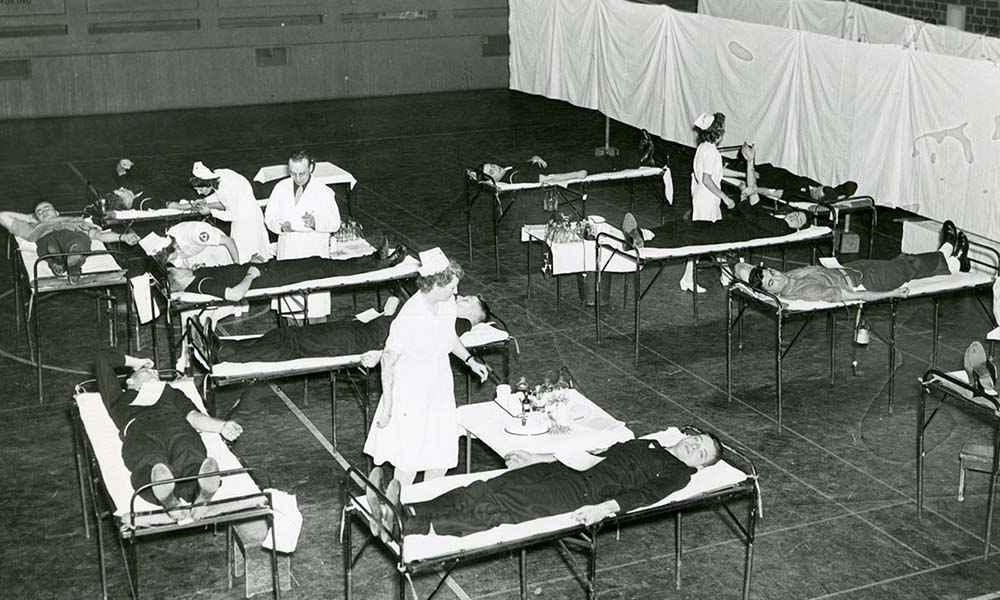
Nurses in Palestra attend to students on cots at blood drive.
Society & Culture
December 7, 2016

Pearl Harbor: When war came to campus

On December 7, 1941, the lives of Rochester faculty and students were immediately changed, and a sleepy campus by the Genesee River was transformed into a vital hub for the war effort.

The effects of the Pearl Harbor bombing on campus life at the University of Rochester were swift and profound.
topics: Institute of Optics, University Archives, World War II,
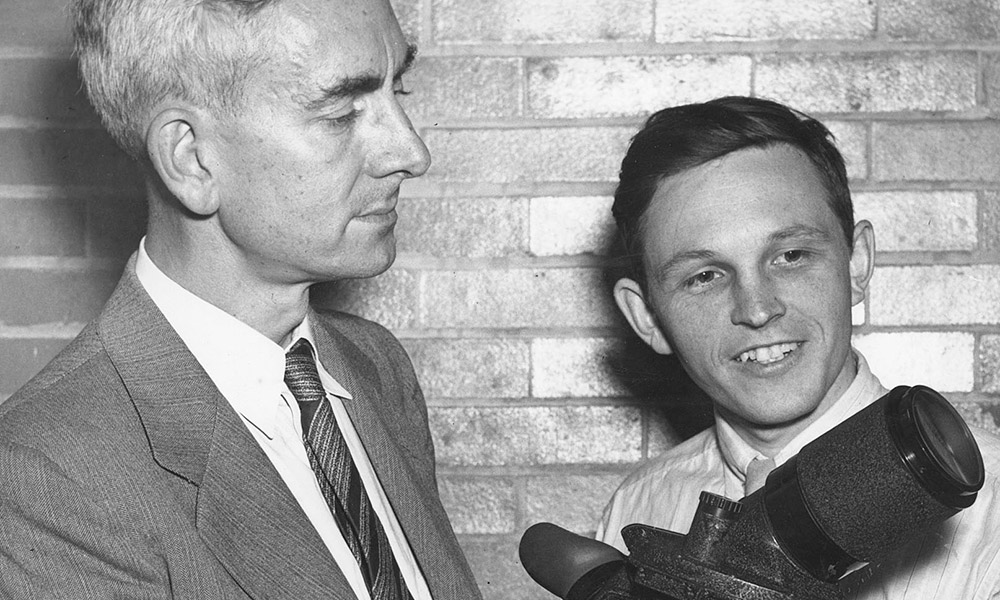
man holding optical instrument

By the time the United States formally entered World War II, Brian O’Brien and his colleagues at the Institute of Optics had “essentially initiated the whole science of night warfare.”

topics: Hajim School of Engineering and Applied Sciences, Institute of Optics, World War II,
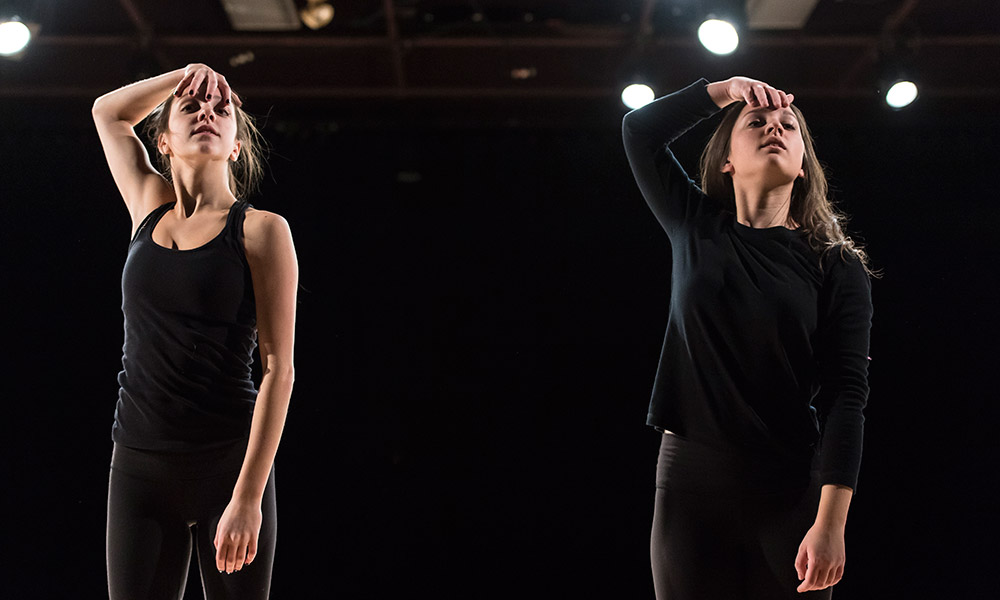
two dancers on stage

The Program of Dance and Movement will present a series of shows featuring students, faculty, and guest artists in new collaborative and multidisciplinary dance works exploring social issues in the wake of the 2016 election.

topics: events, Institute for the Performing Arts, Program of Dance and Movement, School of Arts and Sciences,
3D NASA insignia at Kennedy Space Center Visitor Complex entryway
Voices & Opinion
December 2, 2016

NASA’s historic, crucial role in earth science

In an op-ed for the New York Times, Professor Adam Frank makes the case for the National Aeronautics and Space Administration’s role in earth-centric science. “Without NASA, climate research worldwide would be hobbled,” he writes.

topics: Adam Frank, Department of Physics and Astronomy, School of Arts and Sciences, space,
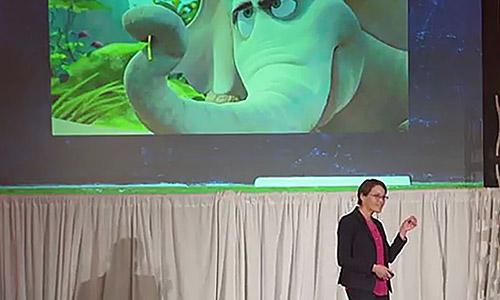
professor in front of screen with an image of an animated elephant
Society & Culture
December 2, 2016

How ‘Horton’ is a hook to talk about research

When Warner School professor Karen Finnigan communications with her peers about school reform, she uses journal articles and academic conference presentations. But when she talks with policymakers or parents, she starts with Horton Hears a Who.

topics: K-12 education, Warner School of Education,
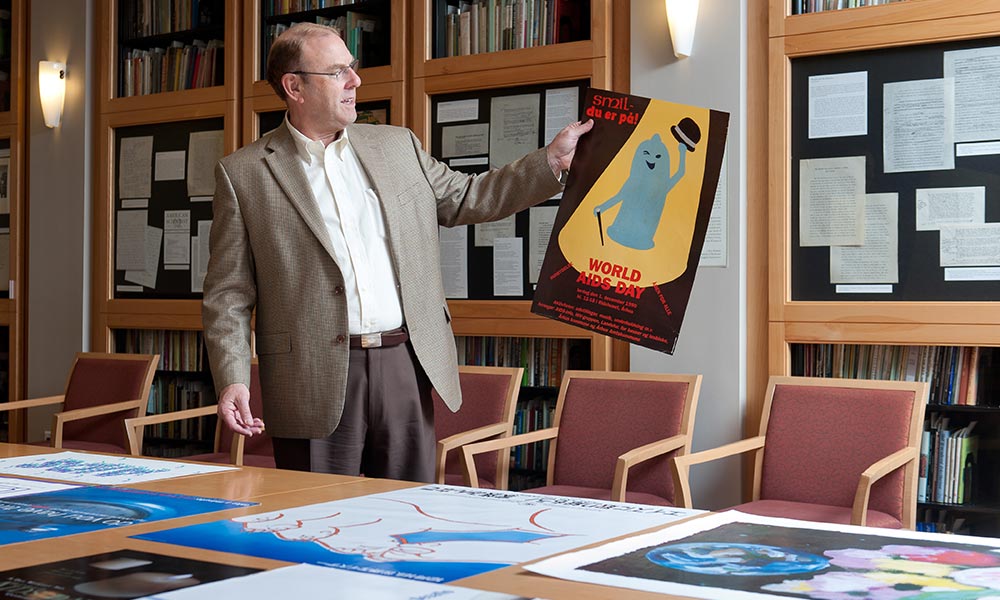
man holding up a poster that reads WORLD AIDS DAY
Society & Culture
December 1, 2016

Michael Gottlieb: The doctor who discovered AIDS

School of Medicine and Dentistry-trained physician Michael Gottlieb launched a new chapter in medical history with his discovery of AIDS in the spring of 1981.

Physician and URochester alumnus Michael Gottlieb launched a new chapter in medical history with his discovery of AIDS in the spring 1981.
topics: alumni,
Campus & Community
December 1, 2016

Junior coordinates book drive for Rwandan students

Ian Manzi ’18 is organizing an online registry to purchase 77 books written in English for the Family Library at Agahozo-Shalom Youth Village, in an effort to educate high schoolers in his native country.

topics: announcements,
Crop of the masthead for The Empty Closet periodical with a stamp nearby that reads "Received Sep 18 '72 U. of R. Library"
Campus & Community
December 1, 2016

News from the front lines of the AIDS fight

Founded by University of Rochester students in 1971, the Empty Closet is one of the oldest continuously published LGBT papers in the United States. Its pages reflect the story of the AIDS epidemic.

Explore how the “Empty Closet,” preserved in the University of Rochester’s digital archives, chronicled the AIDS epidemic and the activism it inspired.
topics: Department of Rare Books Special Collections and Preservation, River Campus Libraries,
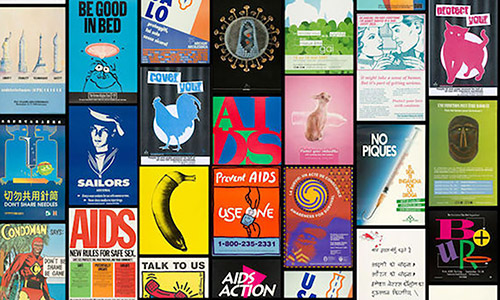
collage of AIDS posters
Society & Culture
December 1, 2016

8,000 posters, one collection

The AIDS Education Poster Collection, housed in the Department of Rare Books, Special Collections and Preservation, is the world’s largest single online collection of visual resources related to the disease.

topics: Department of Rare Books Special Collections and Preservation, HIV and AIDS, River Campus Libraries,
Douglas Crimp
The Arts
November 30, 2016

Representing AIDS, then and now

Although AIDS is no longer the subject of his work, art and cultural critic Douglas Crimp—the Fanny Knapp Allen Professor of Art History and a professor of visual and cultural studies—played a central scholarly role in the first two decades of the AIDS crisis.

topics: Douglas Crimp, Graduate Program in Visual and Cultural Studies, HIV and AIDS, School of Arts and Sciences,