The URochester alumnus reflects on his formative experiences and shares lessons learned from a career dedicated to public service.
Editor’s note: This story was originally published on May 9, 2023. It was updated in July 2024 to include video of Josh Shapiro’s commencement speech and updated again on May 24, 2026, with an excerpt reprinted with permission from Where We Keep the Light: Stories from a Life of Service (Harper, 2026).
Josh Shapiro ’95 was elected governor of Pennsylvania in November 2022—the first University of Rochester alumnus to hold a state’s top executive position.
Shapiro delivered the address at the University-wide 2023 Commencement Ceremony held in Fauver Stadium at the Brian F. Prince Athletic Complex on the River Campus.
The governor of the fifth most populated state in the United States took time to answer questions via email about his time at Rochester, his unplanned veer into politics, and his advice for graduating students.
Address for success
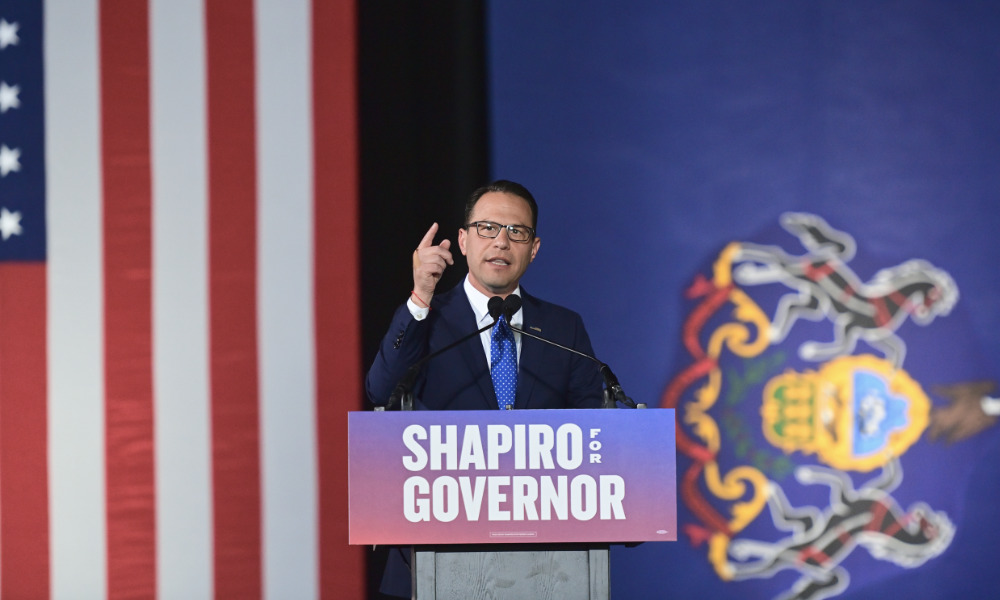
On Friday, May 12, 2023, Shapiro delivered the address at the University-wide Commencement Ceremony held in Fauver Stadium at the Brian F. Prince Athletic Complex on the River Campus.
“I am proud and humbled to be standing here in the same spot, looking over the same field, where I addressed the Class of 1995 during my own commencement 28 years ago.”
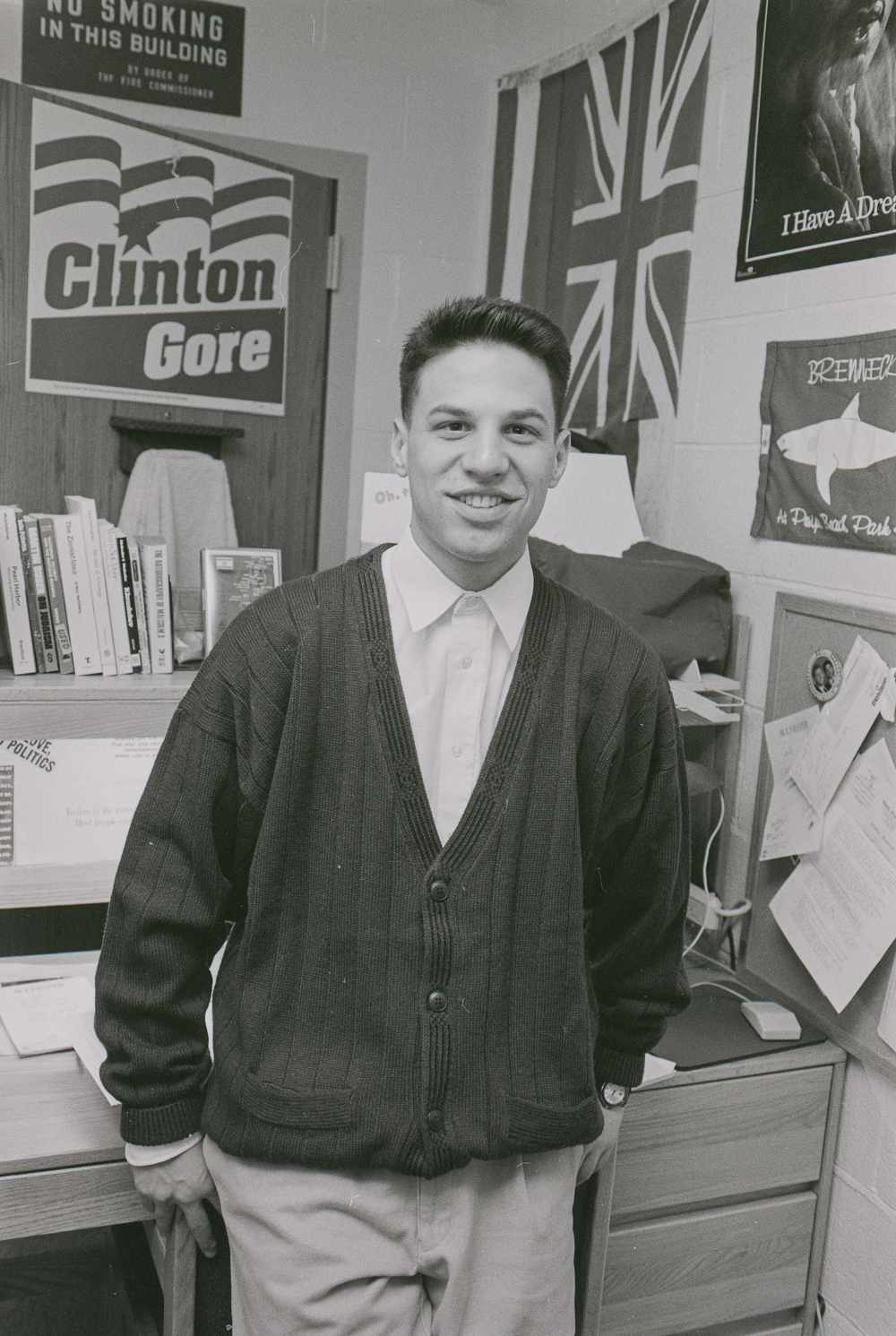
Josh Shapiro in 1993. (University of Rochester photo / Department of Rare Books, Special Collections, and Preservation)
A tough day turned into a fortuitous one during Shapiro’s first year at Rochester.
When he arrived on the River Campus in 1991, Shapiro planned to follow in his father’s footsteps and become a doctor. “I started as a pre-med student, but a few months into freshman year, I nearly flunked out of organic chemistry,” he shared.
That same day, he was also cut from the men’s basketball team.
Back in his dorm room, Shapiro was pondering what the future held when someone knocked on his dorm room door and asked if he wanted to run for student government.
“They said, ‘You don’t have anything else going on, so why not?’ I decided to run—and I won.”
He is the only Rochester student elected SA president in his first year.
Shapiro became a student senator, then beat five juniors in the spring of 1992 to become the only first-year student in school history to serve as Students’ Association (SA) president.
“I knocked on doors, rallied with students, and together we made our campus better and improved communications between students and administrators,” he recalls. “I learned the ins-and-outs of public service, and what it means to advocate for other people.”
Shapiro championed better safety measures on campus, and during his year as president, the University added more outdoor lights and blue light security phones and improved its shuttle service at night for students.
“Josh Shapiro virtually has set a new standard for student leadership,” Paul Burgett, the vice president and University dean of students at the time, told the Campus Times student newspaper in 1992.
His cocurriculur experience would end up informing his academic one, prompting him to earn a bachelor’s degree in political science from Rochester and a law degree from Georgetown University.
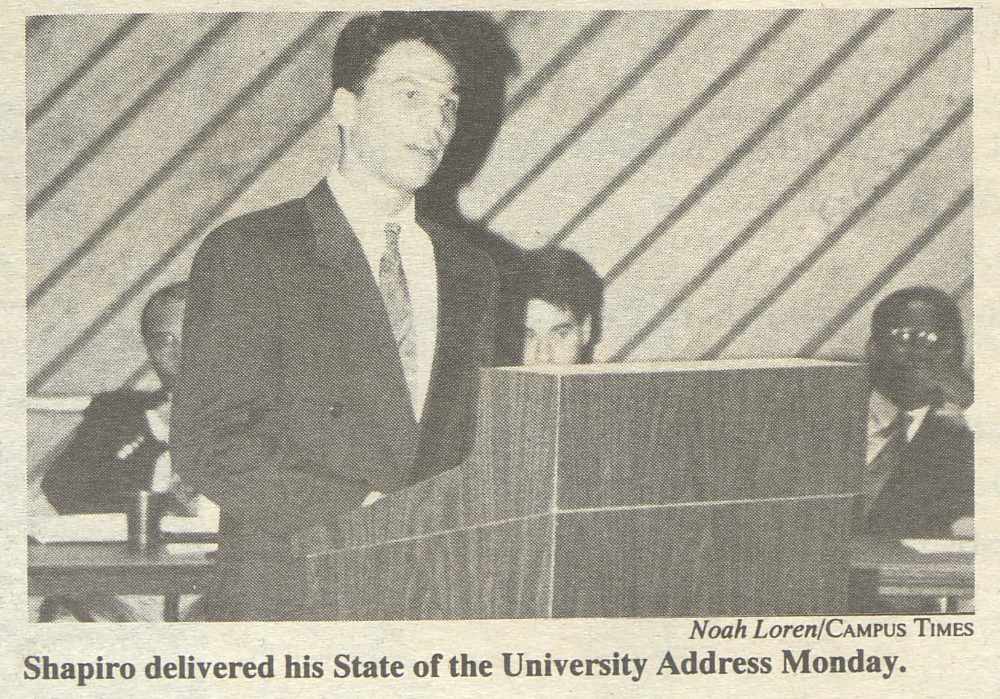
CHANGE OF ADDRESS: From the April 15, 1993, issue of the Campus Times. “I learned the ins-and-outs of public service, and what it means to advocate for other people,” Josh Shapiro recalls of his time in student government at Rochester. He returns to campus on Friday, May 12 to deliver his Commencement address to the Class of 2023. (University of Rochester photo / Department of Rare Books, Special Collections, and Preservation)
Faith and family guided Shapiro’s path into politics.
For Shapiro, an observant Conservative Jew who was raised in Dresher, Pennsylvania (outside of Philadelphia), faith is a lodestar
“My faith is what calls me to serve my community and has taught me to bring its teachings out in the community to make a real difference in people’s lives,” says Shapiro, an observant Conservative Jew. “Scripture teaches us that no one is required to complete the task, but neither are we free to refrain from it. To me, that means it’s on all of us to get off the sidelines and get in the game—and that’s part of the reason why I chose a life of public service.”
He also credits his parents with instilling in him a commitment to family and community service. “I grew up watching my father treat his patients as a pediatrician and my mother care for the kids in our community as a teacher,” he says. “Now that my wife Lori and I have four wonderful children, I am just as committed to working as hard for the children of Pennsylvania as we do for our own.”
The key to keeping constituents happy is mutual respect.
Shapiro has never lost a political election, starting with his run for SA president at Rochester in 1992. He won a seat on the Pennsylvania House of Representatives in 2004 and served until 2012. He then served on the Montgomery County Board of Commissions until 2017, then was twice elected as Pennsylvania attorney general. In 2022, he defeated Republican Doug Mastriano in the general election for Pennsylvania governor.
After decades of running for and being in office, what’s his secret to success as a public servant?
“In every public office I’ve held—from state representative to county commissioner to attorney general to governor—the most important lesson I’ve learned is that you’ve got to show up and treat people with respect,” according to him. “I’m willing to go anywhere to meet with anyone, regardless of party affiliation, to listen and learn, and I know that nothing will get done unless we do it together.
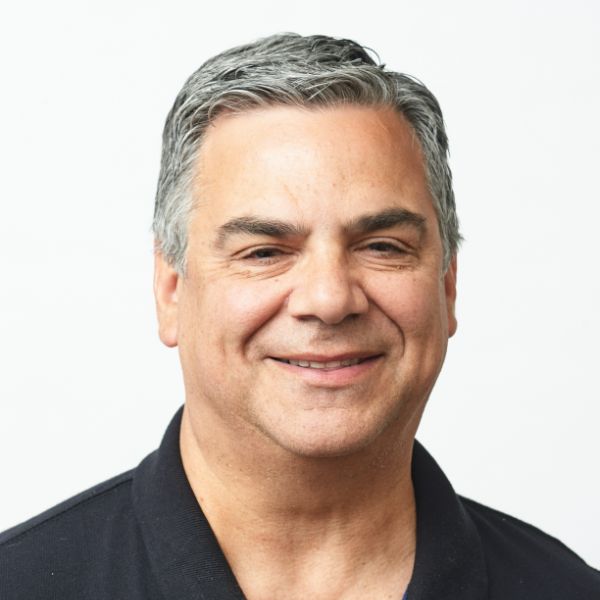
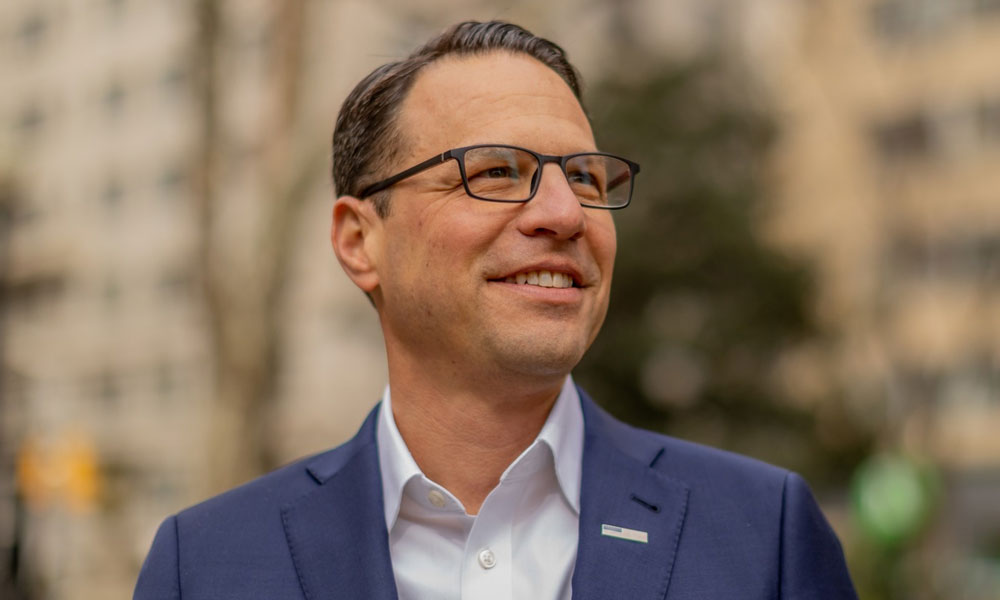
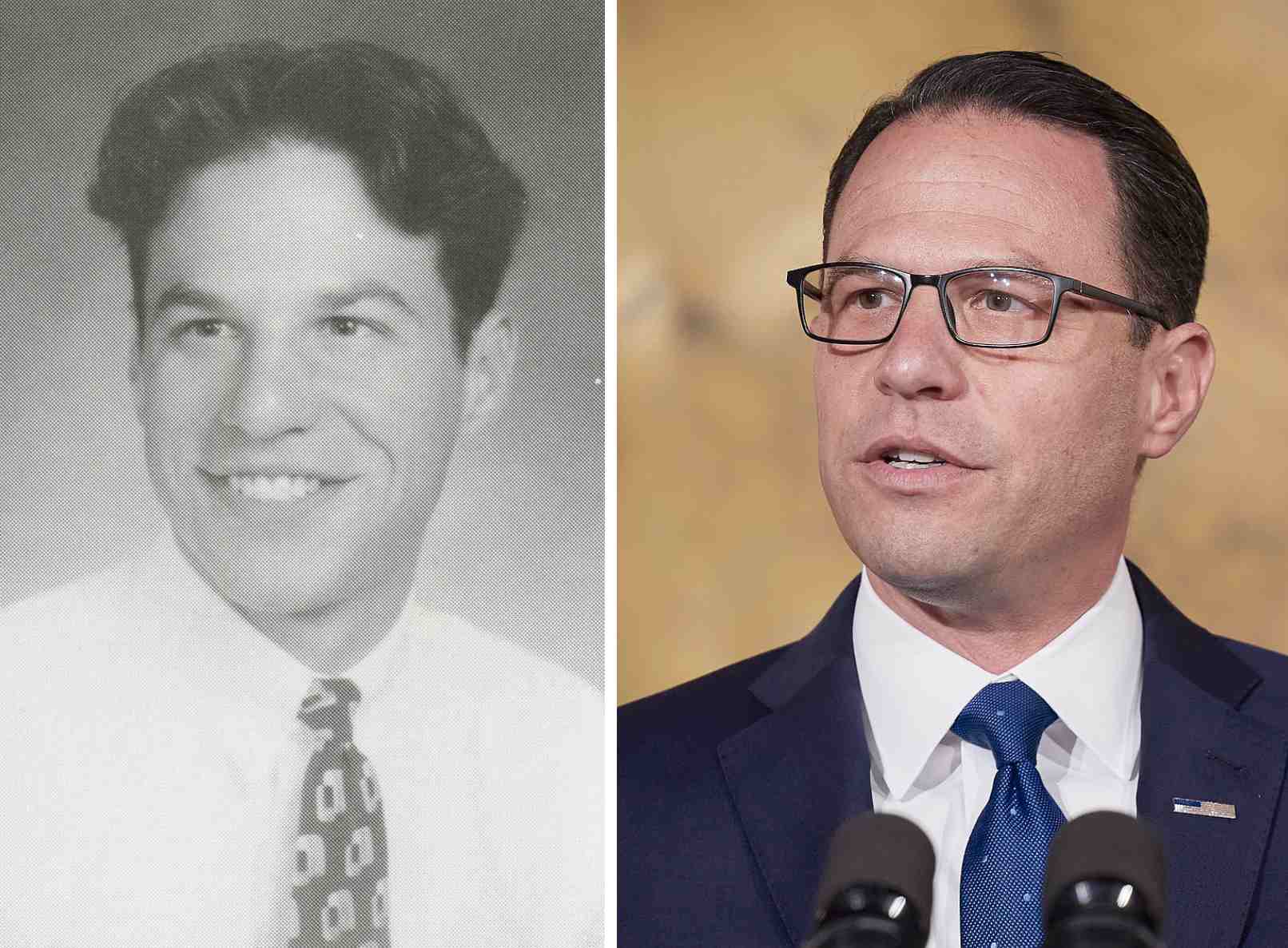
THEN AND NOW: Josh Shapiro photographed for his senior year photo in 1995 and as governor-elect of Pennsylvania in 2022. (University of Rochester photo / Department of Rare Books, Special Collections, and Preservation; photo from Governor Tom Wolf’s Office, CC BY 2.0 via Wikimedia Commons)
He’s filled with optimism for the Class of 2023—and offers a few words of wisdom ahead of graduation day.
“The graduating Class of 2023 are some of the strongest young people I know,” Shapiro says. “Your years at college are supposed to be filled with firsts and milestones, but for many of you the world stopped in 2020. But you didn’t let this adversity hold you back or define you. You pushed through, and in the midst of a global pandemic, your commencement is proof of your strength and power.”
He adds, “We’re counting on you, to use your power and your voice to drive change—to combat climate change, create a more just society, and take on the big fights that earlier generations have failed at. You are going to be the next teachers, doctors, entrepreneurs, and lawmakers that are going to change our future and leave this world better than how you found it. No matter what you choose to do with your life, always remember the value of community. Use your voice and your power for the collective good, to reject extremism, inspire hope over fear, and bring unity over division.”
Opportunity knocks
Before he was Pennsylvania’s governor, Josh Shapiro ’95 was a heartbroken first-year with no team, no major, and no plan—until a knock on his dorm room door changed everything.
Late into the fall just as the season was basketball team. I was crushed. I loved to play, of course, but I loved being part of the team even more. Basketball was a huge part of my identity and made up a gigantic portion of my new social life and community on campus. . . .
It just so happened that on the very day I was cut, my premed professor called me into his office. Out of the 165-point exam he had given that week, I scored a 4. I studied hard. I didn’t screw around. I was a serious student at that point. It just didn’t click for me. I didn’t like it. I couldn’t begin to grasp it.
“I don’t think this is for you,” he said, meaning the premed track. So I didn’t have [my girlfriend] Lori. I couldn’t hack it at basketball. And I was never going to be a doctor.
I called my dad when I was back in my dorm that evening. . . . Everything I wanted and everything that I had was slipping through my fingers. And, adding to all that misery and pressure and defeat, I couldn’t stomach the idea that I would disappoint my dad. “Just be whatever it is that you want to be,” he said. “You don’t have to be a doctor. You just have to find the thing that makes you happy, and I don’t think that being a doctor is your path to that.”
So, some relief washed over me. But not enough. Now what am I going to do? I thought. “Shapiro?” I heard a knock at my door that same evening. It was one of the guys who lived down the hall. “Have you ever thought about student senate? They need someone from our dorm and I heard you have the time.”
I really had no interest . . . but I did have the time. I had nothing to lose, and if I wasn’t going to be a doctor—as that exam grade was proof of—then maybe this could be another way for me to serve. . . .
I won the race. I got along with the other students involved and enjoyed the work that we got to do together. It just so happened that that semester the university’s president had cut funding to club sports. So if I focused on this area for the senate, then I would not only be able to keep my connection to the athletic community, but I’d actually be able to make a difference and help them out. I could have my foot in both worlds.
And I was actually able to get stuff done. I organized a student protest against the funding cuts, worked with administrators, and ultimately was able to claw back a big chunk of money to support the athletes.
By second semester of my freshman year, I had switched my major to political science. The race for student association president had just heated up. There were others who had already declared they were running, all of them juniors, which would make them president in their senior year. That was how it always was. Until that year, when I decided to throw my freshman hat into the ring. Why not?
That April, the Campus Times . . . ran a spread featuring each of the six candidates, myself included, where we laid out our vision for our terms as president. I wrote, “As a freshman, I have learned how to listen to your needs and desires and cultivate that input into concrete ideas, goals, and in the end—results. I have grown this year through meeting and discussing the issues with as many of you as I have been able to. This growing-up process has included so many of you, in both the academic field and the social field, and has made me discover just how special the U of R and its student body really is.”
Clearly, what I lacked in actual wisdom, I made up for with my earnestness and self-seriousness. I can feel my kids’ embarrassment for me reading this (if they ever read this, which they have sworn to never do).
I made some promises about handling faculty cuts and strengthening the requirements for teaching assistants. I knocked on what felt like every dorm room door on campus. I made myself known. I listened to what my fellow students wanted.
I won the race. It was the first time in school history a freshman had ever done so, kicking off a long tradition of me being the youngest guy in the room and me doing a lot of things that everyone would tell me I was insane for doing.