Skip to content
University News

Maiken Nedergaard elected to the National Academy of Inventors

A JOLLY GOOD NAI FELLOW: Maiken Nedergaard is the latest URochester researcher elected as a fellow of the National Academy of Inventors. (University of Rochester photo / J. Adam Fenster)

The honor recognizes Nedergaards groundbreaking research over the past decade, which has fundamentally reshaped basic neuroscience.

Maiken Nedergaard—a pioneering neuroscientist and co-director of the University of Rochester Center for Translational Neuromedicine—has been elected a 2025 international fellow of the National Academy of Inventors (NAI). The honor recognizes academic innovators whose work has led to patented technologies, translational breakthroughs, and broad societal impact. It is the highest professional distinction awarded solely to inventors.

Nedergaard’s selection reflects more than a decade of groundbreaking research that has fundamentally reshaped basic neuroscience, reframed public discussions about sleep and brain health, and opened avenues for entirely new classes of therapies for neurological disorders.

Revealing the brain’s hidden plumbing system’

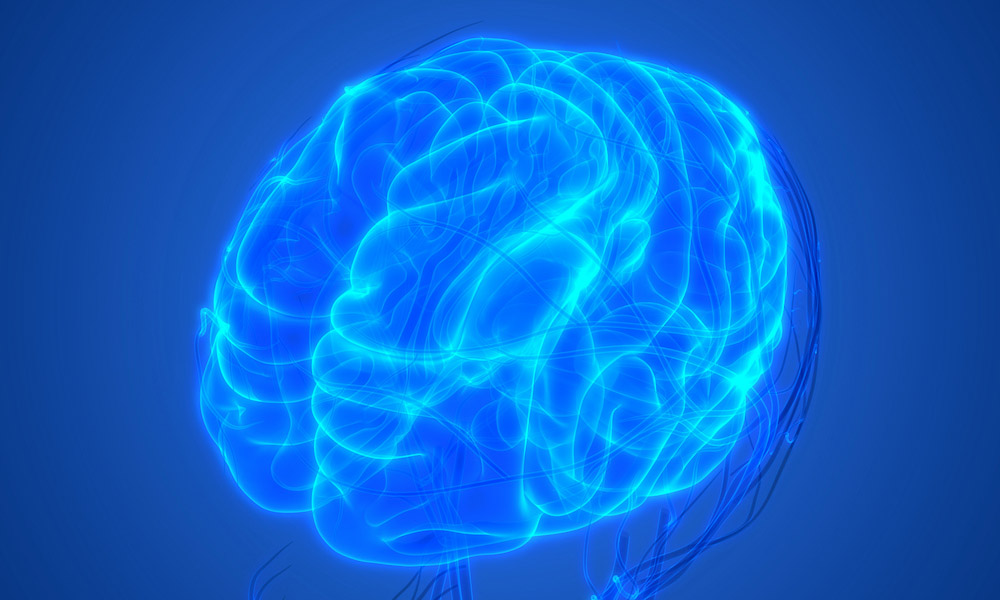
In 2012, Nedergaard and colleagues first described the glymphatic system, a network of fluid channels that clears metabolic waste from the brain, primarily during deep sleep. This discovery resolved long-standing questions in neuroscience and catalyzed a new field focused on how sleep, vascular health, and cellular activity interact to protect the brain.

More recently, the group identified the role of lymphatic vessels located in the membranes surrounding the brain, which carry waste from the brain to the body’s broader lymphatic system. Together, these interconnected pathways form a plumbing system in the brain now implicated in conditions ranging from Alzheimer’s and Huntington’s disease to traumatic brain injury and migraines.
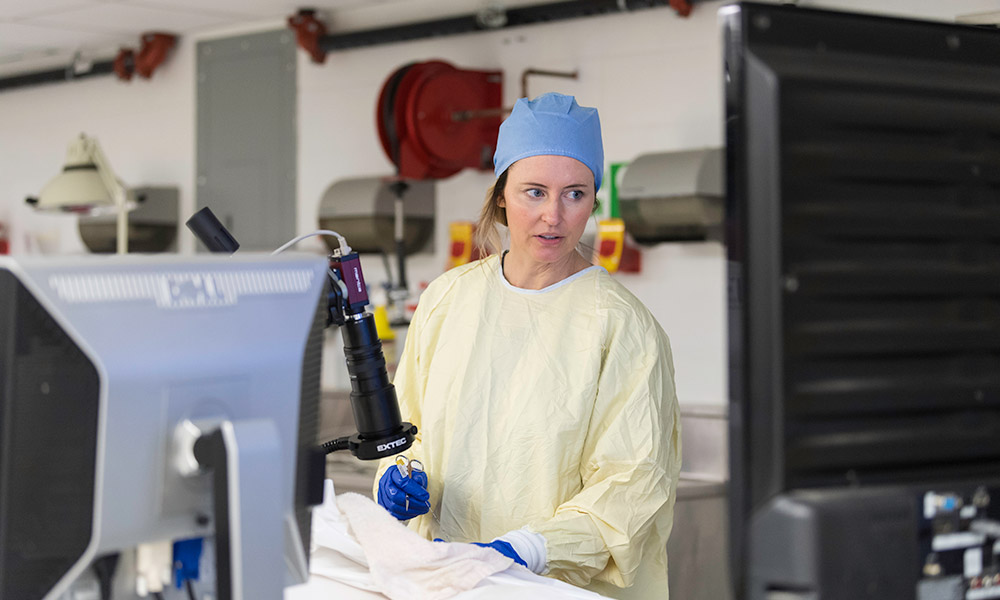
What does sleep do besides just give us rest?

It allows our brain to clear toxic waste that if left alone could lead to neurological disorders. With her discovery of the glymphatic system, URochester neuroscientist Maiken Nedergaard has fundamentally reshaped our understanding of brain physiology and the biological purpose of sleep.

How glymphatic science is evolving

Since the initial discovery, research at the University of Rochester, the University of Copenhagen (where Nedergaard operates a second lab), and around the world has expanded rapidly, revealing that glymphatic function is affected by:

  • Sleep quality: Studies show that deep, restorative sleep maximizes waste clearance, while poor sleep or common over-the-counter sleep aids may impede it.
  • Vascular pulsation: Rhythmic expansion and contraction of blood vessels help propel cerebrospinal fluid through the brain.
  • Astrocyte water channels (Aquaporin-4): These proteins guide the flow of fluid; disruptions to their function are linked to impaired clearance.
  • Aging and injury: Glymphatic efficiency declines with age and after traumatic brain injury, increasing vulnerability to neurodegeneration.

Nedergaard’s team is now examining these components in greater detail, building a comprehensive map of the system and how its breakdown contributes to disease.

New therapeutic pathways on the horizon

As scientists learn more about how the glymphatic system functions, they are beginning to see opportunities to harness it for new therapies. Early studies in animals suggest that several factors influence the brain’s ability to effectively flush out waste, including the health of lymphatic vessels surrounding the brain, the function of key water channels in astrocytes, and the stability of normal sleep rhythms. By improving these processes, researchers have been able to enhance the brain’s ability to clear toxic proteins linked to Alzheimer’s, Huntington’s disease, and other neurodegenerative disorders.

Some teams are exploring ways to strengthen the brain’s lymphatic pathways to help move waste more efficiently, while others are looking at how to boost the activity of Aquaporin-4 to improve fluid flow through brain tissue. Restoring normal patterns of sleep after a brain injury, which is when glymphatic function is naturally strongest, has also shown promise in reactivating the system. Even noninvasive physical techniques that gently stimulate fluid movement in the head and neck have produced encouraging results in mouse models.

In addition, researchers are investigating medications that could support healthier brain fluid movement, including repurposed drugs that appear to improve circulation or stabilize key components of the glymphatic network. Although these approaches are still in early stages, they point toward a future in which enhancing the brain’s natural cleanup system may offer a novel pathway for preventing or slowing neurological disease.

Closeup of a medal bearing the University of Rochester seal.
In good company

URochester’s 11 NAI fellows

Maiken Nedergaard joins the other National Academy of Inventors fellows at the University of Rochester:

Eby Friedman and Steve Goldman, 2024

Jiebo Luo and Benjamin Miller, 2022

Duncan Moore and David Williams, 2021

Jannick Rolland, 2020

James Zavislan, 2018

Wayne Knox, 2017

Kevin Parker, 2016