Historian Brianna Theobald examines how US policies shaped Native American women’s reproductive lives, from forced assimilation and coerced sterilization to generations of resistance and activism.
In the 1970s, Native American women were subjected to widespread sterilization abuses, including procedures performed without informed consent or under coercion.
But these abuses were not isolated incidents. They were part of a much longer history of federal and local authorities attempting to control Native American families, childbirth, and reproductive decisions.
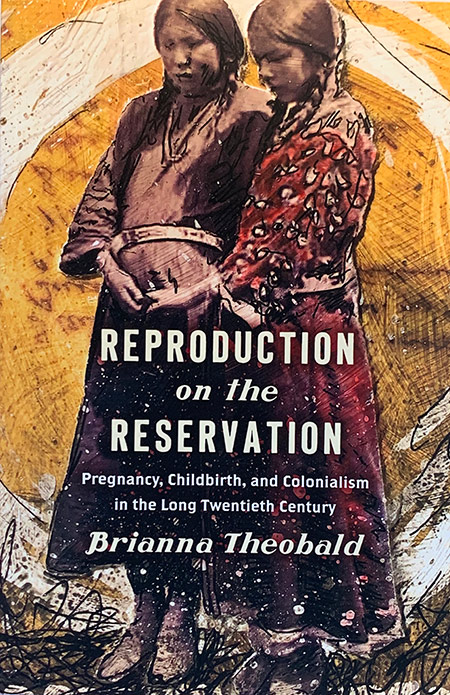
In her book Reproduction on the Reservation: Pregnancy, Childbirth, and Colonialism in the Long Twentieth Century (University of North Carolina Press, 2019), University of Rochester historian Brianna Theobald traces that history from the late 19th century through the 20th century, focusing on the experiences of women on Montana’s Crow Reservation.
Her research also reveals a history of resistance: Native women defended traditional childbirth practices, challenged government interference, and organized movements for reproductive justice and tribal sovereignty.
In this interview, Theobald explains how reproductive policies became instruments of colonial control—and how Native women fought back.
What was life like on reservations?
Theobald: I focus mostly on reservations in the West. Conditions on these reservations were extremely difficult in the late 19th century. Men were not allowed to hunt, and government rations were inadequate. At Crow there was an incredible demographic loss—deaths really—a result of not being able to move around and not being able to do what they had done traditionally for sustenance. They were confined to smaller spaces, which led to the rapid spread of disease. All of this had an effect on women’s health: women of childbearing age were particularly vulnerable to tuberculosis. At the same time, because of this demographic decline, there was a tremendous urgency among Native people to reproduce. So you had fewer women bearing a greater reproductive burden and you can see the outcomes in reduced infant and maternal welfare: greater sickness and mortality.
Why is it important, as you argue, to see reservations as colonial spaces?
Theobald: These are spaces where the federal government has primary and ultimate authority. What I’m talking about here is settler colonialism—when the colonizer, in this case the Europeans and later Americans, come to stay. Their objective is to replicate the societies they left behind. For that, above all, they need land. And to get land, Native peoples had to disappear, in one way or another, for these resources to become available. Historically, this attempted elimination occurred in different ways at different times—through ethnic cleansing and forced removal, sometimes through massacres, and then by the 19th century through cultural assimilation.
How did assimilation affect Native families?
Theobald: The federal government’s assimilation agenda was an attempt to transform Native peoples into American citizens by forcing them to discard all markers of “Indianness,” adopt English and Western practices, and convert to Christianity. A lot of that assimilation agenda centered on gender, family, and the home. In the late 19th century, federal authorities, missionaries, and social reformers deemed it really important for Native people to identify as nuclear family units, led by a male head of household. That required marginalizing the extended family, which was essential to Native family structures, and decreased women’s power within the home, within the family, and within her community. The federal government wasn’t entirely successful in this effort, but the objective was clear.

How did colonialism shape reproductive policies?
Theobald: Efforts to alter and control Native women’s reproductive practices were integral to federal policies that at first glance might seem to have little to do with pregnancy or childbirth. Their reproductive experiences were affected by policies ranging from the allotment of tribal land to the relocation program following World War II. More generally, the federal government assumed greater control over Native reproduction over time.
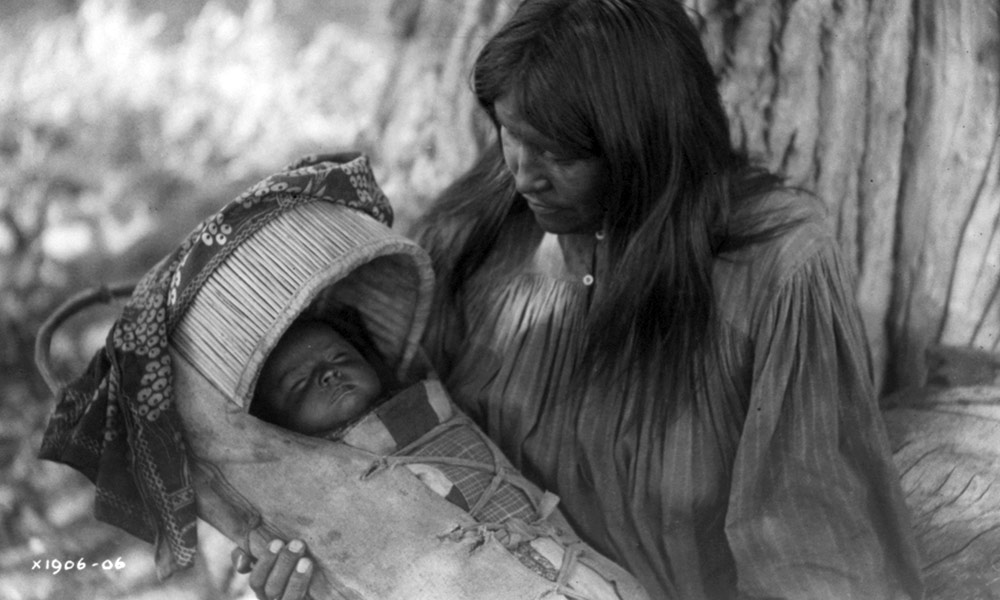
In the 1910s, the government tried to get Native women to give birth with government physicians in hospitals, to move away from midwives and bring childbirth under the purview of the federal government instead. By the midcentury, when childbirth really had moved into hospitals, the federal government had a tremendous amount of control over where women gave birth, with whom they gave birth, the family planning options available to them, and so forth.
How else did federal authorities interfere in the family lives of Native Americans?
Theobald: The forerunner of the Bureau of Indian Affairs, the Office of Indian Affairs, had all these different employees on the reservation. Some were supposed to teach the men to farm, field matrons were supposed to go into women’s homes and teach them the art of domesticity, there were teachers, doctors, nurses. At the Crow Reservation in the late 19th century, I found that the superintendent’s directive to all these different employees was basically to watch what was going on and to report back: report any pregnancies—to curb abortion but also to know paternity, to know if this was out of wedlock, and if so, to pressure a legal Christian marriage. And if a woman had had several births out of wedlock, to determine if punishment might be in order. This surveillance was concerned with women’s reproductive lives, but also with knowing if a woman had left her husband, which in Crow society would have been fine, but was very much frowned upon and sometimes punished by the federal authorities.
What drove sterilizations in the 1970s?
Theobald: The Family Planning Services and Population Research Act of 1970 subsidized sterilizations for Medicaid and Indian Health Service patients. Many Native people received their healthcare through the IHS. We know that after its passage, sterilization rates on many reservations increased. On the Navajo Reservation, for example, they doubled between 1972 and 1978. That doesn’t mean that all these procedures were performed coercively—some women saw it as their best family planning option, given their circumstances—but we do know that the subsidization of the procedure as well as the increased legitimacy of sterilization as a form of birth control at the time facilitated coercive use of the technology.
How did Native women resist?
Theobald: Until midcentury, there was tremendous resistance in some areas to the acceptance of government physicians. The women might tell the field nurse, “yes, I’ll come to the hospital” and then wouldn’t. It’s actually quite funny to read the documentary record. These field nurses would write in their reports that they were frustrated that women who were visibly pregnant would just lie to their faces and say, “no, I’m not”—in an effort to maintain reproductive self-determination, to keep reproduction in these gendered and generational networks where they believed it belonged.
In the 1930s, Susie Yellowtail, a Crow woman, took up midwifery because of her dissatisfaction with her own birthing experience at a government hospital.
Another example was the establishment of the American Indian Movement, or AIM, in 1968 in Minneapolis. This was an intertribal group that was very committed to rejecting the assimilationist pressures of the preceding decades—instead focusing on cultural revitalization and the defense of Native sovereignty, Native treaty rights. AIM is just one of several militant groups that became associated with what’s called the Red Power movement.
In the 1970s, Native activism and resistance became very visible, more widespread, and ultimately coordinated nationally and internationally. That’s when Native women really started to organize independently. They formed Women of All Red Nations, WARN—the group that especially took on these sterilization abuses. Under pressure, the US Government Accountability Office investigated the issue in 1976. They released a report, which actually stopped short of saying that government divisions performed sterilizations coercively, but it did raise a number of concerns regarding the consent process. In the aftermath of this report, amidst Native activism, and also activism by African-American and Latina women, the Department of Health, Education, and Welfare adopted new regulations that offered some tangible protections for women, which went into effect in 1979.
Where are Native women today? You write that some hospitals on reservations have been forced to limit services or have closed due to chronic underfunding and staffing shortages—forcing some women in labor to travel an hour or two to the nearest hospital to deliver, which is unsafe.
Theobald: There are at least two strands. First, there’s a movement now among Native women who do not want a medicalized birthing experience in any hospital, and who are trying to create alternatives that seem more culturally appropriate to them, and which they view as an enactment of their bodily autonomy and sovereignty. As a result we see pockets of a resurgence of Native midwifery and Native doulas.
At the same time, there are other Native women who are very upset, for various reasons, that they can no longer give birth at a government hospital on the reservation.
I see these two movements as quite complementary, in terms of the reproductive justice agenda, in that women should have some control over the circumstances under which they give birth. It’s important to note that the Native maternal mortality rate continues to outpace that of white women, for a variety of reasons that are squarely rooted in the colonial history.