A question for Melissa Mead, the John M. and Barbara Keil University Archivist and Rochester Collections Librarian.
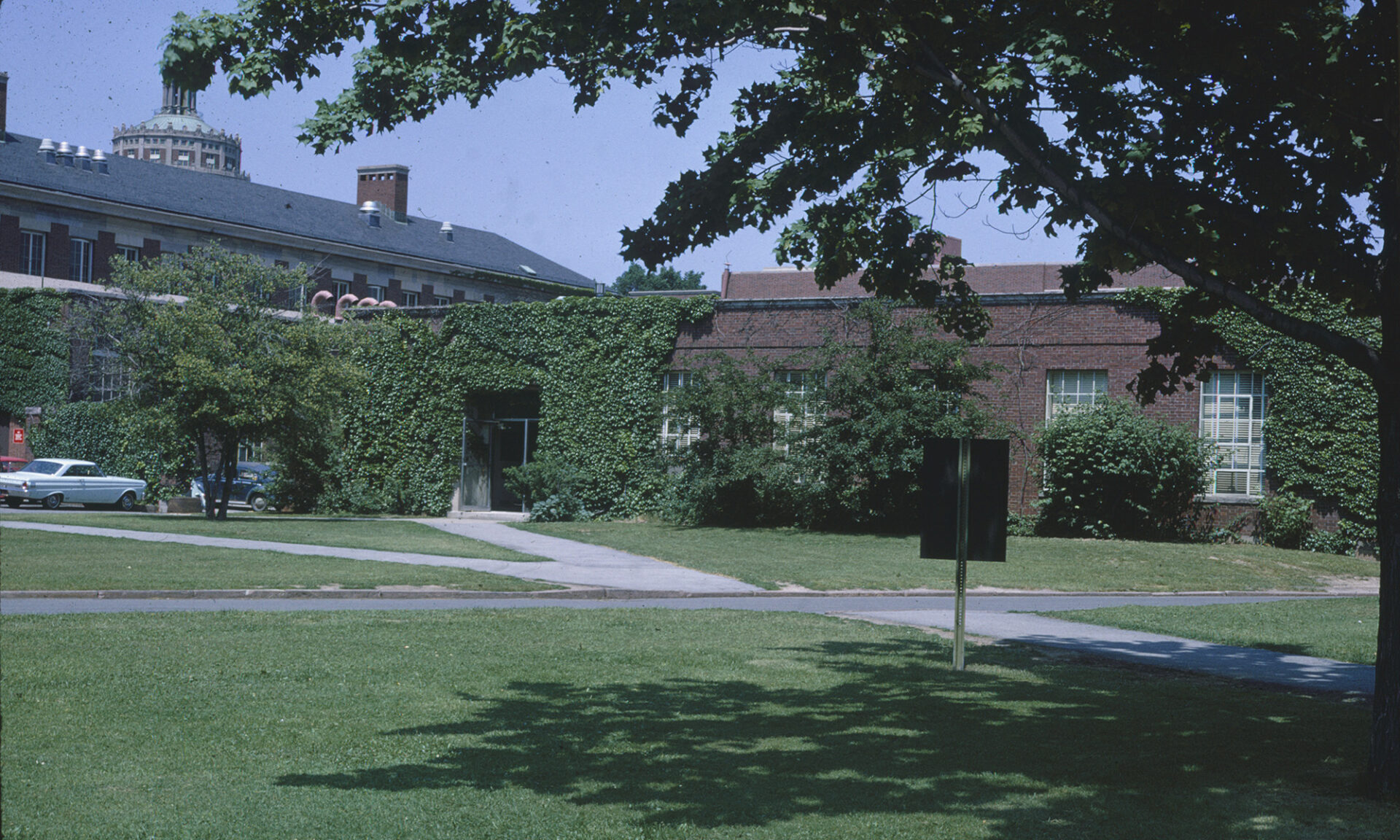
My office is in Taylor Hall, which hosts an odd assortment of student services. In addition to Title IX, it’s home to the Office of Disability Resources and a machine shop. I’ve also heard it’s the only single-story building left on campus. Do you know if that’s the case? What’s the story behind this little outlier of a building?
—Mace McDonald, sexual misconduct prevention education specialist, Title IX Office
Opened in 1935 as the Services Building, this 144-by-81-foot structure centralized the staff and equipment of the facilities department, then led by General Superintendent Clarence Livingston.
According to an article in the Campus student newspaper, “A staff of 183 … do almost every type of work imaginable—from welding to bird-catching.” Across four campuses—the River Campus, Eastman School, Medical Center, and Prince Street—those duties covered more than one million square feet: four miles of corridors, 6,000 doors, 8,000 windows, 9,000 lightbulbs, 45.5 acres of floors, and upwards of 100 acres of grounds. Livingston’s “Analysis of Functions for the Buildings and Grounds Department” binder, which sat on his desk and listed each staff member’s duties, is preserved in the University Archives.
When the colleges for men and women were unified on the River Campus in 1955, offices and divisions on the Prince Street Campus also moved. This included the University School of Liberal and Applied Studies, which served nontraditional students seeking degrees or additional training in general studies, business administration, education, and nursing.
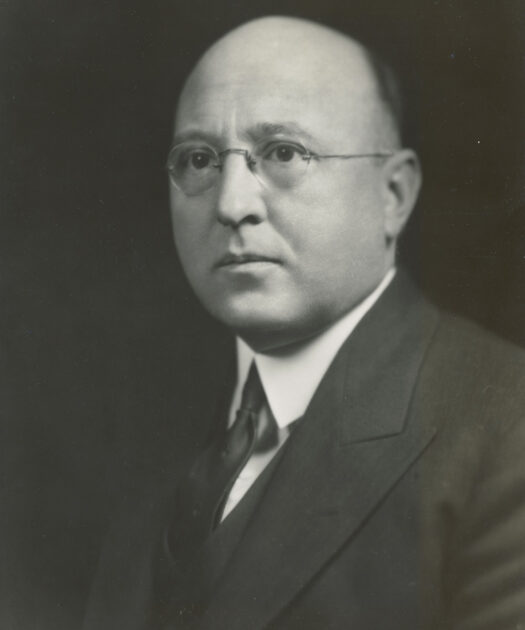
The facilities department moved across Elmwood to what is now the Health Sciences Campus, and, in 1956, the University School took up residence. The building was named for Earl Burt Taylor (Class of 1912 and 1913 (MA)), “the man who largely founded that division of the University as a development of the former Division of University Extension,” according to a 1955 Rochester Review. The University School gained a roommate in March, when the new Computing Center joined it.
With the 1958 launch of the graduate schools of education, business, and engineering, the University School stopped managing evening programs for those students. Its offices moved to Wallis Hall, and in 1961 the College of Education, now the Warner School of Education & Human Development, took its place at Taylor. Meanwhile, the Computing Center expanded and became the primary resident until 2014.
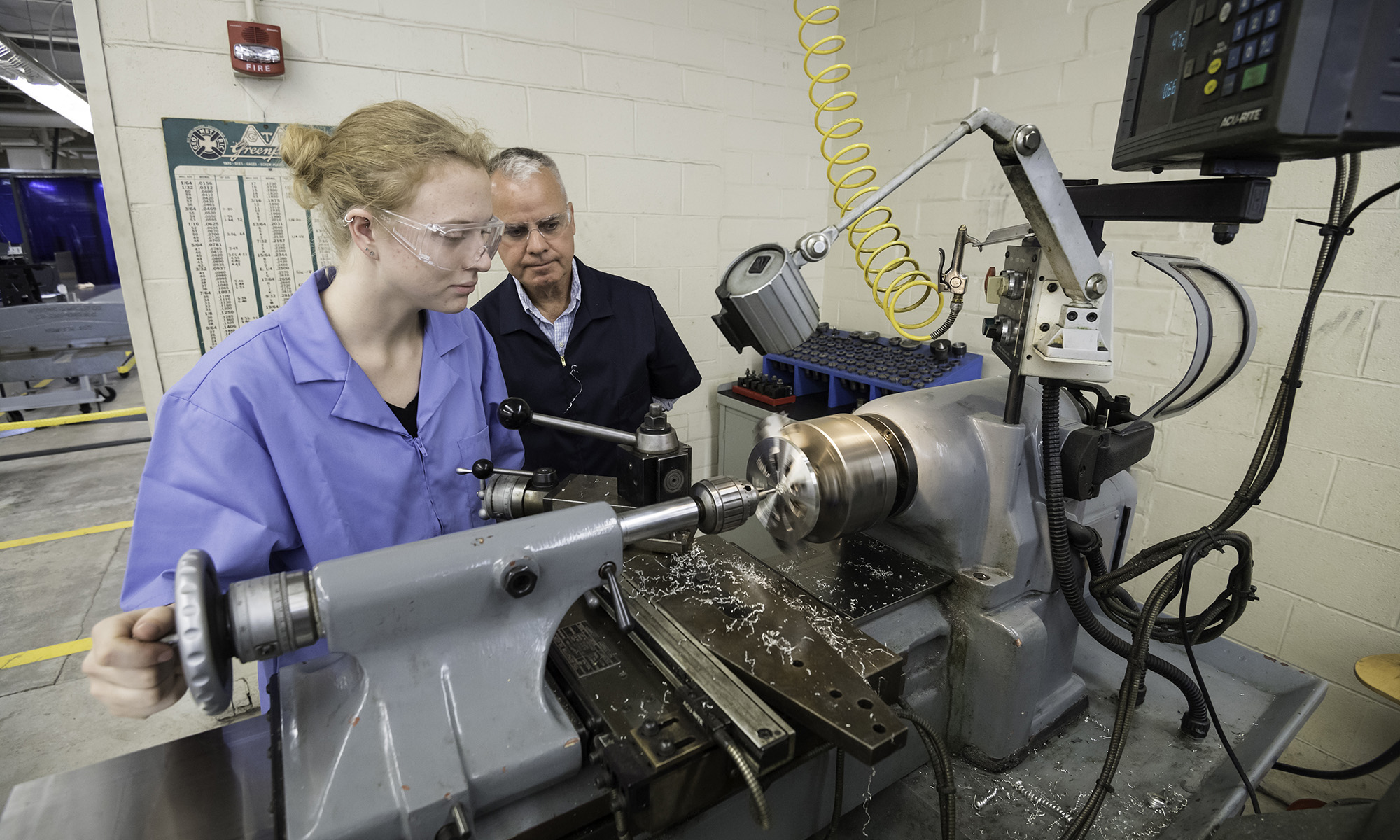
The area that originally served as the facilities machine shop returned to that purpose in 2005. The Taylor Hall Shop is one of 20 design studios, fabrication labs, machine shops, and collaborative spaces available to arts, sciences, and engineering students.
Taylor Hall—nicknamed “the Skyscraper” by University School students—is not the only one-story building on campus: The nearby New York State Center for Advanced Technology (Center for Innovative and Emerging Sciences) is similarly compact.
Although Taylor Hall outlasted the University School, its occupants still enter past the bronze plaque honoring Taylor’s “candor, courage, and humor” and crediting him with “[winning] by wisdom and good will the high regard of the community, the confidence of … colleagues, and the devotion of close associates.”