Shake Shack CEO Rob Lynch has made a career of reviving some of the country’s best-known restaurant brands. His key ingredient: seeing potential in others before they see it in themselves.
The staff at the Shake Shack around the corner from the company’s Atlanta headquarters were preparing to open on a midsummer day when Rob Lynch ’99, ’00S (MBA) walked through the front door. The CEO of the fast-growing fast-casual restaurant chain arrived alone. No assistant. No clipboard. No entourage.
Wearing a crisp open-collared shirt and sport jacket, he blended into the crowd at The Battery, the bustling development of shops and offices around Truist Park, home of the Atlanta Braves. Had a pair of photographers not been waiting for him inside, most of the restaurant’s employees probably wouldn’t have noticed him. That wouldn’t have been unusual.
“We don’t know he’s here most of the time until he’s sitting at a table,” said Danny Boliek, the restaurant’s general manager. “He comes in here like a regular guest, orders at the kiosk, and the next thing I know I’m doing a table touch and there he is.”
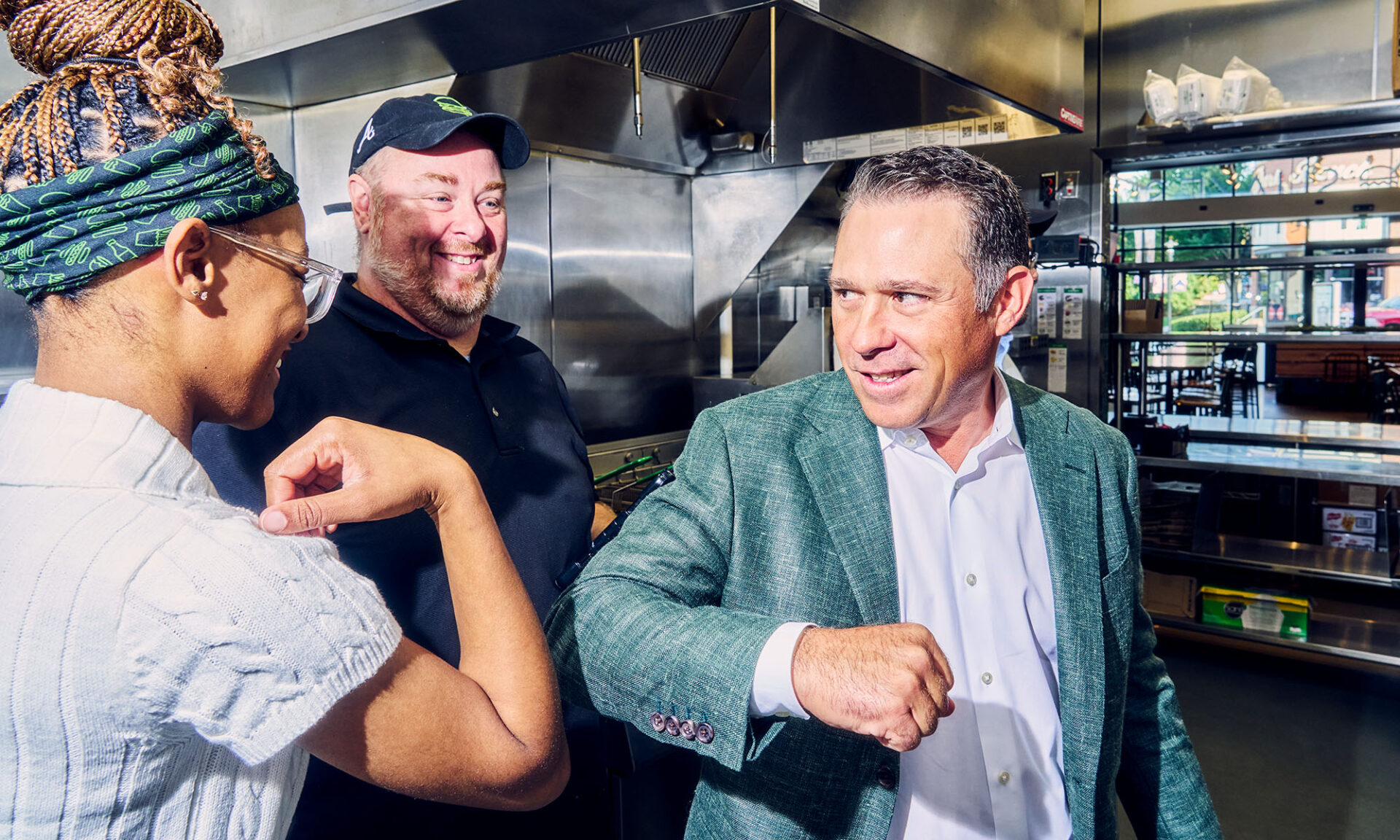
Lynch exchanged greetings with Boliek, then wandered behind the counter into the gleaming stainless-steel kitchen. He wasn’t there to inspect the place. He wasn’t looking for mistakes. He was looking for people. When he found them, he introduced himself as if he were just some ordinary guy. He asked about their families and backstories and talked about his own.
The employees seemed so at ease around him that when Lynch posed for the obligatory photo at the grill, they thought nothing of telling the boss to wear an apron before laying down a patty and to swap plastic gloves when dressing his burger with lettuce and tomato. “You’ll want to change gloves, sir,” one said. “Good thinking,” Lynch replied.
Seeing employees as people with lives outside the workplace is an ethos that Lynch has carried through a career leading some of America’s best-known restaurant brands. Business writers often describe him as a turnaround artist—an executive called in when a brand has lost its way. But listen to Lynch talk about business, and he spends less time on margins or market share than on the people doing the work.
“I call it authentic empathy,” he says. “Being transparent, being real, and recognizing that everyone has their own story, and you don’t know what that is. The best you can do is to have empathy, try to put yourself in their shoes, so you can give them what they need, and you can work together from there.”
Ask Lynch about his philosophy, and before long he talks about his college football coach, a financial aid officer, a professor, and a mentor. Each, he says, saw something in him before he saw it in himself.
Now, he explains on the walk back to his office, he spends much of his time trying to do the same. “This is nice and everything, but this kind of stuff actually drives me crazy,” he says of being profiled in Rochester Review. “The people who should get recognized are the people who are out there every day, working that grill, taking care of our guests.”
Lynch was once one of those people.
Running interference
Long before he was the public face of thousands of employees and billions of dollars in revenue, Lynch was growing up in Pittsburgh, the elder of two sons of a steelworker and a supermarket clerk. He went by “Bobby” in those days.
Money was tight. He was 10 when he told the delivery manager at The Pittsburgh Press that he was 12 so he could get an after-school job. “I was tired of standing in line for free lunch tickets when all my buddies were walking into school,” he says. “So I was like, ‘What can I do?’ I got a newspaper route. I’d walk up to people’s houses and knock on the door and say, ‘Hey, you owe me two dollars.’ Can you imagine that today? But that’s what you did to be able to pay for your lunch like everyone else.”
“The best you can do is to have empathy, try to put yourself in their shoes, so you can give them what they need, and you can work together from there.”
The few impressive homes on his route belonged to lawyers and doctors. Seeing as he hated needles, Lynch decided he would become a lawyer. But there were obstacles—namely money and know-how. Neither of his parents had gone to college. By his senior year in high school, Lynch wasn’t sure he would, either.
He was slinging pies in a pizza parlor and playing football as his college prospects dwindled. He had solid grades and had been accepted at a handful of good schools. But their tuition was impossibly out of reach.
Then Jeff McMartin, a defensive line coach for the University of Rochester football team, came to recruit on his high school campus. McMartin asked Lynch’s coach if he could speak to any players who scored above a certain threshold on their SATs. Only two students qualified. Lynch was one of them.
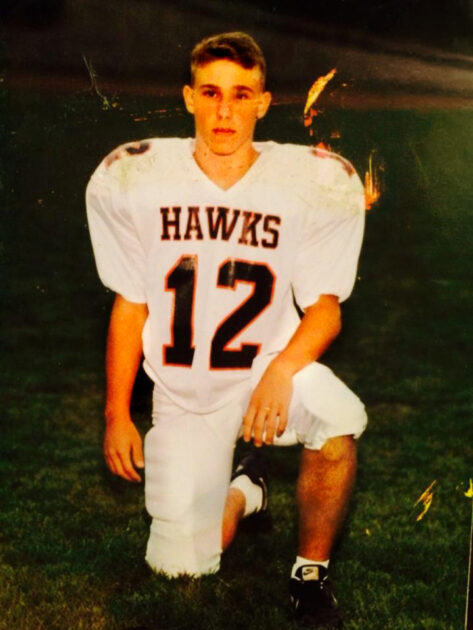
He liked what he heard from McMartin but never bothered to apply upon seeing the tuition price tag. URochester, he figured, would be as out of reach for him as the others. But McMartin did something no representative of any other school did: He called Lynch that spring to ask why he hadn’t applied. “I just got to be straight with you,” Lynch recalls telling him. “I can’t afford to go to community college, much less the University of Rochester.”
The coach’s response would become a defining moment of Lynch’s life. “You send the application in,” Lynch remembers him saying, “and let us work on that for you.”
A few weeks later, Lynch was at a friend’s house on a Friday night when the phone rang. His friend’s mother answered and told Lynch the call was for him. On the other end was a woman from URochester’s Office of Financial Aid. She explained that she had assembled a package of grants that would cover nearly all of his tuition. The remaining costs for room and board, she said, could be financed through student loans, something neither Lynch nor his parents had understood was possible.
“I said, ‘So, let me get this straight,’” he recalls. “‘You’re telling me I can go to the University of Rochester, play football, and not have to pay anything until I graduate and get a job?’” His voice softens when he remembers her saying “yes.” To which he replied, “Well, you just changed my life.”
More than 30 years later, Lynch can still see the phone hanging on the kitchen wall and the living room where he told his friends the news. He can feel them hugging him and patting him on the back. Someone had seen him. Someone had believed in him. Someone had invested in him. There would be others.
A million-dollar prediction
Peter Regenstreif, a professor of comparative politics and public opinion known for his wry humor, taught Lynch as a first-year student and said something that struck him as preposterous at the time. “He looked out at everybody, and he says, ‘I know this may seem hard to believe, but every one of you will make a million dollars in your lifetime,’” Lynch says. “Being from my background and hearing that was just such a powerful thing for me.”
As outlandish as it sounded, the idea helped Lynch see that the world beyond the River Campus was bigger than anything he had ever imagined, and so were its possibilities. He realized that more with each passing year—when an injury forced him to give up football, when serving slices at Pontillo’s gave way to waiting tables at Ruby Tuesday’s and Outback, and, eventually, bartending at the Elmwood Inn. He studied political science and economics and found his passion in the latter.
“The thing about Rochester for me was it gave me every opportunity to realize my full potential.”
Economics for Lynch was about identifying patterns in complex data sets and using them to seize an opportunity or overcome a challenge. He stayed an extra year to earn an MBA at Simon Business School, where he studied marketing and developed an intellectual curiosity about what moved people to act. “The thing about Rochester for me was,” he says, “it gave me every opportunity to realize my full potential.”
It gave him another when Dan Hecht ’91, ’92S (MBA) returned to campus as a representative of Procter & Gamble to interview prospective interns for the company’s pharmaceutical division and selected Lynch from among the applicants.
Hecht remembers Lynch as disciplined and hardworking but also curious, personable, and candid—a combination he regarded as essential to thriving at the company. In those days, Hecht jokingly divided employees into “Proctoids,” the people who knew how to navigate bureaucracy and toe the company line, and “Gamblers,” those who could spot possibilities and were willing to take risks. Hecht saw Lynch as someone who could be both.
“He wasn’t just like, ‘What am I supposed to do? I’ll go do it,’” says Hecht, now an executive coach and professor of leadership at the Jack Welch Management Institute at Strayer University. “Rob was more like, ‘Help me understand it, let me go and figure out how to do it,’ and sometimes came back with new ideas.”
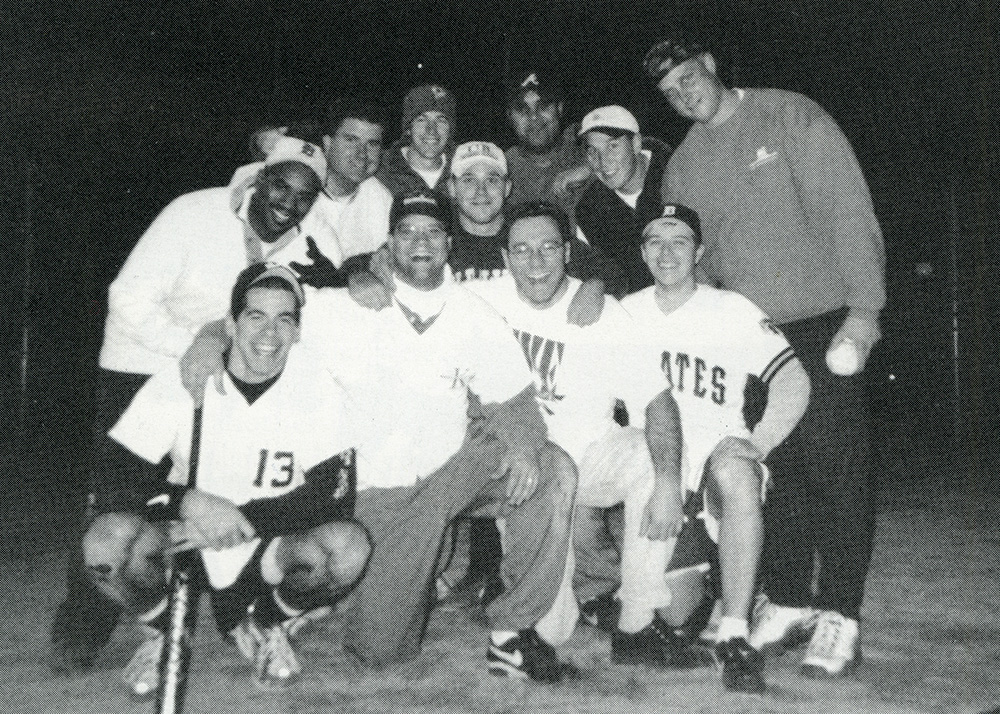
Hecht used Lynch as a test case for a new approach to training interns that Hecht had been developing. Rather than immediately assigning him a task like the other interns, Hecht introduced Lynch to the people and workings of the organization. He had Lynch sit in on meetings, talk with colleagues, and get a feel for the place, from the lunchroom to the conference room.
“By the end of the week, he was a little frustrated because everyone else had a project,” Hecht recalls. “But when I finally gave him his project, he was grounded, and he took off like a rocket. He understood the landscape and that getting to know people, the business, the organization, is critical to figuring out where you’re going.”
The training—and Hecht—had a profound effect on Lynch. “Dan always made time for me, and I always felt like he was truly invested in my success,” he says. “That’s how I’ve tried to show up in my roles since then. I try to create a hospitable work environment where people want to work together and they want to collaborate.”
What was supposed to be a summer internship eventually followed by law school turned into a seven-year job helping shepherd Procter & Gamble’s prized Crest brand. Lynch joined at a time when the brand had seen its share of the marketplace for whiter teeth dwindle. The New York Times chronicled the fall under the headline, “Decline of Crest shows how a brand can fade.” In the ensuing years, though, Crest rebounded with the introduction of a series of cosmetic and flavoring initiatives like Crest Whitestrips and Crest Pro-Health Rinse mouthwash.
“That,” Lynch says, “was the foundation for everything I’ve done since.”
Climbing the food chain
Along the way, Lynch married his high school sweetheart, had three children, and got to know brands the way Bo knows baseball and football. After a run as the associate marketing director at Heinz, he became vice president of marketing at Taco Bell and worked on new products like Doritos Locos Tacos, one of the most successful fast-food product launches in history.
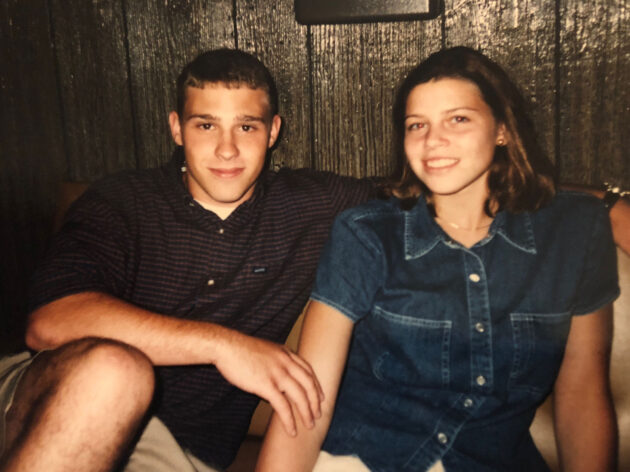
As chief marketing officer at Arby’s, he turned a chain that had become a punchline into a personality with its audacious “We Have the Meats” campaign. Lynch recalls his first reaction when the advertising agency he had hired presented the slogan. “I was, like, really? ‘We Have the Meats’?” Lynch says. “Why doesn’t Nike just say, ‘We Have the Shoes’?”
But he set aside his doubts and put his trust in people. When the slogan was paired with that signature sonic “boom-boom-boom,” from rapper Pusha T, featured on Yogi and Skrillex’s “Burial,” the campaign came to life—and took on a life of its own.
Lynch remembers the moment he realized the campaign had become more than a way to sell sandwiches. He was walking in Chastain Park in Atlanta and stopped to watch a youth football game. The players were perhaps 11 years old. “These kids broke the huddle with, ‘One, two, three, we have the meats!’” Lynch says. “That’s when I knew we’d done something special.”
When Lynch was named CEO at Papa John’s in 2019 and tasked with turning around the brand after its founder became embroiled in a series of racially charged scandals, The New York Times led its story about his hire with, “He was the man behind ‘we have the meats.’” Lynch went on to steer the pizza franchise out of the most turbulent period in its history, but the label still makes him cringe: “The last thing I want my whole career to be known for is my being the ‘We Have the Meats’ guy.”
What, then, does Lynch want as his legacy? That brings us to Shake Shack.
Seeking enlightenment
By the time he arrived at Shake Shack in 2024, Lynch had a reputation as a textbook turnaround specialist. But the publicly traded fast-casual restaurant chain presented a different problem from the other brands he had managed. It wasn’t broken. It was beloved.
The challenge Lynch has set out to overcome is not rescuing the brand. It’s scaling a culture. He has moved quickly. The chain has expanded rapidly on his watch, from a few hundred boutique locations to 710 as of this summer. Lynch has publicly stated he wants to “blow past 1,500” locations and grow its everyday customer base while retaining its reputation as a special dining destination.
Innovation has been key. The restaurant has expanded its “Smoky BBQ” menu, and deal offers on its app have translated to huge gains in digital sales, according to industry trade publications. QSR magazine recently wrote that Shake Shack is “owning the beverage conversation,” and called the chain’s viral Dubai Chocolate Pistachio Shake one of the “buzziest drops in brand history.” When Shake Shack began offering the drink at 30 select locations in New York City, Los Angeles, and Miami, lines reportedly snaked around street corners before stores opened.
“I want my legacy to be that I built a restaurant company that supported 30,000 employees who prospered, built careers, and took care of their families and their communities.”
The queues harkened back to the early days of Shake Shack, which New York City restaurateur Danny Meyer opened in 2001 in Madison Square Park as a hot dog cart to raise money for charity. Three years later, it became a permanent kiosk, adding burgers and fries to the menu. “Everybody who wanted to come in had to stand in line, whether you were a sanitation worker or a Wall Street executive,” Lynch told Restaurant Business Online. “That’s not exclusive. That’s inclusive.”
Today, Meyer remains chairman of Shake Shack while leading Union Square Hospitality Group, which grew out of Union Square Cafe, the New York City restaurant he opened in 1985. Though Shake Shack operates independently of the group, Lynch has embraced its motto: “Extending Enlightened Hospitality.”
“I want my legacy to be that I built a restaurant company that supported 30,000 employees who prospered, built careers, and took care of their families and their communities,” Lynch says. “We want people who derive fulfillment and satisfaction from caring for others. That’s at the core of enlightened hospitality.”
That’s what Lynch is looking for when he visits Shake Shacks unannounced. He will order his burger from the kiosk like everyone else. He will ask a few questions. He will listen. He will take notice of someone behind the counter who reminds him of himself as a young man—hardworking and eager to please, with no clue what life has in store.
This story appears in the fall 2026 issue of Rochester Review, the magazine of the University of Rochester.