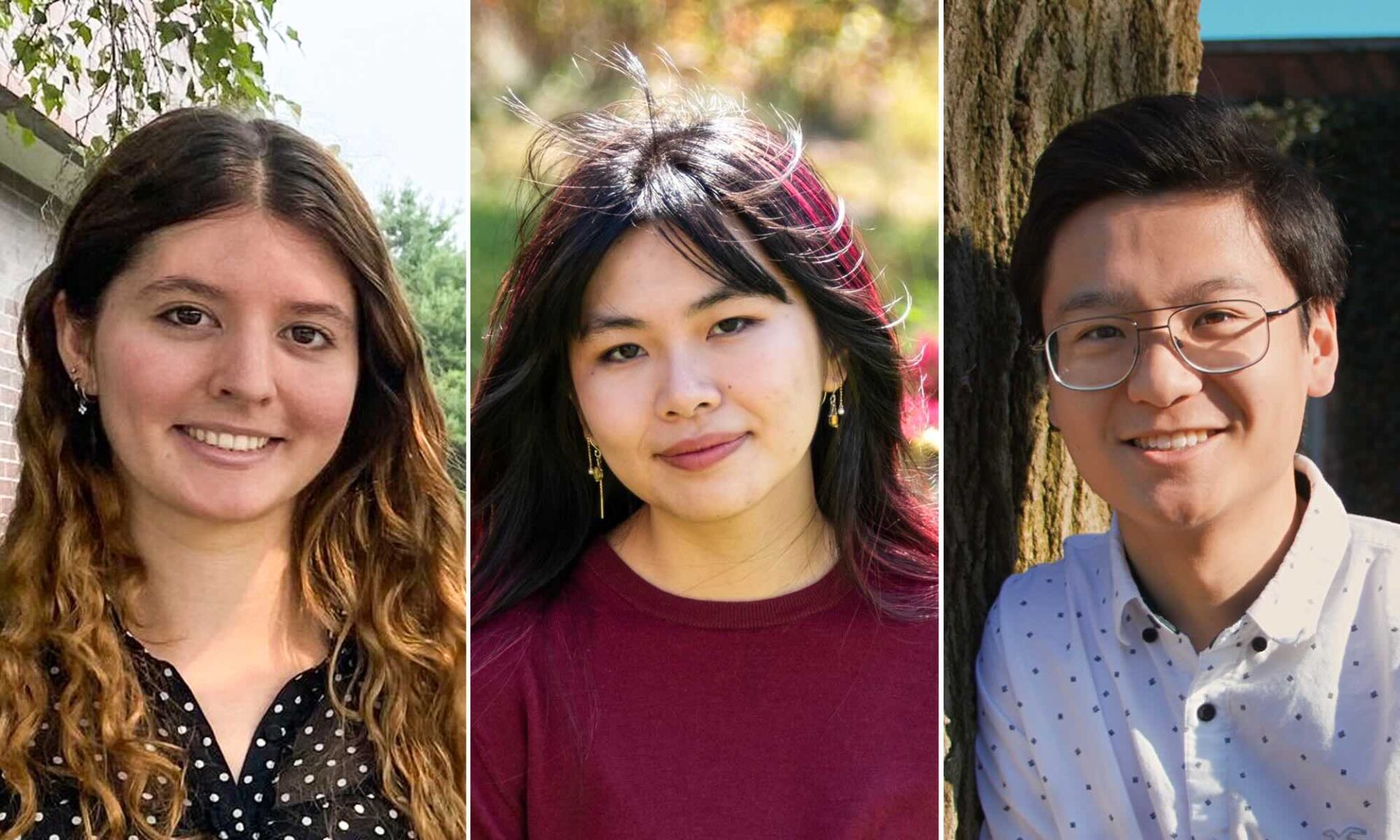
Three Hajim School seniors are honored for blending technical rigor with humanistic insight.
At the University of Rochester, students don’t have to choose between seemingly unrelated fields. The flexible curriculum lets them combine subjects in unexpected ways to create educational paths that reflect their full range of interests. Each year, the Hajim School of Engineering & Applied Sciences awards the Robert L. Wells Prize to three students who embody this spirit: high-achieving Hajim School seniors who also excel in a humanities field.
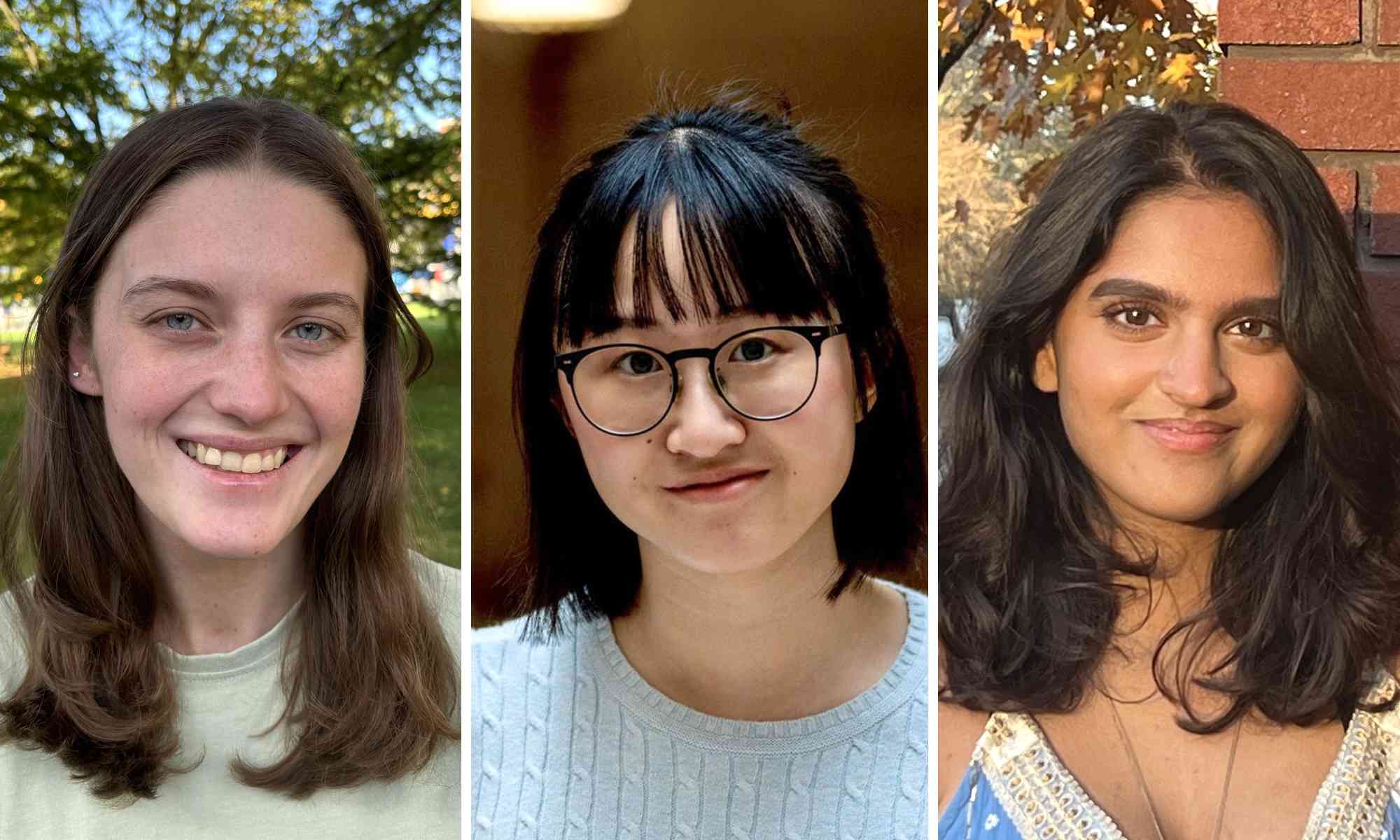
This year’s Wells Prize recipients are:
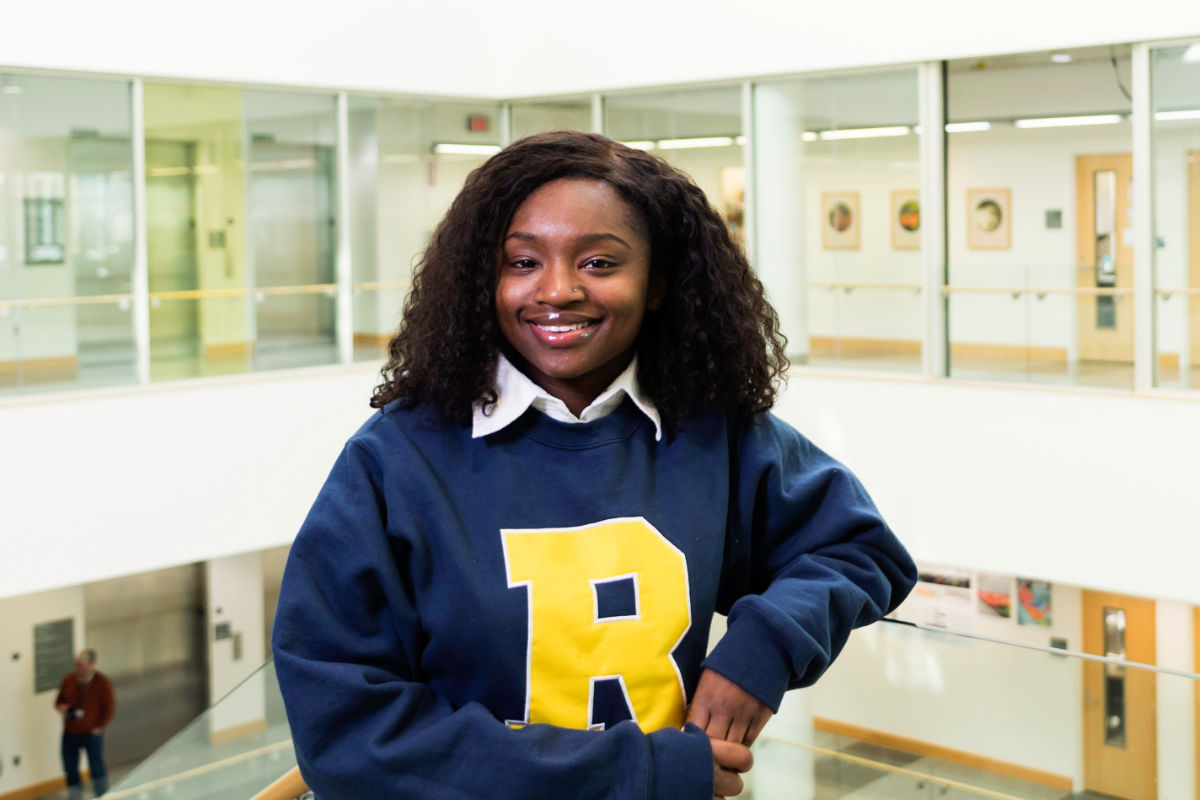
- Kyra McCracken ’26, a biomedical engineering student minoring in Spanish
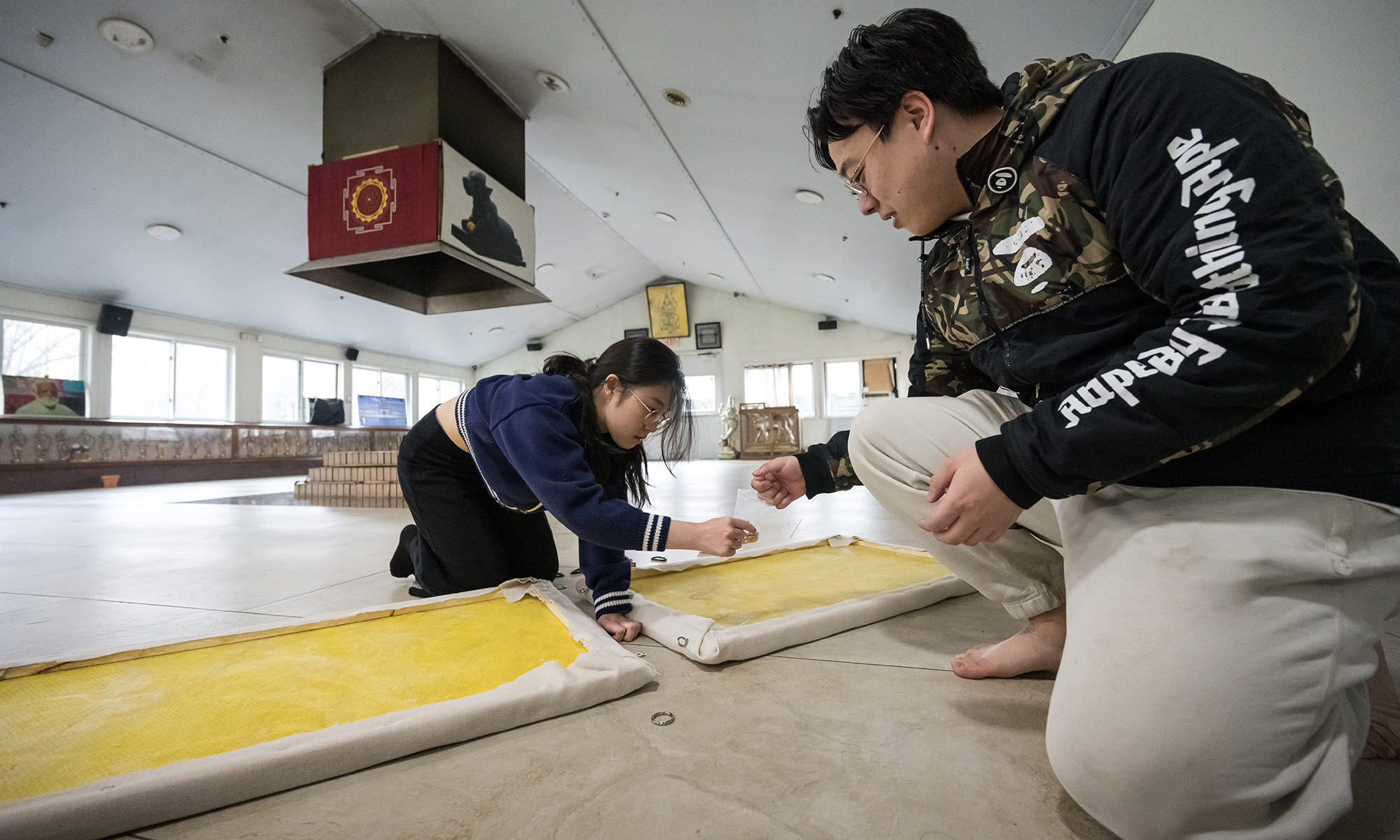
- Sophia Wang ’26, an audio and music engineering student minoring in studio arts
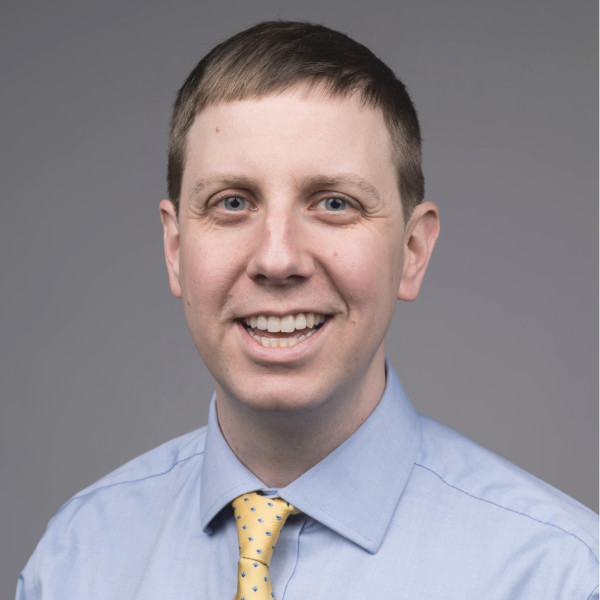
- Stefan Wang ’26, a computer science student minoring in philosophy
The award is named after Robert L. Wells ’39, a mechanical engineering alumnus who became a top executive at Westinghouse and felt strongly that engineers “need the balance of the humanities” to be competent in their field.
Kyra McCracken: Finding balance while learning a second language
Kyra McCracken found that combining her technical studies with Spanish helped her strike the perfect balance. Initially intending to major in applied mathematics, she discovered that biomedical engineering better aligned with her interests and career goals.
“After intending to be an applied mathematics major, I realized that I wanted to incorporate my interest into science and engineering,” says McCracken. “In my future career in biomedical engineering, I want to help make medical devices more accessible.”
Once she zeroed in on the right major, she quickly flourished and by the end of her third year was presented with the Department of Biomedical Engineering’s Outstanding Junior Award. Internship experiences helped McCracken affirm that she was on the correct path.
She spent the fall of her junior year interning at UR Medicine Motion Labs, which uses state-of-the-art computer and sensor technology to study, analyze, and enhance human motion. Before heading into her senior year, she gained industry experience by serving as a quality assurance intern at Hologic, Inc., where she worked on surgical devices for the Gynecological Surgical Solutions division.
McCracken stays active outside the classroom by working as a resident advisor and as a member of the Tau Beta Pi engineering honor society, but she says pursuing a minor in Spanish was one of the ways she found equilibrium while studying such a technical discipline like biomedical engineering.
“Learning a new language is so fun!” notes McCracken. “After beginning to learn Spanish in high school, I wanted to continue learning to improve my speaking skills. I’m glad I had the opportunity to do so at URochester.”
Sophia Wang: Complementing audio engineering with visual arts
Sophia Wang grew up with a love of music and visual arts and has found a way to explore both passions together. She took a wide variety of courses early on, but the ones that resonated were in audio and music engineering, where she was fascinated by the material and found dedicated professors who cared about her and her classmates.
“I grew up playing music. During high school I got really into recording and mixing songs on my laptop,” says Wang. “I chose this major because we get to work with a lot of cool audio related technology, and it’s been so interesting learning how the instruments, software, and equipment I used growing up actually work.”
She thrives on the hands-on class projects, where she’s been able to design everything from an audio plugin to a drum machine and hear them in action. In the summer of 2024, she got to put the skills she learned in the classroom into practice as a digital signal processing/algorithms intern at HP, contributing to headset development.
But she did not lose sight of her passion for visual arts. For Wang, URochester’s curriculum allowed her to continue nurturing her artistic side through a studio arts minor, even as she immersed herself in audio engineering.
“Art is by far my favorite hobby, and I’ve loved all the studio art courses I’ve taken here,” says Wang. “They’ve introduced me to forms of art like photography, printmaking, and performance art—things I hadn’t explored before.”
When she’s not in the classroom, Wang spends most of her free time painting and taking pictures, bringing her collapsible easel outside when the weather is nice. This fall she’s worked on painting portraits of her house.
Stefan Wang: Artificial intelligence informed by philosophy
Majoring in computer science felt like a natural path for Stefan Wang, who grew up playing video games and tinkering with computers. Along the way, he discovered an unexpected complement to his technical studies: philosophy, which introduced him to new ways of thinking about ethics and logic. With aspirations to pursue a PhD, he decided to attend URochester because of its strong emphasis on research.
“I chose computer science because I’ve always been drawn to its power to create solutions for real-world problems,” says Wang. “My coursework here has provided a strong foundation in machine learning and prepared me for research into reinforcement learning and AI safety.”
But while he started out laser-focused on computer science, he stumbled upon a secondary passion.
“It was a complete surprise—in my first semester freshman year I took an introductory philosophy course, PHIL 103, with Professor William FitzPatrick, to fulfill a cluster requirement, but that course made me fall in love with philosophy,” says Wang. “It quickly became clear that philosophy was deeply involved in my main area of interest: artificial intelligence. It has given me the tools to think rigorously about concepts like ethics and logic, which are essential for creating responsible technology.”
Last summer, Wang conducted research in explainable and safety-constrained reinforcement learning at the Air Force Research Laboratory, which he says solidified his career goals. He’s currently getting additional applied experience working with Associate Professor Cantay Caliskan from the Goergen Institute for Data Science and Artificial Intelligence to use multimodal models to study video game franchises. Ultimately, he wants to develop safe and reliable AI systems for the betterment of society.