Healthcare is about improving lives–not only through patient care, but also by creating healthier communities. As healthcare continues to evolve, sustainability is becoming an increasingly important part of that mission. Across University of Rochester Medicine surgery centers, the Perioperative Green Champions are helping lead that change, showing how everyday actions can make a lasting impact.
In March 2025, Ivelisse (Ive) Vicente, assistant director of nursing for perioperative ambulatory surgery, launched the Perioperative Green Champion Program to bring together staff members interested in making their workplaces more environmentally responsible. What began as a small group of sustainability-minded nurses has evolved into a collaborative network spanning multiple perioperative sites, including the Center for Perioperative Medicine, Saunders Orthopaedic Surgical Center, Sawgrass Surgery Center, Strong Memorial Hospital Operating Room, and Strong West Surgery Center.
Today, the Green Champions work together to identify practical ways healthcare workers can reduce waste, improve recycling efforts, and encourage environmentally responsible practices in clinical spaces.
“Healthcare is about improving people’s health, and that responsibility extends beyond the walls of our hospitals. When we reduce waste and make more sustainable choices, we’re also helping create healthier communities.” -Ivelisse Vicente
Small changes lead to big impacts
One of the program’s strengths is its ability to tailor projects to the unique aspects of each location.
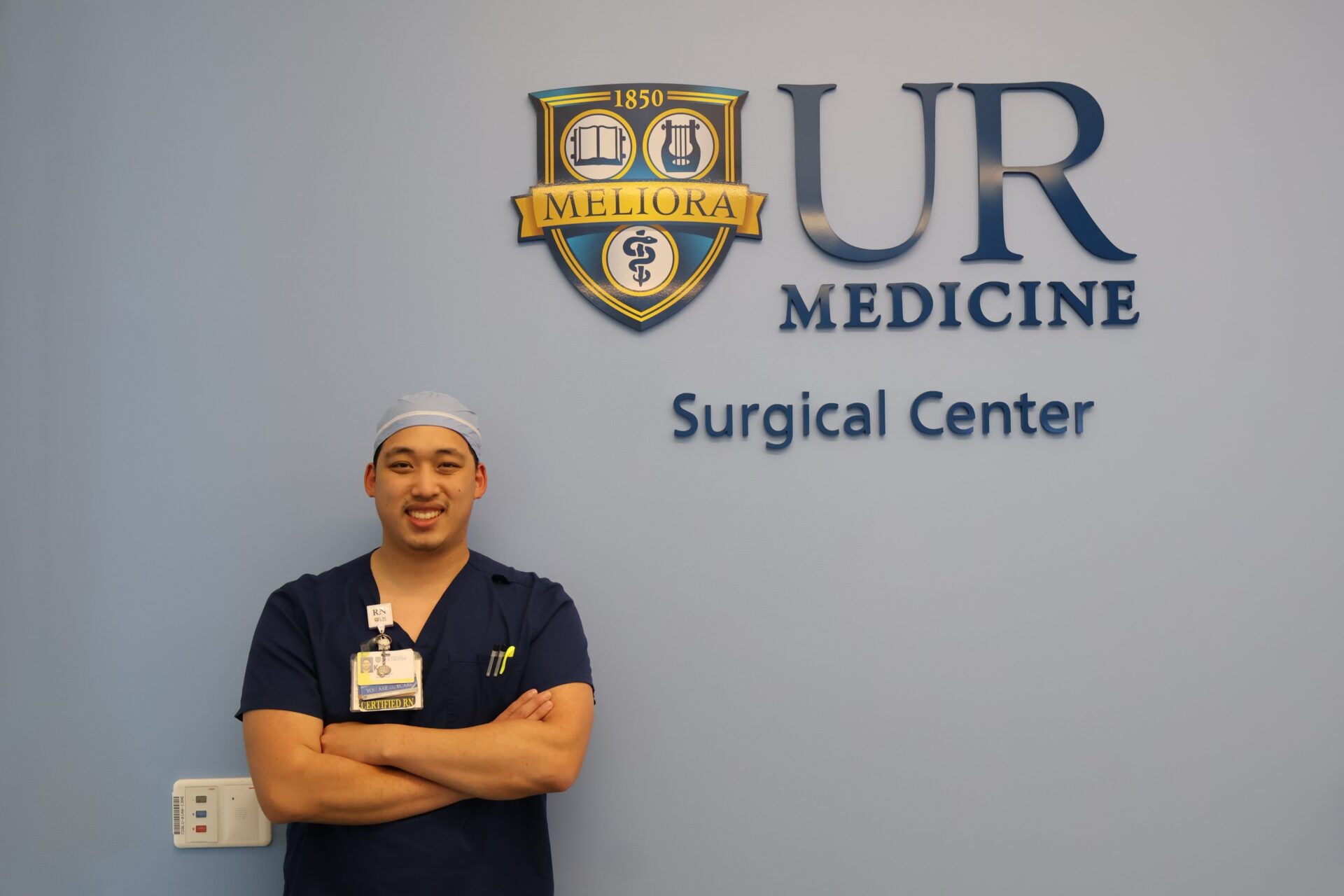
At Saunders Orthopaedic Surgical Center, Green Champion Koa-Li’i Wong launched a waste diversion initiative for the plastic sleeves used to package surgical scrubs. What started as a recycling initiative has now switched its focus on reusing the sleeves, in alignment with the waste management hierarchy. This past year, the initiative has prevented approximately 4,000 plastic sleeves per month from going to the landfill. Last September, the site also began a reuse program for alkaline batteries, which has diverted approximately 400 batteries per month (over 3,000 batteries to date) from landfill waste.
At Sawgrass Surgery Center, Green Champion Ariel Booth worked with the Sustainability Office to update recycling signage throughout the facility, helping staff better identify recycling opportunities. Her team has also explored additional waste reduction initiatives, while Green Champions at other locations are evaluating ways to recycle blue wrap, a plastic-based material used to wrap sterilized surgical instruments before use.
Individually, these projects may appear small. Collectively, they demonstrate that everyday decisions can contribute to a more sustainable healthcare system.
Changing culture, not just practices
The true success of the Green Champions is the culture they are creating. “The most rewarding part has been watching people start bringing their own ideas to the table. When sustainability becomes part of the conversation, that’s when real change begins,” says Vicente.
Through monthly meetings, educational opportunities, and shared projects, Green Champions are helping staff view sustainability as a natural part of their work rather than an additional responsibility. The program creates space for employees to ask questions, propose ideas, and learn from colleagues across different sites.
In this spirit, Kelly Dixon, Green Champion at the Center for Perioperative Medicine, created a resource to share with the team, alongside her daughter who recently graduated with a degree in Sustainability Studies from SUNY Geneseo. Their green guide is aimed to help others incorporate new ways to divert waste into everyday life.
The cultural shift is especially important in healthcare, where factors such as fast pacing, patient safety prioritization, and standard procedures all bear equal and important weight. By creating a supportive network and emphasizing practical, achievable actions, the Green Champions have shown that sustainability improvements do not necessitate extreme operational changes. Instead, progress often begins with simple observations and a willingness to make change.
Looking toward the future
The future of healthcare and sustainability are closely linked. As healthcare systems continue to adapt to new technologies, patient needs, and operational challenges, environmental responsibility will increasingly be part of conversations about quality care and community building.
For employees interested in getting involved, Vicente offers a simple message: start somewhere.
“You don’t need to have all the answers to make a difference. It starts with asking questions, noticing opportunities, and being willing to take that first step,” says Vicente.
Whether it is identifying a recycling opportunity, reducing unnecessary waste, sharing ideas with coworkers, or getting involved in groups like the Perioperative Green Champions or the University’s broader Green Reps program, every contribution helps move healthcare towards a more sustainable future.
Creating healthier communities does not begin and end with patient care; it also means caring for the environment that supports us all.
Written by Anu Ravi, ‘29
Pictured Above: Koa-Li’i Wong, RN, BSN, CFPN