When the topic of climate action is mentioned, many acknowledge the effectiveness of legislation changes or climate data. However, climate action happens in a myriad of ways, including often overlooked methods such as art and expression. For University of Rochester faculty members Stephanie Ashenfelder and Rose Pasquarello Beauchamp, art is a key way they contribute to climate action and education. Through their Climate Interventions class, the EchoLab artist collective, and the Adirondack Climate Project, their work not only allows others to share and listen to stories related to climate change, but also highlights opportunities students can take to become involved in interdisciplinary projects.
Climate in the classroom
The Climate Interventions class offered at URochester is taught by both Stephanie Ashenfelder, the director of the Digital Media Studies program, and Rose Pasquarello Beauchamp, a professor of dance in the Dance and Movement program. This class combines the visual arts with performance and is centered around climate change storytelling. There is also significant emphasis on eco-somatics, or the “idea of centering the body in our relationships and conversations around the environment,” according to Pasquarello Beauchamp. Students also have the opportunity to travel to the Adirondacks to experience the park firsthand, collect climate-related stories from the community, and make art based off of those stories and what they have learned from the course.
“Through the class, we really center the human experience, storytelling and human-to-human connection, and how that can make a really big impact on how people talk and feel about the environment,” says Ashenfelder. “[This also] makes them to want to act.”
Engaging the community
EchoLab is an artist collective started by Pasquarello Beauchamp, Ashenfelder, and Andrea Gluckman, a Rochester-based photographer. According to Ashenfelder, its three main focuses are art, ecology, and community building.
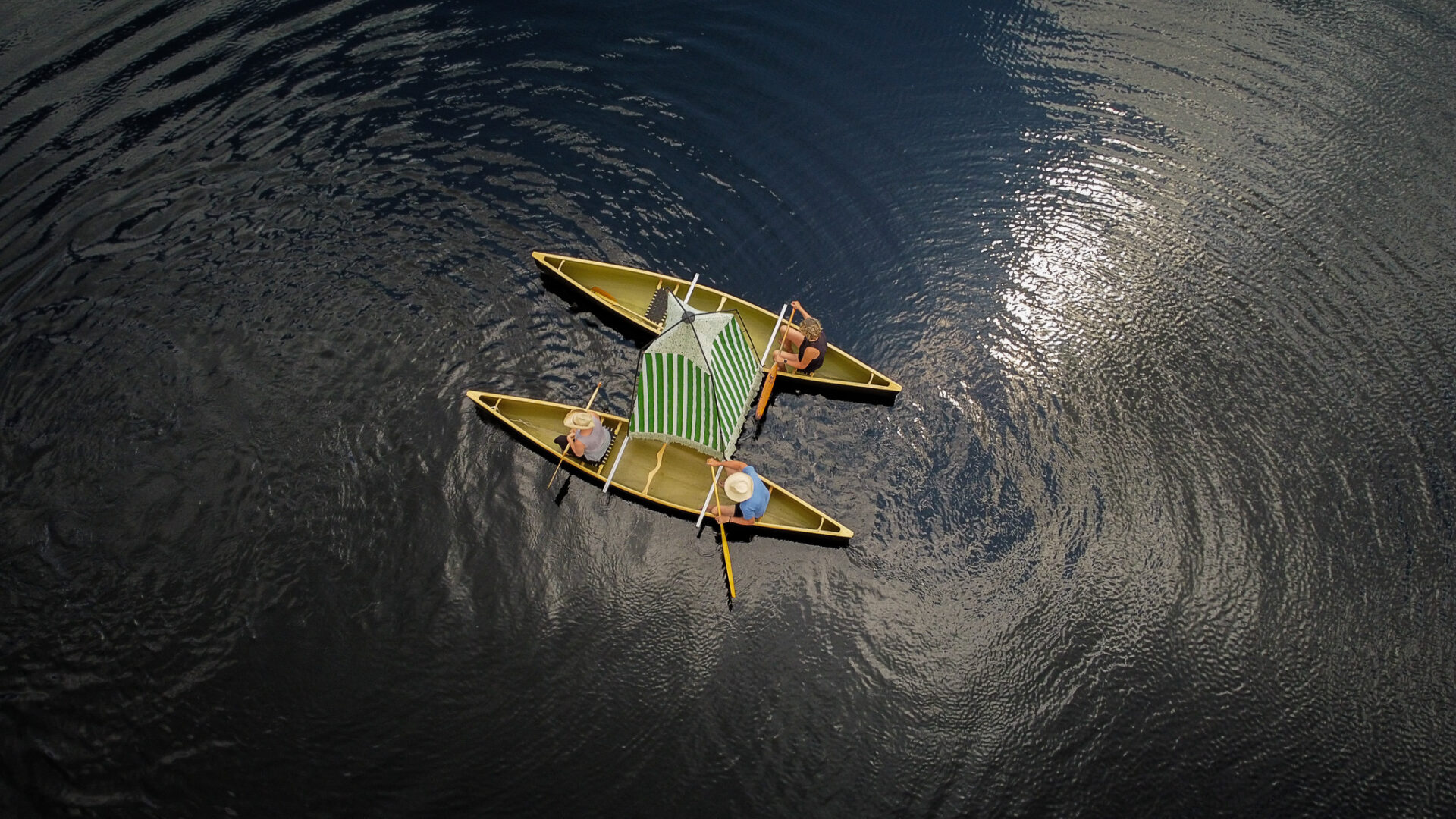
One of EchoLab’s recent projects includes Watershed Movements, a pilot project that entailed a year of research to determine if storytelling and movement could influence members of both rural and urban communities to feel a deeper connection to their local watershed.
EchoLab found that those nearest to the Genesee River, those in the urban area, had a weaker baseline connection to the river. Yet, after the project, the same group showed significant growth in this connection. They were able to better articulate what the river meant to them and described feeling inspired by others’ stories. Conversely, those near the Raquette River, the more rural community, already had a stronger baseline connection to their local river, and thus described how the initiatives reinforced their already-established feelings about the river instead of significantly strengthening or changing it.
These findings support that storytelling and embodiment techniques can be effective ways to bolster connections between the mind, body, and environment. It also brings to light the importance of consistently experiencing nature, as it will build foundations of empathy and understanding for the surrounding environment, which can be a strong catalyst for change.
Collecting climate stories in the Adirondacks
The Adirondack Climate Project, another EchoLab initiative, began in 2022 in collaboration with the Adirondack Council in order to gauge the Adirondack community’s feelings about climate change. Pasquarello Beauchamp and Ashenfelder achieve this by using a portable audio recording booth and asking those around the Adirondack Park to share their experiences and stories related to climate change. Anyone in the park, whether they be visitors to the area or nearby residents, are able to share. Students in the Climate Interventions class also participate in collecting these stories.
Each summer, the stories are shared with various artists, all New York State residents, who create art based off of what they hear in these stories at a micro artist residency, similar to the process used in the Climate Interventions class. The art created during this five-day trip is posted in an online archive as well as displayed in various in-person exhibitions.
The importance of this work
Pasquarello Beauchamp stresses the importance of art and these initiatives in influencing people to physically experience nature as a means to reconnect and grow empathy for the natural world. “It always has an aesthetic element to it, an embodied element, and a conceptual element to it, so it’s using a larger term of art as a framework to address [and] engage,” Pasquarello Beauchamp says.
The Climate Interventions class specifically encourages the younger generation to start thinking about and discussing climate change in an environment that is safe, creative, and community-centered. All of these initiatives allow participants to examine their relationship with nature, the environment, and how their experiences relate to climate change, and then invite them to act in ways that are both creative and tailored to their own interests.
The interdisciplinary aspects of these projects aid in reaching a broad audience of people and exemplify how there are a variety of ways that the University community can engage in climate change awareness and sustainability.
Written by Raelen Green, ‘28