From the Director
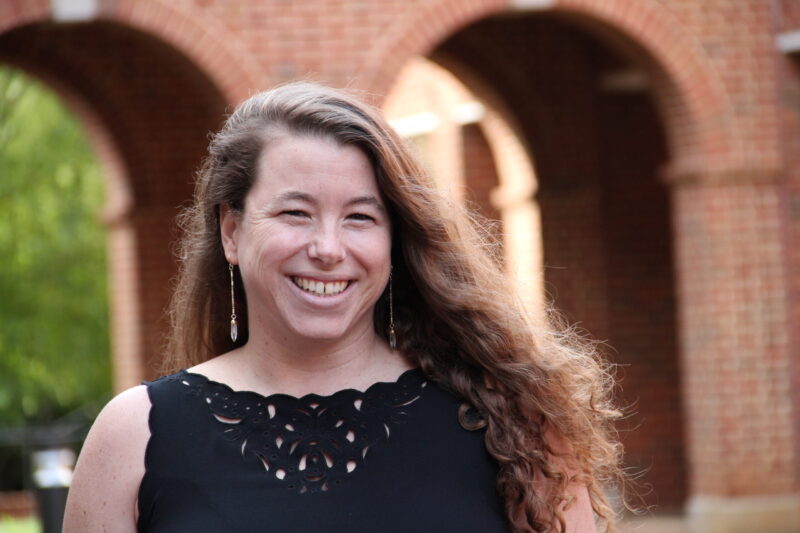
As many of us return to school and I settle into my new home in Rochester, I wanted to take the opportunity to introduce myself to the CUES community. I am the new William and Sheila Konar Director of the Center for Urban Education Success (CUES).
I am thrilled to join a community where people seem to genuinely care about their neighbors and believe in the power of the collective – something I have already personally experienced here in Rochester. During my orientation to the Warner School of Education & Human Development, I was asked to share why I chose to work here. My response was that I wanted to be at an institute of higher education that aligns with my values. Part of the mission of Warner is, “we believe that education can transform lives and make the world more just and humane.” I see this as central to the mission of CUES in the past, present, and future. The Warner mission goes on to name the underlying beliefs of the mission, including “the improvement of education is in pursuit of social justice; development and learning shape and are shaped by the contexts in which they occur; the complexity of educational problems requires an interdisciplinary and collaborative approach; and best practices are grounded in research and theory, just as useful theory and research are informed by practice.” I want to share how each of these beliefs has shaped my career in education and will shape the work of CUES in the upcoming years.
Improvement of education is in pursuit of social justice
Dismantling oppressive systems and replacing them with more inclusive, responsive systems is the work of educational improvement. I define education success as each student receiving what they need to develop to their full academic and social potential. Improvement of education will result in schools and districts where practices are equitable, inclusive, just, and joyful; and students feel seen, supported, engaged, and connected.
Development and learning shape and are shaped by the contexts in which they occur
My mom was a high school English teacher and guidance counselor, and my stepdad was a high school biology teacher and junior high football and basketball coach. We talked about school at the dinner table and attended school events in the evenings and weekends; education has long been part of my life. My mom and stepdad modeled inclusive education and showed me how you support all students. This is the context that shaped my development and learning.
The context of urban schools often reflects the inequities and injustices that societal practices and policies have created. I was just speaking with a colleague in Texas who shared that educators in the state, including professors of higher education who prepare teachers and leaders, are being asked to pledge that they will not teach the historical legacy and impact of slavery. In a time when the teaching of the historical facts that undergird our societal system are being restricted, the work of improving urban education success takes on new challenges. This is the context shaping the development and learning of students today.
The complexity of educational problems requires an interdisciplinary and collaborative approach
The problems facing urban schools are deep and interconnected. My experiences as an alternative education, social studies, and English teacher, as well as a teacher leader and dean, have helped me to understand the complexity of the challenges and opportunities within underserved communities. These experiences have also helped me understand the need to change systems in order to change the experiences of students marginalized by those systems.
My research and partnerships have taught me that we know a lot about educational practices that are equitable, culturally responsive and sustaining, but we don’t have as clear of an understanding of the “how” to ensure those practices are implemented systemwide. I seek to understand how we implement change, and shift both practices and mental models to ensure every student has the chance to succeed in our schools. I believe that this work needs to be done in community, draw on research and practitioner knowledge, and needs to be based in a shared commitment to transform the traditional ways we have done schooling.
Best practices are grounded in research and theory, just as useful theory and research are informed by practice
This notion has been central to my research. I have worked within research practice partnerships with districts where we co-identify concerns and address them together through a reciprocal process of research and theory. In one such partnership, members of the improvement and innovation team at an urban district approached me and my colleagues with the problem of practice that, despite time and money invested in improvement programs and initiatives, every student was not provided the educational opportunity they deserved. Together, we set forth a goal to use continuous improvement to take a more asset-based and equity-focused approach to improvement districtwide. From there, we built a model of continuous improvement in education that we tested, iterated, and improved in the district. More recently, I began working with a team focused on Black student success. We first conducted research on bright spots within the district, and then built a framework for schools and classrooms that became the foundation of our theory of improvement. Now, school teams are working to implement those practices to improve equity gaps in K-2 literacy.
One of my first goals at CUES is to help diffuse the lessons learned about improvement at East through the University of Rochester-East Educational Partnership Organization (EPO) and the replicable reform model for urban secondary schools developed by the teachers, leaders, families, and students at East in partnership with CUES faculty. I think there is an opportunity to share the story of East more broadly across Rochester, New York, and the United States so that other people can learn from the successes and challenges of school transformation.
Invitation to connect
My long-term vision is to disseminate the learning that the center has already contributed over the last ten years and to continuously develop new research and processes to improve and transform schools so that we no longer have to discuss achieving educational success as a goal, and instead, the focus can be on sustaining educational success. In my first few weeks, I have been meeting with Warner faculty and local school and district leaders to learn about their desires and hopes for the center. If I have not yet reached out to you, and you would like to talk with me, please email me at eanderson@warner.rochester.edu. The work of CUES is work with, from, and for the community. Join us!
Erin Anderson, PhD
William & Sheila Konar Director of the Center for Urban Education Success