The esteemed alumnus’s journey from Eastman to the Emmy stage has taken him from coast to coast and across multiple musical boundaries.
For Jeff Beal ’85E, a career in music has never followed a straight line. From jazz trumpeter to Emmy-winning composer, from the concert hall to the soundstages of Hollywood, his four-plus decades as an artist have been defined by curiosity, collaboration, and, above all, a willingness to keep growing.
That spirit has been especially evident in 2026. Beal released two very different recordings: New York Etudes, Vol. II, a collection of solo piano works shaped in part by his experience living with multiple sclerosis, and Body in Motion, a violin concerto written for fellow Eastman School of Music alumnus Kelly Hall-Tompkins ’93E. He also earned two Primetime Emmy nominations for his work on the Peacock series All Her Fault, bringing his career total to 21 nominations and five wins.
The accolades are impressive. But when Beal reflects on his career, he’s more interested in what the journey has taught him: the value of being prepared, the freedom that comes from crossing artistic boundaries, and the simple necessity of continuing to do the work.
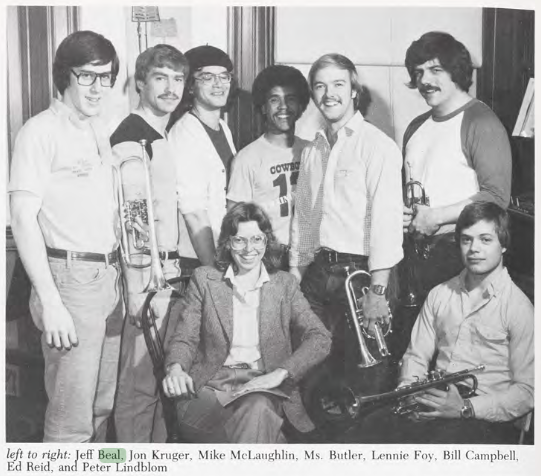
In many ways, those lessons began at Eastman. When Beal arrived in the early 1980s, the trumpet was his primary instrument, but he also played piano. “I wanted to go to a great music school where jazz and classical were taught,” he recalls. “Back then, that was a much shorter list than it is now. Eastman very quickly rose to the top.”
The clincher, however, was a photograph of composer and educator Rayburn Wright ’43E in an Eastman catalog, alongside a mention of Wright’s work in film music. “A little light bulb went off,” Beal says. “I thought, ‘Wow, now that’s interesting.’”
Beal also met his future wife, vocalist Joan ’84E, at Eastman, and, after graduation, the two moved to San Francisco when she accepted a position with the San Francisco Opera. The move west opened new doors for Beal, who began writing music for television and film as well as for corporate clients including Apple and Pixar. In 1991, the couple relocated to Los Angeles.
“To me, the creative part of it isn’t a juggling act; it’s cross-fertilizing. I might learn something in a film score that I want to bring into a concert piece and vice versa.”
Beal’s breakthrough came when he was hired to score Pollock, the 2000 film directed by Ed Harris. Beal was the third composer Harris had tried, and time was short. For Beal, it was an opportunity to bring together the many musical skills he had developed at Eastman—and one that would change the course of his career.
Pollock went on to be nominated for two Academy Awards, winning one. “The film got seen by everybody, and that really put me on the map,” Beal says.
Yet Beal has never viewed film music as a destination so much as another avenue for artistic exploration. He relishes its collaborative nature and the challenge of solving what he calls the “puzzle” of every film. “A score,” he says, “should ultimately become a character of its own.”
Beal doesn’t believe in strict “silos” separating film music, concert music, jazz, and performance. Instead, he sees them as mutually enriching. “To me, the creative part of it isn’t a juggling act; it’s cross-fertilizing,” he says. “I might learn something in a film score that I want to bring into a concert piece and vice versa.”
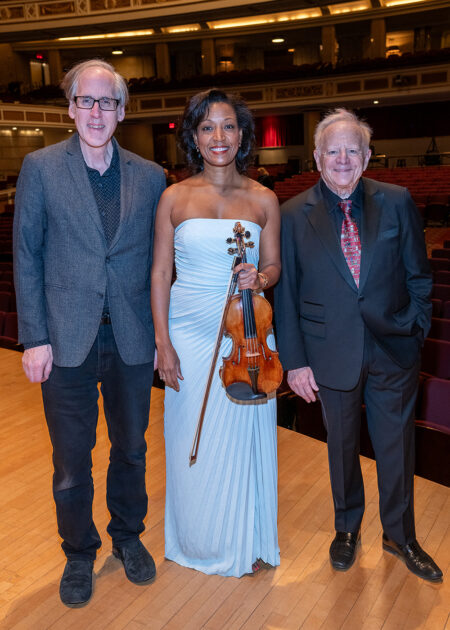
This approach is evident in his latest work. Body in Motion grew from Beal’s connection with Hall-Tompkins, whom he met during Eastman’s centennial celebrations in 2022. He immediately recognized in her what he calls the “Eastman spark”—hard work coupled with passion and joy. Hall-Tompkins performed Beal’s violin concerto with the Eastman Philharmonia, led by guest conductor Leonard Slatkin, at its Rochester premiere in 2025.
Beal has also learned to give creativity room to unfold. He writes early in the morning and has embraced meditation as part of his routine. “I’ve become very comfortable with just sitting and staring and trying to let my unconscious mind do the leading as opposed to my conscious mind,” he says.
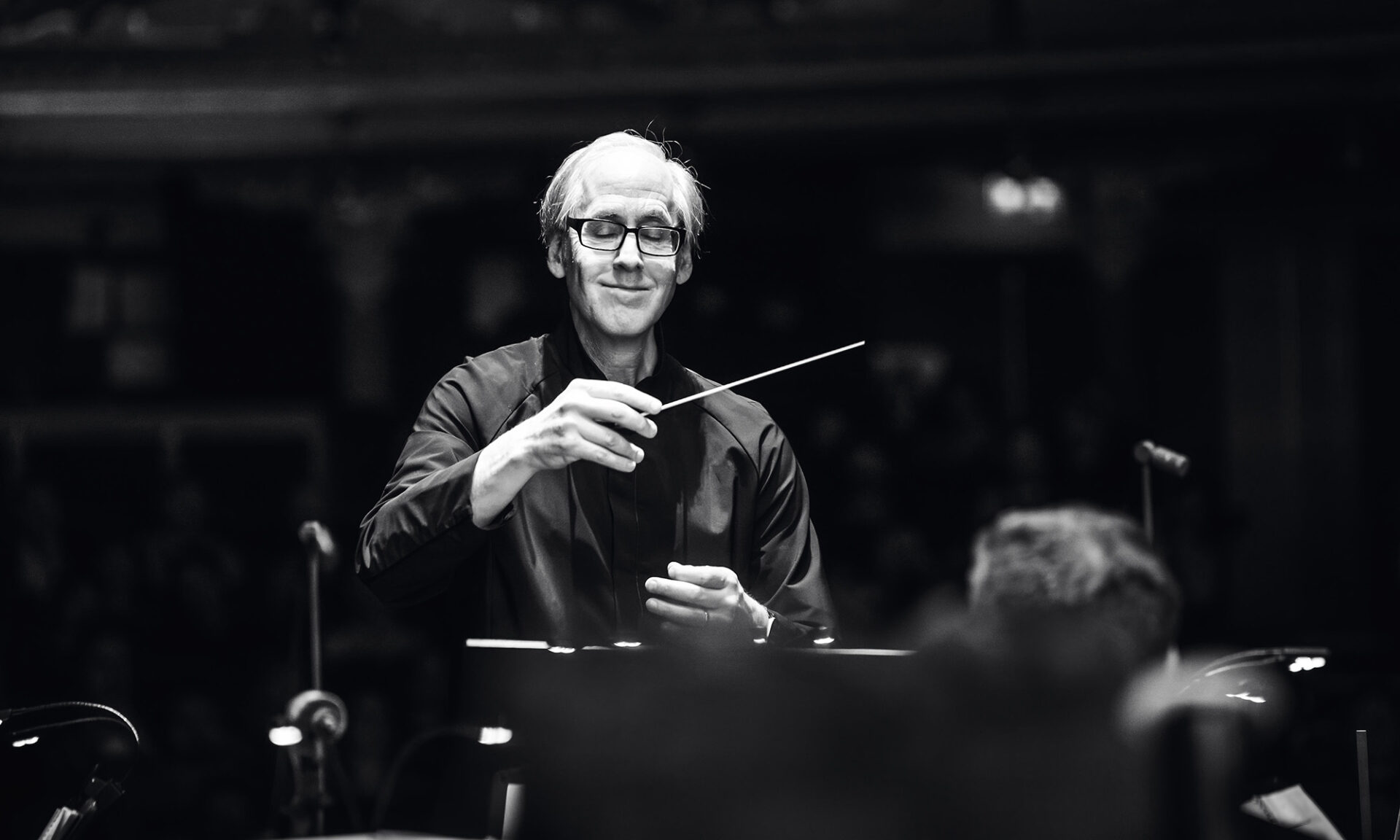
At the same time, Beal remains an active performer and conductor. After the pandemic, that work took on new meaning. “I realized just how special it is,” he explains, “to be in a room with people and perform.”
It’s a lesson that seems to bring his long career full circle. The student who arrived at Eastman eager to explore multiple musical worlds has become an artist who refuses to choose among them. And while awards may mark milestones along the way, Beal says the moments that matter most are subtle and more enduring.
“Having a moment of shared connection artistically, those are the kinds of things that stay with you forever.”
This story appears in the fall 2026 issue of Rochester Review, the magazine of the University of Rochester.