



TMR 24.10: “What Comes Next Is What Remains” [Melvill]
[Note: If you subscribe on Apple Podcasts, please resubscribe to this feed. And this one if you listen on Spotify. The others will be ...
TMR 24.9: “I Hate Thinking about Thinking about Myself Like This” [Melvill]
In the penultimate episode of this season, there’s a lot of talk about Melville’s relationship with Nathaniel Hawthorne as we get ...
TMR 24.8: “Fampiro” [Melvill]
[Note: If you subscribe on Apple Podcasts, please resubscribe to this feed. And this one if you listen on Spotify. The others will be ...
Pilar Adón’s “Of Beasts and Fowls” [Excerpt]
Released today, Of Beasts and Fowls by Pilar Adón & Katie Whittemore is one of the most bewitching books we've released in a while. It's a book about Coro, an artist who has lost her sister and is "out of sorts," who goes for a drive, gets lost, and ends up at a place called Bethany where she ...
>
TMR 24.7: “The White Delirium” [Melvill]
[Note: If you subscribe on Apple Podcasts, please resubscribe to this feed. The other one will be going away in the near future.] Lori Feathers (Across the Pond podcast, Involutions of the Seashell, Interabang Books, and Republic of Consciousness Prize USA) joins Chad and Kaija to talk about ...
>

Three Percent #195: Lori Feathers on Marguerite Young
This week, Lori Feathers joins Chad to talk about "Involutions of the Seashell," a Substack project dedicated to reading and talking about Marguerite Young's Miss MacIntosh, My Darling. They discuss the nature of the Substack, anecdotes about Young, how to get people engaged with such an intimidating ...
>
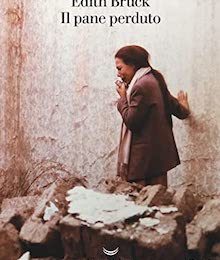
Edith Bruck: Recounting the Holocaust Until She Can’t
Il Pane Perduto by Edith Bruck (La Nave di Teseo, 2021) Review by Jeanne Bonner When Edith Bruck was 12 years old, she was deported to Auschwitz, and was immediately separated from her mother in a brutal scene. In her new memoir, Bruck writes that later, after being yanked away, another prisoner ...
>
The Visual Success of Women in Translation Month [Translation Database]
Women in Translation Month is EVERYWHERE. Whenever I open Twitter (or X?), my feed is wall-to-wall WIT Month. Tweets with pictures of books to read for WIT Month, links to articles about WIT Month and various sub-genre lists of books to read during WIT Month, general celebratory tweets in praise of ...
>
Best Translated Book Award 2021
Over the past year, we (mostly me and Patrick Smith) have been discussing ways to tweak the Best Translated Book Awards to continue to serve the international literature community in a way that can supplement the other major translation awards out there. When the pandemic hit and the world went on ...
>