12 June 09 | Chad W. Post

Going through all my BEA catalogs, Rosa Chacel’s Dream of Reason (University of Nebraska Press, translated from the Spanish by Carol Maier) was one of the books that really caught my eye. And not just because it’s long (like 776-pages long), or because the author is compared to Joyce, Proust, and Woolf (isn’t every modernist writer compared to one of those three or Beckett and Kafka?). The Javier Marias quote on the back is definitely attention grabbing: “Rosa Chacel’s La sinrazon is one of the best, most original, and most daring novels of twentieth-century Spanish literature. . . . It is time that her importance in the history of world literature be recognized.” And based on the bits I’ve read from the galley that arrived this morning, this seems to be the case.

I’m not familiar with Rosa Chacel’s works, although Nebraska has published a couple of her other books—The Maravillas District and Memoirs of Leticia Valle—in the past. Her life sounds pretty interesting as well, but it’s her description of this book—and it’s “embryo” Estacion. Ida y vuelta—that really peaked my interest. (That and the fact that it’s pretty rare to come across a massive modernist text by a Spanish woman writer.)

From the intro she wrote for the third Spanish edition:

I did not, all those years ago, try to create a character who lacked direction or moral consistency—and who might seem quite modern today—I only tried to achieve the mental discourse of a man who sees himself, analyzes himself, and follows himself in his wandering—the subject’s sole characteristic, the urge to wander—through three phases, Estacion. Ida y vuelta.

An ambition or longing for form, then, became my supreme aesthetic motive, also, not separate from form, but also in the enumeration of appurtenances or conditions—also craft, the goal of doing something and doing it well, without taking into account what, at that time, was considered well done: to do this, confident that the work’s veracity, which has nothing to do with its verisimilitude, was solid, a condition that is usually—or was usually—demanded of the novel. Because it was a question of creating a novel, of following a man—not following him as an observer capable of undertaking a story; it had to be the man’s mind itself that followed after him, keeping at just the right distance for being able to judge him, not annexing him but joining him, that is, becoming imbued with the nuances of each phase.

And here are a couple intriguing quotes from the book itself. First, the opening from chapter 1:

A few words, seemingly quite trivial when spoken, over time have become identified with one of the climactic moments in my life. What I’m thinking about occurred during a period so frivolous I’m embarrassed to describe it; nevertheless, I must describe it.

That whole period is very distant now, but I remember it well, well enough to tell about it reliably, which is not at all unusual. People often remember past events in detail; the hard thing is to recall what you were like then while you’re recalling now, to summon, from experience, knowledge, and disillusion, an exact remembrance of not knowing, of innocence. That’s very difficult and that’s what I want to achieve, especially the recollection of innocence, because ignorance actually increases with knowledge—experience and disillusion make it much easier for us to ponder the extent of our ignorance. Innocence is not extensive, though: innocence either is or is not.

And now, skipping to the opening of Part Two:

Cross out, cross out, that was the first thing I thought of when I unearthed these notebooks after six years. Quite cunning, those two words: to cross out you have to pick up your pen again.

I’m rereading everything I wrote, and it seems awkward, inefficient, and positively useless for what I wanted: it clarifies nothing. So if it’s useless, why not toss it into the fireplace? I don’t know why, and I can’t find any reason not to do that; but the thing is, neither do I find enough momentum in myself to do it. I can think I should burn it, but I know my hand won’t move in the right direction; on the contrary, no sooner did the words “cross out” come craftily into my head than my fountain pen began to secrete its spidery web onto the page.

Dream of Reason won’t be available until October, but you can pre-order copies from The Booksmith by clicking here.


Comments are disabled for this article.
....
El arte de la resurrección (The Art of Resurrection)
El arte de la resurrección (The Art of Resurrection) by Hernán Rivera Letelier
Reviewed by Jeremy Osner

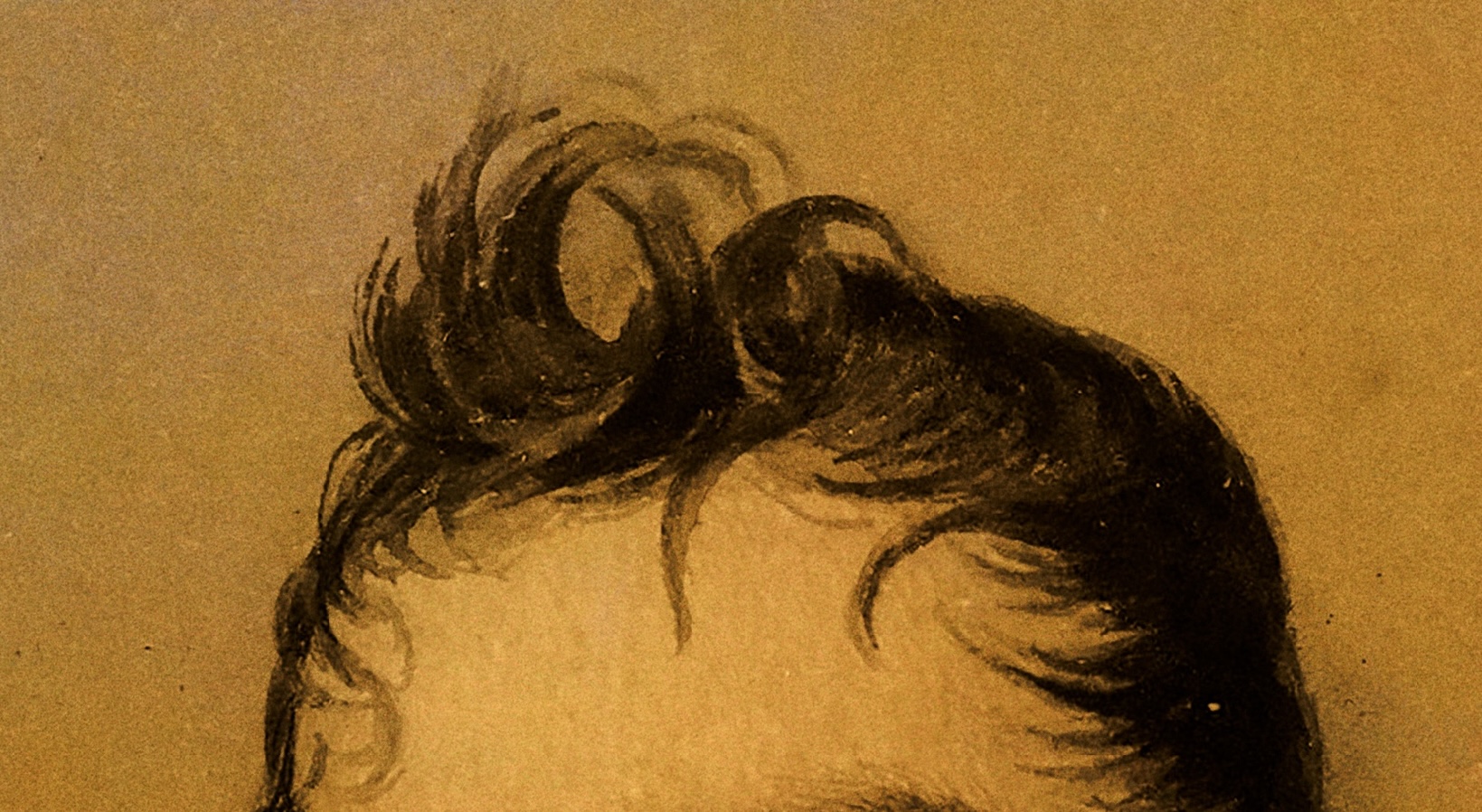
“The small stone plaza was floating in the midday heat. The Christ of Elqui, kneeling on the ground, his gaze thrown back on high, the part in his hair dark under the Atacaman sun—he felt himself falling into an ecstasy.. . .

Read More >

There Once Lived a Girl Who Seduced Her Sister's Husband, and He Hanged Himself: Love Stories
There Once Lived a Girl Who Seduced Her Sister's Husband, and He Hanged Himself: Love Stories by Ludmilla Petrushevskaya
Reviewed by Brendan Riley

This slender, uncanny volume—the second, best-selling collection of stories by Russian author Ludmilla Petrushevskaya to appear in the U.S.—has already received considerable, well-deserved praise from many critics and high profile publications. Its seventeen short tales, averaging ten pages each, are. . .

Read More >

Basti
Basti by Intizar Husain
Reviewed by Rachael Daum

The Urdu word basti refers to any space, intimate to worldly, and is often translated as “common place” or “a gathering place.” This book by Intizar Husain, who is widely regarded as one of the most important living Pakistani writers,. . .

Read More >

The Whispering Muse
The Whispering Muse by Sjón
Reviewed by Vincent Francone

The Whispering Muse, one of three books by Icelandic writer Sjón just published in North America, is nothing if not inventive. Stories within stories, shifting narration, leaps in time, and characters who transform from men to birds and back again—you’ve. . .

Read More >

Mundo Cruel by Luis Negrón
Mundo Cruel by Luis Negrón by Luis Negrón
Reviewed by Camila Santos

Luis Negrón’s debut collection Mundo Cruel is a journey through Puerto Rico’s gay world. Published in 2010, the book is already in its fifth Spanish edition. Here in the U.S., the collection has been published by Seven Stories Press and. . .

Read More >

Selected Translations by W. S. Merwin
Selected Translations by W. S. Merwin by Various
Reviewed by Grant Barber

“South”

To have watched from one of your patios
the ancient stars
from the bank of shadow to have watched
the scattered lights
my ignorance has learned no names for
nor their places in constellations
to have heard the ring of. . .

Read More >

LoveStar
LoveStar by Andri Snær Magnason
Reviewed by Larissa Kyzer

When Icelandic author Andri Snær Magnason first published LoveStar, his darkly comic parable of corporate power and media influence run amok, the world was in a very different place. (This was back before both Facebook and Twitter, if you can. . .

Read More >

Hi, This Is Conchita and Other Stories
Hi, This Is Conchita and Other Stories by Santiago Roncagliolo
Reviewed by Tiffany Nichols

When starting Hi, This Is Conchita and Other Stories, Santiago Roncagliolo’s second work to be translated into English, I was expecting Roncagliolo to explore the line between evil and religion that was front and center in Red April. Admittedly, I. . .

Read More >

City of Angels, or, The Overcoat of Dr. Freud
City of Angels, or, The Overcoat of Dr. Freud by Christa Wolf
Reviewed by Josh Billings

Christa Wolf’s newly-translated City of Angels is a novel of atonement, and in this way the work of art that it resembles most to me is not another book, but the 2003 Sophia Coppola film Lost in Translation. Like that. . .

Read More >

Where Tigers Are at Home
Where Tigers Are at Home by Jean-Marie Blas de Roblès
Reviewed by Grant Barber

French author—philosopher, poet, novelist—de Roblès writes something approaching the Great (Latin) American Novel, about Brazilian characters, one of whom is steeped in the life of the seventeenth century polymath (but almost always erroneous) Jesuit Athanasius Kircher. Eleazard von Wogau, a. . .

Read More >

The next few events from our Translation Events Calendar: See More Events >