3 March 10 | Chad W. Post

While I’m tanning doing journalism at the Abu Dhabi International Book Fair, I thought it would be interesting to totally overload everyone on Macedonio Fernandez. Museum of Eterna’s Novel ranks right up there as one of the books that I’m most proud to be associated with. It’s unique, strange, “difficult,” endlessly playful, important, influential, conceptual, frustrating, enjoyable, and one of the most devoted love stories ever written. To build up to the March 11th event for Macedonio (“The Greatest Event Since It and the World Began”), which will take place at the Americas Society and feature Edith Grossman, Margaret Schwartz, and Todd Garth, all this week we’re going to be serializing Margaret’s translator’s introduction. And on Monday we’ll run a special interview one of our interns did with her about the translation. Here are links to Part I and Part II of the intro. Enjoy!

“I was born a porteño, and in a very 1874 sort of year. Shortly thereafter (though not at first) I began to be cited by a certain Jorge Luis Borges, and with such unabashed commendation, that, thanks to the risks incurred by his vehemence, I became the author of his best work.”

       —Macedonio Fernández,
       in the Argentine literary magazine Sur

As Marcelo Ballvé recently observed, Macedonio invented Borges as much as Borges invented Macedonio. The difference is that it is more likely that a reader will have actually read Borges than Macedonio, whose prose is difficult and does not fit comfortably within any literary genre, and who has been much less widely translated. Like most people, I also came to Macedonio through Borges, in the wistful question that ends his prose poem “The Witness:” “What will die with me when I die? What pathetic or fragile form will the world lose? The voice of Macedonio Fernández, the image of a roan hoarse on the vacant lot at Serrano and Charcas, a bar of sulphur in the drawer of a mahogany desk?” Macedonio here is a voice—or the memory of a voice—that Borges alone possesses, and whose trace will disappear with him. The unusual name, and its casual inclusion in a list of vaguely eccentric, or perhaps anachronistic objects, catches the attention. It sets up a notion of Macedonio’s voice as talisman, momento mori.

There is no easy way, then, to place Borges in an introduction to Macedonio’s work that does not threaten to overwhelm or re-author the man he nevertheless called his mentor. Borges was a generation younger, and he “inherited” Macedonio’s friendship from his father, who had attended law school with Macedonio. When the Borges family returned from Europe (where their stay had been extended by the outbreak of World War I), Macedonio was recently widowed, and his life was in airless limbo. He lived in a series of flophouses, having given up his law practice and sent his children to live with his mother and sister-in-law.

Before his wife died he was a regular, if somewhat eccentric, bourgeois man with occasional literary pretentions and an interest in philosophy, psychology, and music. A photograph from this time in his life shows a small man in a bowler hat with a severe, resigned expression, kneeling with his arms around two small children whose faces are blurred by motion. Now, in his grief but also in his freedom, he divested himself of all bourgeois responsibilities and dedicated himself to metaphysics. As a young man he corresponded with William James and read Schopenhauer and Kant—now he would begin his engagement with the mystery of consciousness in earnest.

Borges wrote that in those days he felt “Macedonio is metaphysics, he is literature.” Nevertheless, the Macedonio of Borges’s eulogy is not so much a man of letters as of conversation. His jokes, his observations, his anecdotes, and his cordial, almost quaint manner—this was his brilliance, not the writing he left behind. In Borges’s construction, Macedonio was the Socrates to his Plato, the oral teacher whose words the disciple transcribed and transformed.

He was a creole Socrates, a New World Socrates, a founder of a new Argentine literature. Borges had spent his adolescence in Europe, and felt ill at ease, perhaps, in his homeland, which seemed backwards by comparison with the cafés of Madrid and Geneva. Macedonio, he writes, seemed to command a uniquely Argentine point of view on “certain eternal things.” The humbleness of his surroundings, his fraternization with the prostitutes and confidence men with whom he shared his lodgings, and his age all contributed to this romantic image.

In his classic book of Buenos Aires essays, The Man Who Is Alone and Waits (El hombre que está solo y espera), Raúl Scalabrini Ortíz writes: “Buenos Aires’s first metaphysician and its only authentic philosopher is Macedonio Fernández.” As the creole Socrates, then, Macedonio re-founded metaphysics and philosophy in an Argentine context. He’s an archetype, a kind of distillation of what it is to think like an Argentine, of the particular poetics and mournful solitude of the South. That Macedonio is the only authentic philosopher of Buenos Aires implies that many others may pretend to the title. His reported disdain for publication and fame underpin that authenticity and add to his mystique. An authentic porteño philosopher discusses his ideas over a cortado in one of the city’s cafés or bars, or over a mate in his home, at the kitchen table, on the porch of a country estancia while the eucalyptus trees rustle in the hot pampas wind. He disdains the pomposity of writing for publication, for he writes, as Borges once said of himself, for himself and his friends—as an afterthought to these cordial, lazy, endless hours of conversation.

In Argentina, Macedonio’s people prefer to trade stories about his eccentricities rather than read his difficult books: how he gave his guitar away to a busboy who was passing on the street, how he founded an anarchist colony in Paraguay but gave up after one night of mosquitoes, how he slept in his clothes and fed sweets to the ants in his boarding house rooms. Very few of these stories are biographically true, or at least they cannot be verified—though what is known does support the image of an eccentric and a recluse. As his son and literary executor, Adolfo de Obieta once wrote, Macedonio’s life is one of those “about which more will always be unknown than known,” a quality that lends itself to literary gossip.

Borges wrote that “writing was no trouble for Macedonio Fernández. He lived (more than any other person I have ever known) to think. Every day he abandoned himself to the vicissitudes and surprises of thoughts as a swimmer is borne along by the current of a great river.” The writing may have been easy, but reading Macedonio is often very challenging. Perhaps because they trace the errant line of his thoughts, his jokes and ideas and images are all presented at once, in rambling sentences with loose syntax and utterly chaotic diction. His ideas are complex, and they are stated in a complicated, ironic, and often contradictory way. He is consciously trying to make the reader uncomfortable and confused, and he was trying to publish at a time when postmodern literature was not yet a genre. As a visionary, his lot was to remain unrecognized in his time, except by a handful of avant-gardists who shared his vision. It may have suited him best—a man with more than his fair share of anxiety who became increasingly reclusive with age—to cultivate his mystique and work on his manuscripts in solitude.


Comments are disabled for this article.
....
El arte de la resurrección (The Art of Resurrection)
El arte de la resurrección (The Art of Resurrection) by Hernán Rivera Letelier
Reviewed by Jeremy Osner

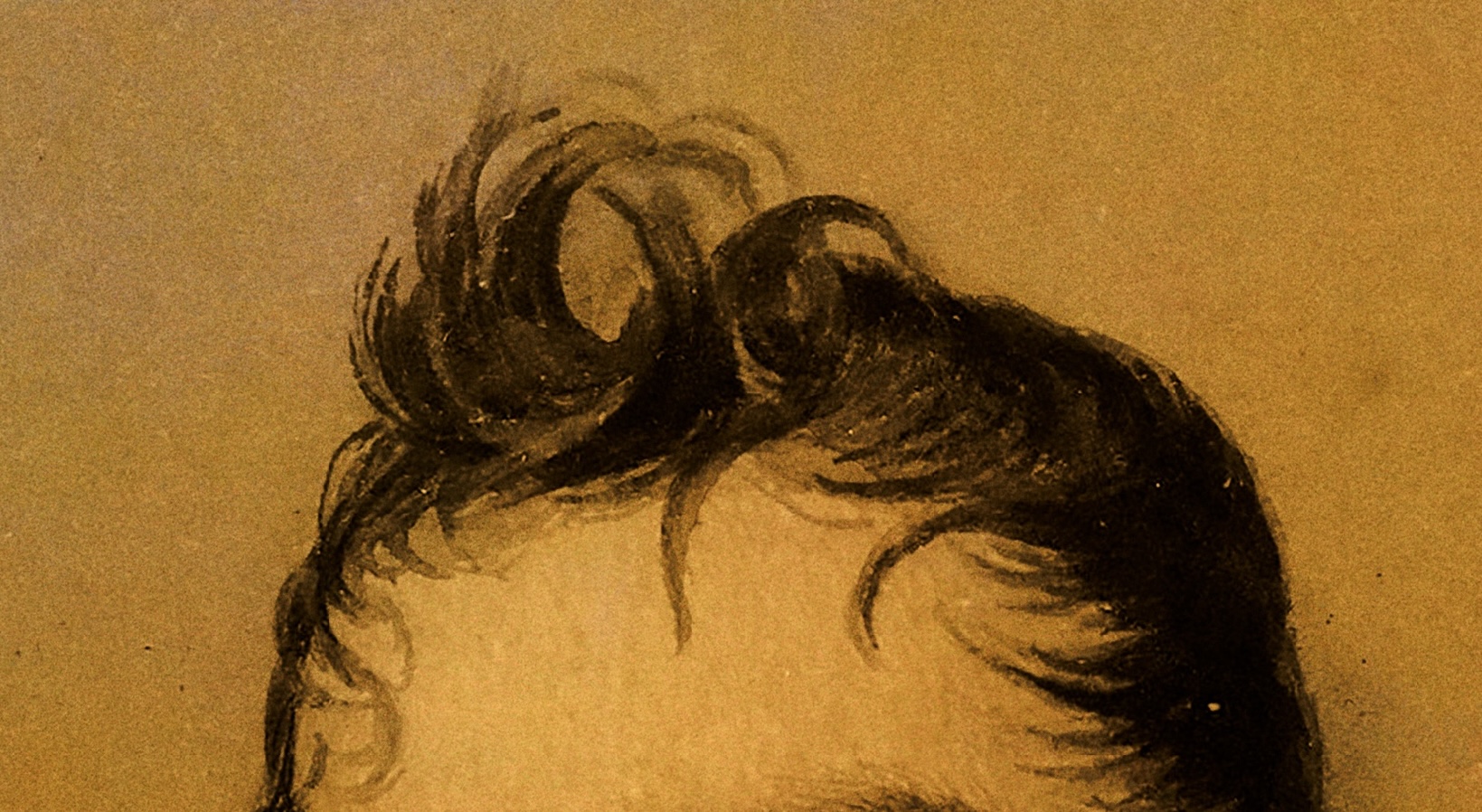
“The small stone plaza was floating in the midday heat. The Christ of Elqui, kneeling on the ground, his gaze thrown back on high, the part in his hair dark under the Atacaman sun—he felt himself falling into an ecstasy.. . .

Read More >

There Once Lived a Girl Who Seduced Her Sister's Husband, and He Hanged Himself: Love Stories
There Once Lived a Girl Who Seduced Her Sister's Husband, and He Hanged Himself: Love Stories by Ludmilla Petrushevskaya
Reviewed by Brendan Riley

This slender, uncanny volume—the second, best-selling collection of stories by Russian author Ludmilla Petrushevskaya to appear in the U.S.—has already received considerable, well-deserved praise from many critics and high profile publications. Its seventeen short tales, averaging ten pages each, are. . .

Read More >

Basti
Basti by Intizar Husain
Reviewed by Rachael Daum

The Urdu word basti refers to any space, intimate to worldly, and is often translated as “common place” or “a gathering place.” This book by Intizar Husain, who is widely regarded as one of the most important living Pakistani writers,. . .

Read More >

The Whispering Muse
The Whispering Muse by Sjón
Reviewed by Vincent Francone

The Whispering Muse, one of three books by Icelandic writer Sjón just published in North America, is nothing if not inventive. Stories within stories, shifting narration, leaps in time, and characters who transform from men to birds and back again—you’ve. . .

Read More >

Mundo Cruel by Luis Negrón
Mundo Cruel by Luis Negrón by Luis Negrón
Reviewed by Camila Santos

Luis Negrón’s debut collection Mundo Cruel is a journey through Puerto Rico’s gay world. Published in 2010, the book is already in its fifth Spanish edition. Here in the U.S., the collection has been published by Seven Stories Press and. . .

Read More >

Selected Translations by W. S. Merwin
Selected Translations by W. S. Merwin by Various
Reviewed by Grant Barber

“South”

To have watched from one of your patios
the ancient stars
from the bank of shadow to have watched
the scattered lights
my ignorance has learned no names for
nor their places in constellations
to have heard the ring of. . .

Read More >

LoveStar
LoveStar by Andri Snær Magnason
Reviewed by Larissa Kyzer

When Icelandic author Andri Snær Magnason first published LoveStar, his darkly comic parable of corporate power and media influence run amok, the world was in a very different place. (This was back before both Facebook and Twitter, if you can. . .

Read More >

Hi, This Is Conchita and Other Stories
Hi, This Is Conchita and Other Stories by Santiago Roncagliolo
Reviewed by Tiffany Nichols

When starting Hi, This Is Conchita and Other Stories, Santiago Roncagliolo’s second work to be translated into English, I was expecting Roncagliolo to explore the line between evil and religion that was front and center in Red April. Admittedly, I. . .

Read More >

City of Angels, or, The Overcoat of Dr. Freud
City of Angels, or, The Overcoat of Dr. Freud by Christa Wolf
Reviewed by Josh Billings

Christa Wolf’s newly-translated City of Angels is a novel of atonement, and in this way the work of art that it resembles most to me is not another book, but the 2003 Sophia Coppola film Lost in Translation. Like that. . .

Read More >

Where Tigers Are at Home
Where Tigers Are at Home by Jean-Marie Blas de Roblès
Reviewed by Grant Barber

French author—philosopher, poet, novelist—de Roblès writes something approaching the Great (Latin) American Novel, about Brazilian characters, one of whom is steeped in the life of the seventeenth century polymath (but almost always erroneous) Jesuit Athanasius Kircher. Eleazard von Wogau, a. . .

Read More >

The next few events from our Translation Events Calendar: See More Events >