23 March 11 | Chad W. Post

Similar to years past, we’re going to be featuring each of the 25 titles on the BTBA Fiction Longlist over the next month plus, but in contrast to previous editions, this year we’re going to try an experiment and frame all write-ups as “why this book should win.” Some of these entries will be absurd, some more serious, some very funny, a lot written by people who normally don’t contribute to Three Percent. Overall, the point is to have some fun and give you a bunch of reasons as to why you should read at least a few of the BTBA titles.

Click here for all past and future posts.

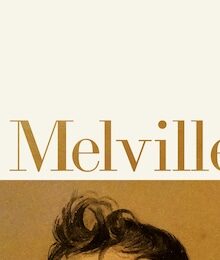
Hocus Bogus by Romain Gary (writing at Émile Ajar), translated by David Bellos

Language: French
Country: France
Publisher: Yale University Press
Pages: 194

Why This Book Should Win: By far the most intriguing backstory of any of the books on the longlist; David Bellos deserves a victory, since the award didn’t exist when he translated Life; Gary knew seven languages (French, Russian, Polish, Yiddish, German, English, and Bulgarian); Life Before Us (one of the other books Gary wrote as Ajar—explanation forthcoming) is the highest-selling French novel of the last century.

This year’s BTBA fiction longlist is loaded with interesting characters and backstories: Cesar Aira’s poetics of “always moving forwards” and never really editing his books, Albert Cossery’s adherence to a life of laziness, and Robert Walser’s experiments in microwriting. But nothing comes close to the hoax of a hoax found in Émile Ajar’s Romain Gary’s Hocus Bogus.

David Bellos’s introduction does a brillant job of setting this all up and providing a context for this novel/faux autobiography, but here’s the basic outline:

In the 1950s and 60s, Romain Gary was one of France’s most popular writers. He’d won a number of prizes, including the Goncourt for Les Racines du ciel (The Roots of Heaven), his books were best-sellers, had been translated into English, made into movies, etc., etc. By the 1970s he had achieved the improbably goal of being a rich and famous writer. But according to Bellos’s intro, he “felt board with being ‘Romain Gary.’”

In 1972 he began drafting a new novel vaguely indebted to Nikolai Gogol’s Diary of a Madman about a lonely statistician living with a pet python in a Paris apartment. As the language of this first-person narration reflected the unbalanced and tortured mind that was its fictional source, it occurred to Gary to allow himself even greater liberties as a writer by adopting another name. After all, “Romain Gary” wasn’t his real name anyway. [Ed. Note: He was originally born as Roman Kacew.] The manuscript, La Solitude du python à Paris, was eventually handed to a Paris publisher under the false name Émile Ajar, in an envelope that made it seem it had come from Brazil.

So, the book gets published under the title Câlin (Cuddles) and is short-listed for the Renaudot prize, which is awarded to a first novel by a new writer. Well. Gary’s not entirely comfortable with screwing a new writer out of the career boost that can come from winning this, so he withdrew the book from consideration.

The book sold widely nonetheless; journalists and editors wanted to meet the mystery author. Gary contracted his cousin’s son, Paul Pavlowitch, to act the part, with strict constraints on what he should and should not say. He also got down to using his new identity to write what would become his most successful novel by far.

Few years later La Vie devant soi (Life Before Us) comes out and, as mentioned above, goes on to be the highest-selling French novel of the last century. Readers go crazy, critics heap praise, the book wins the Goncourt. Which is problematic, since one of the rules is that no author can win the Goncourt twice. Everyone starts searching for Ajar throughout France. (I envision this as a nationwide Pynchonian treasure hunt.)

At this point, one “half-face photograph” of Paul Pavlowitch playing “Émile Ajar” has appeared in the press. A reporter who happened to go to school with Pavlowitch (when Pavlowitch went by the nickname “Alex,” which I mention only because the multiplicity of names is a running bit in Hocus Bogus) recognizes him and tracks him down. Then shit hits fan:

Within days, the family relationship between Pavlowitch and Romain Gary was revealed in the press. Gary was besieged by journalists demanding to know wheter he had in fact written these works of genius that his younger relative had signed under a false name. One fib leads to another . . . and Gary lied outright, in speech and in writing, on radio and on television. He had cornered himself, and felt that he had to find a way of maintaining the deception forever or else suffer ignominy and dishonor.

And what better way to clear his name than to have Ajar write a book about his life as the pseudonym for Paul Pavlowitch.

Written at high speed and completed in January 1976, Hocus Bogus (Pseudo in French) is one of the most alarmingly effective mystifications in all literature. It simulates schizophrenia so as to delude its reader into believing her or she has really understood what the novels of Émile Ajar are about. It must have been quite funny when read in its original context, that is, without knowing that it was written by Romain Gary, but also quite sad, for it bares the suffering soul of a man in great mental and moral distress. Yet it is absolutely hilarious when read with knowledge of its true authorship and intention. Almost every sentence of the book is a double take.

And it is a truly brilliant novel. It is fairly sad—Émile/Paul, who refers to himself by dozens of names, a sort of running gag on pseudonyms—since it revolves around Paul going in and out of the mental hospital, feeling besieged by journalists and the like, trying to deal with his “Uncle Bogey” (an obvious stand-in for Gary), trying to avoid talking to anyone, hallucinating that he’s a python (and hallucinating pythons), and raising a ruckus wherever he goes. So, yes, on one level it’s a bit sad . . . but the writing is brilliantly entertaining, and knowing the hoax within a hoax, it’s pretty damn funny. From the very beginning when he’s talking about getting out of Dr. Christianssen’s psychiatric clinic in Copenhagen:

I managed to filch some of the cards from my medical file to see if they were any use for literature or recuperation.

Simulation taken to such an extreme and pursued without interruption or slip over such a long period of time clearly constitutes obsessive-compulsive behavior and betokens an authentic personality disorder.

Sure, I know that—but everyone else goes in for simulation to an amazing extent. I know a guy from North Africa who’s been behaving like a garbage collector for forty years and a ticket inspector who performs the same action three thousand times a day, because if you don’t fake it, they call you asocial, or not integrated, or perturbed. I could go further and assert that life itself is just a simulation in a hocus bogus world, but that would be seen as lacking in maturity on my part.

Subject is an orphan who since childhood has nursed hatred for a distant relative; typical of father fixation.

Uncle Bogey is a bastard, but that doesn’t have to mean he’s my dad. I never said he was, I just hoped so at various times, out of despair. After the appearance of my book Life Before Us, it was my detectives, not I, who insinuated he was my only begetter.

_Subject makes a complete muddle of his shoelaces when he tried to undo them. Then he tears or cuts them off to get his feet out. Transfer to shoelaces of psychological knots that he only manages to intensify when he tries to sort them out.

The part about the laces is true, but the rest is crap.

There are so many levels of fun and games going on here . . . Hocus Bogus deserves to win the BTBA simply because it’s a stunning monument to fakery, and even includes “The Life and Death of Émile Ajar,” in which Gary finally admitted to the whole scam . . .


Comments are disabled for this article.
....
And the Hippies Came (Llegaron los hippies)
And the Hippies Came (Llegaron los hippies) by Manuel Abreu Adorno
Reviewed by Vincent Francone

Kids these days. They think they’ve invented everything. The McOndo writers and Crack Generation, who so proudly buck the Magic Realist tendencies of García Márquez, who seek to find a place within Latin American letters sans spirits . . .. . .

Read More >

Traveler of the Century
Traveler of the Century by Andrés Neuman
Reviewed by Chad W. Post

When I was about two-thirds of the way through Neuman’s very ambitious, very engrossing novel, Bromance Will Evans asked me what I thought the purpose the rapist had in this book. Not who the rapist was—something that’s held in suspense. . .

Read More >

Anatomy of a Night
Anatomy of a Night by Anna Kim
Reviewed by Jennifer Marquart

“At night Amarâq is coated with a darkness as viscous as unmixed colors, neither the fjord nor the mountains, valleys, lakes, or the river exist, there is only a black mass, a void that spreads across the landscape sporadically, pressing. . .

Read More >

Les aigles puent
Les aigles puent by Lutz Bassman
Reviewed by John Thomas Mahany

If you’ve been following any of the recent Antoine Volodine talk going around Three Percent—both on the blog or on the podcasts—and have heard his fans wax obsessive over all his alter author-egos, you’re probably starting to feel some Volodine. . .

Read More >

Red Spectres
Red Spectres by V. Bryusov/M. Bulgakov/S. Krzhizhanovsky et al.
Reviewed by Aleksandra Fazlipour

Muireann Maguire’s Red Spectres is a stunning and engaging collection of eleven Russian gothic tales written by various authors during the early Soviet Era, all but two stories of which are featured in English for the first time ever. These. . .

Read More >

El arte de la resurrección (The Art of Resurrection)
El arte de la resurrección (The Art of Resurrection) by Hernán Rivera Letelier
Reviewed by Jeremy Osner

“The small stone plaza was floating in the midday heat. The Christ of Elqui, kneeling on the ground, his gaze thrown back on high, the part in his hair dark under the Atacaman sun—he felt himself falling into an ecstasy.. . .

Read More >

There Once Lived a Girl Who Seduced Her Sister's Husband, and He Hanged Himself: Love Stories
There Once Lived a Girl Who Seduced Her Sister's Husband, and He Hanged Himself: Love Stories by Ludmilla Petrushevskaya
Reviewed by Brendan Riley

This slender, uncanny volume—the second, best-selling collection of stories by Russian author Ludmilla Petrushevskaya to appear in the U.S.—has already received considerable, well-deserved praise from many critics and high profile publications. Its seventeen short tales, averaging ten pages each, are. . .

Read More >

Basti
Basti by Intizar Husain
Reviewed by Rachael Daum

The Urdu word basti refers to any space, intimate to worldly, and is often translated as “common place” or “a gathering place.” This book by Intizar Husain, who is widely regarded as one of the most important living Pakistani writers,. . .

Read More >

The Whispering Muse
The Whispering Muse by Sjón
Reviewed by Vincent Francone

The Whispering Muse, one of three books by Icelandic writer Sjón just published in North America, is nothing if not inventive. Stories within stories, shifting narration, leaps in time, and characters who transform from men to birds and back again—you’ve. . .

Read More >

Mundo Cruel by Luis Negrón
Mundo Cruel by Luis Negrón by Luis Negrón
Reviewed by Camila Santos

Luis Negrón’s debut collection Mundo Cruel is a journey through Puerto Rico’s gay world. Published in 2010, the book is already in its fifth Spanish edition. Here in the U.S., the collection has been published by Seven Stories Press and. . .

Read More >

The next few events from our Translation Events Calendar: See More Events >