
11 October 12 | Chad W. Post

Just received this email from New Directions, and rather than summarize and all that, I’m just going to let it stand alone. (Ironic that this comes out on the day of the Nobel Prize announcement . . . ). So here’s a letter from ND publisher Barbara Epler:

October 11, 2012

Late last week, we learned that famed poet, publisher, bookstore owner, artist, and activist Lawrence Ferlinghetti had been awarded the Janus Pannonius International Poetry Prize from the Hungarian PEN Club, a chapter of the larger PEN organization. Established this year, the prize carries a 50,000 Euro financial award.

After doing some research on the Pannonius Prize, Ferlinghetti discovered that a sizeable portion of the prize money had been provided by the Hungarian government, which has been widely accused of officially and unofficially stifling free speech. In light of this news, Ferlinghetti decided to decline the award, and sent this message to the President of the Hungarian PEN Club:

Dear Geza Szocs,

After careful research into the Pannonius Prize and its sponsors, including the present Hungarian government, I have come to the following conclusions: Since the Prize is partially funded by the present Hungarian government, and since the policies of this right-wing regime tend toward authoritarian rule and the consequent curtailing of freedom of expression and civil liberties, I find it impossible for me to accept the Prize in the United States. Thus I must refuse the Prize in its present terms.

However, assuming the total devotion of the Hungarian PEN Club and yourself to freedom of speech and social justice, I propose that the Prize money be used to set up a fund to be administered by the Hungarian PEN Club, said fund to be devoted solely to the publication of Hungarian authors whose writings support total freedom of speech, civil rights, and social justice. These are the only terms under which I can accept the Pannonius Prize.

In defense of individual freedom and democratic institutions, I am faithfully yours,

Lawrence Ferlinghetti

At that point Mr. Szocs offered to exclude the Hungarian government’s contribution to the prize money and to begin negotiations surrounding the proposed fund, but Ferlinghetti is steadfast in his views, saying:

I hereby refuse the Prize in all its forms. There is no possibility of my accepting the prize in a ceremony in the United States or elsewhere. I am sorry it has come to this, and I am grateful to those in Hungary who may have had the purest motives in offering me the Prize.

Lawrence Ferlinghetti has been a bastion of the New Directions list for over sixty years, and we are proud of his decision and stand by him in his fight for free speech.

Barbara Epler
President, New Directions


Comments are disabled for this article.
....
El arte de la resurrección (The Art of Resurrection)
El arte de la resurrección (The Art of Resurrection) by Hernán Rivera Letelier
Reviewed by Jeremy Osner

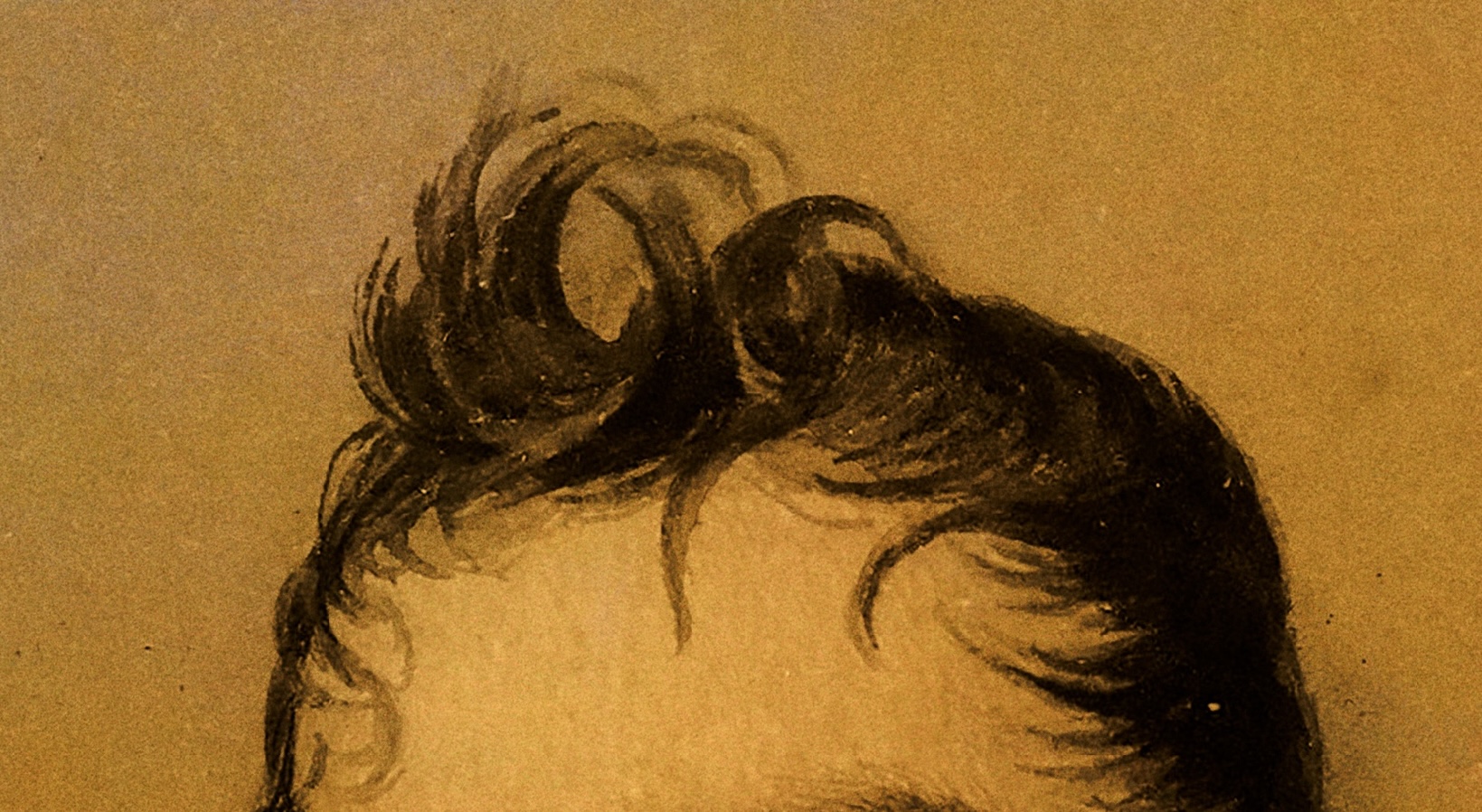
“The small stone plaza was floating in the midday heat. The Christ of Elqui, kneeling on the ground, his gaze thrown back on high, the part in his hair dark under the Atacaman sun—he felt himself falling into an ecstasy.. . .

Read More >

There Once Lived a Girl Who Seduced Her Sister's Husband, and He Hanged Himself: Love Stories
There Once Lived a Girl Who Seduced Her Sister's Husband, and He Hanged Himself: Love Stories by Ludmilla Petrushevskaya
Reviewed by Brendan Riley

This slender, uncanny volume—the second, best-selling collection of stories by Russian author Ludmilla Petrushevskaya to appear in the U.S.—has already received considerable, well-deserved praise from many critics and high profile publications. Its seventeen short tales, averaging ten pages each, are. . .

Read More >

Basti
Basti by Intizar Husain
Reviewed by Rachael Daum

The Urdu word basti refers to any space, intimate to worldly, and is often translated as “common place” or “a gathering place.” This book by Intizar Husain, who is widely regarded as one of the most important living Pakistani writers,. . .

Read More >

The Whispering Muse
The Whispering Muse by Sjón
Reviewed by Vincent Francone

The Whispering Muse, one of three books by Icelandic writer Sjón just published in North America, is nothing if not inventive. Stories within stories, shifting narration, leaps in time, and characters who transform from men to birds and back again—you’ve. . .

Read More >

Mundo Cruel by Luis Negrón
Mundo Cruel by Luis Negrón by Luis Negrón
Reviewed by Camila Santos

Luis Negrón’s debut collection Mundo Cruel is a journey through Puerto Rico’s gay world. Published in 2010, the book is already in its fifth Spanish edition. Here in the U.S., the collection has been published by Seven Stories Press and. . .

Read More >

Selected Translations by W. S. Merwin
Selected Translations by W. S. Merwin by Various
Reviewed by Grant Barber

“South”

To have watched from one of your patios
the ancient stars
from the bank of shadow to have watched
the scattered lights
my ignorance has learned no names for
nor their places in constellations
to have heard the ring of. . .

Read More >

LoveStar
LoveStar by Andri Snær Magnason
Reviewed by Larissa Kyzer

When Icelandic author Andri Snær Magnason first published LoveStar, his darkly comic parable of corporate power and media influence run amok, the world was in a very different place. (This was back before both Facebook and Twitter, if you can. . .

Read More >

Hi, This Is Conchita and Other Stories
Hi, This Is Conchita and Other Stories by Santiago Roncagliolo
Reviewed by Tiffany Nichols

When starting Hi, This Is Conchita and Other Stories, Santiago Roncagliolo’s second work to be translated into English, I was expecting Roncagliolo to explore the line between evil and religion that was front and center in Red April. Admittedly, I. . .

Read More >

City of Angels, or, The Overcoat of Dr. Freud
City of Angels, or, The Overcoat of Dr. Freud by Christa Wolf
Reviewed by Josh Billings

Christa Wolf’s newly-translated City of Angels is a novel of atonement, and in this way the work of art that it resembles most to me is not another book, but the 2003 Sophia Coppola film Lost in Translation. Like that. . .

Read More >

Where Tigers Are at Home
Where Tigers Are at Home by Jean-Marie Blas de Roblès
Reviewed by Grant Barber

French author—philosopher, poet, novelist—de Roblès writes something approaching the Great (Latin) American Novel, about Brazilian characters, one of whom is steeped in the life of the seventeenth century polymath (but almost always erroneous) Jesuit Athanasius Kircher. Eleazard von Wogau, a. . .

Read More >

The next few events from our Translation Events Calendar: See More Events >