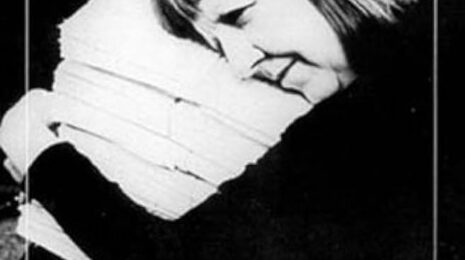
I came across Andrés Barba by chance one day in 2002, browsing at a Spanish bookstore. The book I stood perusing sounded intriguing: the story of an adolescent girl who lives in a Madrid apartment with her prostitute mother and stripper sister. Despite my interest in the story, however, the literary endeavor seemed not just improbable but almost risible. Here was a novel presenting the lives of several troubled women through the eyes of a less-than-savvy, fourteen-year old girl as written by a man – one who was just twenty-six years old. I bought it, I confess, to prove myself right: the protagonist’s voice could not possibly be convincing. Five years later I am still astounded by the heart-breaking tenderness and naked honesty of Barba’s prose.

Katia’s sister, the protagonist, is presented as achingly naive, and her almost saint-like innocence filters each of her observations, deflecting the horrors of the harsh world she inhabits. With utterly uncomplicated candor, she reinterprets prostitution, drug addiction, death and religion, and we are privy to all of her pre-moral reflections. Having quit school, Katia’s sister (who is never named) spends her days cleaning, watching nature shows on TV, and marveling at the tourists in Madrid’s Plaza Mayor who wear such bright colors, say such charming things. She comprises the sole affective bond in the family, the only selfless constant in her all-female clan (Mamá is often gone for days at a time; Katia works late at the strip club; grandmother’s Alzheimer’s is progressing daily). And her perspective is a redemptive one. Daily trials, whether transcendent, morbid, or run-of-the-mill, are all battled with an innocence that ultimately bathes everything in its glow, humanizing us all. At the start of the novel we read:

Mamá hadn’t been home for a week. Katia had just turned eighteen and she’d given her a pair of ladybug earrings that she hadn’t liked. Anyone could have seen it in her forced smile, her gesture of resignation when she asked her to put them on; but that night she went to bed happy in the knowledge that she’d given the perfect gift. Three days later she saw that Katia still hadn’t worn them, not even once. It didn’t trouble her, though. She remembered when she was eight and Mamá had given her a pink watch that she liked so much she didn’t dare put it on, for fear she might break it. She’d take it out at night, watch the second hand slowly caress the quarters of an hour, and then put it back in the same imperturbable case in which a year later it would stop ticking, and then in subsequent years gather dust, purging its sin of having been too beautiful. Maybe that’s why Katia hadn’t worn the earrings yet, because they were just too pretty.

At this point, we are left wondering: is her reaction a defense mechanism, or is she just not too bright? It’s not long, though, before we realize this is no act; the protagonist is not stupid, she’s simply incapable of feeling – or picking up on – malice, cruelty, or bitterness. In Katia’s sister’s world, people aren’t bad; they have concrete rationale for their actions. Their behavior can be explained by a phrase she hears her mother use frequently on the phone, “Men aren’t evil; they just want to get laid.”

Katia’s Sister is a remarkable first book from a very young writer who has gone on to prove his mettle in subsequent novels. This one was finalist for the 19th Herralde Prize in Spain, has been translated into French, Dutch, German, and Italian, and is currently being made into a film in Holland. Rafael Chirbes, one of Spain’s greatest living novelists, has called Barba’s prose “imprescindible”, often translated as “vital” though the urgency is more intense. His writing is “undowithoutable”.

Katia’s Sister
Andrés Barba
Anagrama, 2001


Comments are disabled for this article.

....

Katia's Sister
By Andrés Barba
Reviewed by Lisa Dillman
ISBN:
$
Basti
Basti by Intizar Husain
Reviewed by Rachael Daum

The Urdu word basti refers to any space, intimate to worldly, and is often translated as “common place” or “a gathering place.” This book by Intizar Husain, who is widely regarded as one of the most important living Pakistani writers,. . .

Read More >

The Whispering Muse
The Whispering Muse by Sjón
Reviewed by Vincent Francone

The Whispering Muse, one of three books by Icelandic writer Sjón just published in North America, is nothing if not inventive. Stories within stories, shifting narration, leaps in time, and characters who transform from men to birds and back again—you’ve. . .

Read More >

Mundo Cruel by Luis Negrón
Mundo Cruel by Luis Negrón by Luis Negrón
Reviewed by Camila Santos

Luis Negrón’s debut collection Mundo Cruel is a journey through Puerto Rico’s gay world. Published in 2010, the book is already in its fifth Spanish edition. Here in the U.S., the collection has been published by Seven Stories Press and. . .

Read More >

Selected Translations by W. S. Merwin
Selected Translations by W. S. Merwin by Various
Reviewed by Grant Barber

“South”

To have watched from one of your patios
the ancient stars
from the bank of shadow to have watched
the scattered lights
my ignorance has learned no names for
nor their places in constellations
to have heard the ring of. . .

Read More >

LoveStar
LoveStar by Andri Snær Magnason
Reviewed by Larissa Kyzer

When Icelandic author Andri Snær Magnason first published LoveStar, his darkly comic parable of corporate power and media influence run amok, the world was in a very different place. (This was back before both Facebook and Twitter, if you can. . .

Read More >

Hi, This Is Conchita and Other Stories
Hi, This Is Conchita and Other Stories by Santiago Roncagliolo
Reviewed by Tiffany Nichols

When starting Hi, This Is Conchita and Other Stories, Santiago Roncagliolo’s second work to be translated into English, I was expecting Roncagliolo to explore the line between evil and religion that was front and center in Red April. Admittedly, I. . .

Read More >

City of Angels, or, The Overcoat of Dr. Freud
City of Angels, or, The Overcoat of Dr. Freud by Christa Wolf
Reviewed by Josh Billings

Christa Wolf’s newly-translated City of Angels is a novel of atonement, and in this way the work of art that it resembles most to me is not another book, but the 2003 Sophia Coppola film Lost in Translation. Like that. . .

Read More >